Photo: Wikipedia
Quality of Life in Ocala, FL
A high quality of life with strong walkability, manageable living costs, healthy neighborhood signals, and solid amenity access.
What does Quality of Life tell us?
Quality of Life blends cost of living, nearby amenities, socioeconomic signals, and neighborhood character. City-level scores represent the whole municipality; individual neighborhoods can differ.
What does this tell us?
Quality of Life blends cost of living, nearby amenities, socioeconomic signals, and neighborhood character. City-level scores represent the whole municipality; individual neighborhoods can differ.
Cost of Living
5% below national average
The Real Cost of Living in Ocala, FL for 2026
| Tier | Individual | Family (4) |
|---|---|---|
| Survival | $20k | $37k |
| Comfortable | $43k | $63k |
| Luxury | $97k+ | $150k+ |
| Elite (Top 5%) | $129k+ | $201k+ |
85%
The Area Signal
A metric tracking the socioeconomic signals of the area.


Hobbies
Explore the areaGroceries
2 within 10 miles
Gas
0 within 10 miles
Hospital
3 within 20 miles
Airport
MCO — Orlando International
Post Office
USPS — Ocala, FL
Critical Amenities
Quality-of-Life Analysis
Ocala, Florida, presents a quality of life defined by accessible affordability and a slower, more family-oriented pace than the state's coastal metros. With a cost of living index of 95 — five points below the national average — the city attracts a broad demographic: young families seeking starter homes, remote workers trading high rents for space, and retirees drawn to the region's equestrian culture and lower tax burden. The median household income of roughly $46,000 aligns with the area's modest housing market, creating a community where middle-class stability is the norm rather than the exception.
Cost of living, housing affordability, and how Ocala compares to nearby cities
Ocala's housing market is a primary driver of its affordability. The median home value sits at $219,900, significantly below the Florida statewide median of approximately $392,000 and roughly half the median in nearby Orlando ($390,000) or Gainesville ($280,000). For renters, the median monthly rent of $1,230 undercuts the national median of $1,400 and is notably cheaper than the $1,700+ averages in Tampa or Jacksonville. This price gap means a household earning the area's median income can afford a median-priced home with a conventional mortgage — a scenario increasingly rare in Florida. The average commute of 18.8 minutes further reduces living costs, as residents spend less on fuel and vehicle wear than the national average of 26 minutes. Property taxes in Marion County hover around 0.8% of assessed value, well below the national average of 1.1%, and Florida's lack of state income tax amplifies the savings for wage earners and retirees alike.
Daily life, schools, and local amenities for families and professionals
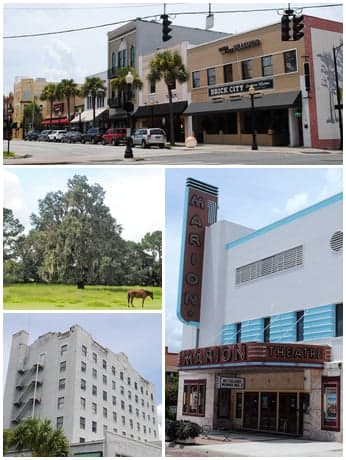
Daily life in Ocala revolves around its equestrian heritage, outdoor recreation, and a growing but still modest dining and retail scene. The city is home to the World Equestrian Center, the largest equestrian facility in the United States, which draws international competitors and fuels a niche economy of trainers, veterinarians, and stable hands. For families, Marion County Public Schools serve roughly 43,000 students, with several magnet and charter options available, though overall district ratings hover near the state average — a factor families should weigh against private school costs. The nearby Ocala National Forest and Silver Springs State Park provide hiking, kayaking, and camping within a 20-minute drive, while the downtown square offers local breweries, farmers' markets, and the historic Marion Theatre. Healthcare access is solid, with AdventHealth Ocala and HCA Florida Ocala Hospital providing two full-service hospitals. The rhythm is decidedly unhurried: restaurants close by 9 p.m. on weeknights, traffic jams are rare, and the biggest local events — like the annual First Friday Art Walk — draw crowds measured in hundreds, not thousands.
Ocala is best suited for those who prioritize space, affordability, and a quiet routine over urban energy. Remote workers, early retirees, and families with young children will find the low commute times and lower housing costs a tangible advantage. Professionals seeking nightlife, high-end dining, or a diverse job market beyond healthcare, retail, and equine services may find the city limiting. For anyone willing to trade coastal glamour for a slower, more financially sustainable lifestyle, Ocala offers a quality of life that is both attainable and grounded.

Crime in Ocala, FL
Generally safer than 66% of comparable U.S. locations.
Violent CrimeViolent Crime Analysis
Property CrimeProperty Crime Analysis
Crime Analysis
Ocala’s overall safety picture is mixed, with property crime rates significantly exceeding national averages while violent crime remains closer to the Florida state median. The city’s 2024 crime data shows a violent crime rate of 375.3 incidents per 100,000 residents and a property crime rate of 2,457.4 per 100,000. These figures place Ocala in a cautionary position for prospective residents, particularly those concerned about theft and burglary, though the violent crime rate is not among the highest in the state.
Crime in context
Compared to the national violent crime rate of roughly 380 per 100,000, Ocala’s 375.3 is essentially on par. However, the property crime rate of 2,457.4 is approximately 40% higher than the national average of about 1,950 per 100,000. Within Florida, Ocala’s violent crime rate is lower than cities like Gainesville (around 500 per 100K) but higher than nearby suburban communities such as The Villages (under 100 per 100K). Property crime, particularly larceny and motor vehicle theft, is the more pressing concern, driven in part by the city’s role as a regional retail and logistics hub. It is important to note that Marion County, which includes Ocala, has not adopted the progressive prosecutorial policies seen in some larger Florida jurisdictions like Miami-Dade or Broward County. The local state attorney’s office generally pursues standard sentencing guidelines, which helps maintain a more predictable justice environment compared to areas with reform-minded district attorneys who may reduce charges or avoid incarceration for repeat offenders.
What residents experience
For daily life, the most tangible safety issue is property crime. Residents report that vehicle break-ins and package theft are common in apartment complexes and neighborhoods near major thoroughfares like State Road 200 and Pine Avenue. Violent crime, while less frequent, is concentrated in specific areas—particularly the northwest quadrant near U.S. 27 and the historic downtown core after dark. The Ocala Police Department has increased patrols in these hotspots, but response times can lag in outlying areas. Families and retirees moving to Ocala should prioritize homes with secure parking, good exterior lighting, and proximity to active neighborhood watch programs. Gated communities and newer subdivisions on the city’s southwest side, such as those near the World Equestrian Center, report notably lower incident rates.
Neighborhood-level variation is stark. The safest areas are generally the newer developments along the SW 60th Avenue corridor and the On Top of the World retirement community, where violent crime is rare. Conversely, the historic west side and areas around the Ocala Regional Medical Center see higher rates of both violent and property offenses. Prospective renters should avoid the immediate vicinity of the Ocala Palms and Pine Ridge neighborhoods, where crime data shows elevated incidents. Overall, Ocala offers a livable environment for those who choose their neighborhood carefully and take standard precautions, but it is not a low-crime haven. The absence of progressive prosecutorial policies in the local justice system is a positive factor, as it reduces the likelihood of lenient treatment for repeat property offenders who might otherwise cycle quickly back onto the streets.
* Values derived from national, state, county, city and local statistics and may differ in a specific area. Last updated: 2026-04-19T06:59:22.000Z
Narrative content on this page is AI-generated and may contain mistakes. Verify any details that matter before acting on them.
ReloMaps may earn a commission from affiliate links at no extra cost to you.

