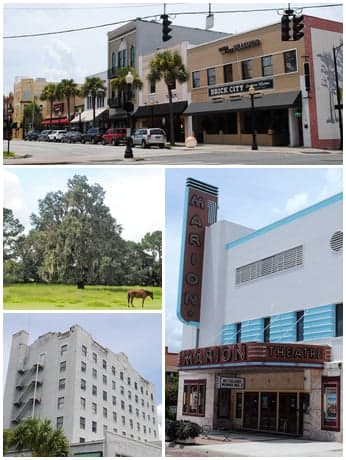
Photo: Wikipedia
Political ClimatePolitical Climate in Ocala, FL
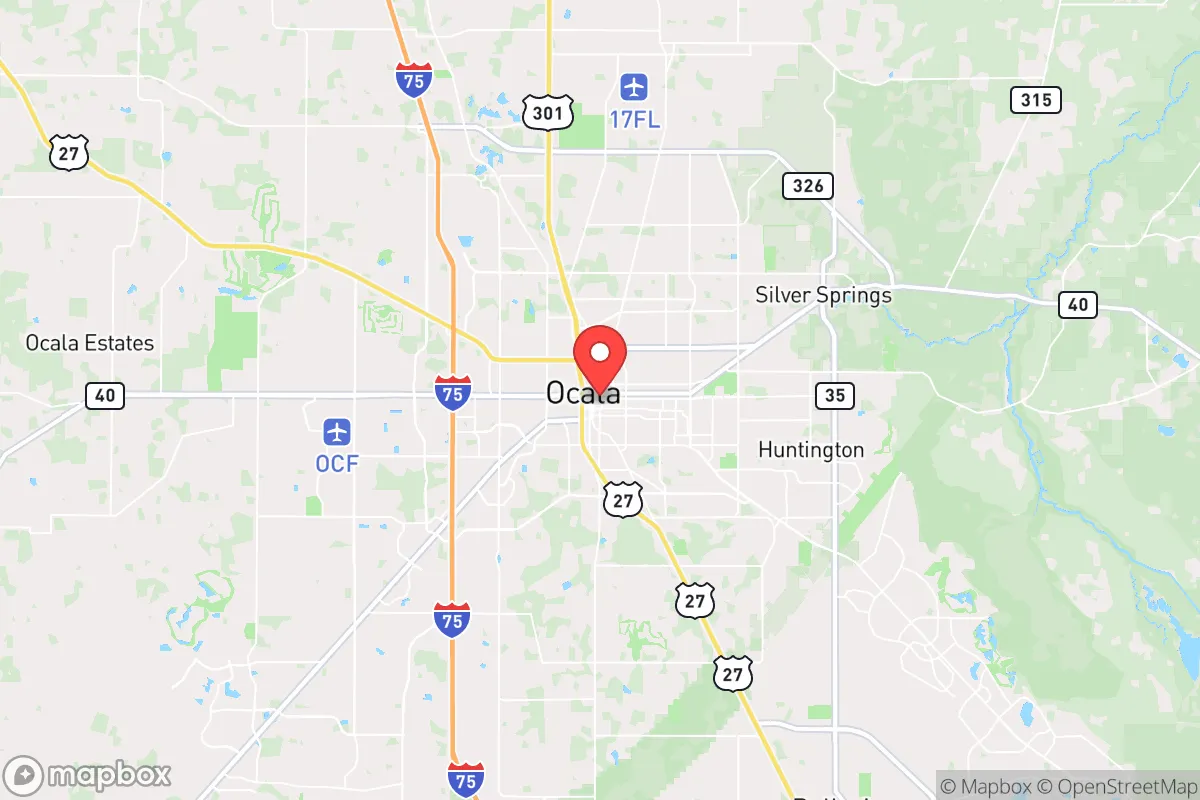
District shown is the primary district for this city’s centroid. Cities may span multiple districts.
Local Political AnalysisPolitical Analysis of Ocala, FL
Ocala and Marion County have long been a solid conservative stronghold, and that hasn't changed much. The Cook PVI rating of R+10 tells you the math is pretty simple here: Republicans hold a comfortable, but not overwhelming, advantage in voter registration and election outcomes. You'll see that play out in local races, where the county commission and school board have been reliably conservative for decades. The real story, though, is the trajectory. While the core of Ocala remains deeply red, you're starting to see some subtle shifts, especially as new folks move in from places like Orlando and Tampa. They bring different ideas, and while they haven't flipped anything yet, it's something to keep an eye on if you value the area's traditional character.
How it compares
Drive 30 minutes east to Gainesville, and you might as well be in a different country politically. That's a deep blue college town, and the contrast is stark. Ocala's politics are much more aligned with the rural and exurban counties to the north and west—think Dunnellon, Williston, and even parts of The Villages (though that's its own unique beast). Within Marion County itself, the city of Ocala is the most moderate pocket, but the surrounding unincorporated areas and smaller towns like Belleview and Silver Springs are rock-ribbed conservative. The key difference is that Ocala's growth is bringing in a mix of retirees from blue states and younger families priced out of the coast, which is slowly diluting the old-guard Republicanism. It's not a crisis yet, but it's a trend worth watching if you're concerned about government overreach creeping in.
What this means for residents
For now, living in Ocala means you're largely free from the kind of heavy-handed local policies you see in places like Orlando or Miami. There's no city-wide mask mandates that last for years, no aggressive zoning that tells you what you can do with your own property, and the tax burden is relatively light. The county commission generally takes a hands-off approach to business and personal life, which is a big reason why people move here. The school board has also been a battleground, but the conservative majority has held the line on things like parental rights and curriculum transparency. If you're worried about progressive ideology taking root in local government, Ocala is still a safe bet, but you'll want to pay attention to city council races and the school board elections—those are the front lines where the fight for the area's future is happening.
Culturally, Ocala still feels like old Florida. You'll see more pickup trucks than Teslas, and the local news is more concerned with the horse farm economy and the latest development proposal than with social justice initiatives. The biggest policy distinction is the county's strong support for Second Amendment rights and its resistance to state-level overreach on property rights. There's a genuine distrust of Tallahassee and Washington here, even among Republicans, when it comes to telling locals how to live. The long-term concern is that as the population grows and diversifies, the political center of gravity could shift. If you're looking for a place where the government stays out of your business and the culture reflects traditional values, Ocala is still one of the better bets in Florida. Just keep an eye on those local elections—that's where the real change happens.

State Political ClimatePolitical Climate in Florida
State Political AnalysisPolitical Environment in the State
Florida has transformed from a classic purple swing state into a solidly Republican-leaning powerhouse over the past two decades, driven by a massive influx of conservative-leaning transplants from the Northeast and Midwest. The state now boasts over 1 million more registered Republicans than Democrats, a flip from near parity in 2008, and has voted for the GOP presidential candidate in every election since 2012, with margins widening each cycle. This shift is most visible in once-competitive regions like the I-4 corridor, where fast-growing suburbs such as The Villages and Ocala have turned deep red, while the Democratic strongholds of Miami-Dade and Broward counties have seen their margins shrink dramatically as Hispanic voters, particularly Cuban-Americans and Venezuelans, have moved rightward.
Urban vs. rural divide
The political map of Florida is a tale of three distinct zones. The urban cores of Miami, Orlando, and Tampa remain reliably Democratic, but their influence is waning as surrounding suburbs explode in population and shift right. The I-4 corridor, stretching from Tampa through Lakeland to Orlando, is the state’s ultimate battleground, but it’s no longer purple—Polk County (home to Lakeland) flipped from Obama in 2012 to Trump by 18 points in 2020, and the trend has only accelerated. The Panhandle and North Florida, including Jacksonville and Pensacola, are deeply conservative, with rural counties like Liberty and Washington routinely voting 80%+ Republican. The biggest story, however, is the collapse of Democratic margins in South Florida: Miami-Dade County, once a 30-point Democratic lock, went for Trump by 11 points in 2024, driven by a massive exodus of non-Cuban Hispanic voters and a surge in conservative Jewish and Venezuelan communities in Doral and Weston.
Policy environment
Florida’s policy environment is a model of limited government, and that’s exactly why people are moving here in droves. There is no state income tax, a huge draw for high-earners and retirees, and property taxes are capped by the Save Our Homes amendment, which limits annual increases to 3% for homesteaded properties. The regulatory climate is business-friendly, with a right-to-work law and minimal red tape—permitting for new construction in Naples or Fort Myers takes weeks, not years. On education, Governor Ron DeSantis signed the Parental Rights in Education Act (HB 1557) in 2022, which prohibits classroom instruction on sexual orientation and gender identity in K-3, and expanded school choice through universal Education Savings Accounts in 2023, making Florida the national leader in educational freedom. Healthcare policy leans toward personal responsibility: the state did not expand Medicaid under Obamacare, and COVID-era policies kept businesses open and schools in-person while other states locked down. Election integrity was bolstered by SB 90 in 2021, which tightened drop box rules, required ID for mail-in ballot requests, and banned ballot harvesting—measures that have withstood legal challenges and kept Florida free of the chaos seen in Georgia or Pennsylvania.
Trajectory & freedom
Florida is unequivocally becoming more free, especially for those who value personal autonomy over government mandates. The state passed constitutional carry (permitless concealed carry) in 2023, allowing law-abiding adults to carry a firearm without a government-issued license—a major expansion of Second Amendment rights. On medical freedom, DeSantis signed a ban on COVID-19 vaccine mandates for private employers and government entities in 2021, and the state has aggressively fought federal mandates in court. Parental rights were further strengthened by the “Don’t Say Gay” law (HB 1557) and the expansion of school choice, which lets parents direct tax dollars to the school that fits their child, not the government’s agenda. Property rights were reinforced by the 2023 “Live Local Act,” which preempts local zoning restrictions to allow more housing development, though some conservatives worry it infringes on local control. The only area where freedom has arguably contracted is in the realm of COVID-era emergency powers: DeSantis signed a law in 2023 that limits a governor’s ability to shut down businesses or mandate masks during a future emergency, which is actually a restoration of liberty after the overreach of 2020. Overall, the trajectory is toward more personal freedom, less bureaucracy, and a government that stays out of your life—exactly what most movers are looking for.
Civil unrest & political movements
Florida has seen its share of political flashpoints, but they’ve largely been contained by a state government that doesn’t tolerate chaos. The 2020 Black Lives Matter protests in Miami and Orlando were relatively muted compared to Portland or Seattle, thanks to a strong law-and-order posture from local sheriffs and the governor. The most visible organized movement on the left is the fight over abortion rights: after the state passed a 15-week ban in 2022 and a 6-week ban in 2023, activists gathered enough signatures to put a constitutional amendment on the 2024 ballot to enshrine abortion access, which failed to reach the 60% threshold. On the right, the “Moms for Liberty” movement, founded in Brevard County, has been a powerful force in school board elections, pushing for parental oversight of curriculum and library books. Immigration politics are front and center: DeSantis signed the “anti-sanctuary” law (SB 1718) in 2023, which requires businesses with 25+ employees to use E-Verify, bans local governments from issuing ID cards to illegal immigrants, and mandates that hospitals collect immigration status data. This has made Florida a national leader in enforcing federal immigration law, and it’s a major reason why border-state transplants are choosing Florida over Texas or Arizona. Election integrity remains a hot topic, but Florida’s 2020 and 2022 elections were widely praised as smooth and secure, with no major controversies—a stark contrast to the chaos in Maricopa County or Detroit.
Projection
Over the next 5-10 years, Florida will only get redder and more conservative. The in-migration is self-selecting: people moving from New York, California, and Illinois are overwhelmingly fleeing high taxes, crime, and progressive policies, and they’re bringing their voting habits with them. The Hispanic vote, particularly in Miami-Dade and Osceola County, will continue to shift right as younger generations of Cuban, Venezuelan, and Nicaraguan Americans reject the socialism their families fled. The Democratic Party’s base is shrinking to the urban cores of Miami, Orlando, and Tampa, plus the aging retiree communities in Broward and Palm Beach—but even those are trending purple as new development brings in conservative families. The biggest wildcard is climate change: rising sea levels and stronger hurricanes could eventually slow growth in coastal areas like Miami Beach and Fort Lauderdale, but inland cities like Ocala, Lakeland, and Gainesville are booming as alternatives. Expect the state to continue passing laws that protect parental rights, gun rights, and economic freedom, while pushing back against federal overreach on everything from immigration to environmental regulation. If you’re moving here now, you’ll find a state that in a decade will be even more aligned with conservative values than it is today.
For a new resident, the bottom line is simple: Florida offers a political environment where your rights are respected, your taxes are low, and your voice matters. You won’t find the government mandating your healthcare choices, dictating what your kids learn, or coddling criminals. The state is on a clear trajectory toward greater freedom, and the people moving here are the ones making it happen. If you value personal liberty and want to live somewhere that rewards hard work and self-reliance, Florida is the place to be—and it’s only getting better.
* Values derived from national, state, county, city and local statistics and may differ in a specific area. Last updated: 2026-04-19T06:59:22.000Z
Narrative content on this page is AI-generated and may contain mistakes. Verify any details that matter before acting on them.
ReloMaps may earn a commission from affiliate links at no extra cost to you.

