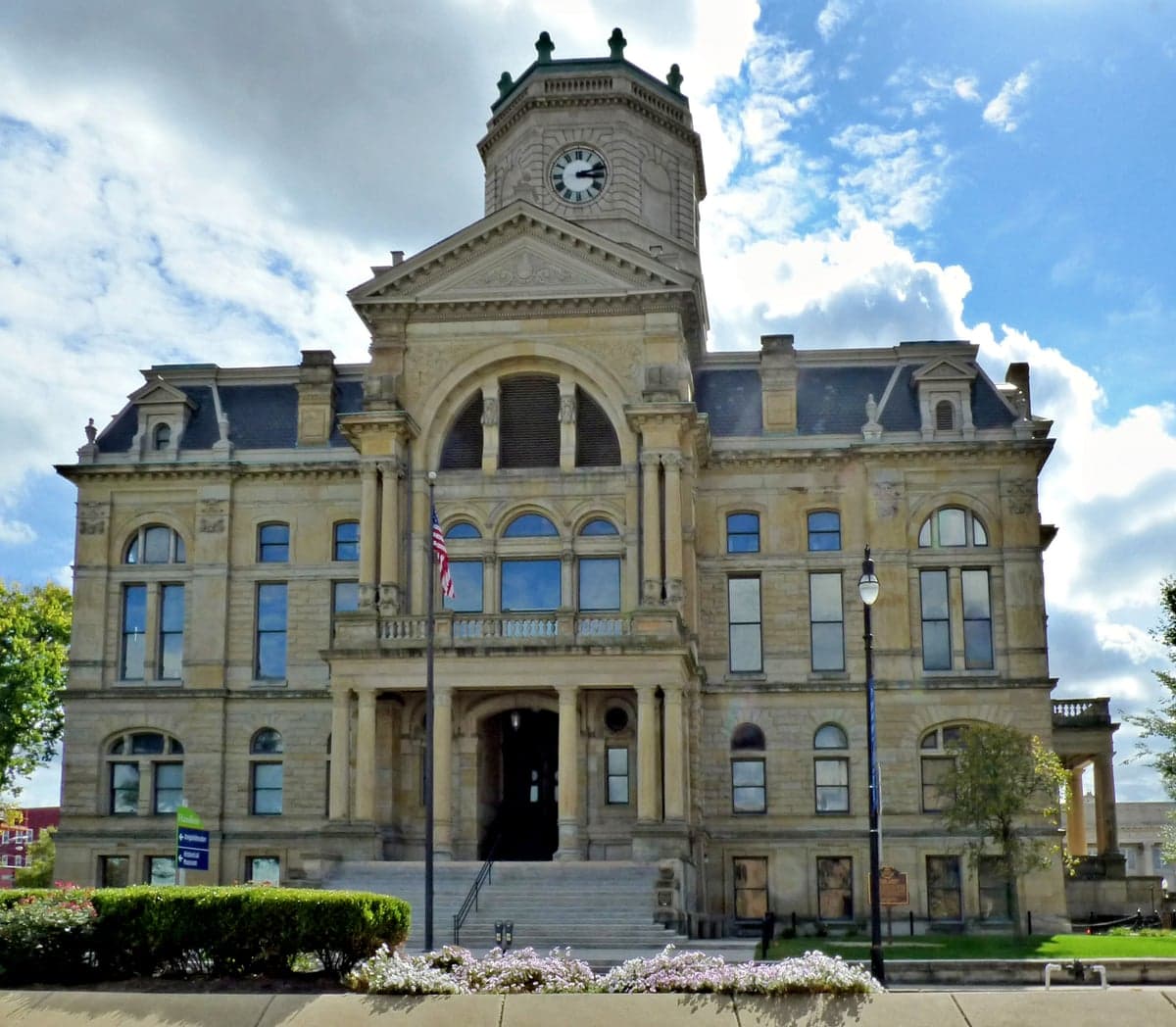
Photo: Wikipedia
Demographics of Butler County
Affluence Level in Butler County
A middle-class area roughly in line with national averages across income, home values, education, and employment.
People of Butler County
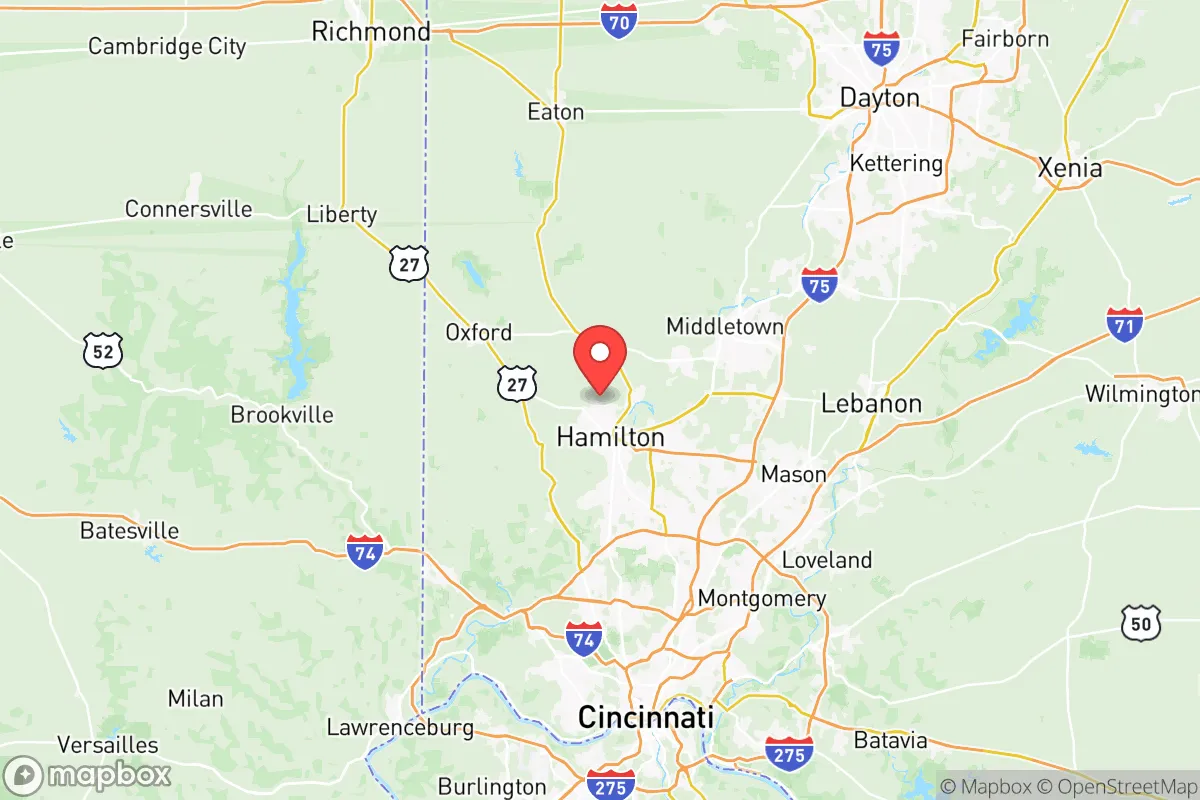
Butler County, Ohio, is a predominantly white, moderately populous county of 389,910 residents that blends Midwestern Rust Belt resilience with suburban growth. Its character is defined by a mix of historic industrial towns like Hamilton and Middletown, fast-growing suburban corridors in West Chester and Liberty Township, and a significant college population anchored by Miami University in Oxford. Residents describe the county as politically conservative-leaning, family-oriented, and proud of its Western Reserve heritage, while grappling with increasing diversity, particularly a growing Hispanic population concentrated in Hamilton and a rising Asian and Indian presence in the northern suburbs.
Settlement & growth (pre-1960)
The first human history of Butler County belongs to the Miami and Shawnee nations, who used the Great Miami River valley for hunting and seasonal settlements. European-American settlement began in earnest after the 1795 Treaty of Greenville forced Native cession of southeastern Ohio lands. The county was formally organized in 1803, drawing an initial wave of Scots-Irish and English pioneers from Pennsylvania, Virginia, and Kentucky. These early settlers farmed the fertile bottomlands around Hamilton, the county seat founded in 1791, and established small crossroads communities such as Oxford (1810), Middletown (1815), and Trenton (1815).
The county’s demographic trajectory shifted sharply with the industrial revolution. Between 1850 and 1900, the discovery of natural gas and the expansion of railroad lines spurred manufacturing. Hamilton became a powerhouse for paper mills, steel foundries, and machine tools, pulling in a large wave of German immigrants (1850s–1880s) who settled in the city’s working-class neighborhoods, particularly the West Side and along the river. Middletown, home to Armco Steel (founded 1900), attracted a similar influx of Germans and, later, Eastern European immigrants—Poles, Slovaks, and Hungarians—between 1890 and 1910, who clustered around the mill district. A smaller but notable Irish immigrant presence formed in Hamilton’s East End. The Great Migration (1910–1950) brought Black families from the Deep South to Hamilton and Middletown for factory jobs, though the Black population remained modest.
By the 1950s, Butler County was a classic industrial Midwestern area: predominantly white, with a strong unionized workforce. The suburban boom started modestly, with postwar housing tracts in Fairfield (incorporated 1955) and West Chester Township (suburbanizing rapidly), attracting white families leaving Hamilton and Middletown for newer schools and detached homes.
Modern era (post-1965)
The 1965 Hart-Cellar Act, combined with deindustrialization and interstate highway expansion, reshaped Butler County’s demographics. The most dramatic change has been the suburbanization and diversification of the northern half of the county. Between 1970 and 2000, West Chester Township and Liberty Township exploded in population, growing from farmland into affluent suburbs of Cincinnati. This growth was driven by domestic migration from Hamilton, Middletown, and Cincinnati proper, as well as corporate relocations along the I-75 corridor.
Foreign-born immigration to Butler County remains modest (4.3%), but its composition has changed markedly since 1990. The most significant new group is the Hispanic population (6.6%), predominantly of Mexican and Central American origin. The community is concentrated in Hamilton, particularly in neighborhoods near the former industrial plants and along the High Street corridor, where Latino-owned grocery stores, taquerias, and churches have become visible. A smaller Hispanic enclave exists in Middletown, tied to light manufacturing and landscaping jobs.
East and Southeast Asian communities (2.7%) have settled primarily in the northern suburbs, driven by professional jobs in advanced manufacturing, finance, and healthcare. West Chester and Mason (which is mostly in Warren County, but its edge extends into Butler) host a small but growing number of Chinese, Korean, and Vietnamese families drawn to the highly rated Lakota and Mason school districts. The Indian-subcontinent population (1.4%) follows a similar pattern, with professionals in engineering, IT, and medicine concentrating in West Chester and Liberty Township, near employers like GE Aviation and Procter & Gamble’s regional offices.
The Black population (8.2%) remains centered in Hamilton and Middletown, the historic industrial cores. However, there has been a slow but steady dispersion into the southern edge of Fairfield and parts of West Chester, driven by middle-class Black families seeking better schools and newer housing. Overall, the county’s White share has declined from roughly 90% in 1980 to 75.9% today, driven almost entirely by post-2000 Hispanic growth and Asian/Indian migration.
The future
Butler County is projected to continue its demographic trajectory toward greater, but still moderate, diversity. The Hispanic population in Hamilton and Middletown will likely grow, driven by natural increase and continued labor demand in manufacturing and logistics (the region hosts large Amazon and Kroger distribution centers). The Asian and Indian populations in West Chester and Liberty Township will expand slowly, but the county lacks the anchor technology employers or top-tier research universities (beyond Miami University) that drive the dense ethnic enclaves seen in Columbus or Cleveland.
The White population is aging and, absent new domestic migration, will likely shrink in absolute numbers over the next two decades, as seen in many Great Lakes counties. The college town of Oxford will remain a demographic outlier—younger, more transient, and slightly more liberal—while the rest of the county consolidates around a conservative-leaning, family-focused identity. New residential development is heavily concentrated in Liberty Township (the Liberty Center mixed-use development) and eastern West Chester, attracting both in-movers from Cincinnati and internal relocators from Hamilton and Middletown.
For someone moving to Butler County in 2026, the county offers a relatively stable, low-crime suburban environment with solid public schools (Lakota, Fairfield, and Edgewood districts are strong), but with fewer big-city amenities and less cultural diversity than the Cincinnati metro core. The population is becoming slightly more varied by decade, but the fundamental character—conservative, family-oriented, rooted in manufacturing and agriculture—will persist.

* Values derived from national, state, county, city and local statistics and may differ in a specific area. Last updated: 2026-09-13T23:29:12.000Z
Narrative content on this page is AI-generated and may contain mistakes. Verify any details that matter before acting on them.
ReloMaps may earn a commission from affiliate links at no extra cost to you.

