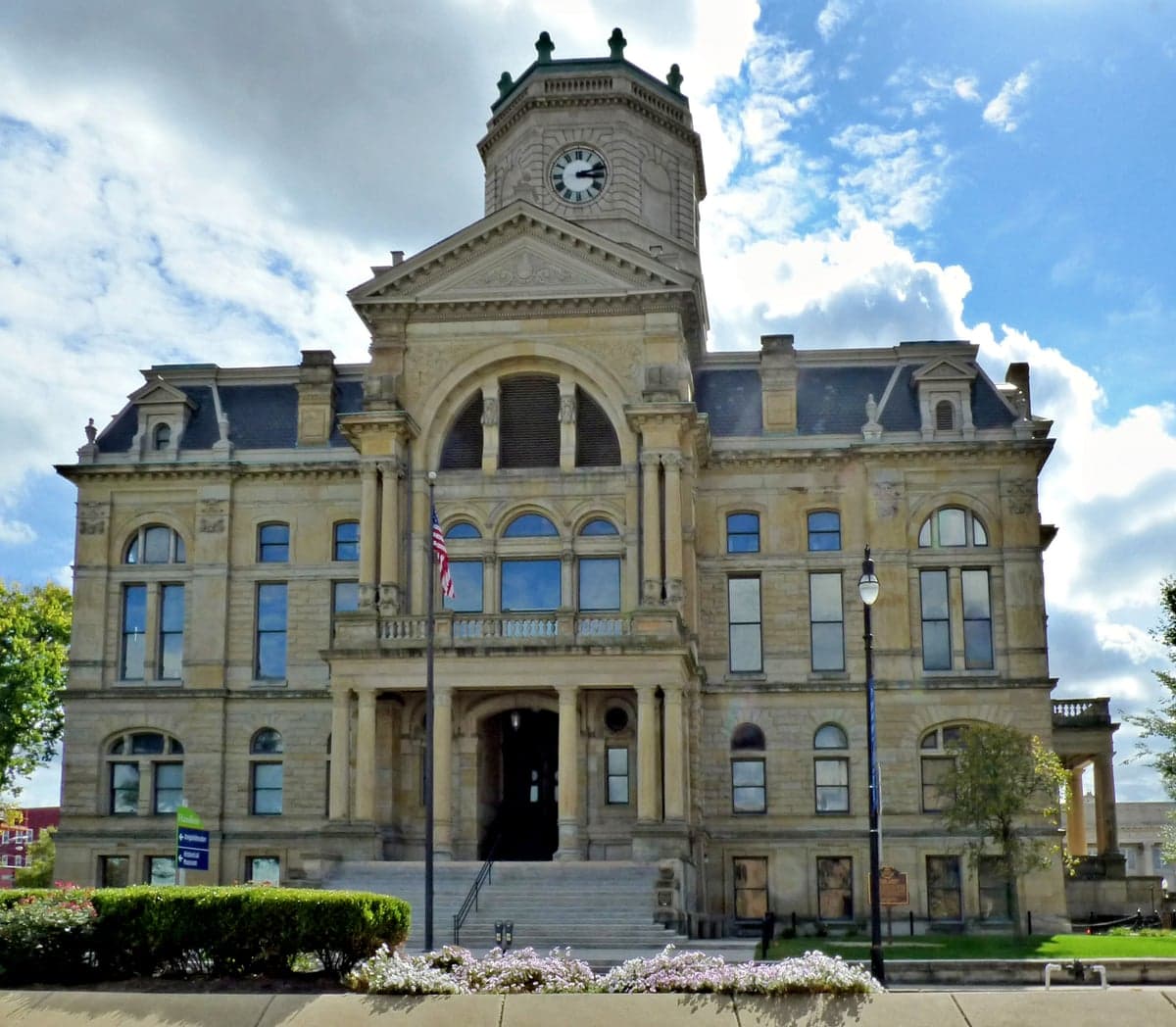
Photo: Wikipedia
Quality of Life in Butler County
A livable area that tracks near national norms for affordability, walkability, and neighborhood health.
What does Quality of Life tell us?
Quality of Life measures an area by evaluating factors like cost of living, nearby amenities, country club access, airport proximity, socioeconomic signals and neighborhood character. For large states, this is a general average — quality of life can vary dramatically between metro areas, suburbs, and rural communities within the same state.
What does this tell us?
Quality of Life measures an area by evaluating factors like cost of living, nearby amenities, country club access, airport proximity, socioeconomic signals and neighborhood character. For large states, this is a general average — quality of life can vary dramatically between metro areas, suburbs, and rural communities within the same state.
Cost of Living
9% below national average
117%
The Real Cost of Living in Butler County for 2026
| Tier | Individual | Family (4) |
|---|---|---|
| Survival | $18k | $33k |
| Comfortable | $47k | $69k |
| Luxury | $134k+ | $208k+ |
| Elite (Top 5%) | $158k+ | $245k+ |
Quality-of-Life Analysis
Butler County, Ohio, offers a quality-of-life spectrum that spans from the dense, amenity-rich city of Hamilton to the quiet, agricultural crossroads of towns like Somerville and Seven Mile, attracting everyone from young professionals seeking urban energy to families craving space and retirees valuing low taxes. Anchored by a cost-of-living index of 91, significantly below the national average, the county delivers tangible affordability without sacrificing access to major job centers like Cincinnati, just 25 minutes south. The 24.9-minute average commute reflects a setting where residents can live rurally yet reach metropolitan employment quickly, a balance that defines the county's broad appeal. This range of options means a person's daily experience changes dramatically depending on whether they choose a walkable historic district or a 5-acre lot off a two-lane road.
Largest town(s) & population centers
Hamilton, the county seat with a population of roughly 62,000, is the clear urban anchor and the most dynamic part of the county. Its revitalized downtown along the Great Miami River features breweries, the Fitton Center for the Arts, and a riverside amphitheater that hosts free concerts, attracting a younger demographic. Daily life here leans toward walkable blocks, loft apartments, and a calendar stacked with community events, while major employers include Atrium Medical Center and AK Steel's corporate headquarters. Fairfield (pop. 45,000) and Middletown (pop. 48,000) form the other large nodes: Fairfield is a more suburban, family-oriented hub with high-rated schools and the sprawling Bridgewater Falls shopping center, while Middletown blends industrial history with newer investments like the Cincinnati-Dayton Road corridor and the massive Atrium Medical Center campus. All three cities provide the county's most concentrated employment, retail, and healthcare access, with median home values around $243,000 and median rents of $1,098 making these centers notably cheaper than comparable Cincinnati suburbs.
Smaller towns & rural pockets
Outside the three big cities, Butler County reveals its quieter side through a handful of incorporated villages and unincorporated communities. Oxford (pop. 22,000 full-time) is a distinct outlier: home to Miami University, it operates as a classic college town with a walkable uptown district, student-heavy rental market, and a cultural calendar tied to the academic year—pulling in a mix of faculty, grad students, and professionals who value its liberal, youth-oriented atmosphere. West Chester Township (pop. 66,000) is technically unincorporated but functions as a large, affluent suburb with its own school district and Liberty Center mixed-use development; it’s the county’s priciest residential area. For true small-town life, Millville (pop. ~700) and Somerville (pop. ~300) sit along state routes in the county's northern tier, offering a handful of churches, a post office, and little else in amenities—but land parcels are cheap and the pace is quiet. Seven Mile (pop. ~3,500) and New Miami (pop. ~2,200) sit between Middletown and Hamilton, offering older, modest single-family homes on large lots, often attracting commuters who want a buffer from city noise.
Cost & lifestyle range
The cost-of-living spread across Butler County is substantial. At the high end, West Chester Township and parts of Oxford near the Miami University campus command home prices that often exceed $400,000, with West Chester's median household income above $100,000—a full tier above the county average. These areas deliver premium schools, dense retail, and proximity to I-75. At the low end, Middletown’s older neighborhoods and Hamilton’s east side still see home sales under $150,000, with rental rates as low as $800 for a two-bedroom unit. The county's overall COL index of 91 means a household earning the national median income stretches roughly 10% further here than the U.S. average. Lifestyle choices follow the price gradient: residents in Hamilton’s German Village or Fairfield’s Forest Park developments walk to coffee shops and parks, while those on the outskirts of Hanover Township or St. Clair Township drive 20-30 minutes to the nearest grocery store but enjoy acreage and lower property taxes.
This county is best suited for people who want affordable access to a major metro (Cincinnati) while choosing their own density: college students and academics in Oxford, suburban families in West Chester and Fairfield, urbanites and creative types in Hamilton, and rural homesteaders in the northern townships. The diversity is real—a person can go from a Browns game at a downtown Hamilton bar to absolute silence in Somerville in under 20 minutes—and that variety, underpinned by consistently low costs, is why Butler County remains one of Ohio's fastest-growing counties by net migration.

Crime in Butler County
Crime rates similar to the national median for U.S. locations.
Violent CrimeViolent Crime Analysis
Property CrimeProperty Crime Analysis
Crime Analysis
Butler County, Ohio, which straddles the suburban and rural fringe southwest of Dayton and north of Cincinnati, records a violent crime rate of 268 incidents per 100,000 residents and a property crime rate of 1,369.9 per 100,000. These figures place the county in a moderate-to-high risk tier for Ohio, with property crime rates notably elevated above state and national medians. The county's safety landscape is heavily shaped by jurisdiction-level policies, with smaller towns often outperforming the countywide averages while the city of Hamilton and parts of Middletown face more persistent challenges.
Crime in context
For context, Ohio’s statewide violent crime rate hovers around 300 per 100,000, making Butler County’s 268 per 100,000 slightly below the state average but still above safer suburban counties like Warren or Delaware. However, the county’s property crime rate of 1,369.9 per 100,000 is roughly 15% higher than the national average of 1,190 per 100,000 and significantly higher than Ohio’s median metro-proximate counties. This disparity is largely driven by the county’s two largest cities: Hamilton (population ~62,000) and Middletown (population ~49,000), both of which have historically dealt with higher rates of theft, vehicle break-ins, and burglary linked to proximity to the I-75 corridor. In contrast, the smaller municipalities of Oxford (home to Miami University) and Trenton consistently report lower crime volumes, with Oxford’s rate often dropping below 100 violent crimes per 100,000 when student-related incidents are excluded.
What residents experience
Residents in Butler County report that property crime — specifically motor vehicle theft and package porch theft — is the most common public safety concern. The county’s prosecutorial approach under Butler County Prosecutor Michael Gmoser is widely recognized as conservative and victim-focused, with a heavy emphasis on felony prosecution and jail time for repeat property offenders. This stands in contrast to the more progressive, diversion-heavy policies seen in nearby Hamilton County (Cincinnati), where district attorneys have frequently faced criticism for plea-bargaining down felony burglaries. While Butler County’s tougher approach has helped keep violent crime in check, the elevated property crime rate suggests that property offenders from neighboring progressive jurisdictions may be drawn to Butler County’s more affluent suburbs, such as West Chester and Liberty Township, where unsecured vehicles and unattended packages are more common.
The county’s daily safety experience varies markedly by neighborhood. In Hamilton, the predominantly Democratic city council has generally supported community policing, but critics note that the local judiciary’s sentencing patterns for drug-related theft have created a "revolving door" for addicts who commit multiple property crimes before facing serious jail time. Residents of safer enclaves like Oxford and Trenton, however, report minimal fear of crime, with neighborhood watches active and police response times under 5 minutes. The overall safety strategy in Butler County is thus bifurcated: conservative prosecution at the county level provides strong deterrents, while municipal-level variations in enforcement and judicial philosophy create pockets where crime can persist — particularly in lower-income, higher-density areas of Middletown and central Hamilton where progressive-leaning local policies may inadvertently prioritize offender rehabilitation over immediate public protection.
For those relocating to Butler County, the safest bets are the unincorporated townships like Liberty and West Chester, which enjoy low crime densities despite their large populations. Conversely, any address within Hamilton city limits or the downtown core of Middletown warrants a close review of block-by-block crime maps, as the presence of progressive judicial influences in those city halls can lead to more lenient outcomes for repeat offenders and a correspondingly higher risk for residents. The county’s overall outlook is stable, but the property crime rate serves as a reminder that even in a generally conservative area, the effect of liberal-leaning city policies in adjacent regions can spill over and degrade safety for everyone.
* Values derived from national, state, county, city and local statistics and may differ in a specific area. Last updated: 2026-09-13T23:29:12.000Z
Narrative content on this page is AI-generated and may contain mistakes. Verify any details that matter before acting on them.
ReloMaps may earn a commission from affiliate links at no extra cost to you.

