
Photo: Wikipedia
Political ClimatePolitical Climate in Ohio
Political Environment in the State
Ohio has shifted from a classic purple battleground to a solidly Republican-leaning state, with a Cook PVI of R+5, but don’t let that single number fool you—the state’s political soul is a tug-of-war between its booming, culturally conservative rural and exurban counties and its shrinking, increasingly progressive urban cores. Over the last 20 years, the GOP has tightened its grip on state government, winning every statewide executive office and holding supermajorities in both legislative chambers, while the Democratic strongholds of Cuyahoga County (Cleveland) and Franklin County (Columbus) have become more isolated. The 2024 presidential race saw Donald Trump carry Ohio by over 11 points, a far cry from the 2-point margins of 2004 and 2012, signaling that the state’s long-term trajectory is redder, not bluer.
Urban vs. rural divide
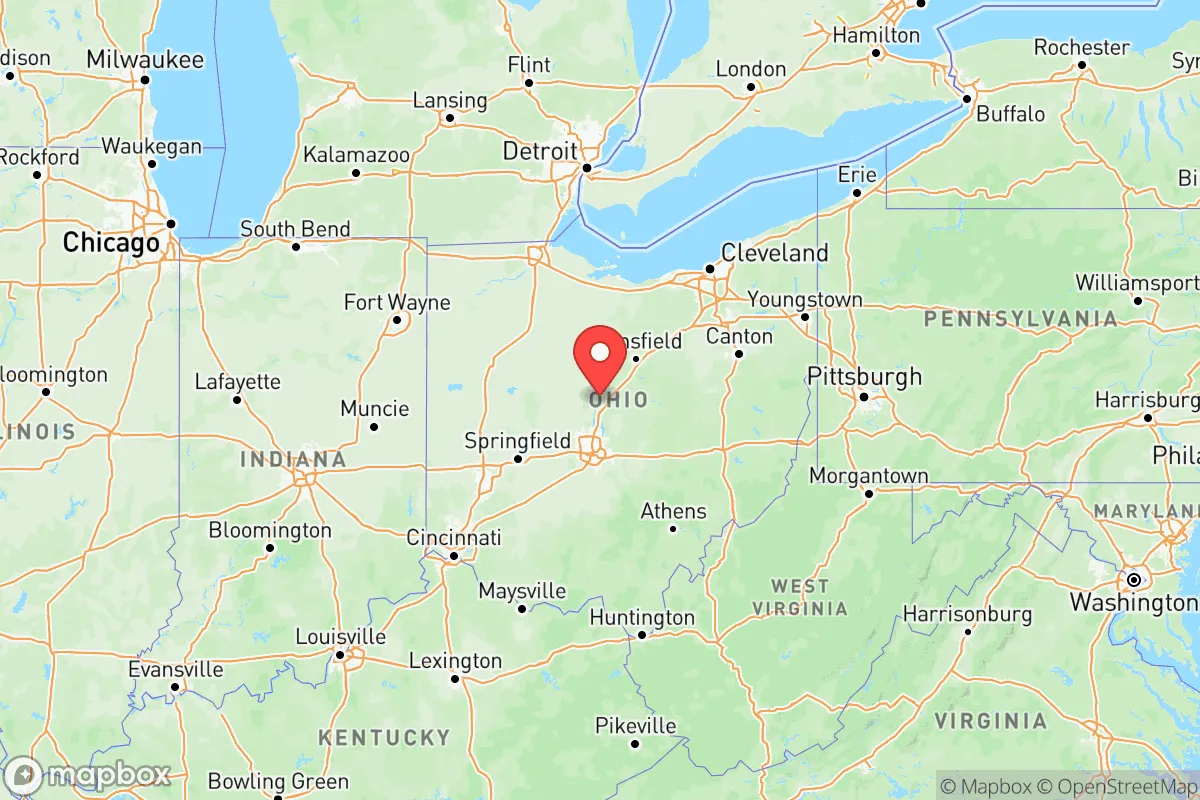
The political map of Ohio is a study in contrasts. The “Big Three” metros—Cleveland, Columbus, and Cincinnati—drive the Democratic vote, but they’re surrounded by a sea of deep-red counties. Columbus (Franklin County) is the blue anchor, with its growing tech and university population pushing it left, while Cincinnati (Hamilton County) has become a suburban swing area, flipping blue in 2020 but still hosting conservative enclaves like West Chester and Mason. Cleveland (Cuyahoga County) remains the most reliably Democratic large county, but its population decline has sapped its statewide influence. Meanwhile, the rural and exurban counties—like Warren County (north of Cincinnati), Delaware County (north of Columbus), and Geauga County (east of Cleveland)—are among the most Republican in the nation, often voting 65-70% for Trump. The Appalachian counties in southeastern Ohio, like Muskingum and Belmont, have flipped hard from blue-dog Democrat to solid red as cultural and economic issues realigned. The real story is the suburban ring around Columbus: Delaware County, once a swing area, now votes R+30, driven by families fleeing the city for lower taxes and conservative school boards.
Policy environment
Ohio’s policy environment is a mixed bag for conservatives. On the plus side, the state has a flat income tax rate of 3.5% (down from 4.8% in 2020), with a phase-out plan that could eliminate it entirely by 2030. Property taxes are moderate, but local levies can be high in blue cities. The regulatory posture is business-friendly, with right-to-work laws not on the books but a strong “at-will” employment culture. Education policy is a flashpoint: the state has a robust school voucher program (EdChoice) that lets parents use public funds for private or religious schools, a major win for school choice advocates. However, the state board of education has been embroiled in battles over curriculum transparency and parental rights. Healthcare is a mixed bag—Ohio expanded Medicaid under Obamacare, which many conservatives see as a federal overreach, but the state has resisted further expansion of government-run options. Election laws have tightened: voter ID requirements were strengthened in 2023, and absentee ballot drop boxes are limited to one per county, which conservatives view as securing election integrity. Gun laws are relatively permissive—constitutional carry passed in 2022, meaning no permit needed to carry a concealed firearm—but local municipalities in blue areas still try to impose their own restrictions, leading to preemption battles.
Trajectory & freedom
Ohio’s trajectory on personal freedom is a two-steps-forward, one-step-back story. The biggest win for liberty in recent years was the 2022 passage of constitutional carry (SB 215), which eliminated the permit requirement for concealed carry—a clear expansion of Second Amendment rights. Parental rights got a boost with the 2023 “Parents’ Bill of Rights” (HB 8), which requires schools to notify parents of any changes to a child’s health or well-being and prohibits instruction on sexual orientation in grades K-3. On the downside, the state has seen a concerning creep of government overreach in medical freedom: the 2023 ban on gender-affirming care for minors (HB 68) was a win for parental rights advocates, but it also sparked a federal lawsuit and ongoing cultural war. Property rights are generally strong, with no statewide rent control and limited eminent domain abuse, but some cities like Columbus have imposed “inclusionary zoning” mandates that force developers to set aside units for low-income tenants—a de facto tax on property owners. The biggest red flag for conservatives is the 2023 ballot initiative that enshrined abortion rights in the state constitution (Issue 1), which passed with 57% support, overriding the legislature’s six-week heartbeat ban. This shows that while the legislature is conservative, the electorate is more moderate on social issues, and direct democracy can override elected officials.
Civil unrest & political movements
Ohio has seen its share of political flashpoints. The 2020 George Floyd protests in Columbus and Cleveland turned violent, with looting and arson in downtown Columbus that led to a heavy National Guard presence. The “Summer of 2020” also saw the rise of local activist groups like the Columbus Freedom Coalition, which pushed for police reform and defunding—though those efforts largely fizzled after the 2021 election. On the right, the “Ohio Patriot” movement has been active, with large rallies at the Statehouse in 2021 and 2022 opposing vaccine mandates and election integrity concerns. The 2022 “Ohio Election Integrity” group successfully pushed for the voter ID law, citing concerns about drop-box security. Immigration politics are less heated than in border states, but the 2023 influx of Haitian migrants in Springfield (Clark County) sparked local tensions, with the city council passing a resolution declaring itself a “welcoming city” for immigrants—a move that angered many residents who felt it bypassed local input. There have been no serious secession or nullification movements, but some rural counties have passed “Second Amendment sanctuary” resolutions, vowing not to enforce any future federal gun bans. Election integrity remains a live issue: the 2024 election saw no major scandals, but the state’s purge of inactive voter rolls (over 200,000 names in 2023) was praised by conservatives as cleaning up the rolls.
Projection
Over the next 5-10 years, Ohio will likely become more Republican at the state level, but with a growing libertarian streak that could complicate GOP governance. The in-migration pattern is key: people are moving to the exurban rings of Columbus and Cincinnati (Delaware, Warren, and Butler counties) from blue states like California and Illinois, bringing conservative values but also a skepticism of big government. These newcomers are driving the push for school choice and lower taxes, but they’re also less likely to support the GOP on social issues like abortion. The urban cores—especially Columbus, which is growing fast due to tech and Intel’s new $20 billion chip plants—will continue to vote blue, but their share of the state’s population is shrinking relative to the red suburbs. The wild card is the state’s direct democracy system: if progressives keep using ballot initiatives to bypass the legislature (as they did with abortion and marijuana legalization in 2023), conservatives may push to make it harder to amend the constitution. Expect more fights over school curriculum, vaccine mandates, and property rights, but the overall trend is toward a freer, more conservative state—as long as the legislature can hold the line against federal overreach and urban progressive activism.
For a new resident, the bottom line is this: Ohio offers a solid conservative policy environment with low taxes, strong gun rights, and school choice, but you’ll need to pick your county carefully. Stick to the exurban rings of Columbus or Cincinnati—places like Dublin, Mason, or Liberty Township—where the schools are good, the taxes are low, and the politics match your values. Avoid the urban cores of Cleveland and Columbus if you want to escape progressive policies like high property taxes and zoning overreach. The state is trending in the right direction, but the fight over ballot initiatives and local control means you’ll need to stay engaged. If you’re looking for a place where your voice matters and your freedoms are respected, Ohio is a solid bet—just don’t expect it to be a perfect red utopia.

Most Conservative Cities in Ohio






Most Liberal Cities in Ohio





* Values derived from national, state, county, city and local statistics and may differ in a specific area. Last updated: 2026-04-14T06:19:45.000Z
Narrative content on this page is AI-generated and may contain mistakes. Verify any details that matter before acting on them.
ReloMaps may earn a commission from affiliate links at no extra cost to you.

