
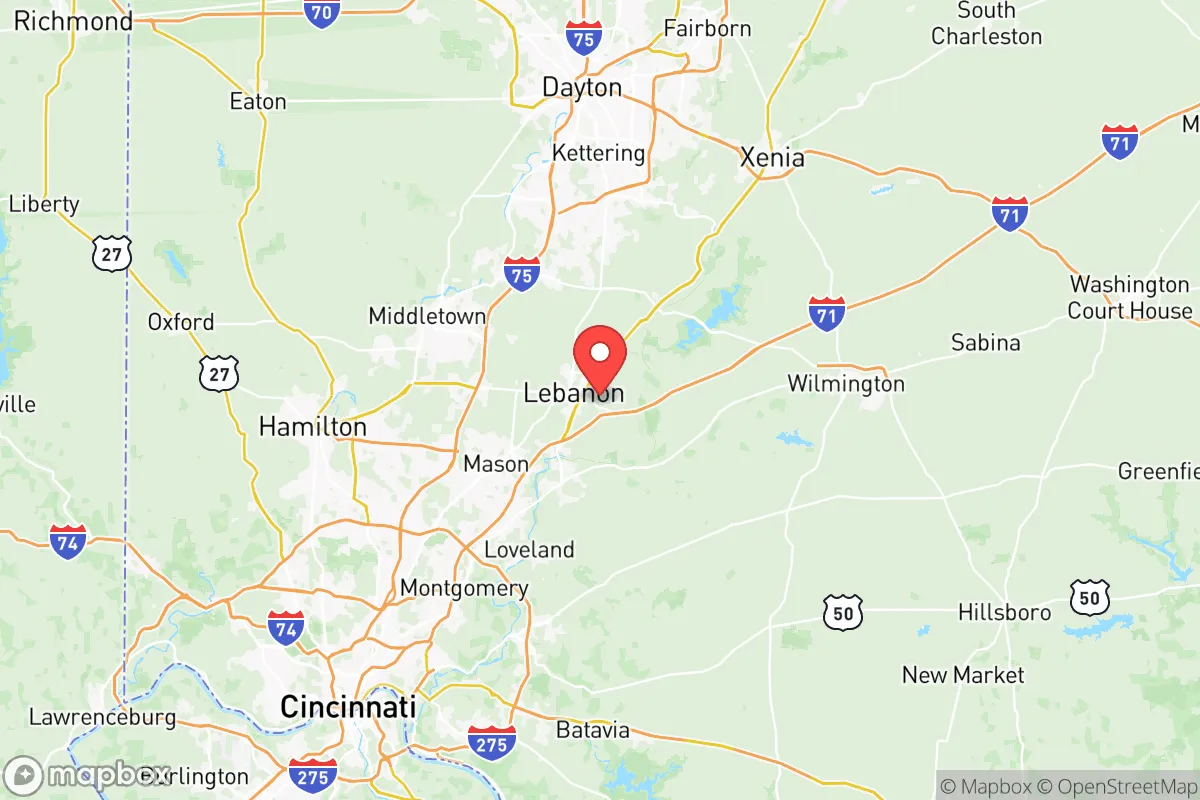
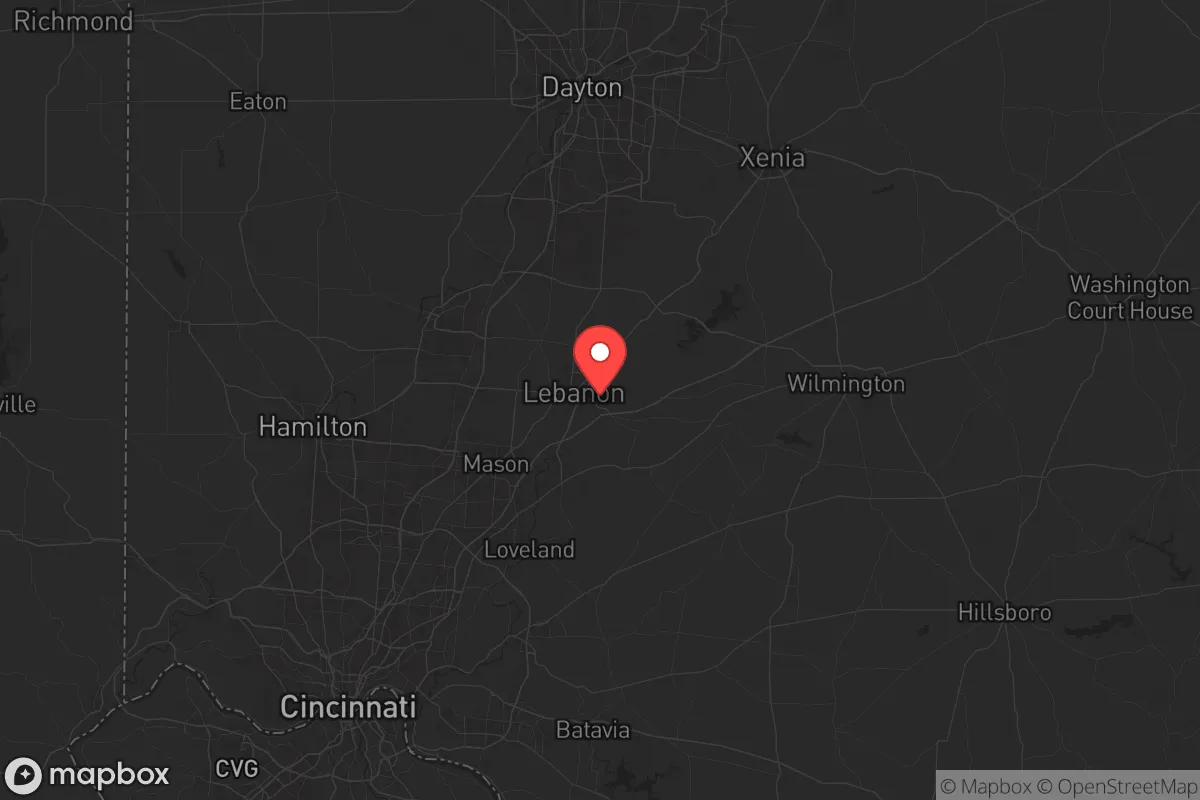
Photo: Wikipedia
Personal Sovereignty in Warren County
Viable for self-reliance. Generally workable, though some barriers may limit total independence.
What does Personal Sovereignty tell us?
Personal Sovereignty measures your capacity for self-reliance and independence with minimal government friction. Higher scores mean fewer barriers between you and the way you want to live... but it assumes you have the space you need and good neighbors.
What does this tell us?
Personal Sovereignty measures your capacity for self-reliance and independence with minimal government friction. Higher scores mean fewer barriers between you and the way you want to live... but it assumes you have the space you need and good neighbors.
State Policy
Energy independence: Importer (40% of energy produced in-state)
Personal Liberty
Homesteading

Personal Liberty Analysis
Warren County, Ohio offers a notably high degree of personal sovereignty, grounded in Ohio’s strong preemption laws and a county-level regulatory posture that leans heavily toward individual autonomy. The area strikes a balance between suburban convenience and rural independence, with towns like Lebanon, Mason, and Franklin each presenting distinct environments for self-reliance. For a relocation audience prioritizing freedom from overreach, Warren County’s tax burden, gun laws, homesteading feasibility, and personal liberties create a landscape where personal sovereignty is the default, not an exception.
Tax burden and regulatory posture: How Warren County compares to Ohio and the Midwest
Warren County’s tax and regulatory environment is among the most favorable in Ohio for those seeking to minimize government intrusion. The county’s effective property tax rate is approximately 1.5% of assessed value, which is below the Ohio average of 1.62% and significantly lower than neighboring Hamilton County (Cincinnati) at 1.9%. Sales tax in Warren County is 7.25%, composed of the state’s 5.75% rate plus a 1.5% county levy—lower than the 7.5% rate in Butler County to the west. The county operates under Ohio’s strong preemption laws, meaning local municipalities cannot impose stricter regulations than the state on matters like firearms, business licensing, or land use. This creates a uniform, light-touch regulatory baseline across towns like Springboro and Morrow, though zoning variances exist. For example, Lebanon has a more permissive approach to home-based businesses than Mason, which enforces stricter commercial zoning in its planned developments. The county’s overall regulatory posture is best described as “hands-off but orderly,” with no county-level income tax and minimal business licensing hurdles.
Self-defense and gun law specifics: What Ohio’s permitless carry means for Warren County residents
Ohio’s permitless carry law, effective June 2022, allows any law-abiding adult 21 or older to carry a concealed firearm without a permit, and Warren County fully aligns with this state-level framework. The county is home to several gun-friendly businesses and ranges, including Point Blank Range & Gun Shop in Mason and Shoot Point Blank in West Chester. Local law enforcement in Franklin and Lebanon is known for a non-confrontational approach to lawful carry, and there are no county-specific restrictions on magazine capacity or firearm types beyond state law. Stand-your-ground provisions apply statewide, meaning no duty to retreat exists in any place where a person is lawfully present. For those seeking training, the Warren County Sportsmen’s Club near Morrow offers regular classes. The county’s sheriff, typically Republican-affiliated, has publicly supported Second Amendment rights, and the county’s concealed carry permit issuance rate (prior to permitless carry) was among the highest in Ohio per capita. For relocation readers, this means self-defense choices are entirely personal, with no local ordinances creating barriers.
Self-reliance and homesteading viability: Lot sizes, zoning, and off-grid feasibility across Warren County
Homesteading and off-grid living are viable in Warren County, but feasibility varies sharply by location. The county’s rural townships—Wayne Township and Hamilton Township—allow agricultural zoning with minimum lot sizes of 2 to 5 acres, enabling small-scale farming, livestock, and rainwater collection. In Morrow, a village of about 2,000 people, zoning is minimal, and residents commonly keep chickens, bees, and even goats on standard residential lots. By contrast, Mason and Springboro enforce suburban-style zoning with lot sizes typically under 0.5 acres and restrictions on livestock and outbuildings. Off-grid solar is legal countywide, but net metering rules require connection to the grid for excess power; fully off-grid living is technically allowed in unincorporated areas but may face pushback from homeowners’ associations in subdivisions. Lebanon offers a middle ground, with some older neighborhoods allowing larger lots and fewer restrictions. The county’s soil quality in the Little Miami River valley is excellent for gardening, and the growing season averages 170 days. For those serious about self-reliance, rural Warren County—particularly areas near Oregonia and Harveysburg—provides the most freedom, while suburban towns require more compromise.
Personal liberties: Parental rights, medical autonomy, speech, and property protections
Warren County’s personal liberties environment is shaped by Ohio’s conservative state policies and a local culture that values individual choice. Parental rights are strongly protected under Ohio law, with no county-level mandates for school curriculum transparency beyond state requirements; school boards in Lebanon City Schools and Mason City Schools have adopted policies allowing parents to opt children out of specific instructional materials. Medical autonomy is robust: Ohio has no vaccine mandates for adults, and Warren County’s health department does not enforce mask or quarantine orders beyond state guidance. Speech protections are standard under the First Amendment, with no county-specific restrictions on public assembly or protest. Property rights are a standout: Ohio’s township zoning system gives landowners significant latitude, and Warren County has not adopted any countywide land-use planning that overrides local control. In Franklin, for instance, property owners can build accessory dwelling units without special permits, while Mason requires conditional use approval. The county’s eminent domain record is minimal, with no high-profile cases in the last decade. For relocation readers, this means day-to-day freedoms—from medical choices to how you use your land—are largely unencumbered by local overreach.
Overall, Warren County ranks among the top Ohio counties for personal sovereignty, offering a regulatory environment that is lighter than the state average and far lighter than urban counties like Franklin (Columbus) or Cuyahoga (Cleveland). The combination of low taxes, strong gun rights, viable homesteading in rural areas, and robust personal liberties creates a landscape where self-reliance is the norm. For a conservative-leaning individual or family, the county provides a freedom-friendly base without the extremes of rural isolation or suburban restriction—a practical middle ground that respects personal autonomy while maintaining community order.

* Values derived from national, state, county, city and local statistics and may differ in a specific area. Last updated: 2026-08-19T02:46:56.000Z
Narrative content on this page is AI-generated and may contain mistakes. Verify any details that matter before acting on them.
ReloMaps may earn a commission from affiliate links at no extra cost to you.

