Photo: Wikipedia
Demographics of Oklahoma County
Affluence Level in Oklahoma County
A middle-class area roughly in line with national averages across income, home values, education, and employment.
People of Oklahoma County
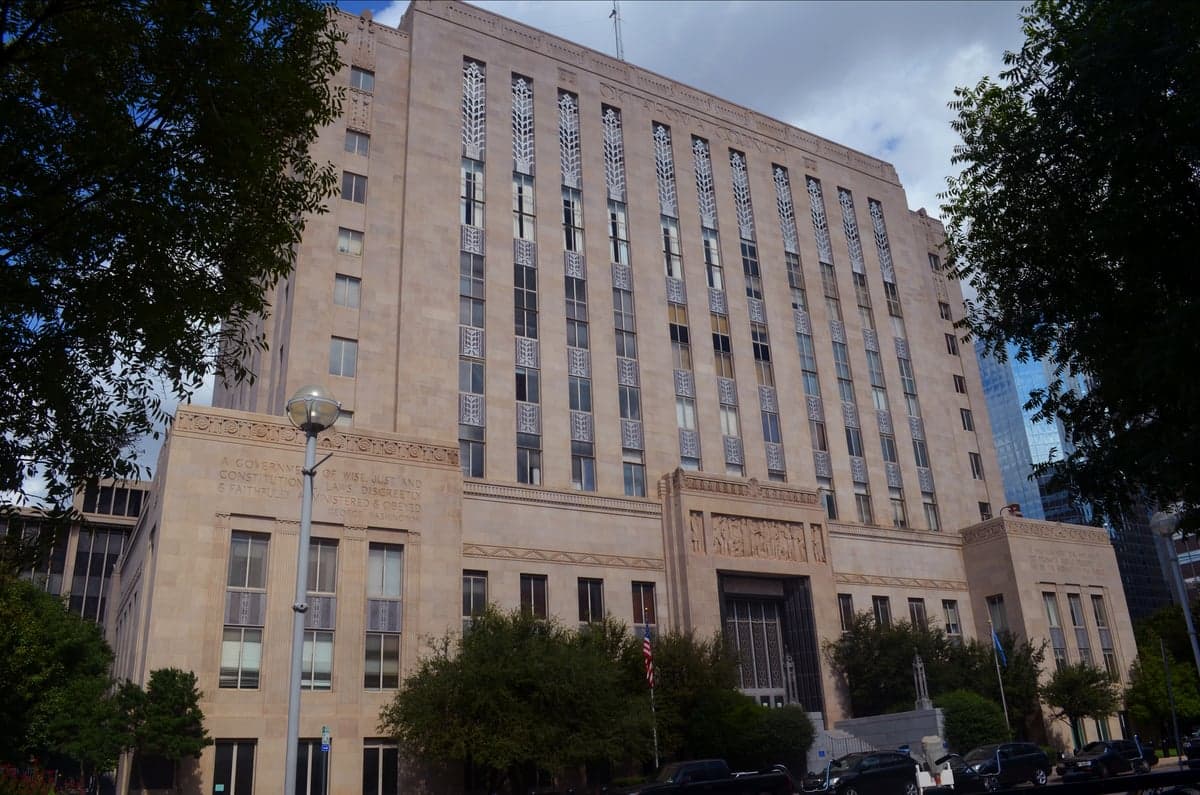
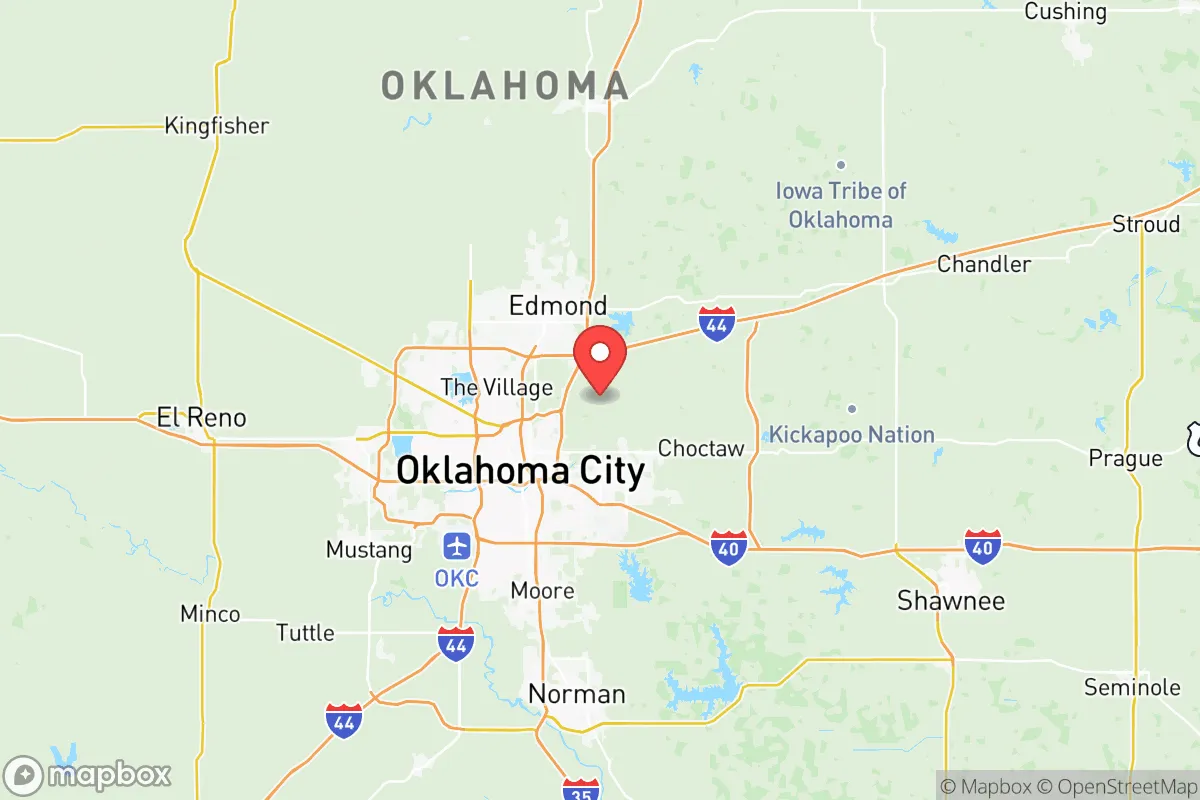
Oklahoma County is home to 800,487 residents, making it the most populous county in Oklahoma and the anchor of the Oklahoma City metropolitan area. Its population is characterized by a white plurality at 52.9%, a substantial Hispanic community at 19.6%, a significant Black population at 14.2%, and growing East/Southeast Asian (2.2%) and Indian (1.1%) communities. The county’s identity is a blend of its frontier and oil-boom roots, a strong conservative political culture, and an increasingly diverse suburban landscape, with a foreign-born population of 6.6% and a college-educated rate of 35.1%.
Settlement & growth (pre-1960)
Before American settlement, the area that is now Oklahoma County was part of the vast territory controlled by various Native American nations, including the Wichita, Caddo, and later the Chickasaw and Choctaw after their forced removal from the Southeast in the 1830s. The land was designated as part of the Unassigned Lands, a region not initially allotted to any specific tribe, which set the stage for the dramatic opening of the territory to non-Native settlers.
The defining event in the county’s human history was the Land Run of 1889, which opened the Unassigned Lands to homesteaders. On April 22, 1889, an estimated 50,000 people surged into the area, staking claims and founding the city of Oklahoma City almost overnight. This initial wave was overwhelmingly composed of white settlers from the Midwest and Upper South—farmers, merchants, and speculators seeking cheap land. The town of Edmond, founded during the same run, became a farming and railroad center, while Guthrie (now in Logan County) briefly served as the territorial capital. The promise of free land drew a diverse mix, including a small number of Black settlers who established communities like the all-Black town of Langston in neighboring Logan County, though Oklahoma County itself remained predominantly white.
The early 20th century brought a second major wave: the oil boom. The discovery of the Oklahoma City Oil Field in 1928 transformed the county from an agricultural hub into an industrial and energy powerhouse. Thousands of workers—many from Texas, Kansas, and the broader oil-producing regions—flooded into Oklahoma City, Bethany, and Warr Acres. This boom created a distinct working-class and middle-class identity, with neighborhoods like the Paseo District and Mesta Park filling with bungalows and craftsman homes. The Dust Bowl of the 1930s also pushed displaced farmers, known as "Okies," into the county from the western parts of the state, though many were already moving toward California. The post-World War II era saw further suburbanization, with the development of Nichols Hills and The Village as affluent enclaves for the growing professional class.
Modern era (post-1965)
The 1965 Hart-Cellar Act fundamentally reshaped Oklahoma County’s demographics, though the effects were slower to arrive than in coastal cities. The county’s foreign-born population, now at 6.6%, began to grow significantly in the 1980s and 1990s. The largest modern immigrant group has been Hispanic, primarily from Mexico and Central America, drawn by jobs in construction, meatpacking, and the service industry. This community has concentrated in the south and southwest parts of Oklahoma City, particularly in the Capitol Hill and South Oklahoma City neighborhoods, as well as in the suburb of Del City. The Hispanic share of the county’s population now stands at 19.6%, up from less than 5% in 1980.
Domestic migration has also been a powerful force. The Rust Belt-to-Sun Belt shift brought new residents from the Midwest and Northeast, attracted by lower housing costs, a strong energy sector, and a business-friendly climate. This in-migration has been predominantly white and middle-class, fueling suburban expansion into areas like Yukon, Mustang, and Piedmont. The Black population, at 14.2%, has deep roots dating to the Land Run era but has seen growth from secondary migration from other Southern states. The historic Black neighborhood of Deep Deuce in Oklahoma City has experienced revitalization, while newer Black suburban communities have formed in Midwest City and Del City.
East/Southeast Asian communities (2.2%) and Indian communities (1.1%) are smaller but growing, largely driven by professional migration tied to the University of Oklahoma Health Sciences Center, Tinker Air Force Base, and the expanding aerospace and tech sectors. Vietnamese and Chinese residents have established enclaves in northwest Oklahoma City, while Indian professionals are more dispersed, with concentrations in Edmond and Nichols Hills. The county’s college-educated rate of 35.1% reflects the pull of these knowledge-economy jobs, though it remains below the national average.
The future
Oklahoma County’s population is heading toward greater diversity and suburbanization, but the pace is moderate compared to Texas or Colorado. The Hispanic share is projected to continue rising, potentially reaching 25-30% by 2040, driven by both immigration and higher birth rates. This growth is likely to solidify the south side of Oklahoma City as a distinct Hispanic cultural and economic hub, while also spreading into suburbs like Moore and Norman. The white plurality, while still a majority, is slowly declining as the county becomes more multiethnic.
The county is not tribalizing into sharply divided enclaves, but distinct ethnic neighborhoods are persisting and strengthening. The Asian and Indian communities, while small, are expected to grow as the health and aerospace sectors expand, with Edmond and the area around the Health Sciences Center becoming key nodes. The Black population is likely to remain stable or grow modestly, with continued suburbanization into Midwest City and Del City. The overall cultural identity of the county is absorbing new groups into its existing conservative, pragmatic character, rather than being fundamentally transformed by them. In-migration from blue states has been modest and has not shifted the political balance.
For someone moving in now, Oklahoma County is becoming a more diverse, suburbanized place that retains its frontier independence and low cost of living. The population is growing steadily but not explosively, and the county offers a mix of urban amenities in Oklahoma City and quiet family-oriented suburbs like Edmond and Yukon. The next 10-20 years will likely see continued Hispanic growth, a stable white majority, and a slow but steady increase in Asian and Indian professional communities, all within a framework of conservative governance and a strong energy-based economy.

* Values derived from national, state, county, city and local statistics and may differ in a specific area. Last updated: 2026-05-11T21:58:04.000Z
Narrative content on this page is AI-generated and may contain mistakes. Verify any details that matter before acting on them.
ReloMaps may earn a commission from affiliate links at no extra cost to you.

