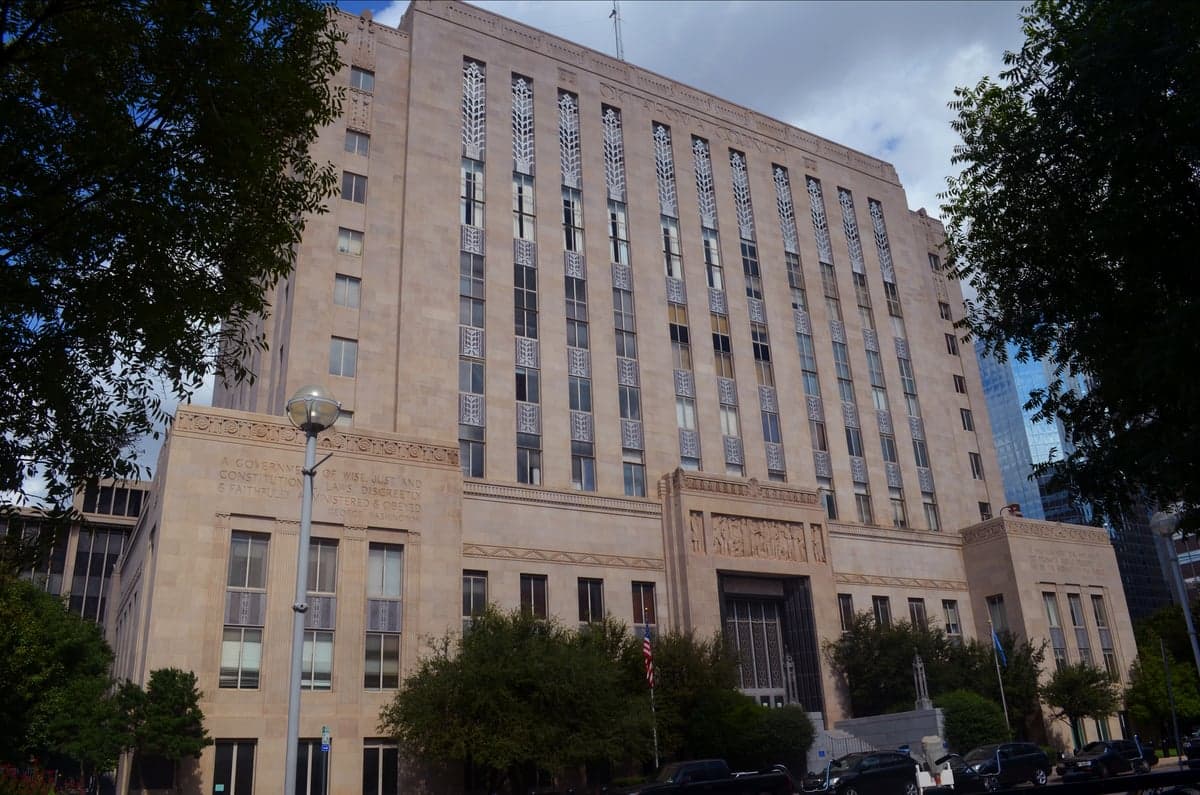
Photo: Wikipedia
Political ClimatePolitical Climate in Oklahoma County
Showing district-level results — no local-only data available.
Local Political AnalysisPolitical Analysis of Oklahoma County
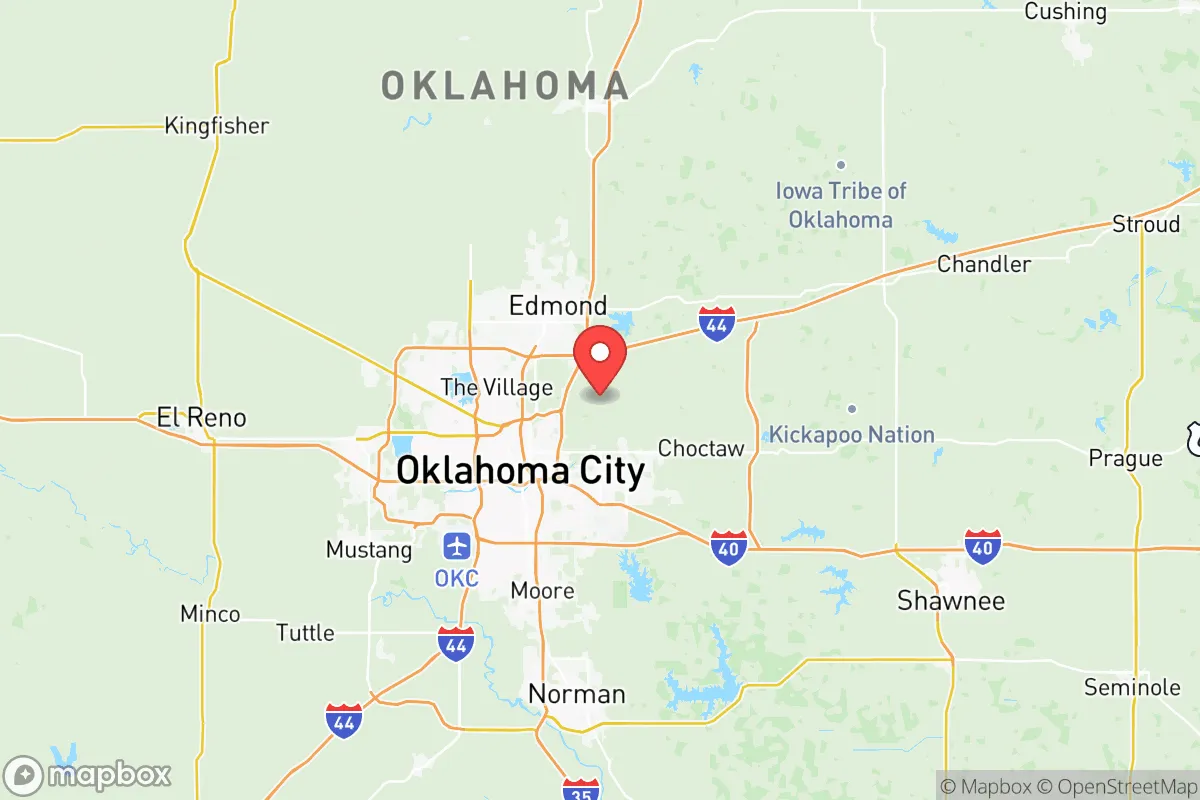
Oklahoma County, anchored by Oklahoma City, has a political climate that’s more purple than its R+9 Cook PVI suggests, but it’s still a solidly conservative place overall—just not as deep red as the rest of the state. The county’s R+9 rating means it leans Republican by nine points, but that’s a full nine points less red than Oklahoma’s statewide R+18 PVI. In practical terms, that means while you’ll see plenty of Trump flags and conservative bumper stickers, you’ll also find pockets where progressive ideas have taken root, especially in the urban core. The trajectory here is a slow but steady shift leftward in the city center, while the suburbs and rural edges are digging in harder on conservative values.
How it compares
The gap between Oklahoma County (R+9) and the state (R+18) is huge—it’s the difference between a county that still votes Republican but has competitive races, and a state where Democrats rarely crack 40%. Look at the 2024 presidential race: Oklahoma County went for Trump by about 12 points, while the state as a whole gave him a 34-point margin. That’s a 22-point gap. The real story is the variation within the county. Edmond and Yukon are deep red—think R+20 or more—with strong conservative turnout and little appetite for progressive policy. Bethany and Warr Acres lean red but are more working-class and less ideological. Midwest City and Del City are swingier, often voting more moderate or even Democratic in local races, thanks to a mix of military families and minority communities. Downtown Oklahoma City and the Paseo/Plaza districts are the blue islands, trending left with younger, college-educated transplants. The county’s political future hinges on whether those blue pockets expand or the red suburbs hold the line.
What this means for residents
For a conservative who values limited government and personal freedoms, Oklahoma County is a mixed bag. On the plus side, the county’s overall conservative tilt means property taxes stay low, gun rights are protected, and there’s no serious talk of income tax hikes. The state’s R+18 lean provides a firewall against the worst progressive overreach—things like sanctuary city policies or heavy-handed zoning mandates that plague blue states. But the county’s blue pockets are pushing for more government involvement in daily life. Oklahoma City’s city council has debated adding protected bike lanes and density bonuses for affordable housing, which sounds benign but often leads to higher development costs and more red tape for homeowners. There’s also a growing push for “equity” initiatives in county government hiring and contracting, which can feel like a backdoor quota system. The real concern is that as the city core gets more progressive, it could drag the whole county leftward, eroding the personal freedoms that make this area attractive.
Culturally, Oklahoma County still feels like a place where neighbors look out for each other and the Second Amendment is respected. You don’t see the aggressive government nanny-state stuff you’d find in coastal cities—no soda taxes, no mask mandates lingering, no crackdowns on gas stoves. But the divide is real: drive five miles from a downtown coffee shop to a Yukon church potluck, and you’ll hear two completely different conversations about what freedom means. The policy distinction that matters most is property rights. In the red suburbs, you can build a shed or park a boat in your driveway without a permit hassle; in the city core, the zoning code is getting thicker every year. If you’re a conservative who values being left alone, the suburbs and rural edges of Oklahoma County are still a great bet—just keep an eye on city council elections, because that’s where the creep starts.

State Political ClimatePolitical Climate in Oklahoma
State Political AnalysisPolitical Environment in the State
Oklahoma is a deeply conservative state with a Cook PVI of R+18, meaning Republicans hold an 18-point structural advantage over Democrats in federal elections. The state has shifted sharply rightward over the past 20 years, driven by the collapse of the old Democratic machine in rural areas and the consolidation of GOP control in the Oklahoma City and Tulsa suburbs. While Democrats once held a competitive two-party system into the 1990s, Oklahoma now ranks among the most reliably Republican states in the country, with every statewide office, both U.S. Senate seats, and five of six U.S. House seats held by the GOP. The state’s political trajectory is defined by a steady march toward conservative policy dominance, with little sign of reversal.
Urban vs. rural divide
The political map of Oklahoma is starkly divided between its two major metros and the vast rural expanse. Oklahoma City and Tulsa are the only blue-leaning population centers, but even they are not uniformly liberal. Oklahoma City’s core precincts around the downtown area and the Paseo Arts District vote Democratic, but the sprawling suburbs—Edmond, Norman, and Moore—are reliably Republican. Norman, home to the University of Oklahoma, is the most liberal city in the state, regularly electing Democrats to the state legislature and city council. Tulsa’s midtown and downtown areas lean left, but the surrounding suburbs like Broken Arrow and Jenks are deeply conservative. Outside these two metros, the state is overwhelmingly red. Rural counties like Cimarron, Texas, and Beaver in the Panhandle routinely vote 85-90% Republican. The shift is most visible in once-Democratic strongholds like southeastern Oklahoma’s McCurtain County, which flipped from blue to deep red after 2008. The urban-rural divide is not just about party—it’s about culture: rural Oklahomans see the cities as increasingly disconnected from traditional values, while urbanites view rural areas as resistant to change.
Policy environment
Oklahoma’s policy environment is aggressively conservative, with a low-tax, low-regulation posture that appeals to freedom-minded residents. The state has a flat income tax of 4.75%, which is being phased down to 3.99% by 2027 under HB 2962, and no estate tax. Sales taxes are high—averaging 8.9% statewide—but property taxes are among the lowest in the nation, capped by a constitutional amendment. The regulatory climate is business-friendly, with right-to-work laws and no state-level minimum wage above the federal $7.25. Education policy is a flashpoint: Oklahoma has one of the nation’s largest school voucher programs, the Oklahoma Parental Choice Tax Credit, which provides up to $7,500 per student for private school tuition. The state also banned critical race theory and DEI programs in public schools via HB 1775 and SB 1147. Healthcare is limited—Oklahoma did not expand Medicaid until 2021 under a Republican-led ballot initiative, and abortion is effectively banned after six weeks under SB 612, with no exceptions for rape or incest. Election laws are strict: voter ID is required, early voting is limited to three days, and absentee ballots require notarization. The state also passed a law in 2023 requiring all ballots to be hand-counted in future elections, a move that has drawn both praise for election integrity and criticism for logistical challenges.
Trajectory & freedom
Oklahoma is becoming more free in the sense of personal liberty, particularly on gun rights, parental rights, and tax freedom. The state passed constitutional carry in 2019, allowing permitless concealed and open carry. In 2023, Governor Kevin Stitt signed HB 1935, which prohibits any state or local enforcement of federal gun laws that violate the Second Amendment—a direct nullification measure. Parental rights expanded with HB 1775, which bans classroom instruction on sexual orientation and gender identity in grades K-5, and SB 1147, which requires schools to notify parents of any changes in a student’s health or well-being. On medical autonomy, Oklahoma banned gender transition procedures for minors under SB 613 in 2023. However, the state has also seen concerning expansions of government overreach. The hand-counting election law (SB 440) has been criticized as an unfunded mandate that could slow results and disenfranchise voters. The state’s medical marijuana program, approved by voters in 2018, has been heavily regulated by the legislature, with caps on dispensaries and a ban on out-of-state ownership. The overall trajectory is toward more conservative governance, but with a growing tension between individual liberty and state-level moral regulation.
Civil unrest & political movements
Oklahoma has seen relatively low levels of civil unrest compared to coastal states, but there have been notable flashpoints. The 2020 George Floyd protests in Oklahoma City and Tulsa were largely peaceful, though Tulsa saw some property damage and a heavy police presence. The state has a strong Second Amendment movement, with groups like the Oklahoma Rifle Association and Oklahomans for Gun Safety actively lobbying. Immigration politics are heated but not violent: Oklahoma passed a law in 2024 requiring all state agencies to verify immigration status for benefits, and Governor Stitt has sent National Guard troops to the Texas border. There is no sanctuary city movement—every county in Oklahoma is a Second Amendment sanctuary, and several have declared themselves “constitutional counties” resisting federal overreach. Election integrity is a major issue: the 2020 election saw widespread claims of irregularities, leading to the hand-counting law and a push for paper ballots. The most visible political movement is the rise of the “Oklahoma Freedom Caucus,” a group of hardline conservative state legislators who have clashed with Republican leadership over spending and education. In 2023, the caucus successfully blocked a budget deal, forcing a special session. A new resident would notice the prevalence of “Don’t Tread on Me” flags and “Let’s Go Brandon” signs in rural areas, but the overall atmosphere is calm and law-abiding.
Projection
Over the next 5-10 years, Oklahoma will likely become even more conservative, but with growing internal fractures. The in-migration pattern is key: people are moving to Oklahoma from California, Texas, and Colorado, drawn by low housing costs and conservative governance. Many of these newcomers are themselves conservative, but they bring different cultural expectations—more libertarian on marijuana and less comfortable with religious social policy. The Oklahoma City and Tulsa suburbs are growing fast, with places like Yukon, Mustang, and Bixby seeing double-digit population increases. This growth will likely shift the GOP primary electorate toward a more pragmatic, business-friendly conservatism, while rural areas remain culturally traditionalist. The Democratic Party is unlikely to recover statewide, but could become competitive in a few suburban state house districts if the GOP continues to factionalize. The biggest wildcard is education: the voucher program could accelerate the decline of rural public schools, leading to political backlash from rural Republicans who depend on those schools. Expect more fights over tax cuts, school funding, and election laws. A new resident moving in now should expect a state that is reliably red, but with a lively internal debate about what that means—more freedom or more moral regulation.
For a new resident, the bottom line is that Oklahoma offers a high degree of personal freedom on guns, taxes, and parental rights, but with a strong cultural conservatism that may feel restrictive on social issues. The state is safe, affordable, and politically stable, but you’ll need to be comfortable with a government that is active in enforcing traditional values. If you’re looking for a place where your vote actually counts in a Republican primary and where your property rights are respected, Oklahoma is a solid bet. Just don’t expect the libertarian paradise some hype—the state still has a heavy hand in regulating morality, and that’s not changing anytime soon.
* Values derived from national, state, county, city and local statistics and may differ in a specific area. Last updated: 2026-05-11T21:58:04.000Z
Narrative content on this page is AI-generated and may contain mistakes. Verify any details that matter before acting on them.
ReloMaps may earn a commission from affiliate links at no extra cost to you.

