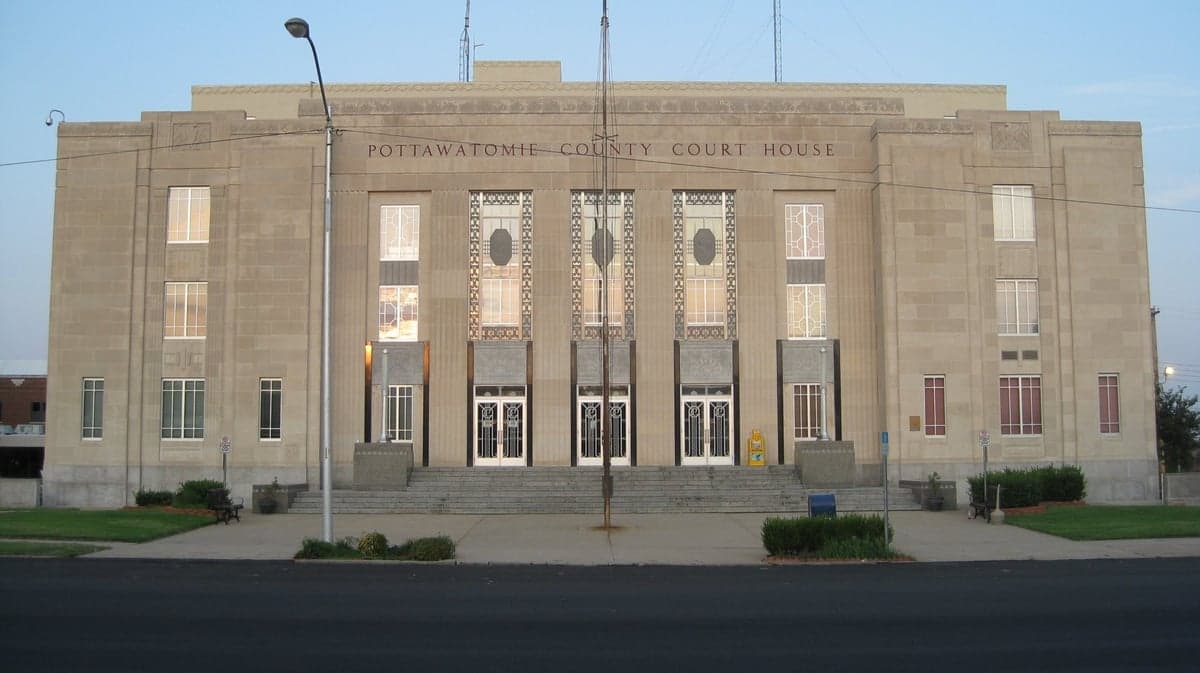
Photo: Wikipedia
Political ClimatePolitical Climate in Pottawatomie County
Showing district-level results — no local-only data available.
Local Political AnalysisPolitical Analysis of Pottawatomie County
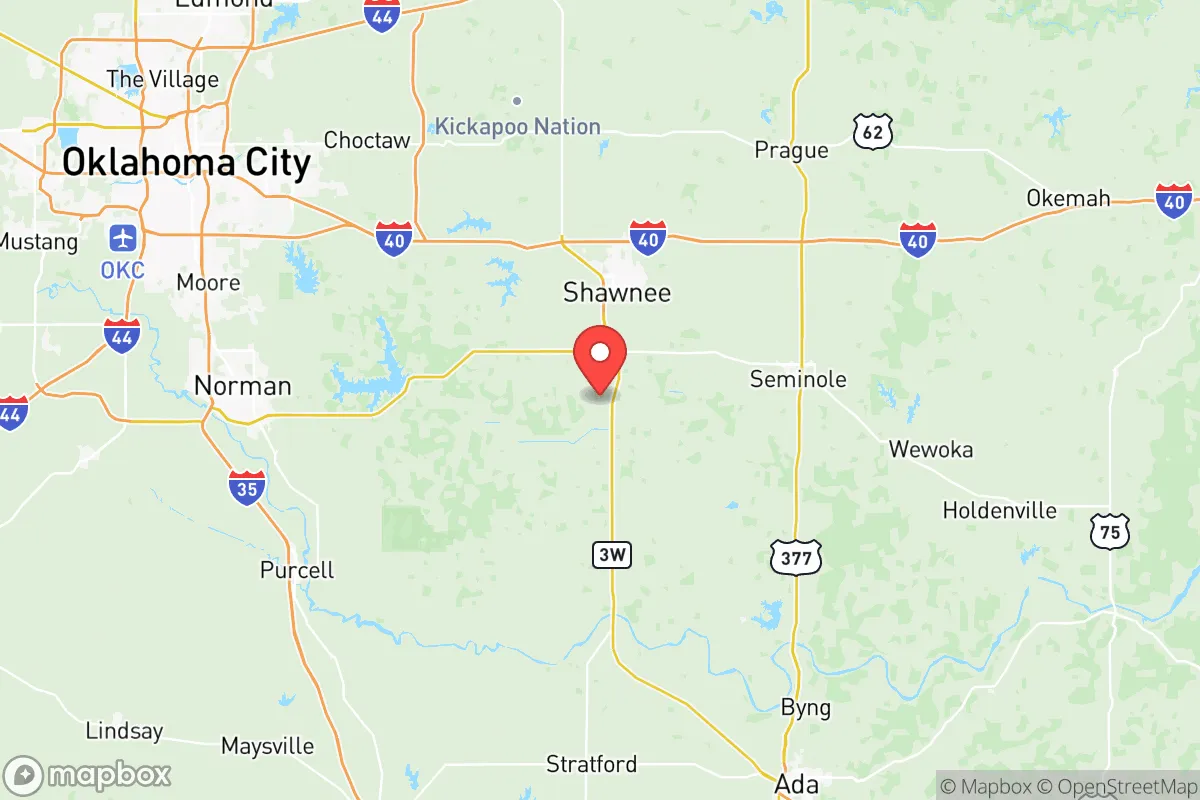
Pottawatomie County, Oklahoma, leans solidly Republican with a Cook PVI of R+9, but that number tells only part of the story. The county is noticeably less conservative than the state as a whole, which sits at R+18, and that gap has been widening in recent cycles. The real political action here isn't between Republicans and Democrats—it's between the old-guard, establishment GOP voters in places like Shawnee and the more populist, Trump-aligned base that dominates the rural precincts. If you're looking for a bellwether for where Oklahoma's suburban shift might be heading, this is it.
How it compares
The R+9 rating puts Pottawatomie County about nine points to the left of Oklahoma's statewide average, which is a meaningful gap in a state where most counties are deep red. Shawnee, the county seat and largest city, is the main reason for that divergence. Its precincts around Oklahoma Baptist University and the historic downtown area have trended bluer over the past decade, with some precincts voting within 5 points of the national average in 2024. By contrast, the small towns to the east—Earlsboro, Maud, and Tecumseh—are reliably deep red, often voting 70% or more Republican. The swing precincts are mostly in the unincorporated areas between Shawnee and McLoud, where suburban development from Oklahoma City is pushing the electorate younger and more moderate. That's a pattern you don't see in the state's rural core counties, which have only gotten redder.
What this means for residents
For conservative residents, the county is a comfortable place to live politically, but not a lock. Republican primaries are where the real decisions get made, and the ideological split between the Shawnee establishment and the rural populist wing means those primaries can be genuinely competitive. For liberal residents, the picture is more nuanced. You won't find many openly progressive elected officials, but Shawnee's precincts are safe enough that a Democrat running a moderate, locally focused campaign can pull 40-45% in a countywide race—something that's nearly impossible in most of Oklahoma. The practical effect is that local policy tends to be pragmatic rather than ideological. The county commission, for example, focuses on road funding and emergency services without the culture-war battles that dominate the state legislature.
The cultural distinction that matters most here is the relationship with Oklahoma City. Pottawatomie County is part of the OKC metro area, and that proximity pulls the county's politics toward suburban moderation. You see it in the school board races, where candidates in Shawnee and Tecumseh talk about funding and curriculum rather than national hot-button issues. The rural precincts, especially around Pink and Macomb, are more aligned with the state's deep-red agricultural counties. That split isn't going away—if anything, the suburban drift in Shawnee will likely push the county's PVI a point or two left over the next decade, even as the rural precincts hold firm. For anyone moving here, the takeaway is simple: you'll find your political tribe, but you'll also have to get used to living in a county that's genuinely split between two different versions of Oklahoma conservatism.

State Political ClimatePolitical Climate in Oklahoma
State Political AnalysisPolitical Environment in the State
Oklahoma is one of the most reliably Republican states in the country, with a Cook Partisan Voting Index of R+18, meaning it votes about 18 points more Republican than the national average. The state hasn't voted for a Democratic presidential candidate since 1964, and over the last 20 years, it has shifted further right, driven by the exodus of rural Democrats to the GOP and the cultural conservatism of the fast-growing suburbs around Oklahoma City and Tulsa. While the state was once a competitive battleground with a strong Democratic tradition in rural areas and among older voters, that era is long gone — today, every statewide office is held by a Republican, and the legislature has a supermajority that routinely passes some of the most conservative laws in the nation.
Urban vs. rural divide
The political map of Oklahoma is starkly divided between its two major metro areas and the vast rural expanse. Oklahoma City and Tulsa are the only real blue dots on the map, but even they are not uniformly liberal — both cities have large conservative suburbs that lean heavily Republican. In Oklahoma County, which contains Oklahoma City, the 2020 presidential race was close, with Biden losing by only about 2 points, but the surrounding counties — Canadian, Cleveland, and Logan — are deep red. Tulsa County is similar: the city itself is competitive, but the suburbs like Broken Arrow and Jenks are solidly Republican. The rural areas, particularly in the Panhandle, southwestern Oklahoma, and the southeast, are overwhelmingly conservative. A few counties, like heavily Native American Adair County in the east, have shown some Democratic strength in local races, but they still vote Republican at the presidential level. The urban-rural divide here is less about ideological diversity and more about shades of red — the cities are moderate-to-conservative, and the countryside is deeply conservative.
Policy environment
Oklahoma's policy environment is defined by low taxes, limited regulation, and a strong cultural conservatism. The state has a flat income tax rate of 4.75%, which has been gradually reduced from over 5% in the last decade, and there is serious talk of eliminating it entirely. Sales taxes are high, often exceeding 10% in some cities when local rates are added, which can be a shock for newcomers. The state is a right-to-work state, meaning union membership is voluntary, and it has some of the weakest labor protections in the country. Education policy has been a flashpoint: the state has seen teacher walkouts and chronic underfunding, but recent years have brought significant school choice expansion, including a universal private school tax credit passed in 2023. Healthcare is a mixed bag — Oklahoma did not expand Medicaid until 2021, and while it has improved access, the state still ranks poorly in health outcomes. Election laws have tightened: voter ID is required, and in 2022 the legislature passed restrictions on absentee ballot drop boxes and shortened the early voting window. For a conservative relocator, the policy environment is broadly welcoming; for a liberal one, it can feel restrictive, especially on social issues.
Recent policy direction
Oklahoma's recent legislative sessions have pushed the state sharply to the right on nearly every front. On gun rights, Oklahoma became a permitless carry state in 2019, meaning anyone over 21 can carry a concealed firearm without a license or training. On education and parental rights, the state passed the "Save Women's Sports Act" in 2022, banning transgender athletes from female sports, and in 2023 enacted a universal school choice tax credit that allows families to use public funds for private or homeschool expenses. On speech and privacy, the legislature passed a law in 2022 requiring public schools to notify parents of any curriculum involving "sexualized content," and in 2023 it banned TikTok on state devices. On medical and bodily autonomy, Oklahoma has one of the strictest abortion bans in the country — a near-total ban with no exceptions for rape or incest, passed in 2022. Property rights are generally strong, with low property taxes and no estate tax, but there have been controversies over wind energy siting and eminent domain for pipelines. On voting, the state has moved to restrict ballot access, including a 2022 law that eliminated the straight-ticket voting option and tightened absentee ballot rules. For a relocator weighing personal liberties, Oklahoma offers broad freedom on guns, taxes, and school choice, but very limited freedom on reproductive rights and some privacy matters.
Civil unrest & political movements
Oklahoma has seen its share of political activism, but it tends to be more organized and less chaotic than in some other states. The most visible movement in recent years has been the teacher walkout of 2018, which shut down schools for two weeks and led to a $6,000 average teacher pay raise — a rare victory for progressive activism in a red state. On the right, the "Take Back Oklahoma" movement has pushed for further tax cuts and school choice, and there is a strong Second Amendment advocacy presence, including open carry rallies at the state capitol. Immigration politics are less heated than in border states, but Oklahoma has passed laws targeting sanctuary cities — though none exist in the state — and in 2024 the legislature considered a bill to allow state law enforcement to enforce federal immigration law. There is no serious secession or nullification movement, though some rural counties have passed symbolic "Second Amendment sanctuary" resolutions. Election integrity controversies have been relatively muted compared to states like Arizona or Georgia, but the 2020 election did see some local disputes over absentee ballot processing in Tulsa County. Overall, the political climate is stable, with activism focused on policy rather than street protests.
Projection
Over the next 5 to 10 years, Oklahoma is likely to remain deeply Republican, but the nature of that conservatism may shift. The state is experiencing modest in-migration from other states, particularly from California and Texas, which could bring a more libertarian, less socially conservative strain of Republicanism. The fast-growing suburbs of Oklahoma City — places like Edmond, Norman, and Moore — are becoming more diverse and slightly more moderate, while rural areas continue to shrink and age. The push to eliminate the state income tax could accelerate, making Oklahoma even more attractive to tax-averse relocators, but it would also put pressure on already underfunded services like education and infrastructure. The Democratic Party is unlikely to become competitive statewide, but it could gain ground in the Oklahoma City and Tulsa metro areas, especially if national trends shift. For someone moving in now, the state in a decade will likely look much like it does today: solidly red, with low taxes, strong gun rights, and a conservative social agenda, but with a growing urban-suburban tension over education funding and public services.
For a new resident, the bottom line is that Oklahoma offers a predictable, stable political environment that aligns closely with conservative values on taxes, guns, and school choice, but it also comes with trade-offs: lower funding for public services, a restrictive social policy environment, and a political culture that can feel insular. If you're a conservative looking for a low-tax, high-freedom state with a strong sense of community, Oklahoma is a solid bet. If you're a liberal, you'll find a small but active progressive community in the cities, but you'll also face a legislature that is actively hostile to many of your priorities. Either way, the state's political trajectory is clear, and it's not changing course anytime soon.
* Values derived from national, state, county, city and local statistics and may differ in a specific area. Last updated: 2026-07-29T20:48:03.000Z
Narrative content on this page is AI-generated and may contain mistakes. Verify any details that matter before acting on them.
ReloMaps may earn a commission from affiliate links at no extra cost to you.

