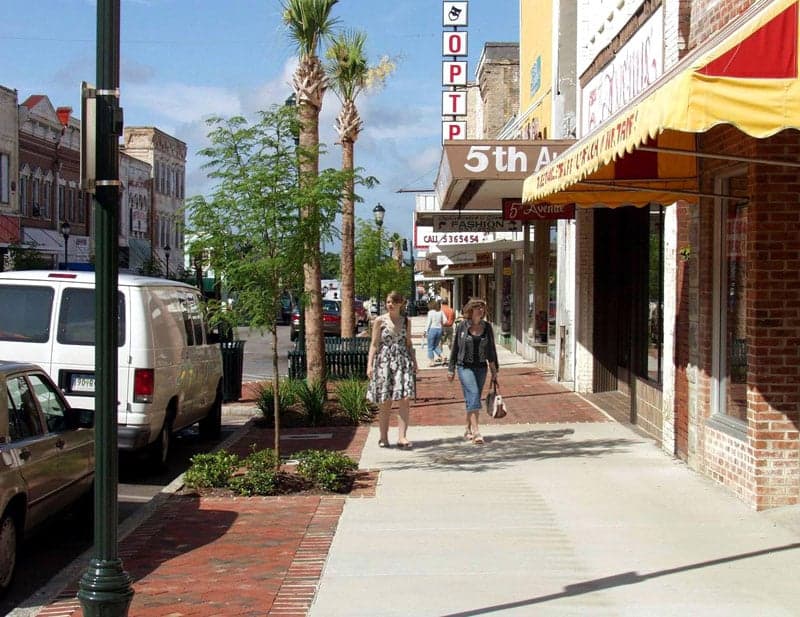
Photo: Wikipedia
Quality of Life in Orangeburg, SC
A high quality of life with strong walkability, manageable living costs, healthy neighborhood signals, and solid amenity access.
What does Quality of Life tell us?
Quality of Life blends cost of living, nearby amenities, socioeconomic signals, and neighborhood character. City-level scores represent the whole municipality; individual neighborhoods can differ.
What does this tell us?
Quality of Life blends cost of living, nearby amenities, socioeconomic signals, and neighborhood character. City-level scores represent the whole municipality; individual neighborhoods can differ.
Cost of Living
40% below national average
The Real Cost of Living in Orangeburg, SC for 2026
| Tier | Individual | Family (4) |
|---|---|---|
| Survival | $12k | $23k |
| Comfortable | $28k | $41k |
| Luxury | $60k+ | $93k+ |
| Elite (Top 5%) | $83k+ | $129k+ |
80%
The Area Signal
A metric tracking the socioeconomic signals of the area.
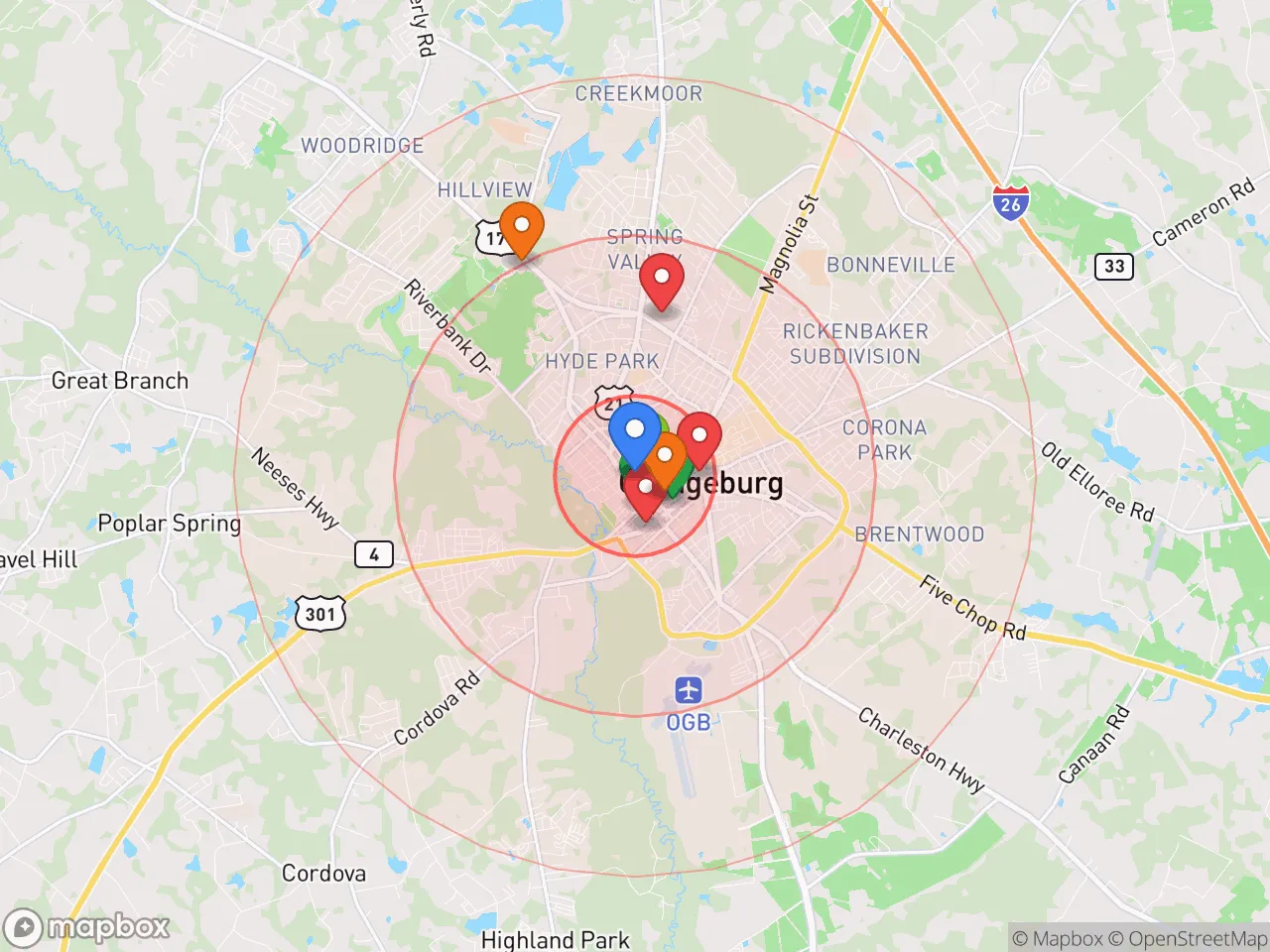
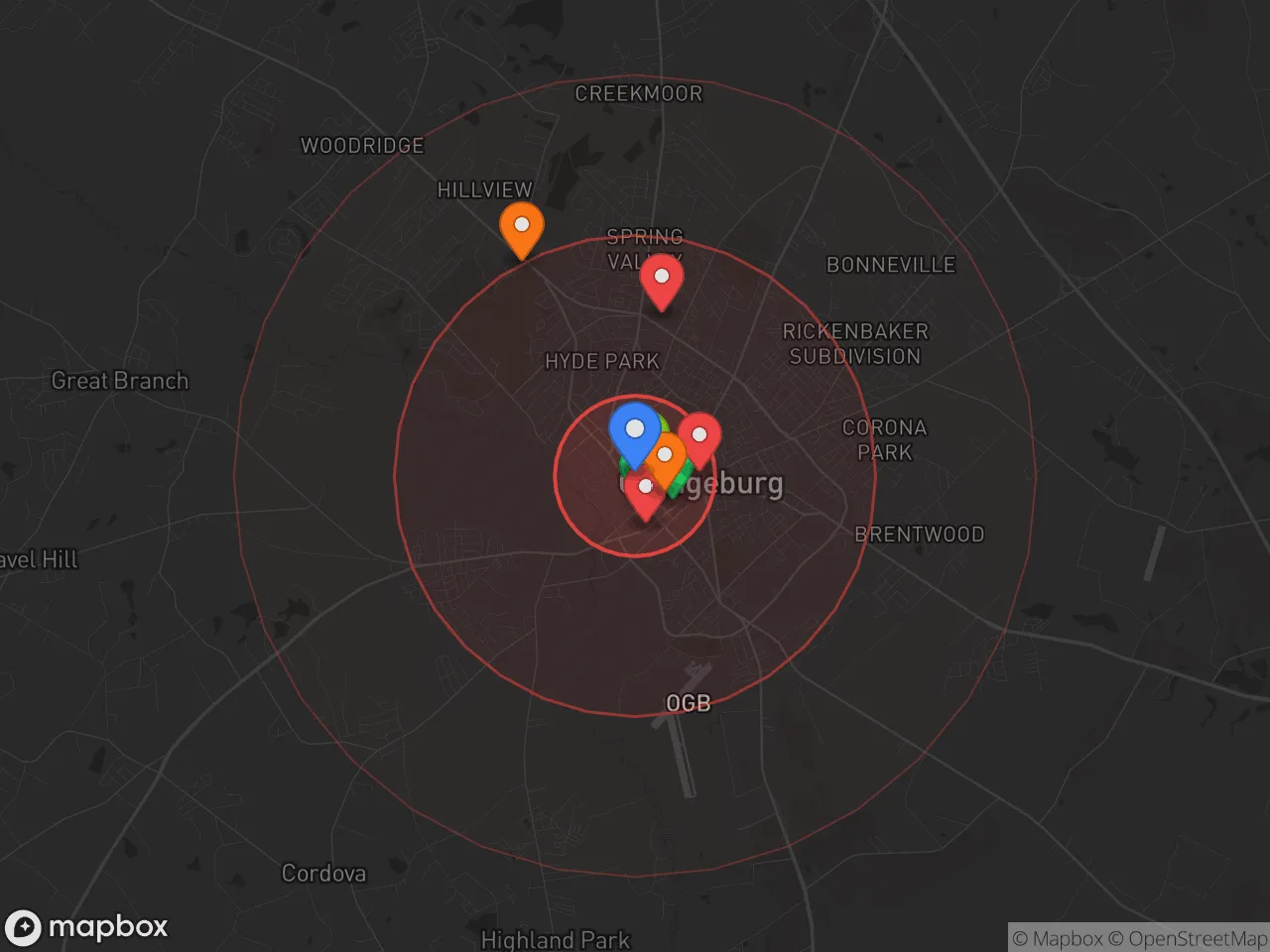
Hobbies
Explore the areaGroceries
4 within 10 miles
Gas
18 within 10 miles
Hospital
3 within 20 miles
Airport
CLT — Charlotte Douglas International
Post Office
USPS — Orangeburg, SC
Critical Amenities
Quality-of-Life Analysis
Orangeburg, South Carolina, presents a notably affordable quality of life, with a cost of living index of 60 (40% below the U.S. average) that attracts a mix of retirees, young families, and professionals working in education, healthcare, and manufacturing. The city’s median household income of roughly $35,000 is lower than state and national averages, reflecting a community where many residents prioritize low housing costs and a slower pace over high earnings. This economic profile shapes a daily life centered on local institutions like South Carolina State University and the Regional Medical Center, rather than on high-end retail or entertainment districts.
Cost of living, housing affordability, and how Orangeburg compares to Columbia and Charleston
Orangeburg’s housing market is among the most accessible in South Carolina. The median home value sits at $145,000, and the median rent is $765—roughly half the rent in Columbia (30 miles north) and a third of Charleston’s (70 miles southeast). For context, a household earning the area median income of $35,000 would spend about 26% of gross income on a mortgage at current rates, well within the 30% affordability threshold. The average commute of 23.8 minutes is slightly shorter than the national average of 26 minutes, and most residents drive to work along I-26 or US-601. Utility costs are about 10% below the national average, and property taxes in Orangeburg County average 0.5% of home value—significantly lower than the 0.8% state average. However, the trade-off is limited job growth: the unemployment rate has hovered around 5.5% in recent years, above the state’s 4.0% figure, meaning affordability comes with fewer local opportunities.
What daily life is like for families: schools, amenities, and local rhythm
Daily life in Orangeburg revolves around a handful of anchors. The Orangeburg County School District serves roughly 10,000 students across 18 schools, with Orangeburg-Wilkinson High School and Lake Marion High School being the largest. The district has faced academic challenges—only about 60% of students meet state standards in reading and math—but smaller private options like Orangeburg Preparatory Schools (K-12) offer an alternative. For recreation, the Edisto Memorial Gardens provide 175 acres of walking trails and rose gardens, while the Orangeburg County Fine Arts Center hosts community theater and concerts. Shopping is limited to big-box retailers along Chestnut Street (US-301) and the Prince of Orange Mall, which has seen several store closures. Residents typically drive to Columbia for major shopping, dining, or medical specialists. The city’s rhythm is quiet and family-oriented, with Friday night high school football at Riley Park and Saturday farmers’ markets at the downtown Railroad Corner being social highlights.
Who thrives in Orangeburg? The city suits those who value extreme affordability and a low-stress commute over urban amenities or career mobility. Retirees on fixed incomes, remote workers earning national salaries, and employees of the area’s largest employers—South Carolina State University (1,200+ employees), Regional Medical Center (1,000+), and Husqvarna’s manufacturing plant (500+)—find the cost-to-income ratio favorable. Young professionals seeking nightlife or diverse job markets will likely feel constrained; the city’s population of roughly 13,000 has been flat for a decade. For anyone willing to trade excitement for a mortgage under $1,000 a month and a 24-minute drive to work, Orangeburg delivers a stable, low-pressure base in South Carolina’s Lowcountry.

Crime in Orangeburg, SC
Significantly higher crime rates than 82% of comparable U.S. locations.
Violent CrimeViolent Crime Analysis
Property CrimeProperty Crime Analysis
Crime Analysis
Orangeburg, South Carolina, reports a violent crime rate of 1,139.2 per 100,000 residents and a property crime rate of 4,229 per 100,000, placing it among the most dangerous small cities in the state. These figures are roughly three times the national average for violent crime and nearly double the national property crime rate, indicating a serious public safety challenge. The city’s location, roughly 40 miles from Columbia and 70 miles from Charleston, places it within commuting distance of larger metro areas, a factor that can influence crime patterns and law enforcement resources.
Crime in context
Orangeburg’s violent crime rate of 1,139.2 per 100,000 is more than double South Carolina’s state average of roughly 500 per 100,000 and far exceeds the national average of about 380 per 100,000. Property crime in Orangeburg, at 4,229 per 100,000, also significantly outpaces the state average of approximately 2,500 per 100,000 and the national figure of around 2,000 per 100,000. These statistics place Orangeburg in the bottom percentile for safety among U.S. cities of comparable size. The high rates are consistent with trends seen in many small cities near larger metro areas, where progressive prosecutorial policies in surrounding jurisdictions can contribute to elevated recidivism and reduced deterrence.
What residents experience
Residents report that property crimes such as burglary, vehicle theft, and larceny are the most common offenses, often occurring in both residential and commercial areas. Violent crime, including aggravated assault and robbery, is concentrated in specific neighborhoods but remains a concern citywide. The presence of liberal-leaning district attorneys in nearby counties, who may prioritize diversion programs over incarceration, is a contributing factor that many residents cite as undermining public safety. This approach, while intended to reduce jail populations, can result in repeat offenders cycling back into the community, directly impacting victims and the general public’s sense of security. Daily life for many involves heightened vigilance, with residents often avoiding certain areas after dark and relying on private security measures like alarm systems and surveillance cameras.
Neighborhood-level variation
Safety conditions vary notably across Orangeburg’s neighborhoods. Areas near the South Carolina State University campus and downtown commercial corridors tend to see higher concentrations of property crime and occasional violent incidents. In contrast, established residential neighborhoods on the city’s outskirts, such as those near Edisto Memorial Gardens, report lower crime rates and stronger community watch programs. However, even in these safer pockets, residents remain aware that the city’s overall crime statistics reflect systemic issues tied to broader regional justice policies. For those considering relocation, consulting local crime maps and speaking with current residents about specific blocks is essential, as block-by-block variation can be significant.
* Values derived from national, state, county, city and local statistics and may differ in a specific area. Last updated: 2026-05-01T00:38:34.000Z
Narrative content on this page is AI-generated and may contain mistakes. Verify any details that matter before acting on them.
ReloMaps may earn a commission from affiliate links at no extra cost to you.

