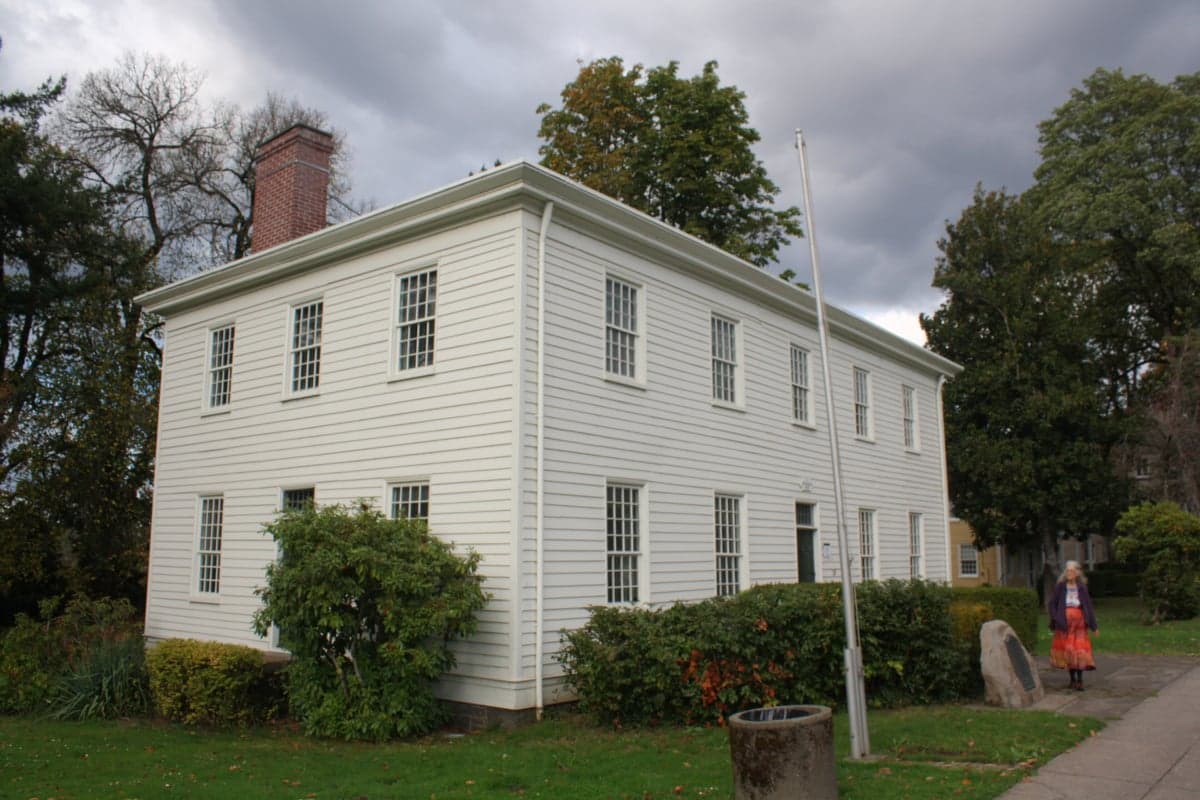
Photo: Wikipedia
Demographics of Oregon City, OR
Affluence Level in Oregon City, OR
An upper-middle-class area. Household wealth, education levels, and homeownership run ahead of national benchmarks.
People of Oregon City, OR
Oregon City, Oregon, is a historically white, working-to-middle-class city of 37,482 residents that retains a distinctly small-town, family-oriented character despite being part of the Portland metro area. With a population that is 86.0% white and only 1.6% foreign-born, it is notably less diverse than neighboring Portland or even Clackamas County as a whole. The city’s identity is shaped by its role as the original territorial capital and a historic mill town, now transitioning into a bedroom community for Portland commuters while preserving a strong sense of local heritage. For conservative-leaning movers, Oregon City offers a more traditional, less transient population base than many West Coast suburbs.
How the city was settled and grew
Oregon City’s population history begins with its founding in 1829 as a Hudson’s Bay Company fur-trading post, making it the first incorporated city west of the Rocky Mountains. The Oregon Trail brought the first major wave of American settlers in the 1840s, with Protestant farmers and merchants from the Midwest claiming land under the Donation Land Claim Act. These early arrivals concentrated in the Canemah neighborhood, a historic river landing district, and along the bluff above Willamette Falls. The city became the territorial capital in 1848, drawing government clerks, lawyers, and tradesmen to the Downtown area near the falls. A second wave came with the timber and paper mill boom of the late 19th and early 20th centuries, which attracted Scandinavian and German immigrant workers to neighborhoods like McLoughlin and Park Place. These groups built the city’s enduring Lutheran and Catholic parish communities, and their descendants remain a significant presence in these older districts today.
Modern era (post-1965)
After the 1965 Immigration and Nationality Act, Oregon City saw minimal foreign-born influx compared to other Portland suburbs. The city’s white share remained above 90% through the 1990s, and the 1.6% foreign-born figure today is among the lowest in the metro area. Domestic in-migration from California and other western states accelerated in the 1980s and 1990s, as families sought affordable housing and lower crime rates. These newcomers largely settled in newer subdivisions in the South End and Redland areas, which feature larger lots and newer schools. The Hispanic population, now 5.0%, grew modestly through the 2000s, concentrated in the Downtown and Canemah neighborhoods, often working in landscaping, construction, and the remaining mills. The East/Southeast Asian community (1.8%) and Black community (1.2%) remain very small, with no distinct ethnic enclaves; these residents are dispersed across the city, primarily in the South End and newer subdivisions. The Indian subcontinent population is effectively zero, reflecting the city’s lack of tech-sector or professional-service job magnets that draw such groups to other Portland suburbs.
The future
Oregon City’s population is projected to grow slowly, reaching roughly 40,000 by 2035, driven primarily by infill development and the conversion of rural land in the Redland and South End areas. The city is not homogenizing into a single bloc; instead, it is tribalizing along geographic and generational lines. Older, established families in McLoughlin and Park Place remain predominantly white and locally rooted, while newer subdivisions attract younger families from other parts of Oregon and California. The Hispanic population is growing slowly but steadily, likely reaching 7-8% by 2040, but remains too small to form a concentrated ethnic neighborhood. The foreign-born share is expected to remain below 3%, as Oregon City lacks the rental stock, transit access, and ethnic infrastructure that attract immigrants to cities like Gresham or Beaverton. The city’s white share will likely decline to around 82-83% by 2040, but Oregon City will remain one of the whitest and least diverse cities in the Portland metro area.
For a conservative-leaning mover, Oregon City represents a stable, family-oriented community where demographic change is slow and incremental. The population is aging slightly, with a median age of 39, but the influx of young families in the South End and Redland areas is keeping schools and youth sports active. The city is becoming more of a bedroom community for Portland and Lake Oswego commuters, but its historic core and low foreign-born share mean it retains a more traditional, less cosmopolitan character than most West Coast suburbs. If you value a place where your neighbors are likely to be third-generation Oregonians and the pace of change is measured in decades, not years, Oregon City fits that profile.

* Values derived from national, state, county, city and local statistics and may differ in a specific area. Last updated: 2026-05-03T01:52:30.000Z
Narrative content on this page is AI-generated and may contain mistakes. Verify any details that matter before acting on them.
ReloMaps may earn a commission from affiliate links at no extra cost to you.

