Photo: Wikipedia
Political ClimatePolitical Climate in Oregon City, OR
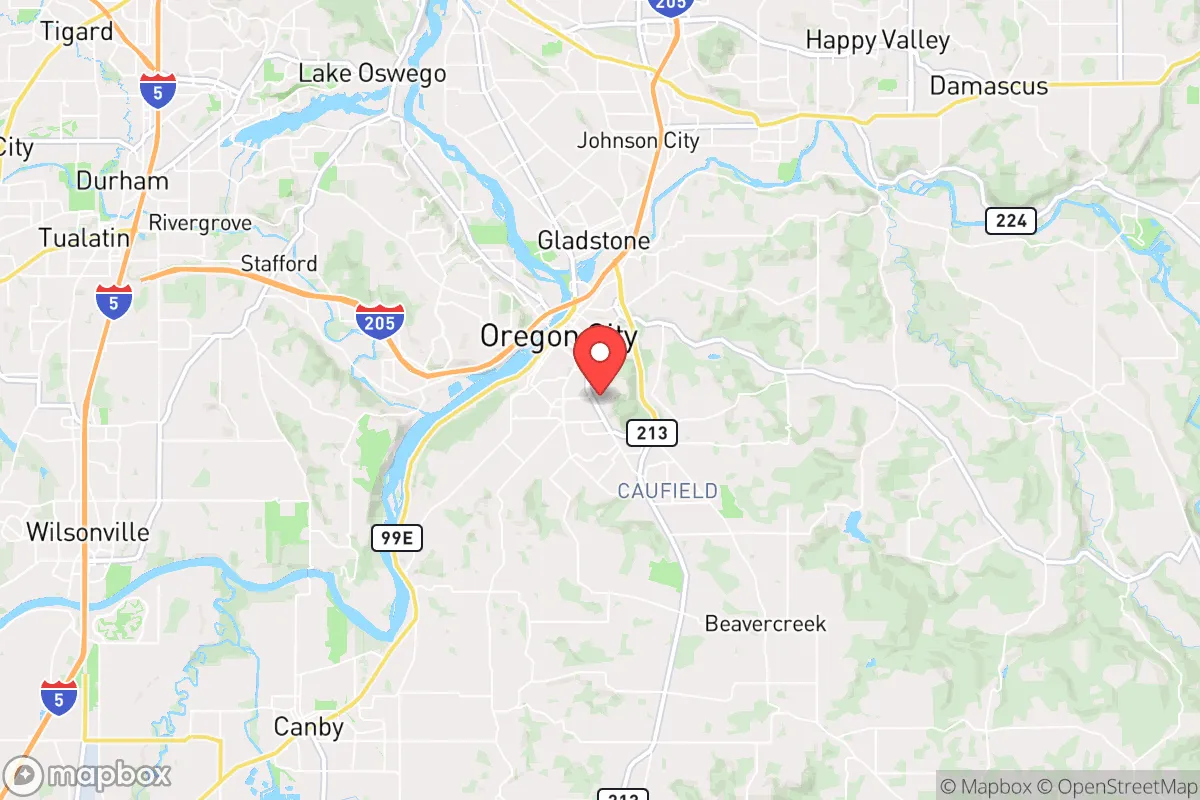
District shown is the primary district for this city’s centroid. Cities may span multiple districts.
Local Political AnalysisPolitical Analysis of Oregon City, OR
Oregon City, Oregon, sits in a political landscape that has shifted noticeably over the past decade, and if you’ve lived here as long as I have, you’ve felt it. The Cook PVI rating of D+4 tells you the area leans Democratic, but that number doesn’t capture the full story—it’s a moderate blue that’s been creeping leftward, especially since 2020. Back in the day, this was a reliably conservative town, a working-class lumber and paper mill hub where folks minded their own business and didn’t expect the government to run their lives. Now, you see more progressive energy in city council meetings and local ballot measures, and it’s raising eyebrows among those of us who value personal freedoms and limited government interference.
How it compares
Drive just a few miles in any direction, and you’ll hit towns that feel like a different world. Head south to Canby or east to Estacada, and you’re in deep red territory—places where the Second Amendment isn’t debated, and property taxes stay low because people vote against new spending. Up north, West Linn and Lake Oswego are wealthier and more liberal, with higher housing costs and a stronger push for green energy mandates and zoning overhauls. Oregon City sits right in the middle, but it’s losing its conservative edge. The county itself, Clackamas, used to be a swing county; now it’s trending blue, and the city council has passed things like renter protections and density-boosting land-use changes that feel like they’re borrowed from Portland’s playbook. If you value local control and don’t want Sacramento-style rules creeping in, the contrast with surrounding towns is stark.
What this means for residents
For those of us who’ve been here a while, the biggest concern is how these political shifts affect daily life. Property taxes have climbed as the city approves new bonds for parks and transit projects—things that sound nice but hit your wallet hard. There’s also been a push to limit short-term rentals and impose stricter building codes, which feels like government overreach into what you can do with your own property. The school board has gotten more progressive too, with debates over curriculum and library books that wouldn’t have happened twenty years ago. If you’re a small business owner or a tradesperson, you’ll notice more red tape: licensing fees, environmental reviews, and labor rules that make it harder to just get the job done. The trajectory is concerning because each new regulation chips away at the freedom to live your life without asking permission.
Culturally, Oregon City still has some of its old character—the historic downtown, the Willamette Falls, and a strong sense of community among long-time residents. But the policy distinctions are becoming more pronounced. The city has embraced urban growth boundary expansions and transit-oriented development, which sounds progressive but often means higher density and less privacy. There’s also a growing push for sanctuary city policies and police reform measures that prioritize social justice over public safety. In the near term, expect more ballot measures on taxes and land use; in the long term, if the trend continues, Oregon City could look a lot like Portland’s suburbs—more expensive, more regulated, and less tolerant of the independent spirit that made this place worth living in. Keep an eye on local elections; they’re where the real fight for your freedoms happens.

State Political ClimatePolitical Climate in Oregon
State Political AnalysisPolitical Environment in the State
Oregon has shifted from a purple swing state to a solidly blue stronghold over the past two decades, with Democrats controlling every statewide office and both legislative chambers since 2018. The state’s overall partisan lean is now roughly D+10 in presidential elections, but that number hides a deep and growing chasm between the liberal Willamette Valley and the rest of the state. For a conservative considering relocation, the key takeaway is that Oregon’s political trajectory has been driven almost entirely by the Portland metro area, while vast rural regions feel increasingly disenfranchised and are actively pushing back.
Urban vs. rural divide
The political map of Oregon is a tale of two states. The Portland metro area — Multnomah County (Portland), Washington County (Beaverton, Hillsboro), and Clackamas County (Oregon City) — generates roughly half the state’s population and votes overwhelmingly Democratic. Multnomah County alone gave Joe Biden a 75-point margin in 2020. Meanwhile, the rest of Oregon is deeply conservative. Eastern Oregon counties like Harney, Malheur, and Lake routinely vote 70-80% Republican, and the southern Oregon counties of Jackson (Medford) and Josephine (Grants Pass) are reliably red, though Medford itself has become a bit more purple as California transplants move in. The I-5 corridor south of Eugene, including Roseburg and Douglas County, is a conservative stronghold where timber and ranching still dominate the economy. The real flashpoint is the suburban ring: Clackamas County used to be a swing county but has trended left, while Bend (Deschutes County) has flipped from red to purple to light blue as wealthy out-of-staters flood in. If you’re looking for a politically like-minded community, your best bets are the rural counties east of the Cascades or the southern interior — but be prepared for a long drive to any major city.
Policy environment
Oregon’s policy environment is among the most progressive in the nation, and it shows in the tax code and regulatory climate. The state has no sales tax, which sounds great, but it makes up for it with the 5th-highest personal income tax rate in the country (top marginal rate of 9.9%) and high property taxes in many counties. The corporate tax rate is also high, and the state recently passed a gross receipts tax on businesses to fund education. On the regulatory front, Oregon has some of the strictest land-use laws in the nation, thanks to the 1973 Senate Bill 100, which created urban growth boundaries that limit sprawl. This has driven up housing costs dramatically, especially in the Portland metro. Education policy is dominated by teachers’ unions, and the state has struggled with declining test scores despite above-average per-pupil spending. Healthcare is heavily regulated, with a state-run insurance exchange and Medicaid expansion. Election laws are among the most liberal: Oregon was the first state to vote entirely by mail (1998), and it automatically registers voters when they get a driver’s license. There is no voter ID requirement, which has been a flashpoint for election integrity concerns among conservatives. The state also has a “Motor Voter” law that registers anyone who interacts with the DMV unless they opt out.
Trajectory & freedom
Oregon’s trajectory over the past decade has been unmistakably toward less personal freedom, particularly in the areas of gun rights, property rights, and medical autonomy. In 2022, voters passed Measure 114, which requires a permit to purchase a firearm, bans magazines over 10 rounds, and mandates a completed background check before any transfer. The law is currently tied up in court, but it signals the direction of the state’s politics. On property rights, the urban growth boundaries have made it nearly impossible to build new housing in many areas, driving up costs and limiting personal choice. The state has also passed strict rent control laws (2019’s SB 608) that cap annual rent increases at 7% plus inflation, which sounds pro-tenant but has actually discouraged new construction. On medical autonomy, Oregon was the first state to legalize assisted suicide (1994’s Death with Dignity Act) and has some of the most permissive drug laws in the nation — but in 2024, the state recriminalized possession of small amounts of hard drugs after a disastrous three-year experiment with decriminalization (Measure 110). That reversal shows that even progressive Oregon has limits when policies visibly fail. Parental rights have been a battleground: the state passed a law in 2023 requiring school districts to adopt policies that affirm transgender students’ identities, overriding parental notification requirements in some cases. For conservatives, this is a major red flag.
Civil unrest & political movements
Oregon has a long history of civil unrest, from the 2020 Portland protests that made national headlines to the more recent rise of rural secession movements. The 2020 George Floyd protests in Portland lasted for months, with federal agents deployed and nightly clashes between demonstrators and law enforcement. The city became a symbol of progressive governance, but the unrest also galvanized rural conservatives. The Greater Idaho movement, which proposes moving the eastern Oregon counties into Idaho, has gained real traction: 13 of Oregon’s 36 counties have passed measures supporting the idea, though it faces long odds legally. Immigration politics are also a flashpoint: Oregon is a sanctuary state (1987’s SB 100), meaning local law enforcement cannot cooperate with federal immigration authorities. This has led to tensions in rural areas where ICE operations are more visible. Election integrity remains a hot-button issue: the state’s all-mail voting system has been criticized by conservatives for lacking voter ID requirements, though there have been no major fraud scandals. The 2022 gubernatorial race saw a rare three-way contest where Democrat Tina Kotek won with just 47% of the vote, thanks to a strong independent candidate who siphoned off moderate votes. That race highlighted the deep dissatisfaction with both major parties in the state.
Projection
Looking ahead 5-10 years, Oregon is likely to become even more polarized. The Portland metro will continue to grow and dominate state politics, while rural counties will lose population and political influence. The Greater Idaho movement is unlikely to succeed, but it will keep rural resentment simmering. The biggest wildcard is housing: if the state doesn’t reform its land-use laws, the cost of living will continue to drive out middle-class families, both liberal and conservative. The in-migration from California has slowed since 2020, but it’s still net positive, and those newcomers tend to be more progressive. For conservatives, the realistic outlook is that Oregon will remain a blue state with a vocal but shrinking rural minority. The best-case scenario is that the state’s recent recriminalization of drugs and the court challenges to Measure 114 signal a slight moderation, but don’t bet on it. If you move to Oregon as a conservative, you’ll need to be comfortable being in the minority politically, especially if you live in or near any city of size.
Bottom line for a new resident: Oregon offers stunning natural beauty and a laid-back lifestyle, but the political climate is increasingly hostile to conservative values. If you’re a parent concerned about school policies or a gun owner worried about magazine bans, you’ll want to look closely at the specific county and city you choose. The rural areas east of the Cascades and in southern Oregon are your best bet for finding like-minded neighbors, but you’ll still be subject to state-level laws that you may find oppressive. Come for the mountains and the coast, but be prepared to fight for your freedoms at the ballot box and in the courts.
* Values derived from national, state, county, city and local statistics and may differ in a specific area. Last updated: 2026-05-03T01:52:30.000Z
Narrative content on this page is AI-generated and may contain mistakes. Verify any details that matter before acting on them.
ReloMaps may earn a commission from affiliate links at no extra cost to you.

