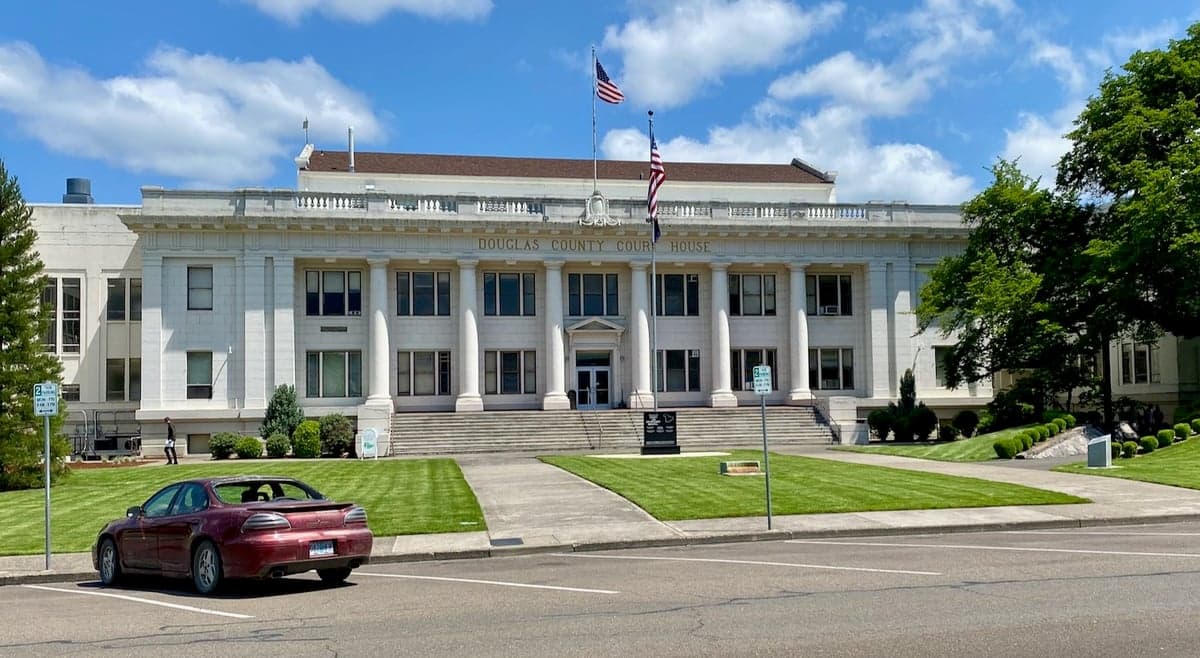
Photo: Wikipedia
Quality of Life in Douglas County
A livable area that tracks near national norms for affordability, walkability, and neighborhood health.
What does Quality of Life tell us?
Quality of Life measures an area by evaluating factors like cost of living, nearby amenities, country club access, airport proximity, socioeconomic signals and neighborhood character. For large states, this is a general average — quality of life can vary dramatically between metro areas, suburbs, and rural communities within the same state.
What does this tell us?
Quality of Life measures an area by evaluating factors like cost of living, nearby amenities, country club access, airport proximity, socioeconomic signals and neighborhood character. For large states, this is a general average — quality of life can vary dramatically between metro areas, suburbs, and rural communities within the same state.
Cost of Living
8% below national average
73%
The Real Cost of Living in Douglas County for 2026
| Tier | Individual | Family (4) |
|---|---|---|
| Survival | $16k | $30k |
| Comfortable | $55k | $81k |
| Luxury | $107k+ | $165k+ |
| Elite (Top 5%) | $126k+ | $195k+ |
Quality-of-Life Analysis
Douglas County, Oregon offers a spectrum of quality-of-life options that range from the regional hub of Roseburg to remote, unincorporated communities in the Umpqua River valley. The county attracts a mix of outdoor enthusiasts, retirees seeking affordable land, and workers in timber, healthcare, and manufacturing, with each area providing a distinct balance of amenities, cost, and pace of life.
Largest town(s) & population centers
Roseburg, the county seat and largest city (population roughly 24,000), is the commercial and cultural anchor of Douglas County. Daily life here centers around the downtown core along the South Umpqua River, with a mix of local restaurants, breweries, and retail anchored by the Douglas County Museum and the Umpqua Valley Arts Association. The city is home to the main campus of Umpqua Community College and the primary medical center, Mercy Medical Center. Commute times are short—the county average is just under 20 minutes—making Roseburg a practical base for workers at local employers like Roseburg Forest Products, the county government, and the Oregon Department of Forestry. Housing is more expensive here than in outlying areas, with the countywide median home value of $283,200 reflecting Roseburg's premium, though still well below the national average.
Smaller towns & rural pockets
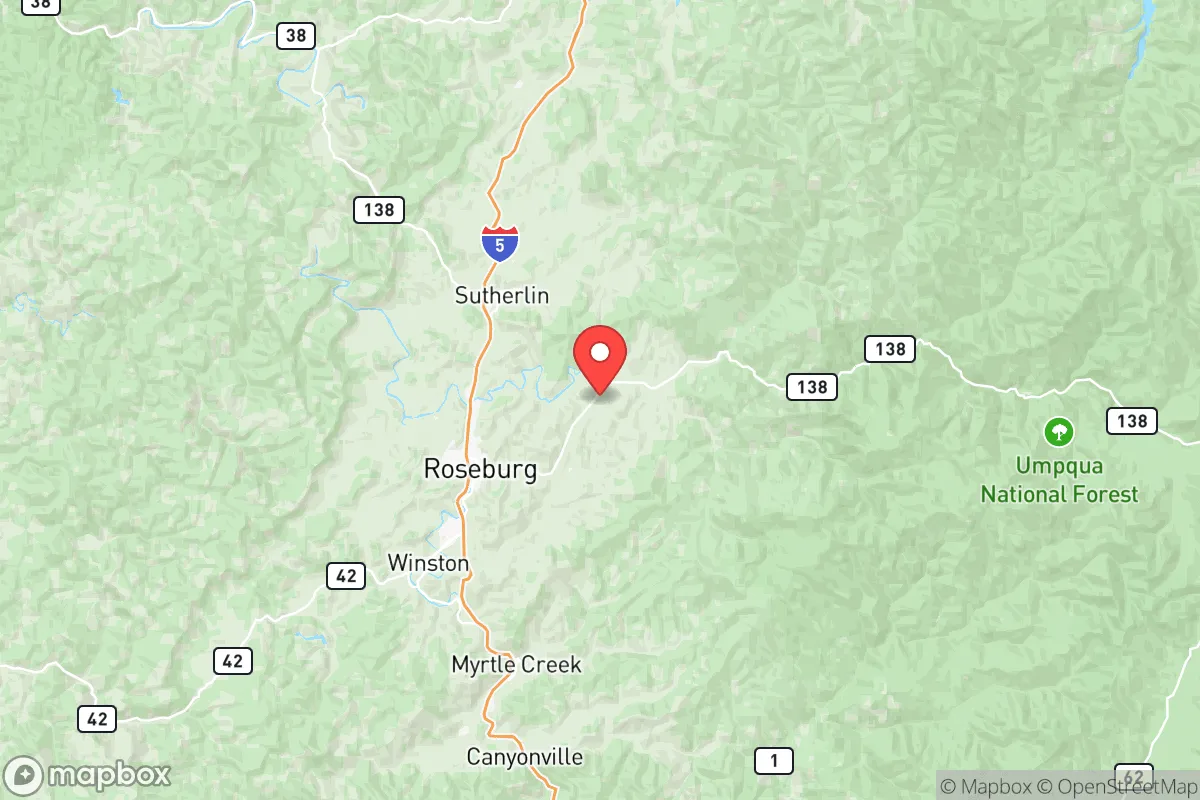
Beyond Roseburg, the county contains a string of smaller communities along Interstate 5 and deeper into the Coast Range and Cascades foothills. Sutherlin (population ~8,000) sits just north of Roseburg and offers a quieter, more affordable alternative with its own small downtown and access to the Umpqua River. Winston (population ~5,500) is known for the Wildlife Safari park and a more rural, family-oriented feel. Further south, Myrtle Creek and Canyonville are smaller mill towns with populations under 4,000, where housing costs are notably lower—median rents in these areas often fall below the countywide $995 average. Unincorporated places like Glide (east of Roseburg along the North Umpqua River) and Elkton (west, near the Umpqua River's confluence) are true rural pockets, with limited services but direct access to fishing, hiking, and the Umpqua National Forest. These areas draw people seeking land, privacy, and a slower pace, though they require longer drives for groceries and healthcare.
Cost & lifestyle range
The cost of living in Douglas County varies significantly by location. The countywide cost-of-living index of 92 (8% below the U.S. average) masks a spread: Roseburg's index is closer to 95, while rural areas like Glide or Elkton can be in the mid-80s. At the lower end, Canyonville and Riddle offer median home values around $200,000–$230,000, with rents often below $900. At the higher end, Roseburg's newer subdivisions and riverfront properties push values above $350,000. Lifestyle differences are stark: Roseburg provides walkable downtown amenities, a hospital, and cultural events, while rural residents trade convenience for acreage and quiet. The county's median rent of $995 is affordable by state standards, but rental availability is tight in smaller towns, where most housing is owner-occupied. Commute times are short countywide, but rural residents may drive 30–45 minutes to Roseburg for work or shopping.
Douglas County suits a wide range of residents, but the fit depends on priorities. Retirees and remote workers often choose Roseburg for its services and social opportunities, while families and homesteaders gravitate to Sutherlin, Winston, or the rural river valleys for lower costs and land. Those who thrive here value outdoor recreation—fishing, hunting, hiking, and forestry—and accept a trade-off of fewer urban amenities for lower housing costs and a slower pace. The county's diversity of settings means that a single household can find everything from a downtown apartment to a 20-acre parcel within a 30-minute drive, making it a practical choice for those who want options within a small geographic footprint.

Crime in Douglas County
Crime rates similar to the national median for U.S. locations.
Violent CrimeViolent Crime Analysis
Property CrimeProperty Crime Analysis
Crime Analysis
Douglas County, Oregon, presents a mixed safety profile where property crime rates significantly exceed national averages while violent crime remains closer to state benchmarks. With a violent crime rate of 311.9 per 100,000 residents and a property crime rate of 2,137.9 per 100,000, the county's overall safety picture is heavily influenced by its largest city, Roseburg, and the surrounding unincorporated areas. Residents in smaller communities like Winston, Sutherlin, and Reedsport generally experience lower crime volumes, though property theft remains a concern countywide.
Crime in context
Douglas County's violent crime rate of 311.9 per 100,000 is roughly 11% below the national average of 350 per 100,000 but sits slightly above Oregon's statewide rate of approximately 290 per 100,000. The property crime rate of 2,137.9 per 100,000, however, is about 45% higher than the national average of 1,470 per 100,000 and closely mirrors Oregon's elevated statewide property crime trend. These figures place Douglas County in a challenging position: while violent incidents like homicide and aggravated assault are less frequent than in many urban Oregon counties (Multnomah County, home to Portland, posts a violent crime rate near 500 per 100,000), the prevalence of larceny, burglary, and motor vehicle theft is a persistent issue. The Douglas County Sheriff's Office and Roseburg Police Department jointly attribute much of the property crime to drug-related offenses, particularly methamphetamine and opioid addiction, which drive theft-to-support-habit cycles.
What residents experience
For daily life in Douglas County, the most tangible safety concern is property crime. Residents in Roseburg, the county seat and economic hub, report frequent vehicle break-ins, package thefts, and burglaries in neighborhoods near downtown and along the I-5 corridor. In contrast, smaller towns like Winston (home to Wildlife Safari) and Sutherlin experience lower overall crime volumes, though they are not immune to theft rings that operate across the county. Violent crime is less common in daily experience but does cluster in specific areas: Roseburg's downtown core and certain mobile home parks see higher rates of assault and domestic violence incidents. The county's rural nature means response times can be longer for residents in remote areas near Canyonville or Glide, which is a practical consideration for those living far from the sheriff's main station in Roseburg. The Douglas County District Attorney's office, currently under elected leadership that emphasizes accountability, prosecutes property and drug crimes aggressively, though Oregon's statewide criminal justice reforms—including Measure 110 (drug decriminalization, partially rolled back in 2024)—have historically limited enforcement options for low-level drug possession, frustrating some residents who feel the system is too lenient on repeat offenders.
Neighborhood-level variation
Safety varies noticeably across Douglas County's communities. Roseburg accounts for the majority of reported crime, with its central neighborhoods near Harvard Avenue and the Douglas County Courthouse seeing the highest concentration of incidents. Winston and Reedsport (on the coast) are generally considered safer, with violent crime rates roughly half of Roseburg's. Canyonville, home to the Seven Feathers Casino Resort, sees transient-related property crime but benefits from a visible private security presence on the casino grounds. The unincorporated areas around Myrtle Creek and Riddle report very low violent crime but experience occasional rural burglaries targeting farm equipment and outbuildings. For prospective residents, the safest neighborhoods tend to be the newer subdivisions on Roseburg's north end (near the VA hospital) and the quiet residential streets of Winston and Sutherlin, where community watch programs are active and property crime is less frequent.
* Values derived from national, state, county, city and local statistics and may differ in a specific area. Last updated: 2026-07-30T07:31:56.000Z
Narrative content on this page is AI-generated and may contain mistakes. Verify any details that matter before acting on them.
ReloMaps may earn a commission from affiliate links at no extra cost to you.

