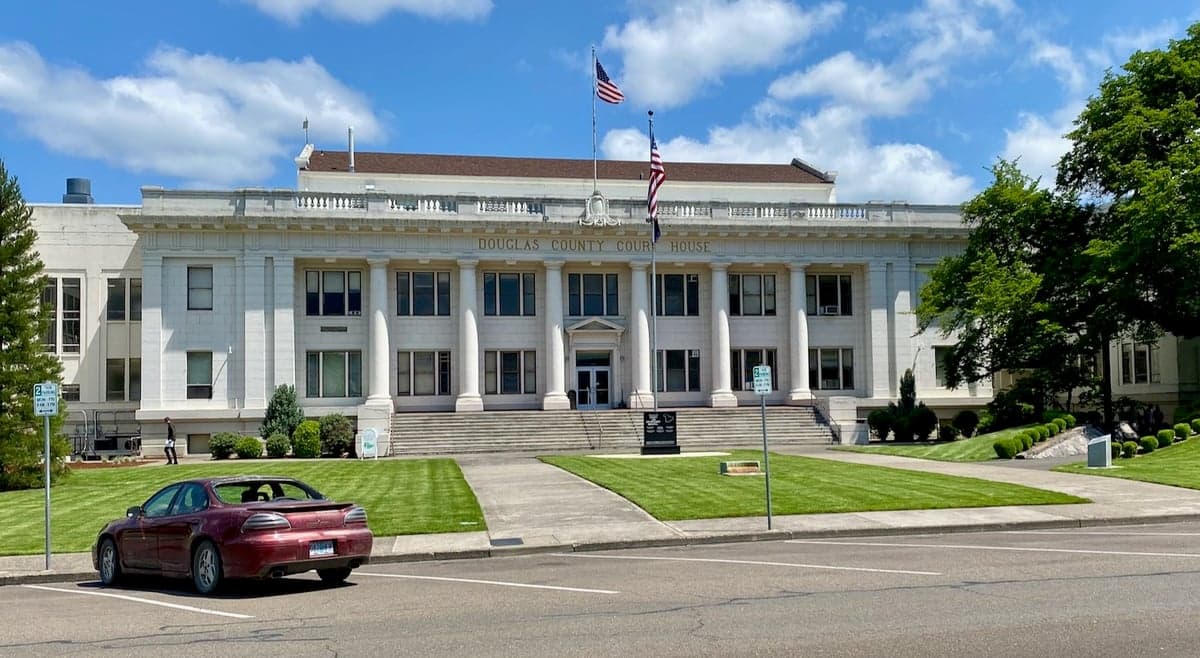
Photo: Wikipedia
Personal Sovereignty in Douglas County
Viable for self-reliance. Generally workable, though some barriers may limit total independence.
What does Personal Sovereignty tell us?
Personal Sovereignty measures your capacity for self-reliance and independence with minimal government friction. Higher scores mean fewer barriers between you and the way you want to live... but it assumes you have the space you need and good neighbors.
What does this tell us?
Personal Sovereignty measures your capacity for self-reliance and independence with minimal government friction. Higher scores mean fewer barriers between you and the way you want to live... but it assumes you have the space you need and good neighbors.
State Policy
Energy independence: Importer (35% of energy produced in-state)
Personal Liberty
Homesteading

Personal Liberty Analysis
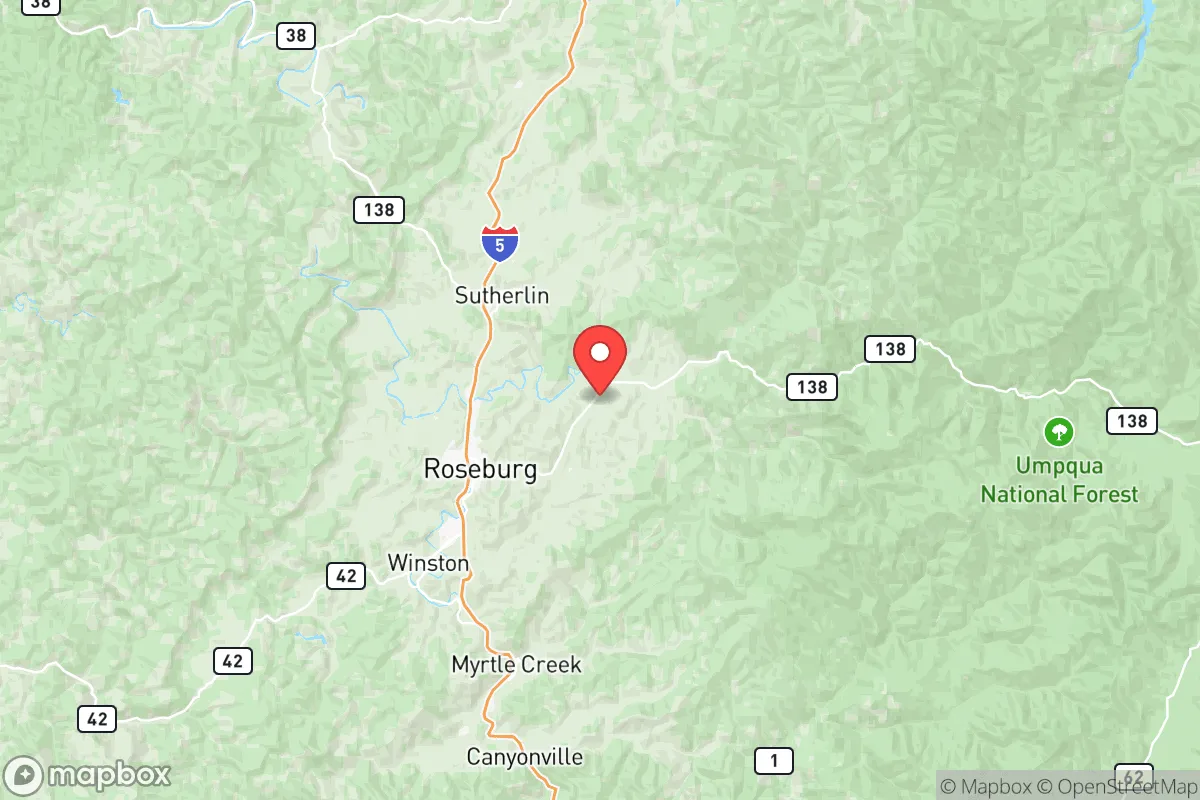
Douglas County, Oregon offers a notably high degree of personal sovereignty compared to the more regulated Willamette Valley counties to the north, with a governing philosophy that leans heavily on local control and minimal interference in daily life. The county’s rural character, combined with a strong timber and agricultural heritage, has fostered an environment where self-reliance is not just valued but expected. For individuals and families prioritizing autonomy—whether in financial decisions, self-defense, or lifestyle choices—Douglas County presents a landscape where state-level mandates are often met with local resistance and where the practical ability to live independently is well-supported by land use policies and cultural norms.
Tax burden and regulatory posture: how Douglas County compares to Oregon’s urban centers
Oregon’s lack of a state sales tax is a significant advantage for residents, and Douglas County’s property tax rates are among the more moderate in the state. The effective property tax rate in the county typically hovers around 0.85% to 1.0% of assessed value, which is lower than in Portland’s Multnomah County (often above 1.3%) and comparable to other rural Oregon counties. This lower burden is partly due to the county’s limited urban services and a voter base that consistently rejects new bond measures. Income taxes, however, remain a state-level factor—Oregon’s top marginal rate of 9.9% applies to high earners—but the county’s lower cost of living and median home prices (often 30-40% below the state average) offset this for most residents. Regulatory posture in Douglas County is distinctly light-touch. The county planning department generally favors property rights, with minimal zoning restrictions outside of incorporated city limits. In cities like Roseburg (the county seat) and Sutherlin, building permits are processed relatively quickly, and there is no county-wide short-term rental ban, unlike in some coastal or metro areas. The county’s stance on business regulation is similarly permissive; home-based businesses are broadly allowed, and there is no local minimum wage ordinance above the state’s $14.70/hour (2026), which is lower than in cities like Portland or Eugene.
Self-defense and gun law specifics: what the Second Sanctuary designation means for residents
Douglas County is a stronghold for Second Amendment rights, having formally declared itself a Second Amendment Sanctuary County in 2020. This means local law enforcement and elected officials have pledged not to enforce state-level gun control measures they deem unconstitutional, such as Oregon’s Measure 114 (which requires permits to purchase firearms and bans magazines over 10 rounds). In practice, this creates a legal gray area where state law is on the books but local enforcement is minimal. For residents, this translates to a permissive environment for concealed carry, open carry, and firearm ownership. The county sheriff, John Hanlin, has been a vocal advocate for gun rights, and the sheriff’s office processes concealed handgun license (CHL) applications efficiently—typically within 30 days. In towns like Winston and Myrtle Creek, gun culture is deeply embedded; shooting ranges are common, and private firearm sales between individuals are routine without state interference. For those moving from states with strict gun laws, Douglas County offers a tangible reduction in bureaucratic hurdles. However, it is important to note that federal laws still apply, and residents must comply with background checks for purchases from licensed dealers. The overall environment is one where the right to self-defense is treated as a fundamental, pre-existing liberty rather than a privilege granted by the state.
Self-reliance and homesteading viability: lot sizes, zoning, and off-grid feasibility
Douglas County is one of the most viable areas in Oregon for homesteading and off-grid living, thanks to its permissive land-use regulations and abundant rural land. Outside of city limits, the county’s zoning allows for minimum lot sizes as small as 2.5 acres in some rural residential zones, with larger parcels (5-20 acres) common in agricultural and forest zones. This is a stark contrast to the Willamette Valley, where exclusive farm use (EFU) zoning often restricts non-farm dwellings. In areas like Canyonville and Glide, it is entirely feasible to build a self-sufficient homestead with a well, septic system, and solar panels. The county does not require building permits for structures under 200 square feet (e.g., sheds, tiny houses on wheels), and off-grid power systems are generally allowed as long as they meet basic electrical safety codes. Rainwater collection is unrestricted, and composting toilets are permitted with a simple site review. For those seeking true independence, the Umpqua River Valley offers ample water resources and a growing season long enough for substantial food production. The county’s planning department is known for working with landowners rather than against them, and variances for alternative building methods (straw bale, earthship) are granted more readily than in urban counties. The main limitation is the state’s building code for permanent dwellings, which still requires a permit and inspection, but the county’s enforcement is less aggressive than in metro areas.
Personal liberties: parental rights, medical autonomy, speech, and property
Douglas County’s culture of personal sovereignty extends to several key areas of individual liberty. Parental rights are strongly respected; the county’s school districts, including Roseburg Public Schools and South Umpqua School District, have generally deferred to parents on curriculum and health decisions, with no local mandates for mask-wearing or vaccine requirements beyond state law. Medical autonomy is a mixed picture: while Oregon has legalized assisted suicide and recreational marijuana, the county’s conservative lean means that access to certain services (e.g., abortion clinics) is limited—there is no abortion provider in the county, requiring travel to Eugene or Medford. However, for those seeking alternative or holistic medicine, the regulatory environment is permissive, with few restrictions on naturopaths or herbalists. Free speech is robustly protected, with a local media landscape that includes both mainstream outlets and independent voices. Property rights are arguably the strongest pillar of personal liberty here. The county’s comprehensive plan, updated in 2022, explicitly prioritizes private property rights and limits the use of eminent domain. In towns like Riddle and Yoncalla, residents routinely engage in activities like logging, mining, and recreational shooting on their own land without fear of nuisance complaints. The county’s approach to code enforcement is complaint-driven rather than proactive, meaning that as long as a property doesn’t create a public health hazard, the county generally stays out of private affairs.
Overall, Douglas County ranks among the top Oregon counties for personal sovereignty, offering a regulatory environment that is significantly lighter than the Portland metro area and even many mid-sized cities like Salem or Eugene. For a conservative-leaning individual or family, the combination of low taxes, a Second Sanctuary stance, viable off-grid living, and strong property rights creates a rare pocket of autonomy within a state that has trended toward centralization. While state-level mandates on income tax and some environmental regulations remain, the county’s practical enforcement culture and the sheer availability of land mean that residents can exercise a degree of self-determination that is increasingly difficult to find in the Pacific Northwest. For those willing to trade urban amenities for independence, Douglas County delivers on the promise of personal sovereignty.

* Values derived from national, state, county, city and local statistics and may differ in a specific area. Last updated: 2026-07-30T07:31:56.000Z
Narrative content on this page is AI-generated and may contain mistakes. Verify any details that matter before acting on them.
ReloMaps may earn a commission from affiliate links at no extra cost to you.

