 Popular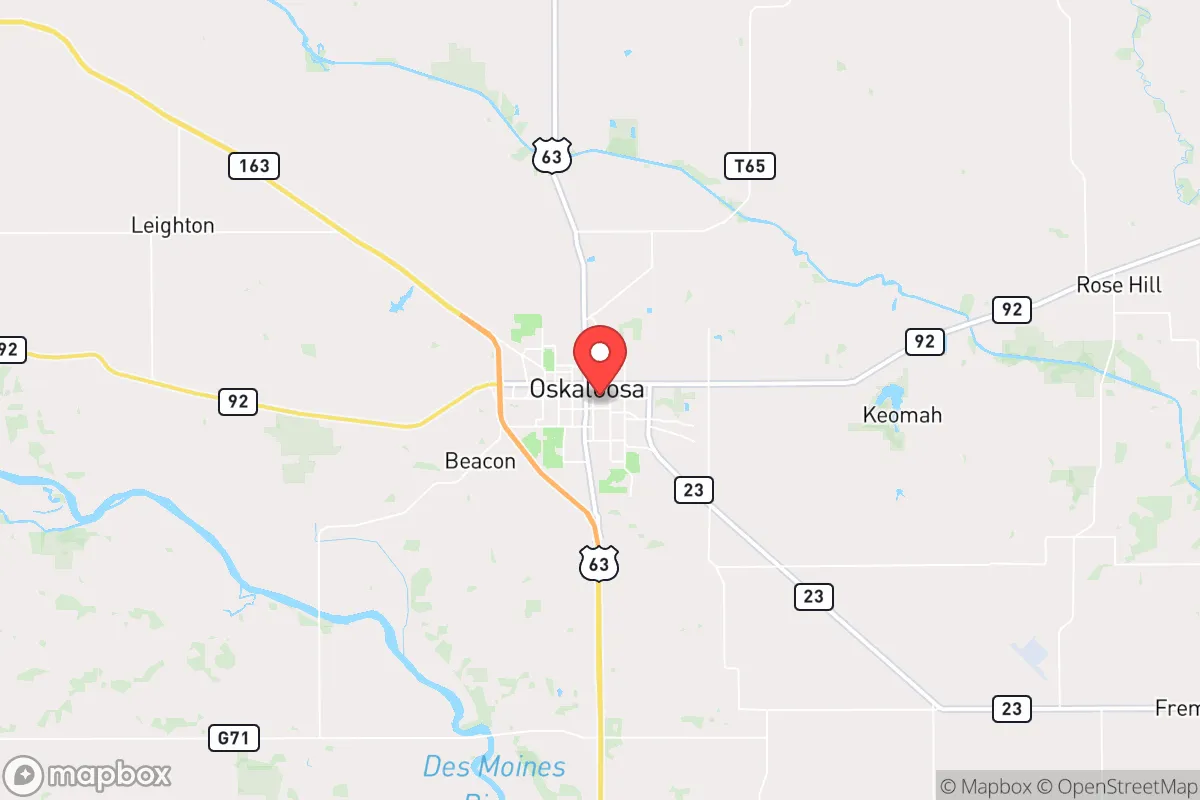
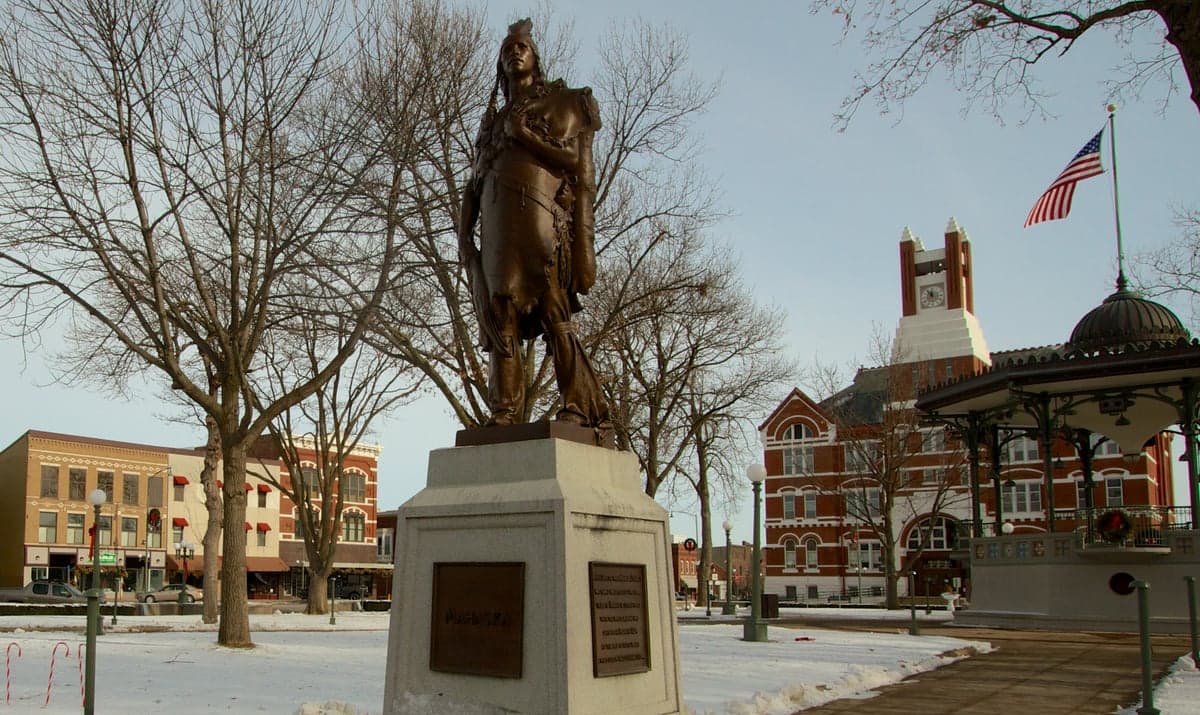
Photo: Wikipedia
Political ClimatePolitical Climate in Oskaloosa, IA
District shown is the primary district for this city’s centroid. Cities may span multiple districts.
Local Political AnalysisPolitical Analysis of Oskaloosa, IA
Oskaloosa sits in a reliably conservative pocket of Iowa, with a Cook PVI of R+4 that reflects the broader Mahaska County trend of favoring Republican candidates by comfortable margins. In the 2024 presidential race, the county went for the GOP candidate by roughly 20 points, a pattern that has held steady for the last decade. That said, there’s a quiet undercurrent of change here—some of it driven by younger families moving in from Des Moines and a few local business owners pushing for more progressive policies. It’s not a blue wave by any stretch, but you can feel the tension between the old-school values most of us grew up with and the new ideas that are starting to creep into city council meetings and school board discussions.
How it compares
Drive 20 minutes north to Pella, and you’ll find a similar conservative lean, though Pella’s Dutch Reformed heritage gives it a more socially traditionalist flavor. Head south to Ottumwa, and the politics get a bit more mixed—Wapello County has trended purple in recent cycles, with a stronger union presence and a larger minority population that shifts the needle left. Oskaloosa sits right in the middle: not as insular as some smaller towns like New Sharon or Beacon, but not as politically volatile as the college towns to the east, like Grinnell. What sets Oskaloosa apart is its relative stability—most folks here vote Republican because they believe in limited government, lower taxes, and personal responsibility, not because they’re following a party line. That independence is something I’ve always respected, even when I disagree with a particular candidate.
What this means for residents
For the average person living here, the political climate means you can still go to the county fair or a high school football game without getting into heated arguments about national politics. Most local elections are decided on practical issues—road repairs, school funding, zoning—rather than culture war flashpoints. That’s a good thing, because when government starts meddling in how you run your small business, what books your kids can check out from the library, or how you choose to raise your family, it’s a red flag. So far, Oskaloosa has avoided the worst of that overreach. The city council has resisted calls for stricter rental ordinances that would have hurt property owners, and the school board has kept curriculum decisions local rather than adopting state-mandated diversity initiatives that feel more like indoctrination than education. But I’ve seen a few warning signs: a push for a “climate action plan” that would have added red tape for farmers, and some talk about “equity audits” for city hiring. Those ideas didn’t get far, but they’re a reminder that vigilance matters.
One thing that stands out culturally here is the strong sense of self-reliance. People don’t look to the government to solve their problems—they form church groups, volunteer fire departments, and community fundraisers. That’s the Oskaloosa I know and want to keep. The long-term outlook depends on whether we can hold the line against the kind of top-down progressive policies that have bogged down bigger cities. If the current trajectory holds—steady conservative leadership with a healthy dose of skepticism toward government expansion—I think we’ll be fine. But if the newcomers from Des Moines keep pushing their agenda, we might see a slow shift that erodes the freedoms we’ve always taken for granted. For now, it’s still a good place to live if you value your privacy and your right to make your own choices without a bureaucrat looking over your shoulder.

State Political ClimatePolitical Climate in Iowa
State Political AnalysisPolitical Environment in the State
Iowa has been a reliably Republican state in presidential elections since 2016, but its political identity is more complex than a simple red-state label. The state’s overall partisan lean is roughly R+6 to R+8, driven by a coalition of rural conservatives, evangelical Christians, and a growing number of fiscally conservative suburbanites. Over the last 10-20 years, Iowa has shifted from a classic purple swing state—where it voted for Obama in 2008 and 2012—to a solidly red one, with Republicans now holding all four U.S. House seats, a trifecta in state government, and both U.S. Senate seats. This trajectory accelerated after 2020, when the state’s rural and small-town voters turned out in force against progressive policies seen in neighboring states like Minnesota and Illinois.
Urban vs. rural divide
The political map of Iowa is a textbook example of the urban-rural chasm. The state’s two largest metros—Des Moines (Polk County) and Iowa City (Johnson County)—are Democratic strongholds. Polk County voted for Joe Biden by 11 points in 2020, while Johnson County went for Biden by a staggering 37 points. These areas are home to the state’s largest universities, corporate headquarters, and a growing professional class. In contrast, the rest of the state is deeply Republican. Counties like Sioux County (home to the conservative Dutch Reformed community) and Plymouth County routinely vote 70-80% Republican. The real story is the suburbs: Ankeny and Waukee, once reliably red, have shifted toward Democrats as they’ve grown denser and more diverse, but they still lean Republican in down-ballot races. Meanwhile, smaller cities like Council Bluffs and Dubuque have become battlegrounds, with Dubuque County flipping from Obama to Trump in 2016 and staying red since. The rural-urban split is stark: drive 20 minutes outside Des Moines, and you’ll see Trump signs still flying high.
Policy environment
Iowa’s policy environment is a conservative’s dream, especially compared to its neighbors. The state has a flat income tax rate of 3.8% (phasing down to 3.5% by 2027), no inheritance tax, and a low corporate tax rate. Property taxes are moderate, though they vary by county. Governor Kim Reynolds signed a six-week abortion ban in 2023 (the “Heartbeat Law”), which is currently tied up in court but reflects the legislature’s strong pro-life stance. Education policy is a major win: Iowa has a robust school choice program, including Education Savings Accounts (ESAs) that let parents use state funds for private or homeschool expenses. The state also passed a law banning “critical race theory” and “gender identity” instruction in K-12 schools. On healthcare, Iowa expanded Medicaid under the Affordable Care Act, but the state has since moved to a managed-care model that’s been controversial. Election laws tightened after 2020: voter ID is required, absentee ballot drop boxes are restricted, and early voting windows were shortened. For a conservative, this is a state that actively pushes back against federal overreach.
Trajectory & freedom
Iowa is becoming more free in many respects, but there are warning signs. On the plus side, the state passed constitutional carry (permitless carry) in 2021, allowing law-abiding adults to carry concealed firearms without a permit. Parental rights were strengthened with a 2023 law requiring schools to notify parents of any “gender identity” changes and prohibiting instruction on sexual orientation in grades K-6. Property rights got a boost with a 2022 law limiting eminent domain for carbon pipelines, a hot-button issue in rural areas. However, the state’s medical autonomy took a hit: the 2023 abortion ban is a significant restriction on personal choice, though it aligns with conservative values. The biggest freedom concern is taxation: while income taxes are dropping, property taxes have crept up in growing suburbs like West Des Moines and Urbandale, driven by school bond issues. Overall, Iowa is trending toward more individual liberty on guns, education, and speech, but the state’s heavy reliance on property taxes and its aggressive use of eminent domain for private projects (like the Summit Carbon Solutions pipeline) are genuine red flags for liberty-minded residents.
Civil unrest & political movements
Iowa has seen its share of political flashpoints, but nothing like the riots in Portland or Minneapolis. The most visible unrest came in 2020, when Des Moines and Iowa City saw Black Lives Matter protests, some turning violent with property damage. Since then, the left has organized around abortion rights and LGBTQ issues, with groups like Planned Parenthood Advocates of Iowa and One Iowa pushing back against conservative legislation. On the right, the Iowa Firearms Coalition and Iowa Parents for Education have been highly effective, mobilizing thousands to school board meetings and statehouse hearings. Immigration politics are relatively quiet, as Iowa’s foreign-born population is small (about 5%), but there’s been tension over meatpacking plants in Storm Lake and Postville, where immigrant labor is essential. Election integrity remains a hot topic: the 2020 audit in Linn County (Cedar Rapids) found no widespread fraud, but conservatives remain skeptical of the state’s electronic voting machines. A new resident would notice the absence of street-level chaos, but the culture war is alive and well in school board races and county party meetings.
Projection
Over the next 5-10 years, Iowa is likely to stay red but shift slightly purple in the suburbs. The state’s population is aging and slowly declining in rural areas, while metros like Des Moines and Iowa City are growing due to in-migration from Illinois and California. These newcomers tend to be more moderate or left-leaning, which could flip Polk County and Johnson County even bluer. However, the rural vote is so dominant that statewide races will remain Republican for the foreseeable future. The biggest wild card is the 2026 governor’s race: if Kim Reynolds retires, the GOP primary could fracture between establishment and populist wings. On policy, expect more school choice expansion, further income tax cuts, and a continued push against federal mandates on energy and agriculture. The carbon pipeline controversy will likely be resolved in favor of property rights, but that’s not guaranteed. A new resident moving in now should expect a state that’s conservative but not authoritarian—where you can live your life without much government interference, as long as you don’t live in a blue city.
For a conservative individual or family, Iowa offers a high degree of personal freedom on guns, education, and taxes, with a low risk of civil unrest. The trade-off is a cold climate and a slowly shrinking rural economy. If you’re looking for a state where your vote counts, your kids can learn without indoctrination, and your property rights are respected (mostly), Iowa is a solid bet. Just keep an eye on the suburbs—they’re the battleground for the state’s future.
* Values derived from national, state, county, city and local statistics and may differ in a specific area. Last updated: 2026-04-30T04:33:33.000Z
Narrative content on this page is AI-generated and may contain mistakes. Verify any details that matter before acting on them.
ReloMaps may earn a commission from affiliate links at no extra cost to you.

