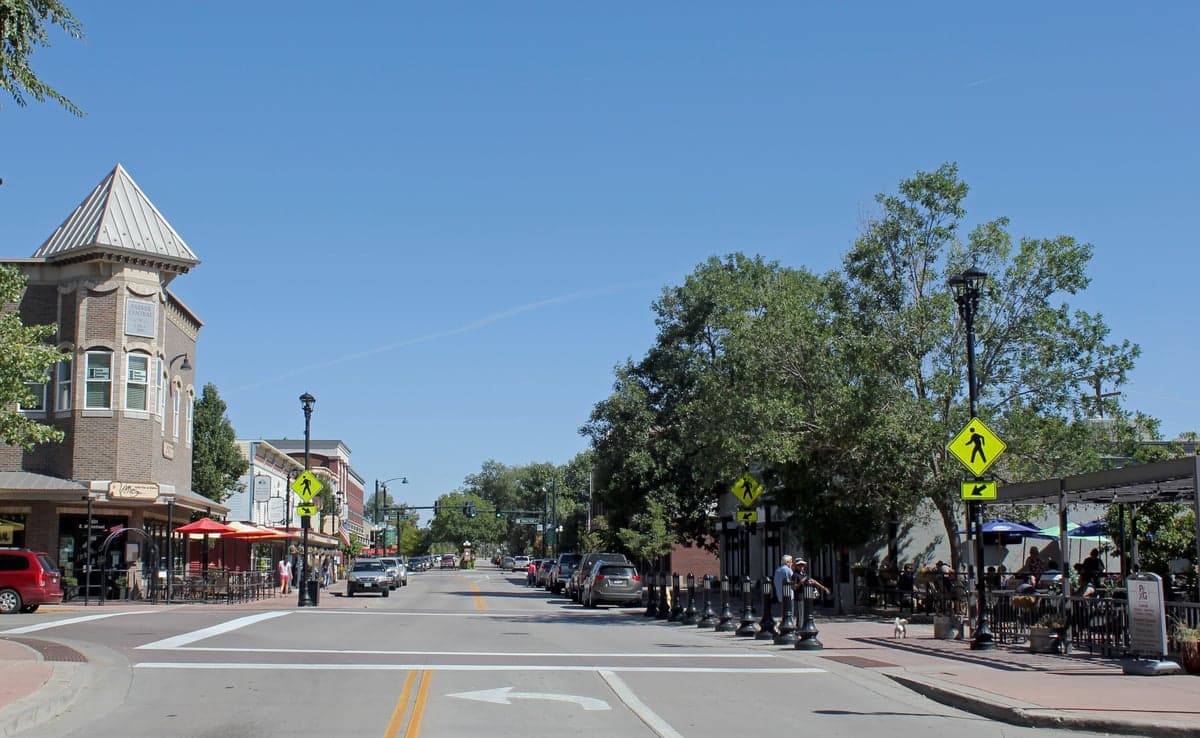
Photo: Wikipedia
Personal Sovereignty in Parker, CO
Viable for self-reliance. Generally workable, though some barriers may limit total independence.
What does Personal Sovereignty tell us?
Personal Sovereignty measures your capacity for self-reliance and independence with minimal government friction. Higher scores mean fewer barriers between you and the way you want to live... but it assumes you have the space you need and good neighbors.
What does this tell us?
Personal Sovereignty measures your capacity for self-reliance and independence with minimal government friction. Higher scores mean fewer barriers between you and the way you want to live... but it assumes you have the space you need and good neighbors.
State Policy
Energy independence: Net exporter (110% of energy produced in-state)
Personal Liberty
Homesteading

Personal Liberty Analysis
Parker, Colorado, offers a notably high degree of personal sovereignty relative to the Denver metro area, but it is not a libertarian free-for-all. The town’s character is shaped by a strong local culture of self-reliance, a county government that generally respects property rights, and a state-level legal framework that, while increasingly progressive, still leaves significant room for individual autonomy. For a conservative-leaning individual or family focused on minimizing government overreach, Parker represents a strategic compromise: you get the economic and social benefits of a growing suburban hub without the most aggressive regulatory impulses found in Boulder or Denver proper. However, the creeping influence of state-level mandates on everything from energy to education means that vigilance—not complacency—is the price of maintaining that sovereignty here.
Tax burden and regulatory posture: How Colorado’s fiscal policies affect your autonomy
Colorado’s tax structure is a mixed bag for those prioritizing financial sovereignty. The state levies a flat income tax of 4.4% (as of 2025), which is moderate but not low, and there is no state sales tax on groceries or prescription drugs. Douglas County, where Parker sits, keeps property taxes relatively low—around 0.55% of assessed value—thanks to the Taxpayer’s Bill of Rights (TABOR), a constitutional amendment that limits revenue growth and requires voter approval for tax increases. This is a critical safeguard: TABOR gives residents direct control over how much the government can take, and Douglas County voters have consistently rejected tax hikes. However, the state’s regulatory posture is more intrusive. Colorado’s 2022 “right to repair” law for agricultural equipment is a win for self-reliance, but the state also imposes strict emissions standards (following California’s lead) that can complicate modifications to older vehicles or generators. For a prepper, this means you can own land and build a shop without excessive county interference, but you’ll need to navigate state-level red tape if you want to run a diesel generator off-grid or modify a truck for extended range. The net effect: Parker’s local governance is friendly to autonomy, but state-level overreach is a persistent threat that requires active political engagement to resist.
Self-defense and gun law specifics: What the Second Amendment looks like in Parker
Colorado is a “shall-issue” state for concealed carry permits, meaning the Douglas County Sheriff’s Office cannot arbitrarily deny your application if you meet the statutory requirements—no background check red flags, no felony record, and completion of a certified training course. Parker itself is home to several gun-friendly businesses, including Bristlecone Shooting, Training & Retail Center, which offers classes and a range that sees heavy use from locals. However, the state has moved left on firearms since 2013. Colorado now has a 15-round magazine capacity limit (passed in 2013 and upheld by courts), universal background checks for private sales, and a “red flag” law (Extreme Risk Protection Order) that allows law enforcement to temporarily seize firearms from individuals deemed a risk by a judge. For a survivalist, these laws are a direct infringement on the right to keep and bear arms. The practical workaround: many Parker residents maintain a low profile, avoid posting about their collections online, and ensure their firearms are stored securely but accessibly. The Douglas County Sheriff, Darren Weekly, has publicly stated his office will not enforce “unconstitutional” gun laws, but that stance is not legally binding and could change with a new sheriff. If you value maximum Second Amendment sovereignty, Parker is better than Denver but worse than Wyoming or Texas. You can own AR-15s, but you’ll need to buy them with standard-capacity magazines from out of state or pre-ban stock.
Self-reliance and homesteading viability: Lot sizes, zoning, and off-grid feasibility
Parker’s zoning is a tale of two realities. Within the town limits, most residential lots are standard suburban quarter-acre to half-acre plots, with homeowners’ associations (HOAs) that often restrict chickens, goats, or visible solar panels. For a serious homesteader, this is a non-starter. However, unincorporated Douglas County, just outside Parker’s city limits, offers 1- to 5-acre parcels where zoning is far more permissive. Areas like Franktown or the Pinery allow for small-scale agriculture, including horses, chickens, and even a few head of cattle, without HOA interference. Off-grid feasibility is limited by Colorado’s building codes: you must have a septic system (permitted by the county) and a water source (well or cistern), but solar panels are legal and net metering is available through Xcel Energy. The state’s 2023 law requiring new homes to be “solar-ready” is a minor annoyance but not a barrier. The real constraint is water: Parker sits in a semi-arid region, and well drilling is expensive ($15,000–$30,000) and subject to groundwater rights that can be complex. For a prepper, the ideal play is to buy a 2- to 5-acre lot in unincorporated Douglas County, install a well and solar array, and keep a low profile. You won’t be fully off-grid—internet and power lines are ubiquitous—but you can achieve a high degree of self-sufficiency in food and energy. Just be prepared to fight the county if you want to build a bunker or store large quantities of fuel; the fire code is strict.
Personal liberties: Parental rights, medical autonomy, speech, and property
Parental rights in Colorado have become a flashpoint. The state’s 2023 “Jared Polis” executive orders on gender-affirming care and the 2024 law protecting access to abortion have created a legal environment where parents’ authority over their children’s medical decisions is increasingly challenged by state mandates. For a conservative parent, this is a red flag: the state can override your consent for certain treatments, and school districts (including Douglas County) have been pressured to adopt policies that limit parental notification. That said, Douglas County School District has a conservative board that has resisted some of these mandates, and many parents simply opt for homeschooling or private Christian schools (there are several in Parker). Medical autonomy for adults is stronger: Colorado allows direct primary care (DPC) memberships, and there are several DPC clinics in the area that operate outside insurance networks, giving you control over your healthcare. Speech is broadly protected under the First Amendment, but Colorado’s “anti-discrimination” laws have been used to target businesses that refuse services for same-sex weddings—a concern for religious conservatives. Property rights are generally respected, but the state’s 2021 “oil and gas” setback law (requiring 2,000-foot buffers from homes) shows that the government can restrict how you use your land if it conflicts with environmental goals. The bottom line: Parker offers more personal liberty than most Front Range towns, but you must be proactive—join the local Republican club, attend school board meetings, and know your rights.
Overall, Parker’s personal sovereignty is a solid B+ in a state that is trending toward a C-. The town’s local governance, low property taxes, and gun-friendly culture provide a strong foundation for self-reliance, but state-level overreach on firearms, medical mandates, and energy regulation is a constant drag. Compared to rural Wyoming or Montana, Parker is more constrained; compared to Denver or Boulder, it is a bastion of freedom. For a survivalist or prepper, the strategic move is to buy land just outside the town limits, build a self-sufficient homestead, and engage politically to push back against state encroachment. Parker is not a retreat—it’s a forward operating base in a state that still respects TABOR and local control, but only if you fight to keep it that way.

* Values derived from national, state, county, city and local statistics and may differ in a specific area. Last updated: 2026-05-01T11:24:31.000Z
Narrative content on this page is AI-generated and may contain mistakes. Verify any details that matter before acting on them.
ReloMaps may earn a commission from affiliate links at no extra cost to you.

