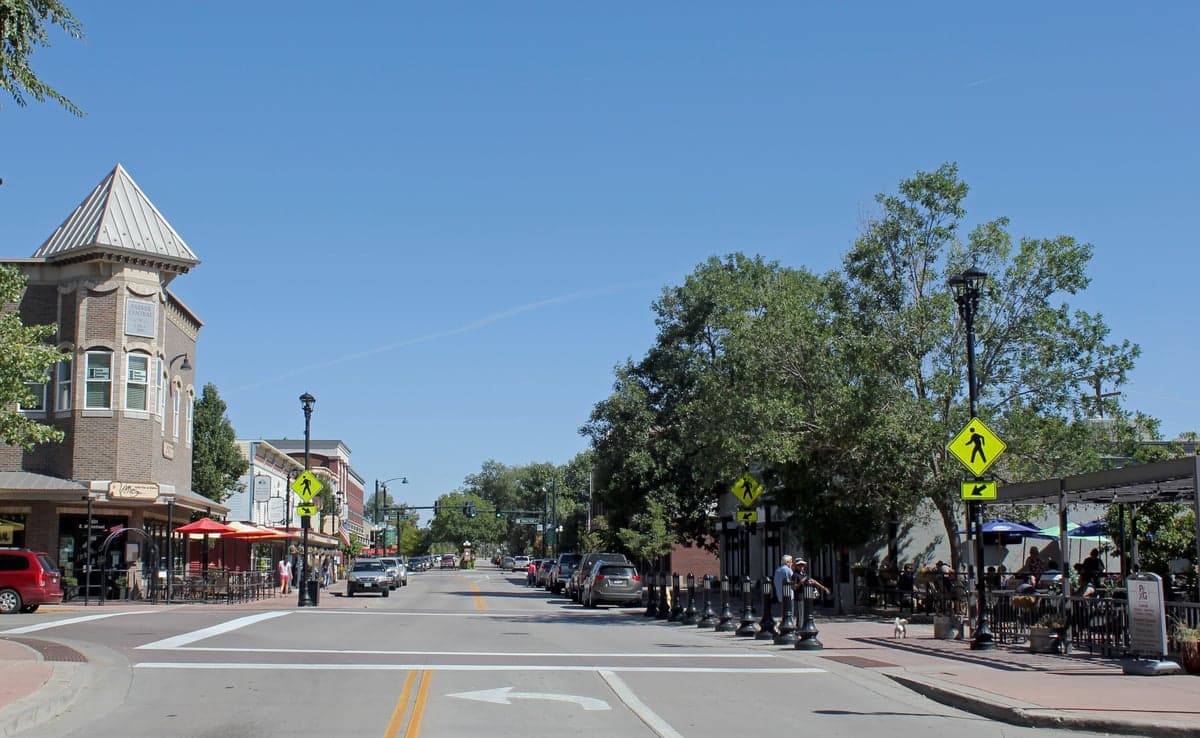
Photo: Wikipedia
Political ClimatePolitical Climate in Parker, CO
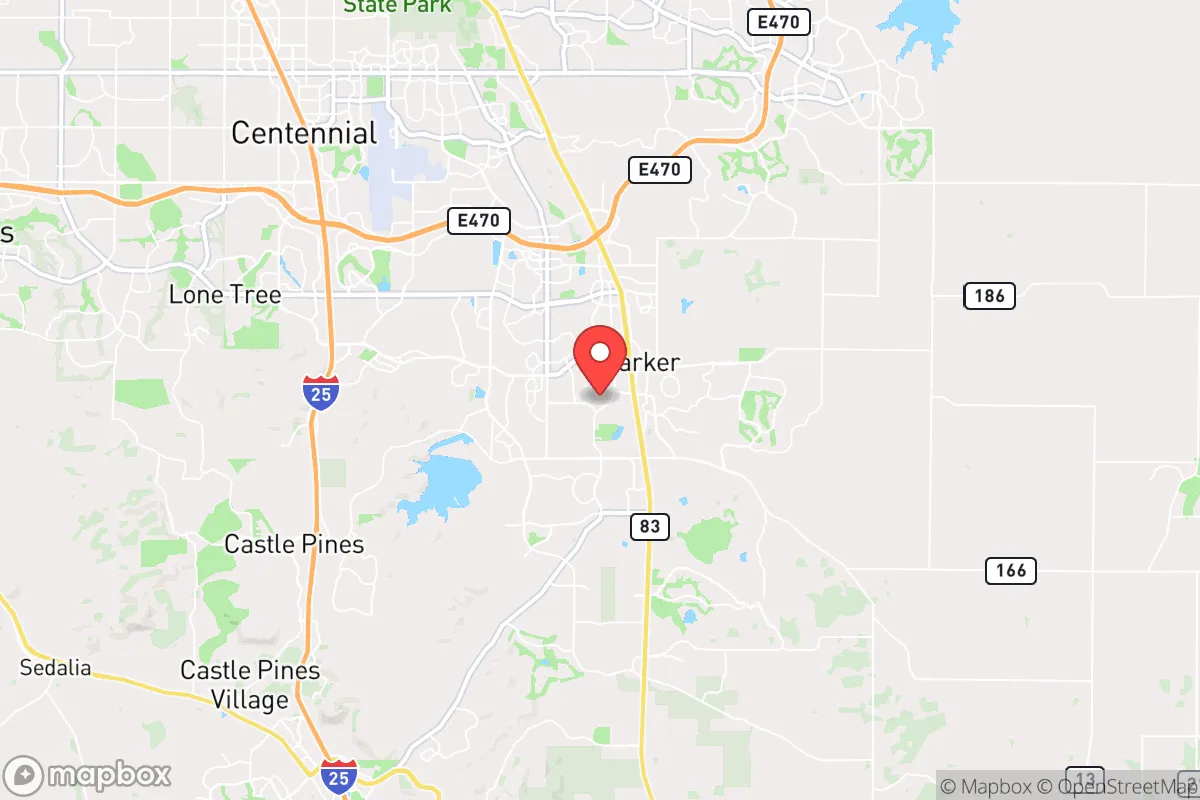
District shown is the primary district for this city’s centroid. Cities may span multiple districts.
Local Political AnalysisPolitical Analysis of Parker, CO
Parker, Colorado, has long been a solidly conservative community, and that hasn't changed much despite the state's broader leftward drift. The Cook PVI of R+9 tells you the baseline: this is a place where Republican candidates can expect to win by a comfortable margin, but it's not a deep-red stronghold like some rural counties. The real story is the pressure from the Denver metro area's growth—people moving in from California, Illinois, and other blue states are slowly nudging the culture, even if the voting patterns haven't flipped yet. If you've been here since the 90s like I have, you've watched the town double in size, and with that comes a subtle shift in attitudes that makes you wonder how long the old-school values will hold.
How it compares
Drive 20 minutes north to Aurora or 30 minutes northwest to Denver, and you're in a completely different political universe—those areas are reliably blue, with progressive policies on everything from zoning to policing. Head south to Colorado Springs, and you'll find a much more conservative, military-heavy culture that makes Parker look moderate by comparison. The contrast is sharpest with Douglas County itself: Parker is the county seat, and the county as a whole leans red, but the unincorporated areas and smaller towns like Castle Rock tend to be even more reliably Republican. What sets Parker apart is its proximity to the urban core—you get the conservative values without feeling completely isolated from city amenities, but that also means the cultural creep from Denver is a constant, low-grade concern.
What this means for residents
For now, you can still count on local government to keep taxes relatively low and regulations light, especially compared to what you'd face in Boulder or Denver. The school board and town council have historically resisted progressive overreach on issues like critical race theory and gender ideology in classrooms, but the pressure is mounting. You'll see more "In This House We Believe" signs in certain neighborhoods than you did a decade ago, and the local library board has had to fight off attempts to bring in drag queen story hours. The real worry is the long game: as more tech workers and remote employees move in from blue states, they bring their voting habits with them. If you value personal freedoms—like the right to keep and bear arms without endless red tape, or the freedom to run your business without a dozen new mandates—Parker is still a good bet, but you need to stay engaged in local elections to keep it that way.
Culturally, Parker has a few distinct markers that set it apart from the surrounding blue areas. The town still hosts a big Fourth of July parade and a rodeo, and the local churches are well-attended and active in community life. You won't find the same level of homeless encampments or open drug use that plagues Denver, and the police department maintains a visible, community-oriented presence. The biggest policy distinction is probably the lack of rent control or aggressive affordable housing mandates—the market is allowed to work, which keeps property values high but also means you're not subsidizing someone else's lifestyle. If you're looking for a place where your voice still matters and the government mostly stays out of your way, Parker is holding the line, but don't take it for granted. The next five to ten years will tell whether it stays true to its roots or gets swallowed by the Denver blob.

State Political ClimatePolitical Climate in Colorado
State Political AnalysisPolitical Environment in the State
Colorado has shifted from a classic purple swing state to a solidly blue-leaning one over the past two decades, with Democrats now controlling the governorship, both U.S. Senate seats, and both chambers of the state legislature. The state voted for Joe Biden by 13.5 points in 2020, a stark contrast to its 2012 split where it went for Obama by just 5 points. The real story, though, is the geographic and cultural chasm: the Front Range urban corridor—Denver, Boulder, and their suburbs—drives the state’s progressive tilt, while the Eastern Plains, Western Slope, and mountain communities remain deeply conservative, creating a political landscape that feels like two different states under one capitol dome.
Urban vs. rural divide
The political map of Colorado is a tale of two worlds. The Denver metro area, including Denver, Aurora, and Lakewood, is the engine of Democratic power, with Denver County routinely delivering 80%+ of its vote to Democratic presidential candidates. Boulder County is even more progressive, often hitting 85%+ for Democrats. The suburban ring—places like Jefferson County (Jeffco) and Arapahoe County—has flipped decisively blue since 2016, driven by an influx of out-of-state transplants and younger voters. Meanwhile, the Eastern Plains counties like Elbert, Lincoln, and Kit Carson vote Republican by 70-80% margins. The Western Slope, including Mesa County (Grand Junction), remains a conservative stronghold, though resort towns like Aspen and Telluride are blue islands in a red sea. The 2022 gubernatorial race saw Republican Heidi Ganahl win 54 of 64 counties but lose the popular vote by 20 points—a perfect illustration of how Colorado’s urban concentration overrides its rural majority.
Policy environment
Colorado’s policy environment has become increasingly progressive, with a state income tax rate of 4.4% (flat) and a property tax system that has seen recent reforms to slow growth, but overall tax burden remains moderate compared to high-tax states like California. The regulatory posture is aggressive: the state has a strict red flag law (HB 19-1177) allowing temporary firearm seizure, a 2021 law requiring universal background checks for private gun sales, and a 2023 law raising the minimum age to purchase any firearm to 21. Education policy is dominated by the Colorado Department of Education, which has pushed critical race theory-aligned curriculum standards and LGBTQ+ inclusive materials, sparking parental rights battles in districts like Douglas County. Healthcare is heavily regulated, with a state-run insurance exchange (Connect for Health Colorado) and a 2022 law capping insulin prices. Election laws have been liberalized: Colorado was one of the first states to implement universal mail-in voting (2013), automatic voter registration, and same-day registration, which critics argue weakens election integrity. The state also has a sanctuary state law (HB 19-1124) limiting cooperation with federal immigration enforcement, a flashpoint for conservatives.
Trajectory & freedom
Colorado is becoming less free by any conservative measure of personal liberty. The 2023 Family Affirmation and Equality Act (HB 23-1069) designated Colorado a “sanctuary state” for gender-affirming care, overriding parental rights in medical decisions for minors. The 2021 Vaccine Passport Law (SB 21-163) allowed businesses to require proof of vaccination, though it was later repealed. Gun rights have been systematically eroded: the 2023 HB 23-1219 banned so-called “assault weapons” (a vague category), and the 2024 HB 24-1348 imposed a 10-day waiting period on all firearm purchases. Property rights have been squeezed by a 2022 law (SB 22-115) that expanded local governments’ ability to impose rent control, and a 2023 law (HB 23-1171) that limited short-term rentals like Airbnb in mountain towns. The state’s Taxpayer Bill of Rights (TABOR), a constitutional amendment limiting tax increases, remains a bulwark against even higher taxes, but Democrats have repeatedly found loopholes to bypass it, such as the 2023 Proposition HH (defeated by voters) which would have allowed the state to keep excess tax revenue. The trajectory is clear: more regulation, less individual autonomy, and a government that increasingly sees itself as the arbiter of personal choices.
Civil unrest & political movements
Colorado has seen significant civil unrest and political activism. The 2020 George Floyd protests in Denver turned violent, with property damage and clashes with police, leading to a 2021 police reform law (SB 21-217) that limited qualified immunity and use of force. The Colorado Springs Club Q shooting in 2022 galvanized LGBTQ+ activism and led to a 2023 law banning “conversion therapy” for minors. On the right, the Colorado Republican Party has been riven by infighting between moderates and the MAGA-aligned faction, with the 2023 state party chair election going to a pro-Trump hardliner. The Weld County secession movement—a 2013 proposal to form a new state called “North Colorado”—failed but reflected deep rural frustration with Denver’s dominance. Immigration politics are a constant flashpoint: the 2023 Denver migrant crisis, with thousands of illegal immigrants bused from Texas, overwhelmed city services and sparked backlash, leading to a 2024 law (HB 24-1108) that limited Denver’s sanctuary policies. Election integrity remains a hot-button issue: the 2020 election saw Mesa County Clerk Tina Peters indicted for allegedly tampering with voting machines, a case that has become a cause célèbre for election skeptics. A new resident would notice the stark cultural divide: Denver’s “Black Lives Matter” street mural and Boulder’s “Hate Has No Home Here” signs versus the “Don’t Tread on Me” flags on pickup trucks in the Eastern Plains.
Projection
Over the next 5-10 years, Colorado will likely become more progressive due to demographic trends. The state is growing fastest in the Front Range, driven by out-of-state transplants from California, Texas, and the Midwest—many of whom are younger, college-educated, and left-leaning. The 2020 census gave Colorado an eighth congressional seat, and the new district (CO-08) in the northern Denver suburbs is a swing seat that leans Democratic. The rural population is shrinking, meaning the conservative vote will be further diluted. The Colorado Democratic Party is pushing for a state-level wealth tax and a single-payer healthcare system, though both face TABOR hurdles. The Colorado Supreme Court has become increasingly activist, with a 2023 ruling that struck down a school voucher program as unconstitutional. Expect more gun control, more environmental regulation (the 2024 Clean Air Act amendments targeting oil and gas), and more erosion of parental rights. The Douglas County school board’s 2023 flip to conservative control was a rare bright spot, but it’s likely an outlier. A conservative moving in now should expect to be in a permanent political minority, with the state’s trajectory resembling Oregon or Washington within a decade.
For a new resident, the bottom line is this: Colorado offers stunning natural beauty, a strong economy, and a relatively low tax burden compared to the coasts, but the political climate is increasingly hostile to conservative values. If you value gun rights, parental control over education, limited government, and election integrity, you will find yourself fighting an uphill battle against a well-funded progressive machine. The state is not a lost cause—rural counties and some suburbs still offer like-minded communities—but the tide is against you. If you’re moving here, be prepared to engage politically, join local conservative groups, and brace for a state that is rapidly becoming a laboratory for progressive policy. The mountains are still beautiful, but the political landscape is getting harder to navigate.
* Values derived from national, state, county, city and local statistics and may differ in a specific area. Last updated: 2026-05-01T11:24:31.000Z
Narrative content on this page is AI-generated and may contain mistakes. Verify any details that matter before acting on them.
ReloMaps may earn a commission from affiliate links at no extra cost to you.

