Photo: Wikipedia
Demographics of Parker, CO
Affluence Level in Parker, CO
An upper-middle-class area. Household wealth, education levels, and homeownership run ahead of national benchmarks.
People of Parker, CO
Parker, Colorado, is a predominantly white, college-educated, and family-oriented suburb of 60,115 residents, characterized by a strong sense of community and a notably low foreign-born population of just 4.2%. The city’s identity is shaped by its rapid transformation from a small ranching crossroads into a master-planned bedroom community, attracting domestic migrants seeking newer housing, good schools, and a conservative-leaning lifestyle within commuting distance of Denver and Colorado Springs. With 53.7% of adults holding a bachelor’s degree or higher, Parker’s population skews professional and managerial, and its demographic profile remains less diverse than the Denver metro area as a whole.
How the city was settled and grew
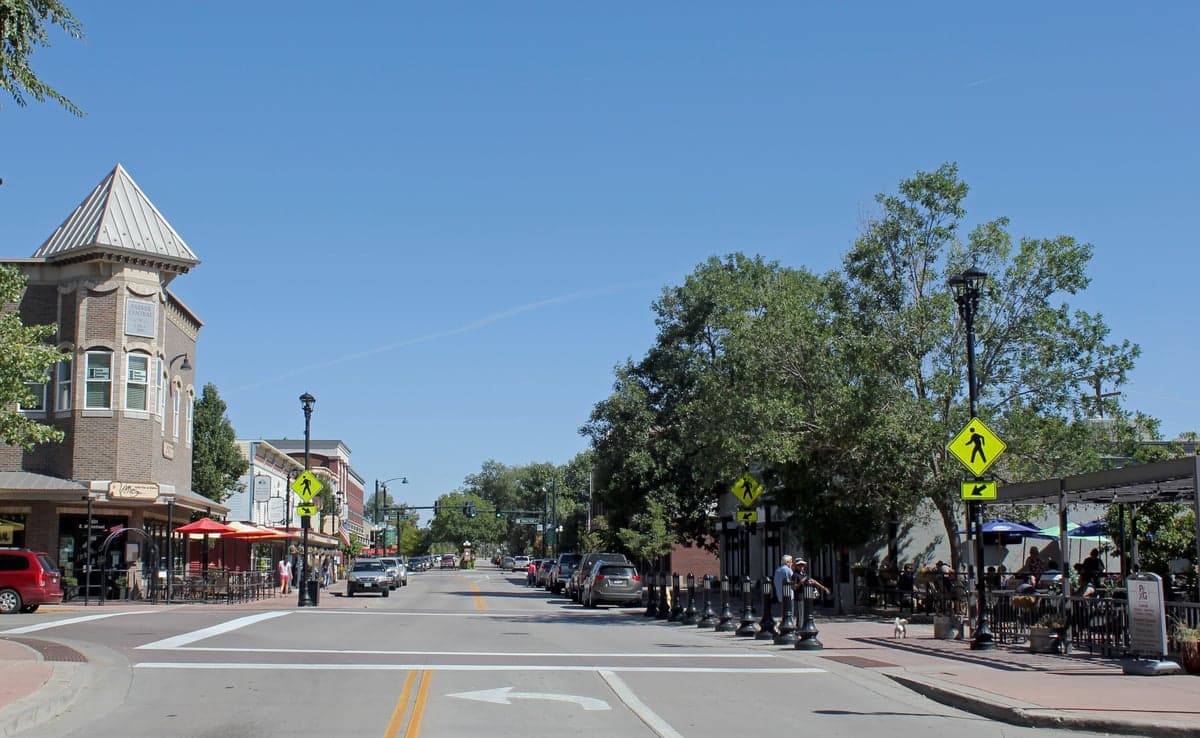
Parker’s original population was drawn by agriculture and the railroad in the late 19th century. The town was founded in the 1860s as a stagecoach stop and was officially platted in 1882 by James S. Parker, a local rancher. The early settlers were primarily Anglo-American homesteaders and ranchers who established small farms along Cherry Creek. The historic downtown district, centered on Mainstreet, retains the character of this era, with original buildings housing the families of merchants and railroad workers. For much of the first half of the 20th century, Parker remained a tiny agricultural hamlet, with a population that barely reached a few hundred. The town’s growth was stagnant until the post-World War II era, when improved highways and the rise of automobile commuting began to attract a trickle of new residents from Denver, though it remained a quiet, rural community through the 1960s.
Modern era (post-1965)
The modern population of Parker is almost entirely a product of domestic suburbanization that began in earnest after 1970 and accelerated dramatically after 1990. The 1965 Hart-Cellar Act had minimal direct impact here; Parker’s foreign-born share (4.2%) is far below the national average, and the city’s growth has been driven overwhelmingly by white, native-born Americans moving from other parts of Colorado and the Midwest. The first major wave of suburban development occurred in the 1970s and 1980s, centered on neighborhoods like Parker Valley and Ponderosa Hills, which attracted middle-class families seeking larger lots and a rural feel. The real explosion came in the 1990s and 2000s, when master-planned communities such as Stonegate, Cottonwood, and Prairie Center were built, drawing thousands of families from the Denver metro area who were priced out of closer-in suburbs. These neighborhoods are overwhelmingly white and owner-occupied, with very low rental rates. The Hispanic population (13.2%) is the largest minority group, concentrated in older, more affordable parts of town and in mobile home parks like those near Parker Road, often working in construction, landscaping, and service industries. The East/Southeast Asian community (3.1%) and the Indian-subcontinent community (2.5%) are smaller, professional-class populations that have settled primarily in newer, higher-end subdivisions like Meridian and Rowley Downs, drawn by the school system and tech-adjacent employment. The Black population (1.2%) remains very small, reflecting Parker’s historical and ongoing demographic profile as a predominantly white suburb.
The future
Parker’s population is likely to continue growing slowly, as the city is largely built out and new annexation opportunities are limited. The demographic trend is toward modest diversification, but the city is not tribalizing into distinct ethnic enclaves; rather, it is homogenizing around a white, upper-middle-class, family-oriented norm. The Hispanic share is expected to rise gradually, driven by natural increase and service-sector employment, but the foreign-born population is unlikely to grow significantly given the high cost of housing and the lack of rental stock. The East/Southeast Asian and Indian communities are plateauing, as they are not being replenished by new immigration at the same rate as in Denver or Aurora. The next 10–20 years will likely see Parker become slightly more Hispanic and slightly less white, but it will remain a predominantly native-born, English-dominant, and politically conservative suburb. The biggest demographic shift may be generational: as the large cohort of families who moved in during the 1990s and 2000s ages, the city will see a rising share of empty-nesters and retirees, potentially altering demand for housing types and services.
For someone moving in now, Parker is a stable, low-diversity, and highly educated community where the population is largely settled and the growth phase is winding down. It is a place where the dominant culture is white, professional, and family-centric, and where newcomers will find a population that is welcoming but relatively homogeneous. The city’s future is one of slow, incremental change rather than dramatic demographic transformation, making it a predictable choice for those seeking a consistent suburban environment.

* Values derived from national, state, county, city and local statistics and may differ in a specific area. Last updated: 2026-05-01T11:24:31.000Z
Narrative content on this page is AI-generated and may contain mistakes. Verify any details that matter before acting on them.
ReloMaps may earn a commission from affiliate links at no extra cost to you.

