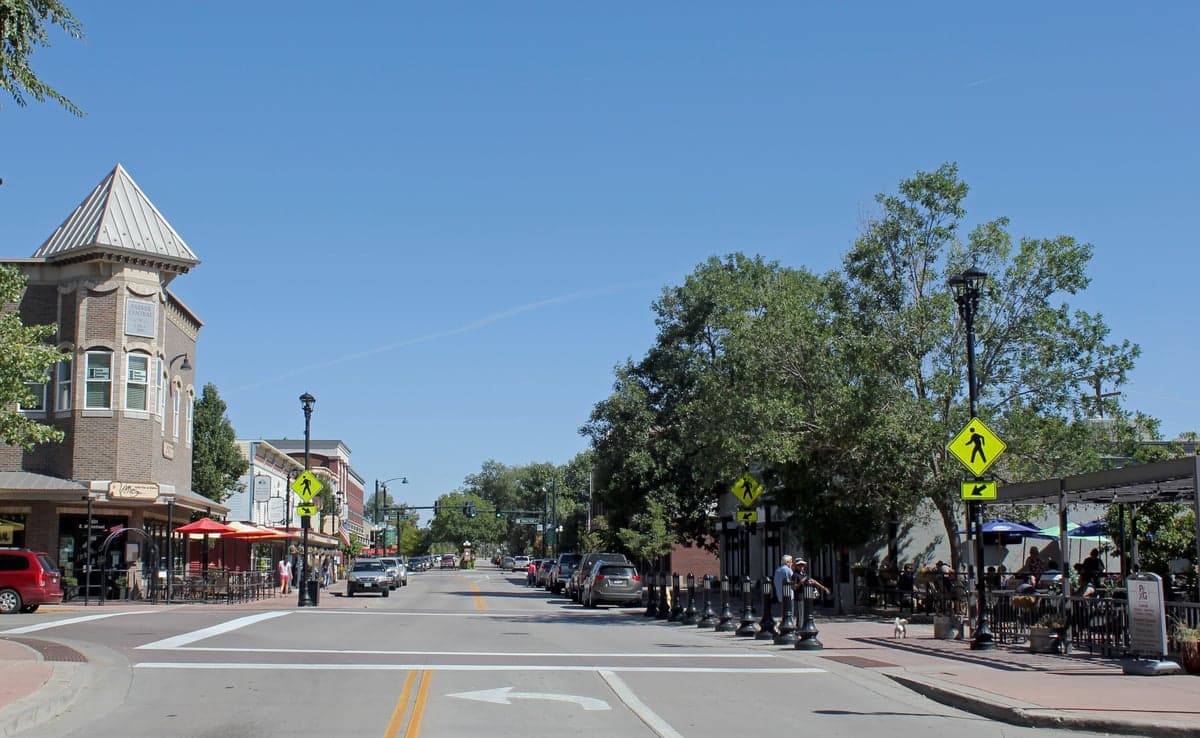
Photo: Wikipedia
Strategic Assessment of Parker, CO
Multiple tactical vulnerabilities. Population density, target proximity, or disaster risk are likely compounding. A retreat property and exit planning is required.
What does the Strategic Assessment tell us?
Our Strategic Assessment grades tactical survivability of an area. Major population centers, military targets, fallout zones, natural disasters, and border exposure all drive risk — lower exposure means a more defensible position in a crisis.
This is heavily inspired by Joel Skousen's Strategic Relocation book. Highly recommended you checkout the book ($)What does this tell us?
Our Strategic Assessment grades tactical survivability of an area. Major population centers, military targets, fallout zones, natural disasters, and border exposure all drive risk — lower exposure means a more defensible position in a crisis.
This is heavily inspired by Joel Skousen's Strategic Relocation book. Highly recommended you checkout the book ($)Strategic Pillars

Key Distances
Regional Safe Places
Below is our recommended "safe zones" in Colorado and the surrounding area based on our strategic heuristics. For most people, it's unrealistic to live in a “safe zone” full-time due to work, family or other personal reasons. They tend to be more rural. However, many of these areas are perfect for second homes and retreat properties that double as a vacation home or even a short-term rental.
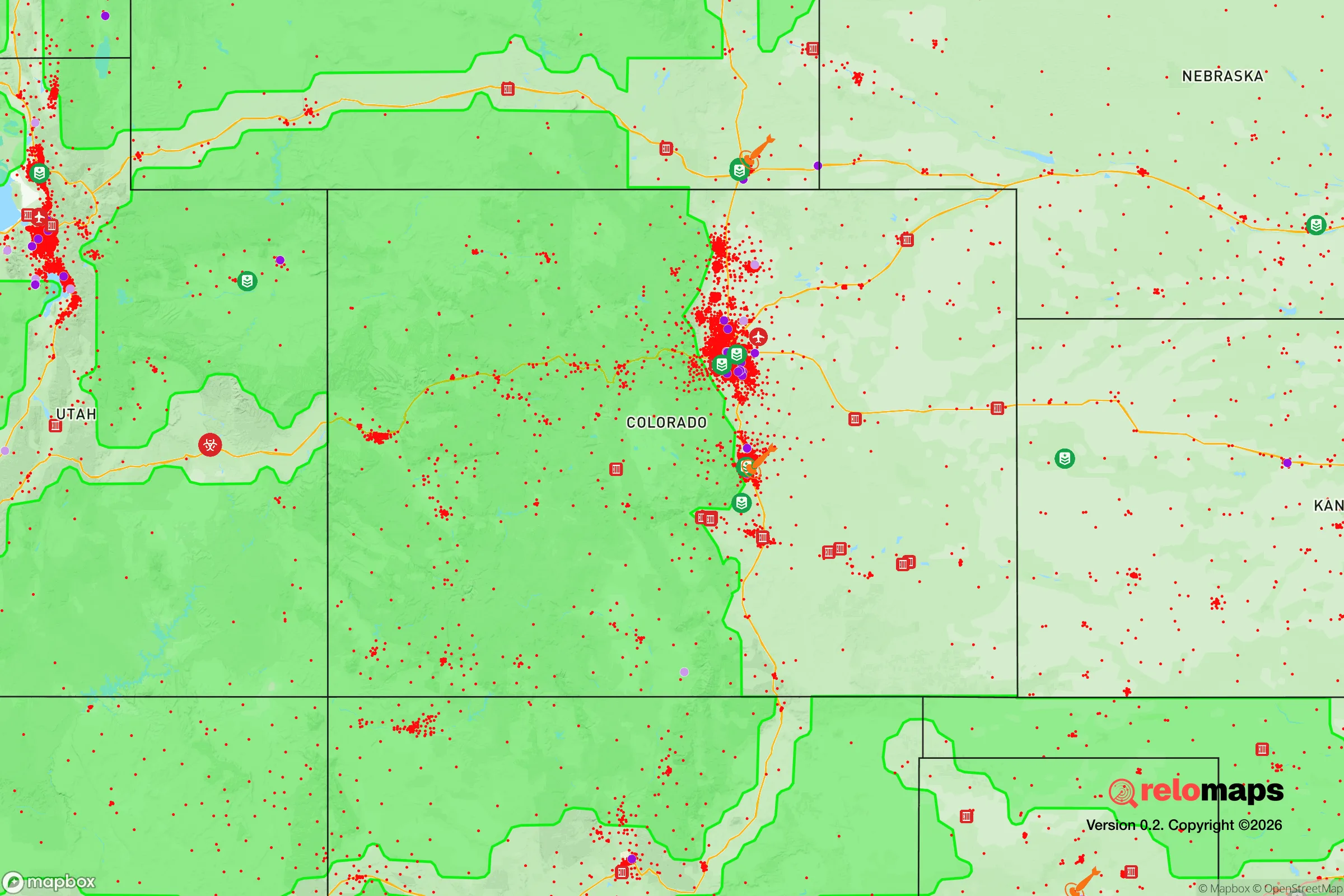
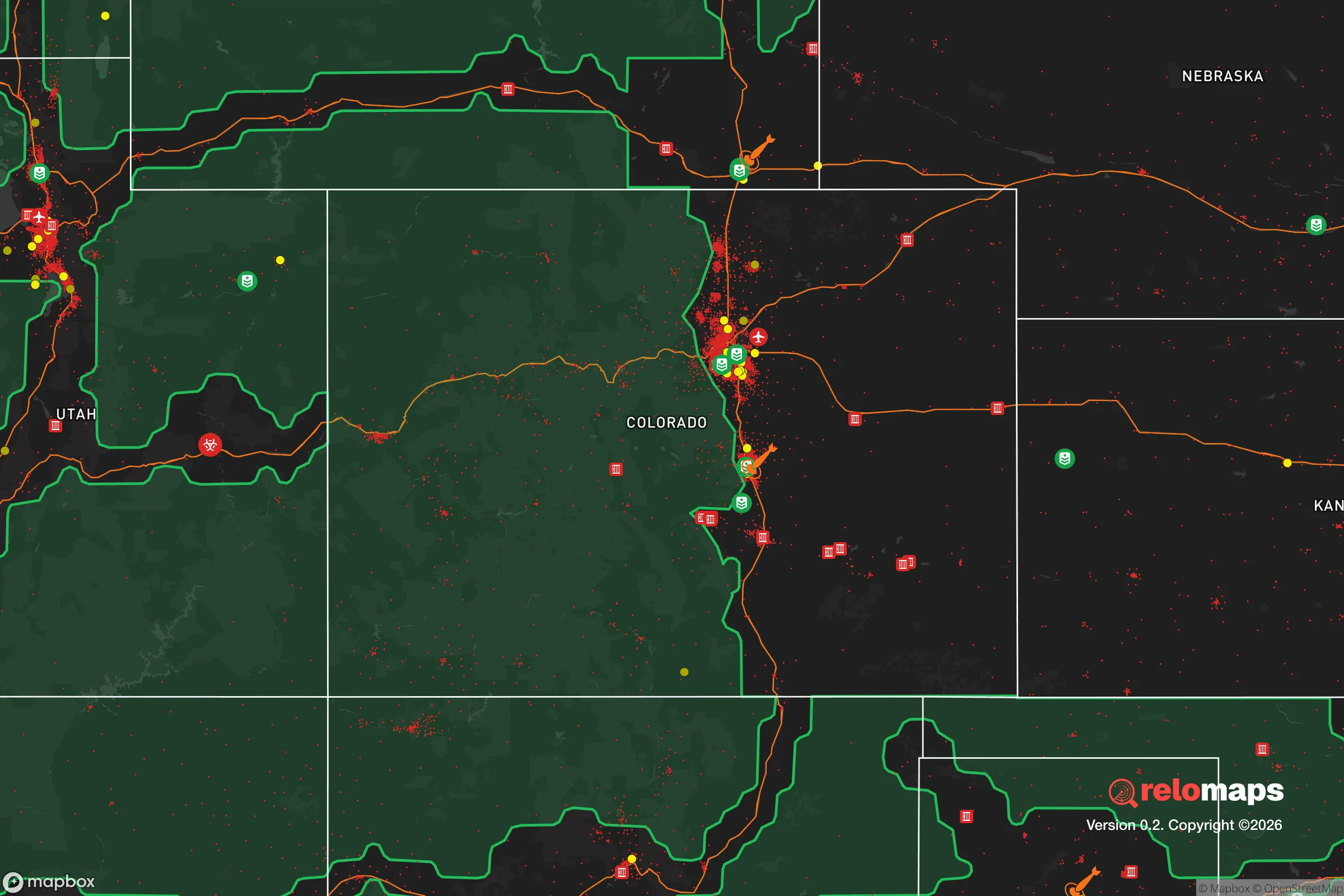


Important Note: For informational purposes only. This does not mean nothing bad ever happens in the green zones. Please use common sense. This is based on public data and modeled with AI. We tried to take a conservative approach but mistakes happen. We update this regularly as new information becomes available.
Solar Generator Recommendations
Backup power matters more here than in safer locations. We've picked three solar generators across budgets and capacity tiers — start with the budget unit if you only need a few essentials, or step up if you want to run a fridge and HVAC for days at a time.

Jackery Portable Power Station Explorer 300
Budget OptionPower on the Go: Weighing only 11 lbs, it's convenient to set up and store with book-sized foldable solar panels

BLUETTI Portable Power Station AC180
Designed for both indoor and outdoor scenarios, AC180 is highly capable as it has a robost capacity and continuous output power.

EF ECOFLOW DELTA Pro Ultra Power Station
Upgraded PickEcoFlow DELTA Pro Ultra is a whole-home energy system designed to grow with your family. Integrated with the Smart Home Panel 2, it scales to meet your evolving energy needs — keeping your home powered, intelligent, and secure through every stage of life.
We earn a commission, at no additional cost to you.
Strategic Assessment Analysis
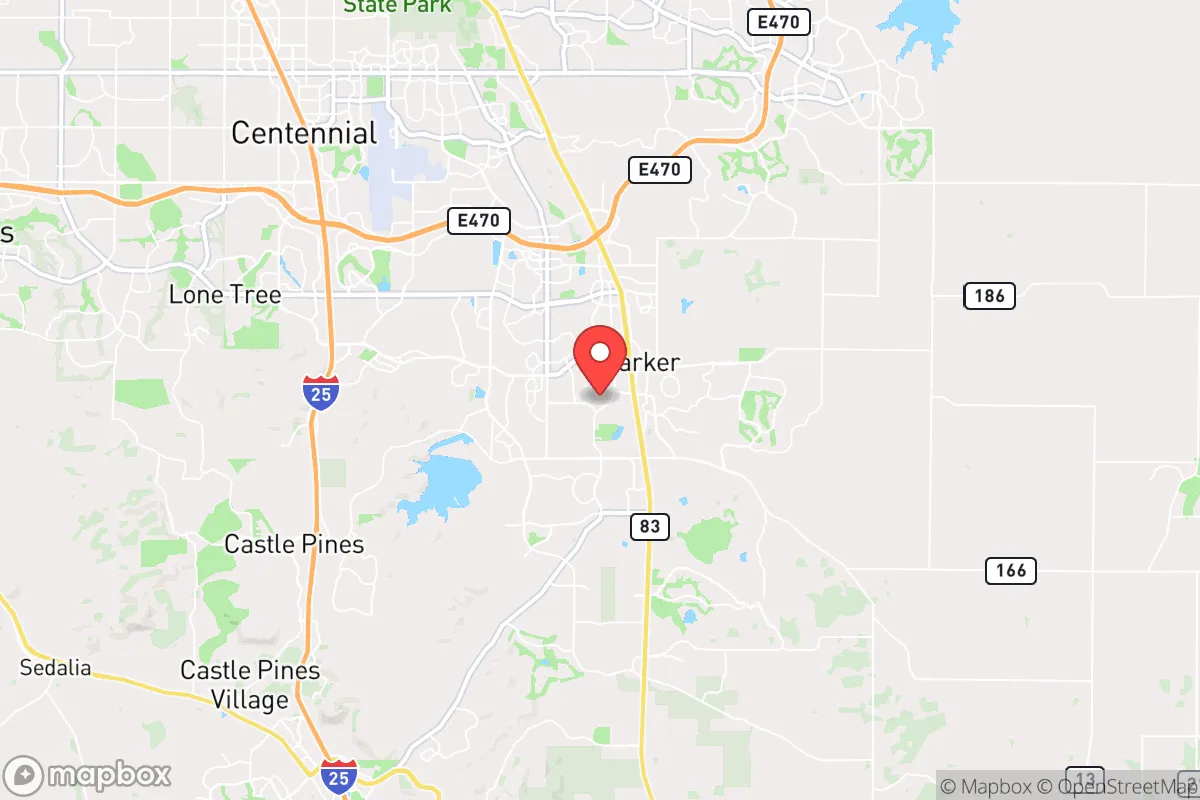
Parker, Colorado, sits in a strategic sweet spot that few relocation analysts fully appreciate: close enough to Denver’s economic engine to sustain a professional career, yet far enough from the urban core to offer genuine buffer during civic unrest or cascading infrastructure failures. The town’s position along the I-25 corridor, roughly 25 miles southeast of downtown Denver, places it outside the immediate blast radius of any high-value target in the metro area, while still allowing access to the Front Range’s food, fuel, and medical supply chains. For a relocator thinking in terms of decades, not just next year, Parker’s combination of suburban stability, open-space buffers, and limited industrial exposure makes it a defensible base of operations — provided you understand where the real vulnerabilities lie.
Geographic position and natural advantages for long-term security
Parker’s geography is its first line of defense. The town sits on the high plains at roughly 5,800 feet elevation, with the Rocky Mountain foothills rising to the west and the rolling prairie stretching east toward Kansas. This terrain creates natural chokepoints: the only major routes into Parker from Denver are I-25, E-470, and Parker Road (CO-83), all of which can be monitored or controlled during a crisis. The area’s low population density relative to the metro core — about 60,000 residents spread over 22 square miles — means you’re not competing with millions for resources when supply chains falter. The semi-arid climate, with less than 15 inches of annual precipitation, reduces flood risk and limits the spread of wildfires compared to forested mountain towns, though the grass-fire danger in dry years is real. Water access is the critical variable: Parker draws from the Denver Basin aquifer system and the South Platte River via the WISE partnership, but the aquifer is being depleted faster than it recharges, making long-term water independence a concern for anyone planning a 20-year stay. For a prepper, the takeaway is that Parker’s natural buffers are strong, but you cannot rely on municipal water alone — a well on your own property or a rainwater catchment system becomes a strategic necessity.
Risks, exposures, and proximity to fallout-relevant landmarks
The biggest vulnerability for Parker is its proximity to Denver’s critical infrastructure. Denver International Airport (DIA) is 20 miles north — a prime target for any coordinated attack or mass-casualty event involving aviation or logistics hubs. The Buckley Space Force Base in Aurora, 15 miles northwest, is a high-value military installation that could draw kinetic or cyber attacks during a major conflict. The I-25 corridor itself is a chokepoint: if a major earthquake along the Front Range (a low-probability but high-consequence event) or a coordinated sabotage campaign takes out the bridges near Castle Rock or the C-470 interchange, Parker becomes effectively isolated from Denver’s hospitals and supply depots. On the plus side, Parker has no major chemical plants, refineries, or nuclear facilities within its borders, so you’re not living next to a secondary target. The closest nuclear power plant is Fort St. Vrain (decommissioned, but still storing spent fuel) near Platteville, 45 miles north — outside the immediate fallout zone for most scenarios. The real risk is less a single explosion and more a cascading collapse: a cyberattack on the power grid that takes out the Front Range’s substations, followed by food shortages, civil unrest in Denver, and a refugee flow south along I-25. Parker’s position as a bedroom community means it has limited industrial base to sustain itself — most residents commute to Denver or Aurora for work, which becomes a liability if the roads are blocked or unsafe.
Practical resilience for a relocator: food, water, energy, and defensibility
For a relocator serious about self-sufficiency, Parker offers a mixed bag. Food production is feasible but not trivial: the growing season is short (about 120 frost-free days), and the clay-heavy soil requires amendment for vegetable gardening. The surrounding agricultural land is mostly cattle ranching and hay, not row crops, so local food sources are protein-heavy and grain-light. You’ll want to establish a greenhouse or hoop house to extend the season, and stockpile heirloom seeds that tolerate altitude and dry conditions. Water is the harder problem. Parker’s municipal water is treated and reliable in normal times, but during a prolonged grid outage or contamination event, you need a backup. Drilling a private well is possible in parts of Parker, but the Denver Basin aquifer is deep (300-1,000 feet) and expensive to tap — expect $15,000-$30,000 for a well that produces 5-10 gallons per minute. Rainwater collection is legal in Colorado but limited to 110 gallons per property without a permit, so you’ll need to work within state regulations or plan for a larger system if you’re on acreage. Energy resilience is more straightforward: Parker averages 300 sunny days per year, making solar panels a high-yield investment. The town has no net-metering cap for residential systems, so you can offset your entire usage and run critical loads during outages. Battery storage is essential — the grid is vulnerable to winter storms (remember the 2021 Texas-style freeze that hit Colorado in 2022) and summer wildfire shutoffs. Defensibility is where Parker shines. The town’s layout — a mix of suburban subdivisions, horse properties, and open-space corridors — means you can choose a home with good sightlines, limited access points, and neighbors who are likely armed and conservative. Douglas County has one of the highest rates of concealed-carry permits in Colorado, and the local sheriff’s office is pro-Second Amendment. For a single person or family, a home on a cul-de-sac near the town’s eastern edge, with a view of the prairie and a single road in, offers a defensible position that’s hard to beat in a metro-adjacent area.
The overall strategic picture for Parker is one of calculated trade-offs. You get the economic stability of a Denver suburb — good schools, low crime, a growing tax base — without living inside the blast radius of the city’s critical infrastructure. The natural buffers are real: open space, elevation, and limited industrial targets give you time to react during a crisis. But the water dependency, the commute-driven economy, and the proximity to DIA and Buckley mean you cannot afford complacency. Parker is not a bug-out location; it’s a stand-and-hold location for someone who wants to maintain a professional life while building a resilient homestead. If you’re willing to invest in a well, solar, and a serious food-storage program, and you’re comfortable with the reality that a major event will bring Denver’s chaos to your doorstep within 48 hours, then Parker offers a rare combination of opportunity and defensibility. If you want total isolation and zero risk, look farther east to the plains or deeper into the mountains. But for a relocator who wants to stay connected to the modern economy while preparing for the worst, Parker is one of the better bets on the Front Range.

* Values derived from national, state, county, city and local statistics and may differ in a specific area. Last updated: 2026-05-01T11:24:31.000Z
Narrative content on this page is AI-generated and may contain mistakes. Verify any details that matter before acting on them.
ReloMaps may earn a commission from affiliate links at no extra cost to you.

