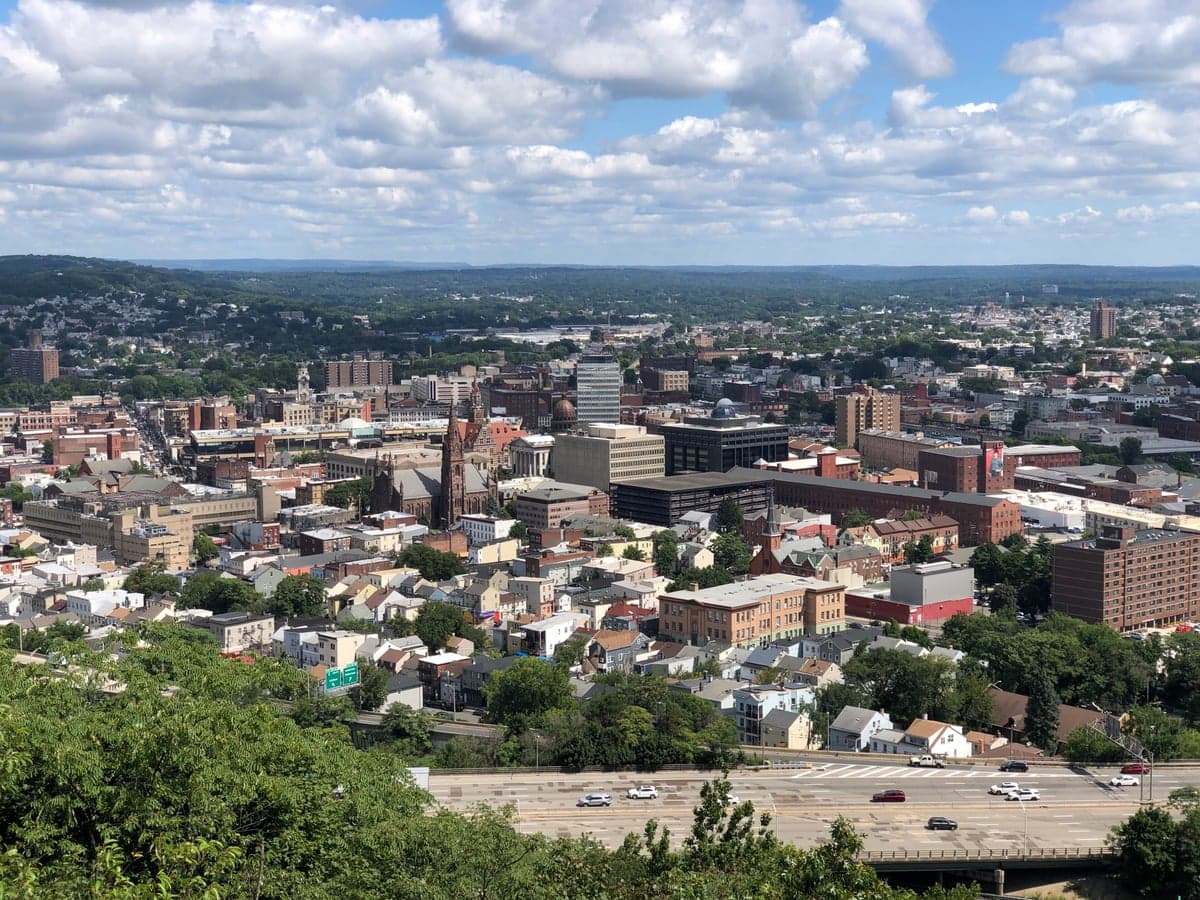
Photo: Wikipedia
Political ClimatePolitical Climate in Paterson, NJ
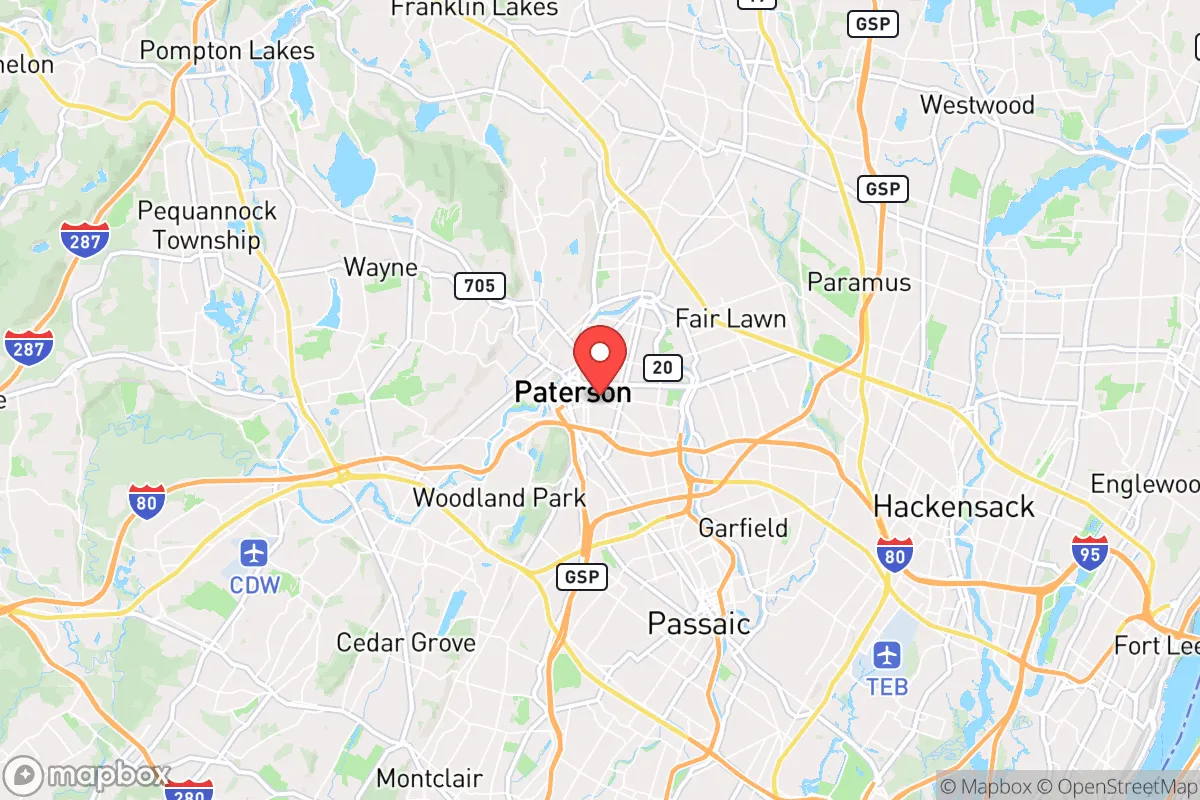
District shown is the primary district for this city’s centroid. Cities may span multiple districts.
Local Political AnalysisPolitical Analysis of Paterson, NJ
Paterson, New Jersey, has been a Democratic stronghold for decades, and with a Cook PVI of D+2, it leans reliably blue, but it’s not the kind of deep-blue lock you see in places like Newark or Jersey City. The city’s political trajectory has shifted noticeably leftward over the past ten years, especially on social and cultural issues, which is something that gives me pause if you value personal freedoms and limited government. Back in the 90s and early 2000s, Paterson was more of a moderate, working-class Democratic town—folks were focused on jobs, public safety, and keeping taxes in check. Now, there’s a growing push for progressive policies that feel like they’re creeping into everyday life, from zoning rules that favor big developers to local ordinances that can feel heavy-handed on things like property use and business regulations.
How it compares
If you drive just a few miles west to Wayne or north to Hawthorne, you’ll find towns that lean more Republican or are at least politically mixed, with lower taxes and a more hands-off approach to local governance. Paterson, by contrast, has a city council and mayor’s office that have consistently backed state-level progressive initiatives—think stricter environmental mandates, expanded paid leave requirements, and a general openness to higher taxes to fund social programs. Surrounding Passaic County towns like Clifton and Woodland Park are more politically balanced, but Paterson’s urban core tends to vote as a bloc, which means its representatives often push for policies that can feel like government overreach, especially on property rights and small business regulations. The contrast is stark: in Paterson, you might face more red tape opening a small shop or renovating a home than you would in a town like Totowa, where local government tends to stay out of your way.
What this means for residents
For the average person living here, the political climate translates into a few concrete realities. First, property taxes are among the highest in the state, and they keep climbing because the city’s budget relies heavily on them to fund services that are often inefficient. Second, there’s a growing sense that local government is more interested in symbolic progressive gestures—like sanctuary city policies or climate resolutions—than in fixing potholes, keeping streets safe, or cutting the bureaucratic nonsense that makes it hard to run a business. If you value personal freedom, you’ll notice that the city’s approach to public health and safety can feel intrusive, with mandates and ordinances that go beyond what neighboring towns require. Long-term, I see Paterson continuing to drift left, especially as younger, more progressive voters move in and older, more moderate residents move out to places like Haledon or Prospect Park, where the political vibe is a bit more live-and-let-live.
Culturally, Paterson has always been a diverse, blue-collar city with a strong immigrant tradition, but the policy distinctions are becoming sharper. The city has embraced a “sanctuary” stance and actively limits cooperation with federal immigration enforcement, which is a double-edged sword—it can make some feel protected, but it also strains local resources and can create friction with state and federal authorities. On the plus side, there’s a real community spirit here, and many residents are fiercely independent, but the political machine in Trenton and the local progressive push make it harder to just live your life without government getting in the way. If you’re considering moving here, keep an eye on the school board and city council elections—those are where the real battles over your rights and your wallet are fought.

State Political ClimatePolitical Climate in New Jersey
State Political AnalysisPolitical Environment in the State
New Jersey has long been a blue state, but its political complexion is more nuanced than the simple "Democratic stronghold" label suggests. For decades, the state has leaned reliably Democratic in presidential elections — voting for the Democratic candidate by double digits since 1992 — but the coalition that produces that margin is fracturing. The real story is a growing urban-suburban divide, with the state's deep-blue core in Newark, Jersey City, and the Hudson County corridor increasingly at odds with a restive, tax-burdened suburban and rural population that has been drifting rightward since the mid-2010s. If you're considering a move here, understand that the political climate is not monolithic: your experience will depend heavily on whether you land in a dense, transit-oriented city or a more spread-out, family-oriented suburb.
Urban vs. rural divide
The political map of New Jersey is essentially a tale of two states. The northeast corridor — Essex County (Newark), Hudson County (Jersey City, Hoboken), and parts of Bergen and Union counties — is the engine of Democratic dominance. These areas are dense, diverse, and heavily reliant on public transit and government services. They vote 70-80% Democratic and produce the lion's share of the state's blue margin. In contrast, South Jersey and the western exurbs are more conservative. Ocean County, for example, voted for Trump by 18 points in 2024, while Sussex County went +22 for Trump. The Pinelands region and rural areas like Hunterdon and Salem counties are reliably red, driven by a mix of farming, hunting, and a strong independent streak. The suburbs of Morris County and Somerset County are the true battlegrounds — they were once reliably Republican but have shifted toward Democrats in the Trump era, though local races remain competitive. If you're looking for a politically like-minded community, you'll find it in places like Toms River (Ocean County) or Newton (Sussex County), but you'll be surrounded by blue if you settle in Montclair or Maplewood.
Policy environment
New Jersey's policy environment is a textbook case of progressive governance with a heavy hand. The state has the highest property taxes in the nation — averaging over $9,500 annually — and the second-highest overall tax burden. The income tax is progressive, topping out at 10.75% for income over $1 million, but the middle class feels the squeeze from the combination of property, sales, and income taxes. The regulatory posture is dense: the state has its own environmental standards that often exceed federal ones, a strict gun permit system (among the toughest in the country), and a mandated paid family leave program that employers must fund. On education, New Jersey spends more per pupil than almost any other state, but the results are uneven — wealthy suburbs like Millburn and Princeton have world-class schools, while urban districts like Newark and Camden struggle. Healthcare is heavily regulated, with a state-run insurance exchange and strict certificate-of-need laws that limit hospital expansion. Election laws are among the most liberal: no-excuse mail-in voting, automatic voter registration, and same-day registration are all in place. For a conservative-leaning resident, the policy environment feels like a constant tug-of-war between personal freedom and government intervention.
Trajectory & freedom
Over the past decade, New Jersey has become less free by almost any measure. The state has expanded its gun control regime multiple times, most recently with the 2022 "Gun Safety Package" that banned .50 caliber rifles, raised the purchase age to 21, and required microstamping on handguns. On parental rights, the state has moved in the opposite direction of many red states: in 2024, the legislature passed a law that prevents school districts from notifying parents if a child changes their gender identity or pronouns, overriding local control. Medical autonomy took a hit with the 2023 law that mandated COVID-19 vaccines for healthcare workers without a religious exemption, a policy that remains in effect. Property rights are constrained by the state's aggressive use of eminent domain and the Mount Laurel Doctrine, which forces municipalities to zone for affordable housing, often overriding local zoning decisions. The tax burden continues to rise — the 2024 budget included a new "millionaire's tax" surcharge and an increase in the corporate business tax. For someone who values personal liberty, the trajectory is unmistakably toward more government control, not less.
Civil unrest & political movements
New Jersey has seen its share of political flashpoints. The 2020 Black Lives Matter protests were large and occasionally violent in Newark and Jersey City, with property damage and clashes with police. The state's sanctuary policies are among the most aggressive in the nation — the 2018 "Immigrant Trust Directive" prohibits state and local law enforcement from cooperating with ICE in most circumstances, and the 2023 "Immigrant Protection Act" expanded those protections. This has created tension in communities like Paterson and Elizabeth, where immigration enforcement is a live issue. On the right, the New Jersey Second Amendment Society has been active in lawsuits and protests, particularly after the 2022 gun law. The 2020 election integrity debate was muted compared to swing states, but there were localized controversies in Ocean County over mail-in ballot procedures. The Parents' Rights movement has gained traction in suburban school board races, especially in Middletown and Freehold, where battles over curriculum and library books have been intense. A new resident would notice that political activism here is less about street protests and more about school board meetings, zoning hearings, and legal challenges.
Projection
Looking ahead 5-10 years, New Jersey's political trajectory is likely to continue its leftward drift, but with growing friction. The state's demographic trends are working against conservatives: the population is aging, but the younger, more diverse urban cores are growing faster than the rural areas. In-migration patterns are mixed — the state loses residents to Florida and Texas, but gains from New York and Pennsylvania, often bringing progressive attitudes. The suburban shift toward Democrats in places like Morris and Somerset counties seems durable, driven by college-educated voters who prioritize social issues over taxes. However, the tax burden is reaching a breaking point. If the state continues to raise taxes to fund pension obligations (the state has the worst-funded pension system in the country), you could see a backlash that flips some legislative seats in 2027 or 2029. The wild card is the Mount Laurel affordable housing mandate, which is forcing suburban towns to build high-density housing — this could change the political complexion of formerly conservative suburbs. For someone moving in now, expect a state that remains solidly blue but with a growing, vocal minority pushing back against the direction of policy.
For a conservative-leaning individual or family considering New Jersey, the bottom line is this: you can find a community that shares your values, but you will be swimming against the current of state policy. The tax burden is heavy and likely to get heavier. Your gun rights will be severely restricted. Your children's education will be subject to state mandates that may conflict with your values. But if you choose wisely — a town like Jackson in Ocean County or Wantage in Sussex County — you can find good schools, safe neighborhoods, and a like-minded community. Just know that the state government in Trenton will be working against you on most issues that matter to conservatives. It's a trade-off: proximity to New York City and Philadelphia, excellent infrastructure, and natural beauty, in exchange for a constant battle over your wallet and your freedoms.
* Values derived from national, state, county, city and local statistics and may differ in a specific area. Last updated: 2026-05-02T13:03:33.000Z
Narrative content on this page is AI-generated and may contain mistakes. Verify any details that matter before acting on them.
ReloMaps may earn a commission from affiliate links at no extra cost to you.

