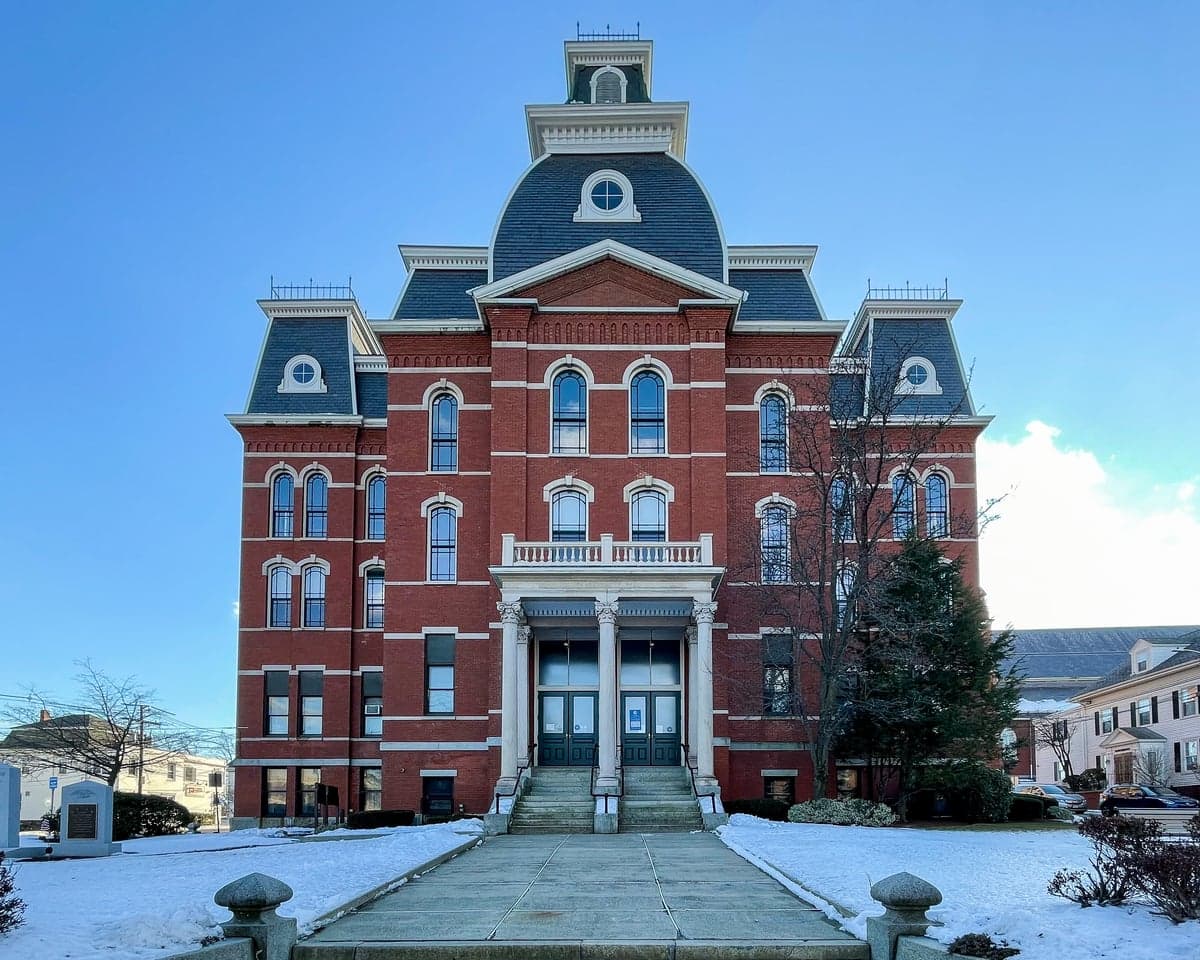
Photo: Wikipedia
Demographics of Peabody, MA
Affluence Level in Peabody, MA
An upper-middle-class area. Household wealth, education levels, and homeownership run ahead of national benchmarks.
People of Peabody, MA
Peabody, Massachusetts is a densely settled, predominantly white city of 54,180 residents, where a historic working-class identity rooted in leather tanning and manufacturing is giving way to a more diverse, suburban character. The city is notably less foreign-born than the state average, with just 6.2% of residents born outside the U.S., yet it has absorbed significant Hispanic and East/Southeast Asian populations in recent decades. Distinct neighborhoods like West Peabody, South Peabody, and the Downtown corridor each carry the imprint of different settlement waves, from Irish and Italian immigrants to newer Brazilian and Vietnamese families. For a conservative-leaning mover, Peabody offers a stable, family-oriented environment with a strong sense of local identity, though its demographic profile is slowly shifting toward greater ethnic variety.
How the city was settled and grew
Peabody’s population history begins with its 17th-century founding as part of Salem, from which it was set off in 1752 as the town of Danvers. The city’s real growth engine was the leather tanning industry, which exploded in the early 1800s and made Peabody the world’s leading leather producer by the late 19th century. This industry drew successive waves of immigrants: first the Irish, who built St. John’s Church and settled in the Downtown and Proctor neighborhoods near the tanneries; then French-Canadians, who formed a tight-knit community around West Peabody and established St. Jean Baptiste Parish; and later Italians, who concentrated in South Peabody and the Lynnfield Street area. By 1900, the city’s population had surged past 11,000, and it was incorporated as a city in 1916. The Polish and Lithuanian communities also arrived in the early 1900s, settling near the industrial rail corridor. These groups built the city’s dense triple-decker housing stock and Catholic parish network, creating a blue-collar, ethnically European character that persisted through the mid-20th century.
Modern era (post-1965)
After the 1965 Hart-Cellar Act, Peabody’s immigrant stream shifted away from Europe. The most notable post-1965 arrivals have been Hispanic immigrants—primarily from Puerto Rico, the Dominican Republic, and Central America—who now make up 12.4% of the population. These families have concentrated in West Peabody and the Downtown area, where older, more affordable housing stock and proximity to bus lines and Route 1 retail corridors provide entry points. East/Southeast Asian communities, including Vietnamese and Chinese families, account for 1.9% of residents and are most visible in South Peabody and near the Northshore Mall district, where Asian-owned businesses have opened. The Indian-subcontinent population remains tiny at 0.1%. Meanwhile, domestic in-migration from Boston and the inner suburbs has accelerated since 2000, bringing younger, college-educated professionals (now 33.9% of adults) into neighborhoods like Brooksby Village and the newer subdivisions off Lowell Street. This group has pushed the city’s median home value above $500,000 and spurred a wave of condo conversions and downtown revitalization. The Black population, at 3.6%, is small but growing, with families settling in West Peabody and near the Route 114 corridor.
The future
Peabody’s population is trending toward greater diversity, but at a slower pace than neighboring Salem or Lynn. The white share (76.7%) is declining gradually as older European-ethnic residents age out and younger, more diverse families move in. The Hispanic share is the fastest-growing segment, projected to reach 15-17% by 2035, driven by both immigration and higher birth rates. East/Southeast Asian growth is steady but modest, concentrated in the South Peabody and Northshore Mall areas. The city is not tribalizing into stark ethnic enclaves—most neighborhoods remain mixed—but West Peabody is becoming a de facto Hispanic hub, while South Peabody retains a strong Italian-American and East Asian character. The college-educated cohort is expanding, which may accelerate gentrification of the Downtown and Proctor districts. The foreign-born share is likely to rise slowly, but Peabody will remain a predominantly native-born, English-dominant city for the foreseeable future.
For a mover today, Peabody is a stable, middle-class city where the old ethnic European identity is fading but not gone, and where new Hispanic and Asian communities are integrating without major friction. It offers good schools, low crime, and proximity to Boston, but at a higher cost of entry than a decade ago. The city is becoming more diverse and more educated, but it remains a fundamentally family-oriented, suburban place—not a melting pot, but a quiet mosaic of distinct neighborhoods.

* Values derived from national, state, county, city and local statistics and may differ in a specific area. Last updated: 2026-04-19T10:18:06.000Z
Narrative content on this page is AI-generated and may contain mistakes. Verify any details that matter before acting on them.
ReloMaps may earn a commission from affiliate links at no extra cost to you.

