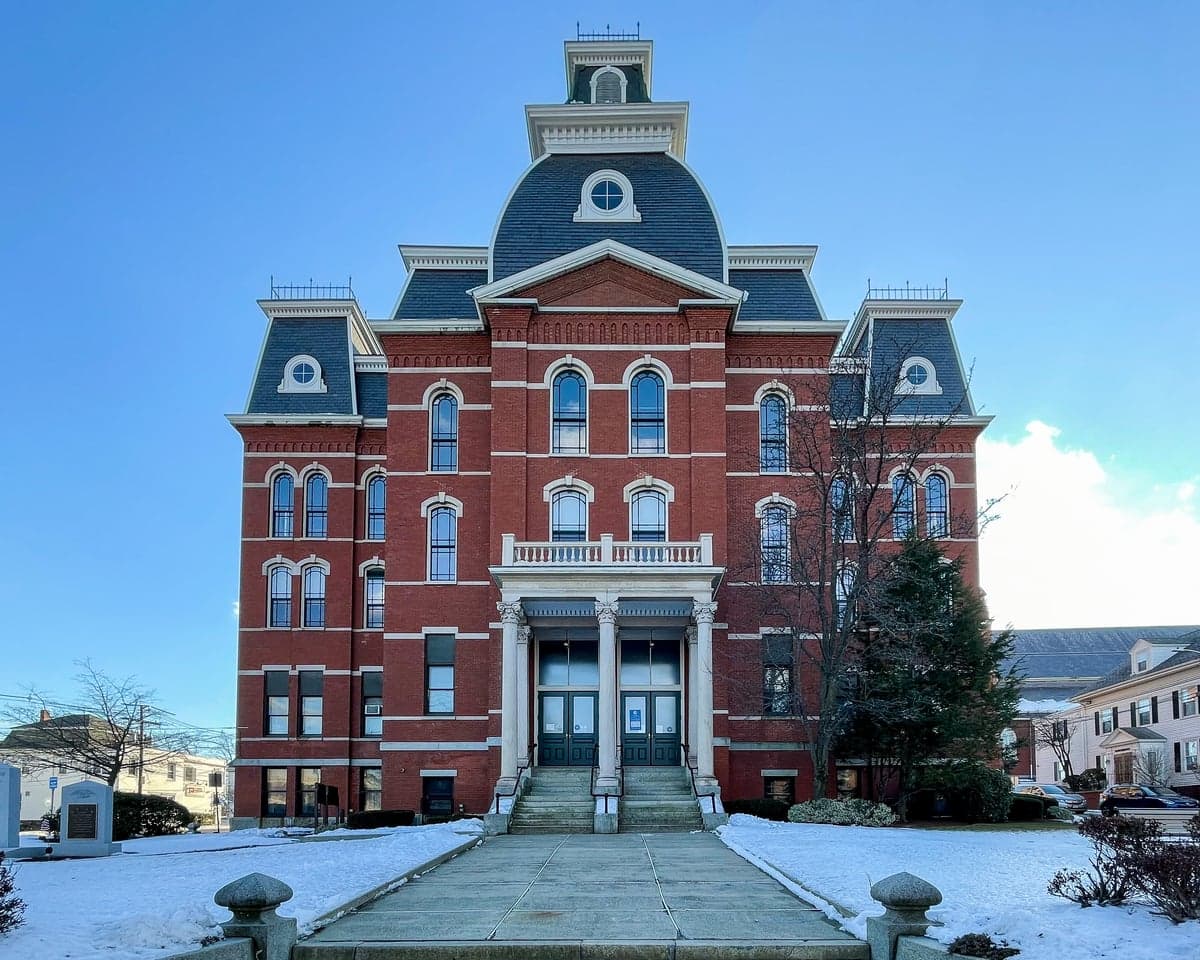
Photo: Wikipedia
Political ClimatePolitical Climate in Peabody, MA
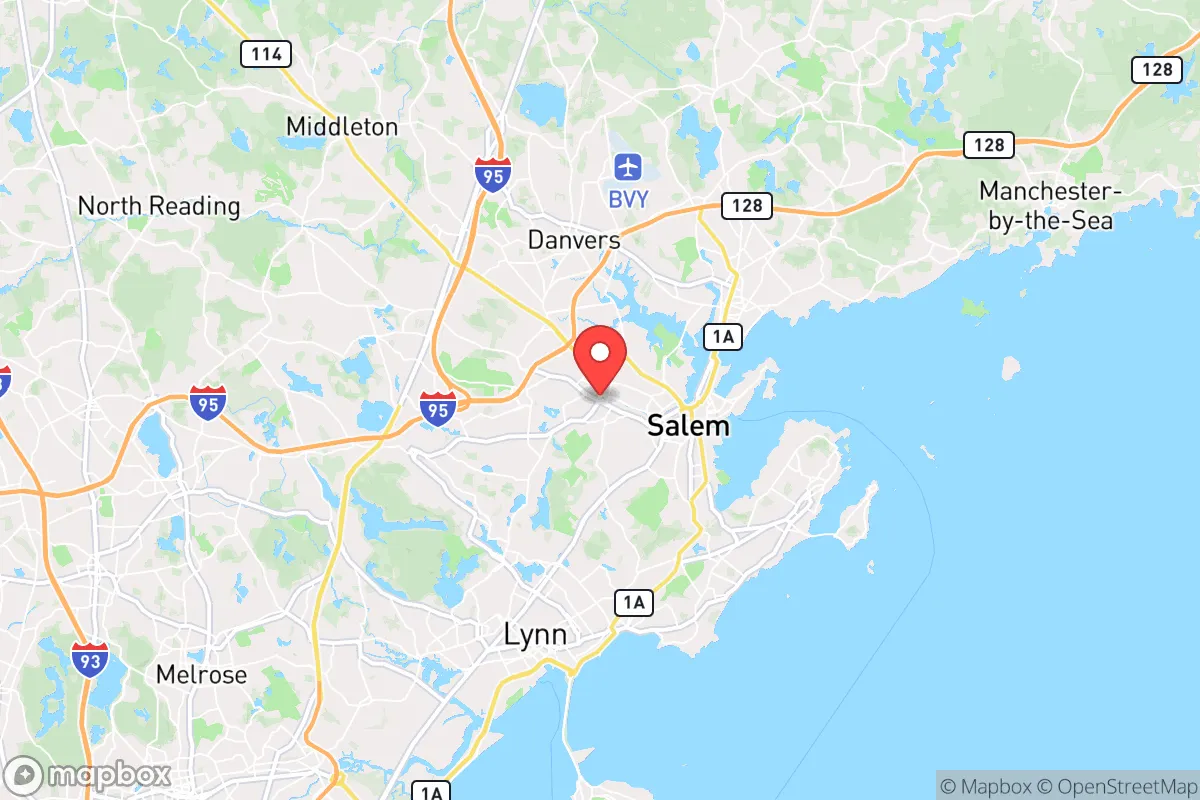
District shown is the primary district for this city’s centroid. Cities may span multiple districts.
Local Political AnalysisPolitical Analysis of Peabody, MA
Peabody, Massachusetts, has a political climate that leans heavily Democratic, with a Cook PVI of D+11, meaning it votes about 11 points more Democratic than the national average. But if you've lived here as long as I have, you know that's not the whole story. This used to be a solidly blue-collar, union Democrat town—the kind where folks voted for the party out of habit, not because they agreed with every progressive idea. Over the last decade or so, though, the shift has been real. The old-school, "live and let live" Democrats are being pushed out by a younger, more activist crowd that's less interested in local concerns and more focused on national social agendas. It's not the Peabody I grew up in, and honestly, it's getting harder to recognize.
How it compares
To understand Peabody's politics, you have to look at the neighbors. Drive ten minutes north to Danvers, and you'll find a town that's still more balanced—still has a strong Republican presence, especially in local races. Head west to Lynnfield, and it's even more conservative, with a lot of families who moved out of Boston for better schools and lower taxes. But Peabody? It's surrounded by places like Salem (D+20 or worse) and Lynn (deep blue), so the pressure to fall in line with progressive orthodoxy is constant. The city council and school board have become echo chambers for the same talking points you hear on cable news. There's very little pushback on things like zoning changes that favor developers over single-family homeowners, or curriculum shifts that prioritize social justice over reading and math. If you're a conservative or even a moderate, you feel like a minority in your own town.
What this means for residents
For the average family, this political tilt has real consequences. Property taxes keep creeping up, and the city's response is always "we need more revenue," never "let's cut spending." There's a growing sense that government overreach is becoming the norm—from mask mandates that lasted longer than in surrounding towns to a local energy committee pushing net-zero building codes that will make renovations more expensive. The school system has embraced DEI initiatives that, frankly, divide kids rather than unite them. And if you speak up at a city council meeting about fiscal responsibility or parental rights, you get labeled as "out of touch." The long-term trend is concerning: as more people move in from Boston and Cambridge, the political center of gravity shifts further left, and the old Peabody—the one where your neighbor didn't care how you voted as long as you kept your lawn mowed—is fading fast.
Culturally, Peabody still has its charms. The Italian and Irish heritage runs deep, and you can still get a good sub at a corner deli where the owner knows your name. But the policy direction is unmistakable. The city is pushing for more density, more bike lanes, and more "equity" initiatives that sound good on paper but often mean more bureaucracy and less personal freedom. If you value being left alone to raise your family without the government meddling in every aspect of your life, Peabody is becoming a tougher place to call home. I'd keep an eye on the next few election cycles—if the trend holds, this town might not be recognizable in another ten years.

State Political ClimatePolitical Climate in Massachusetts
State Political AnalysisPolitical Environment in the State
Massachusetts has long been one of the most reliably Democratic states in the nation, but the political reality on the ground is far more nuanced than the deep-blue label suggests. Over the past 20 years, the state has shifted from a moderate, business-friendly Democratic stronghold to a progressive laboratory, with the legislature and governor’s office consistently controlled by Democrats who have pushed through sweeping policy changes. While the state hasn’t voted for a Republican presidential candidate since 1984, the real story is the growing urban-rural chasm, the acceleration of one-party rule, and the quiet exodus of conservatives and moderates to places like New Hampshire, Florida, and Texas.
Urban vs. rural divide
The political map of Massachusetts is a tale of two worlds. The Boston metro area—including Boston proper, Cambridge, Somerville, and Brookline—is the engine of the state’s progressive tilt, routinely delivering 80-90% of the vote to Democrats. These dense, educated, and affluent communities drive state policy through sheer population weight. Western Massachusetts, particularly Springfield, Northampton, and Amherst, is also reliably blue, though with a more activist, left-wing flavor. The real contrast lies in the central and southeastern parts of the state. Worcester County has become a bellwether: while the city of Worcester itself leans Democratic, the surrounding towns like Holden, Paxton, and Rutland vote Republican by wide margins. The South Shore and Cape Cod—places like Plymouth, Sandwich, and Barnstable—have shifted rightward in recent cycles, with many towns flipping from blue to red in 2020 and 2024. The rural hill towns of the Berkshires and the North Quabbin region are also deeply conservative, but their votes are drowned out by the Boston behemoth. In 2024, Middlesex County (home to Cambridge and Lowell) voted 68% for Biden, while Barnstable County on the Cape voted 52% for Trump—a 16-point gap that shows the geographic fracture.
Policy environment
Massachusetts has one of the highest tax burdens in the country, and it’s only getting heavier. The state income tax is a flat 5%, but a 2022 ballot question (Question 1) added a 4% surtax on income over $1 million, effectively creating a 9% top marginal rate. Property taxes are high, especially in the Boston suburbs, and the state’s sales tax is 6.25%. The regulatory environment is dense: businesses face strict environmental rules, a $15 minimum wage (indexed to inflation), and a paid family and medical leave program funded by payroll deductions. On education, Massachusetts spends more per pupil than almost any other state, and its public schools are top-ranked nationally—but the system is heavily centralized, with the state Board of Education controlling curriculum and testing. School choice is limited; charter schools are capped, and there is no voucher program. Healthcare is dominated by the state’s 2006 reform law (Romneycare), which served as the model for the ACA. The state has its own health insurance exchange and mandates coverage. Election laws are among the most liberal: no-excuse mail-in voting, same-day registration, and early voting are permanent. Voter ID is not required at the polls, though a signature check is used. The state has also banned the use of ranked-choice voting after a 2020 ballot question passed in only a few cities.
Trajectory & freedom
Over the past decade, Massachusetts has moved decisively toward expanding government control over personal choices, while contracting individual freedoms in several key areas. On gun rights, the state already had some of the strictest laws in the nation, but in 2024, Governor Maura Healey signed the Massachusetts Gun Safety Act, which bans the sale of certain semi-automatic rifles, requires serialization of homemade firearms, and expands “red flag” orders. The law also prohibits carrying firearms in most government buildings and on public transit. On parental rights, the state passed the Parentage Act in 2022, which allows courts to recognize multiple legal parents without requiring a biological or marital connection—a move critics say undermines traditional family structures. In 2023, the legislature overrode Governor Charlie Baker’s veto to pass the Work and Family Mobility Act, which allows undocumented immigrants to obtain driver’s licenses. Medical autonomy has been expanded in some areas (telehealth, abortion access codified into law in 2020), but restricted in others: the state has a strict vaccine mandate for schoolchildren, and during COVID, Massachusetts had one of the longest-lasting mask mandates in the country. Property rights are constrained by the state’s Chapter 40B law, which allows developers to bypass local zoning if they include affordable housing—a policy that has led to dense development in suburban towns. The state’s Millionaire’s Tax (2022) and the push for a progressive income tax signal that the tax burden will only increase. Overall, the trajectory is toward less personal freedom, more mandates, and higher costs.
Civil unrest & political movements
Massachusetts has seen its share of political flashpoints, though large-scale civil unrest is rare compared to other states. The most visible recent movement has been the parental rights protests that erupted in 2021-2022, particularly in suburban towns like Lexington, Needham, and Wellesley, where parents objected to critical race theory and gender ideology in school curricula. These protests were met with fierce opposition from teachers’ unions and school boards, and in many cases, parents were labeled as extremists. The state’s sanctuary status—Massachusetts is a “Trust Act” state, meaning local law enforcement cannot detain individuals based solely on immigration status—has been a flashpoint in cities like Lawrence, Lowell, and Chelsea, where immigrant populations are large. In 2023, a controversy erupted in Methuen when the city council voted to limit shelter access for undocumented migrants, only to be overruled by the state. Election integrity has been a quieter issue, but the 2020 and 2024 cycles saw allegations of irregularities in mail-in ballot processing in Boston and Springfield, though no major court cases resulted. The state’s Second Amendment sanctuary movement has been active in rural towns like Sturbridge, Spencer, and Athol, where local resolutions opposing new gun laws have passed. On the left, the Sunrise Movement and Extinction Rebellion have held protests in Boston, and the Boston Workers Alliance has pushed for police reform. The overall climate is one of low-grade tension: the progressive majority in the legislature is secure, but the conservative minority is increasingly vocal and organized, especially in the exurbs and rural areas.
Projection
Looking ahead five to ten years, Massachusetts is likely to become even more progressive, but with a growing conservative counter-movement in the suburbs and rural areas. Demographic trends favor the left: the state’s population is aging, but in-migration from other states (especially New York and California) is bringing more progressive voters to the Boston area. The out-migration of conservatives to New Hampshire, Florida, and Texas is accelerating, particularly among families with school-age children who are frustrated by high taxes and education policies. The state’s housing crisis—driven by strict zoning and high demand—will likely push more people out, further concentrating the remaining population in the urban core. Politically, expect the legislature to continue passing progressive legislation: a public option for health insurance, a wealth tax, and stricter environmental regulations are all on the table. The Republican Party in Massachusetts is weak and fractured, with no clear statewide leader. The best-case scenario for conservatives is that the state’s high cost of living and regulatory burden will eventually trigger a backlash, but that is unlikely to shift the overall balance of power. A new resident moving in now should expect to live in a state where the government is deeply involved in daily life, taxes are high and rising, and personal freedoms—especially around guns, education, and medical choices—are increasingly constrained.
For a conservative-leaning individual or family considering Massachusetts, the bottom line is this: you will be in a political minority, and the state’s policies will often conflict with your values. The schools are excellent, the economy is strong, and the natural beauty is real—but you will pay dearly for it in taxes and lost autonomy. If you value low taxes, school choice, gun rights, and limited government, Massachusetts is likely not the right fit. If you can afford the cost and are willing to navigate a system that is actively hostile to your worldview, you can find like-minded communities in the suburbs and rural towns, but you will be fighting an uphill battle against a legislature that has no interest in compromise.
* Values derived from national, state, county, city and local statistics and may differ in a specific area. Last updated: 2026-04-19T10:18:06.000Z
Narrative content on this page is AI-generated and may contain mistakes. Verify any details that matter before acting on them.
ReloMaps may earn a commission from affiliate links at no extra cost to you.

