
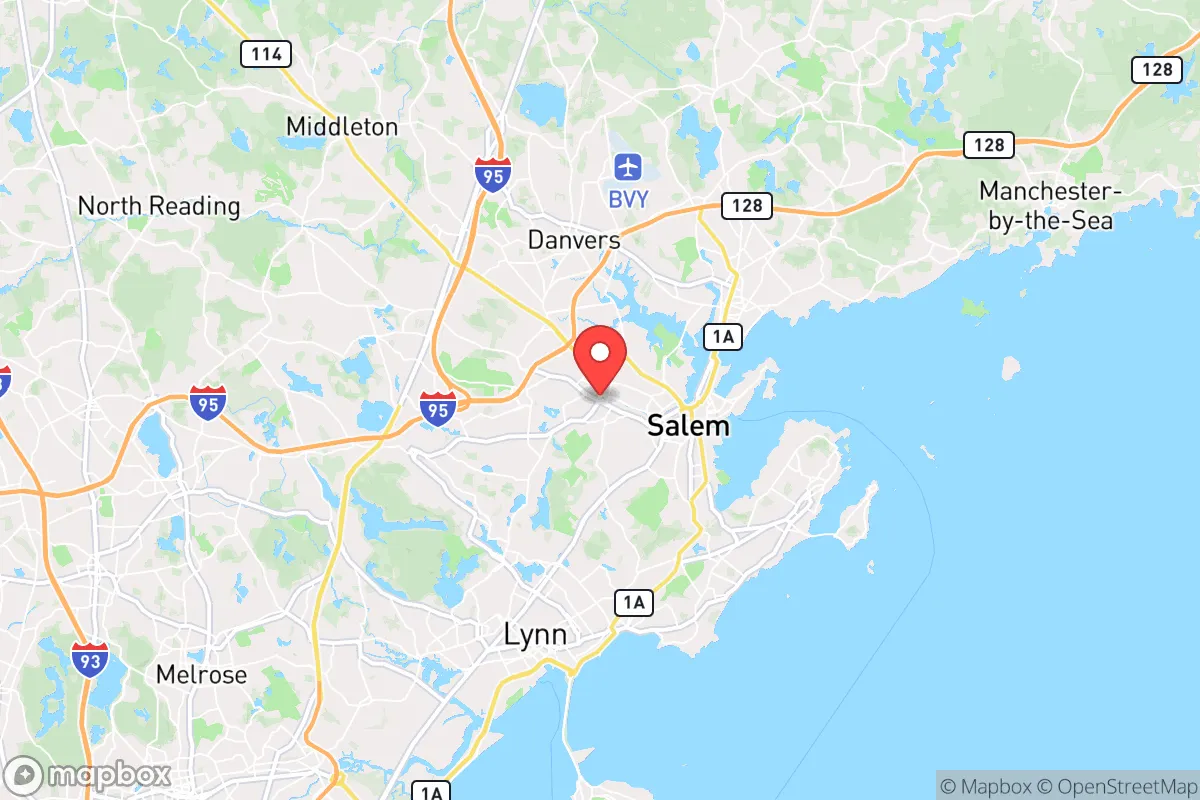
Photo: Wikipedia
Quality of Life in Peabody, MA
A high quality of life with strong walkability, manageable living costs, healthy neighborhood signals, and solid amenity access.
What does Quality of Life tell us?
Quality of Life blends cost of living, nearby amenities, socioeconomic signals, and neighborhood character. City-level scores represent the whole municipality; individual neighborhoods can differ.
What does this tell us?
Quality of Life blends cost of living, nearby amenities, socioeconomic signals, and neighborhood character. City-level scores represent the whole municipality; individual neighborhoods can differ.
Cost of Living
78% above national average
The Real Cost of Living in Peabody, MA for 2026
| Tier | Individual | Family (4) |
|---|---|---|
| Survival | $30k | $57k |
| Comfortable | $110k | $162k |
| Luxury | $163k+ | $253k+ |
| Elite (Top 5%) | $192k+ | $298k+ |
59%
The Area Signal
A metric tracking the socioeconomic signals of the area.


Hobbies
Explore the areaGroceries
1 within 10 miles
Gas
0 within 10 miles
Hospital
3 within 20 miles
Airport
BOS — Boston Logan International
Post Office
USPS — Boston, MA
Critical Amenities
Quality-of-Life Analysis
Peabody, Massachusetts, presents a quality of life defined by solid middle-to-upper-middle-class stability, attracting a mix of long-standing multi-generational families, Boston-bound professionals, and a significant population of retirees from the city’s historic Portuguese and Italian communities. With a cost of living index of 178—well above the national baseline of 100—the city is notably more affordable than its immediate neighbors to the south and west, yet still carries a premium that reflects its access to the Greater Boston economy. The typical resident is a homeowner, a commuter, or someone who values the blend of suburban space and urban proximity that Peabody uniquely offers.
Cost of living, housing affordability, and how Peabody compares to nearby towns
Peabody’s cost of living is driven primarily by housing, with a median home value of $566,200 and a median rent of $1,902. While these figures are steep by national standards, they represent a significant discount compared to neighboring communities like Salem (median home value ~$550,000–$600,000) and especially Swampscott or Marblehead, where median values routinely exceed $700,000. For renters, the $1,902 median is roughly $200–$400 less per month than comparable units in Danvers or Beverly, making Peabody a pragmatic choice for those who need to be within the Route 128 corridor. The average commute of 27.2 minutes is realistic for the region—shorter than the 30+ minute averages from farther-out suburbs like Andover or Woburn—and is facilitated by easy access to I-95, Route 1, and the commuter rail at nearby Salem or North Station. Property taxes in Peabody hover around the state average, and while the overall COL index is high, the city offers better square footage per dollar than any coastal North Shore town.
Schools, amenities, and what daily life actually feels like
Daily life in Peabody revolves around its well-regarded public school system, which includes the comprehensive Peabody Veterans Memorial High School and several K-8 schools that consistently score above state averages in math and English. The city is home to the Northshore Mall, one of the largest shopping centers in New England, and the Peabody Institute Library, a historic cultural anchor. Outdoor recreation is centered on Brooksby Farm (a working farm with pick-your-own produce and walking trails) and Crystal Lake, a popular swimming and fishing spot. The city’s dining scene is notably strong for its size, with a high concentration of Portuguese and Italian restaurants along Route 1 and Main Street. Commuters appreciate that the 27-minute average drive to downtown Boston is manageable, though traffic on Route 1 during peak hours can add 10–15 minutes. The overall rhythm is suburban but not sleepy—Peabody has a working commercial core and a steady calendar of community events, including the annual International Festival and the Peabody Farmers Market.
Peabody is best suited for families and professionals who prioritize space, school quality, and a shorter commute over the cachet of a coastal address. Retirees from the Portuguese and Italian communities find a strong cultural support network, while young couples often choose Peabody as a more affordable entry point to the North Shore housing market. Those seeking a vibrant nightlife or walkable urban core will find the city too car-dependent; instead, Peabody rewards residents who value a quiet, well-serviced suburb with solid schools and easy highway access to Boston, Salem, and the beaches of the North Shore.

Crime in Peabody, MA
Lower crime rates than 98% of comparable U.S. locations.
Violent CrimeViolent Crime Analysis
Property CrimeProperty Crime Analysis
Crime Analysis
Peabody, Massachusetts, reports a violent crime rate of 21.6 incidents per 100,000 residents and a property crime rate of 43.2 per 100,000, figures that place it among the safer communities in the Greater Boston area. However, these official statistics must be weighed against the broader context of a large metropolitan region where progressive judicial policies and district attorney priorities often prioritize offender rehabilitation over public safety. For residents and those considering relocation, understanding how these local numbers interact with regional criminal justice trends is essential for a complete safety assessment.
Crime in context
Peabody’s violent crime rate of 21.6 per 100,000 is dramatically lower than the national average of roughly 380 per 100,000 and well below the Massachusetts state average of about 300 per 100,000. Property crime in Peabody, at 43.2 per 100,000, also sits far under the national benchmark of approximately 1,950 per 100,000. These raw statistics suggest a community with very low incidence of serious offenses. However, these numbers reflect only reported crimes, and in a metro area like Boston’s, the effectiveness of law enforcement is often undercut by district attorneys who decline to prosecute property crimes below certain dollar thresholds or who pursue diversion programs for repeat offenders. The low reported rate may mask a higher actual incidence of crime that goes uncharged or unrecorded due to prosecutorial discretion.
What residents experience
Day-to-day life in Peabody feels safe for most residents, with well-lit downtown areas, active neighborhood watch programs, and a visible police presence. The city’s property crime rate, while low on paper, is the more common concern—incidents like package theft, bicycle theft, and occasional car break-ins do occur, particularly near the Northshore Mall and commuter rail stations. Violent crime is rare and typically confined to domestic incidents or isolated disputes rather than random street violence. Yet the regional justice environment creates a lingering risk: Essex County’s district attorney has implemented policies that reduce cash bail and expand pretrial release for nonviolent offenders, which can result in individuals with multiple property crime charges cycling back into neighborhoods quickly. Residents report that while they feel safe walking at night, they remain vigilant about locking doors and securing vehicles, a precaution driven less by local crime rates than by awareness of how the broader justice system handles repeat offenders.
Neighborhood-level variation
Safety in Peabody is not uniform. The West Peabody and South Peabody neighborhoods, characterized by single-family homes and lower population density, experience virtually no violent crime and very low property crime. The downtown area near Route 114 and the commercial corridors around the mall see higher foot traffic and correspondingly more theft and vandalism, though still at rates far below nearby Lynn or Salem. The city’s public housing complexes and areas with higher rental density report slightly elevated incident rates, but these remain within the low range for the region. For prospective residents, choosing a quieter residential street over a main thoroughfare can further reduce the already minimal risk, but the overarching concern remains the regional prosecutorial environment that may embolden property criminals to operate with reduced consequences.
* Values derived from national, state, county, city and local statistics and may differ in a specific area. Last updated: 2026-04-19T10:18:06.000Z
Narrative content on this page is AI-generated and may contain mistakes. Verify any details that matter before acting on them.
ReloMaps may earn a commission from affiliate links at no extra cost to you.

