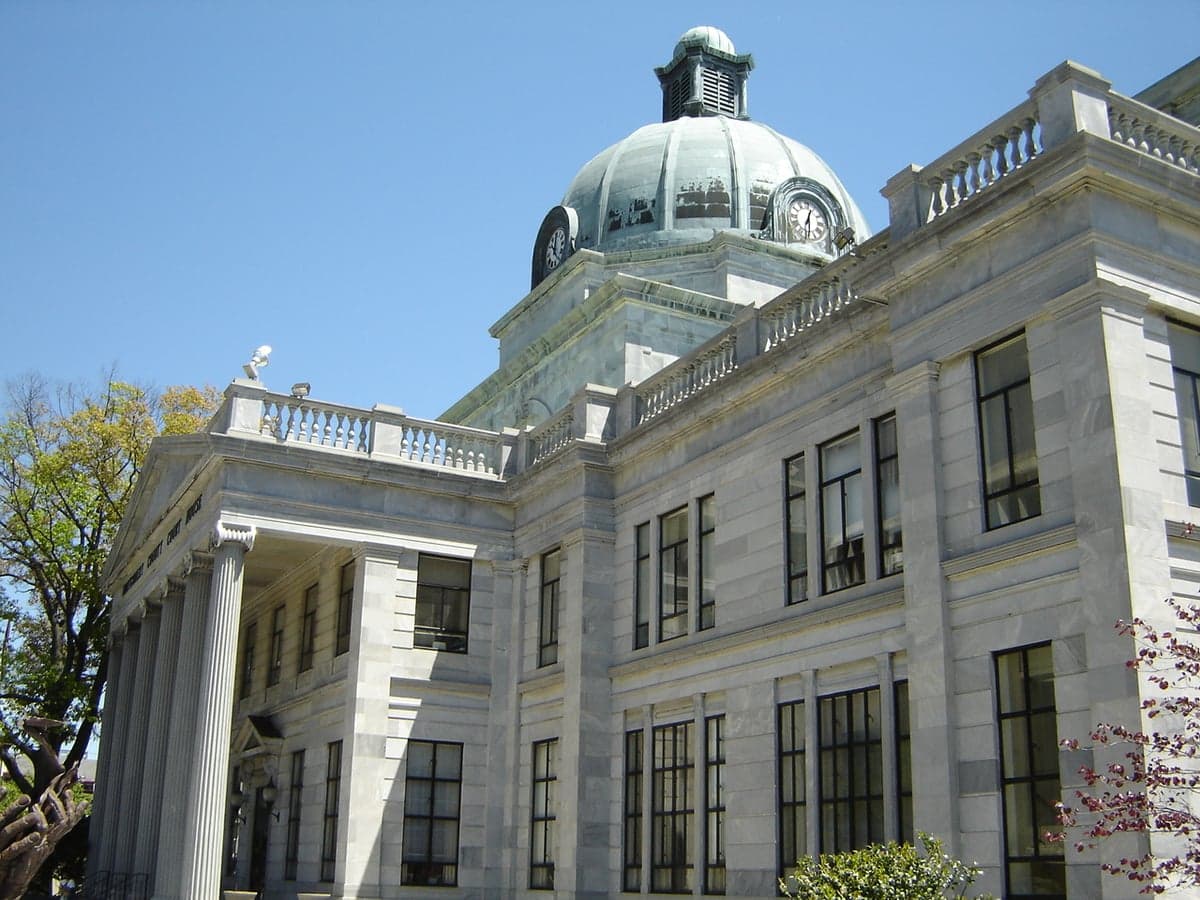
Photo: Wikipedia
Demographics of Montgomery County
Affluence Level in Montgomery County
An upper-middle-class area. Household wealth, education levels, and homeownership run ahead of national benchmarks.
People of Montgomery County
Montgomery County, Pennsylvania, is a densely populated suburban county of over 861,000 residents, characterized by a highly educated workforce (52.3% college-educated) and a predominantly white population (72.4%) that is gradually diversifying. Its identity is shaped by a deep history of early American settlement, a strong industrial and pharmaceutical economy, and a modern influx of Asian and Indian professionals drawn to its top-tier school districts and proximity to Philadelphia. The county is a blend of historic boroughs, affluent Main Line communities, and post-war suburbs, with a foreign-born population of just 4.5% that is notably concentrated in specific professional enclaves.
Settlement & growth (pre-1960)
Before European contact, the area now known as Montgomery County was inhabited by the Lenape people, particularly the Unami and Munsee bands, who lived along the Schuylkill River and its tributaries. William Penn's 1681 charter brought English Quakers, who established the first permanent European settlements in what would become the county's southeastern corner, including the boroughs of Norristown (the county seat, founded 1784) and Pottstown (founded 1752). These early settlers were primarily English, Welsh, and a small number of Dutch and Swedish farmers, drawn by Penn's promise of religious freedom and fertile land.
The 18th and 19th centuries saw a significant wave of German immigrants, who became the dominant ethnic group in the county's central and northern townships. These "Pennsylvania Dutch" settlers established farming communities in places like Lansdale (founded 1872) and Hatfield (founded 1887), where their descendants still form a cultural backbone. The county's industrial revolution began in earnest after 1850, fueled by the Schuylkill Canal and later the Philadelphia and Reading Railroad. This drew a wave of Irish immigrants, who worked in the mills and railroads, settling in industrial hubs like Conshohocken and Bridgeport. By the late 19th century, Italian and Polish immigrants arrived to work in the county's burgeoning textile, iron, and steel mills, particularly in Norristown and Pottstown, creating tight-knit ethnic neighborhoods that persisted for generations.
The 20th century brought a second major industrial boom, anchored by the pharmaceutical and chemical industries. Companies like Merck & Co. (established in West Point in 1903) and later Wyeth and McNeil Laboratories transformed the county into a hub for white-collar science and engineering. This shift attracted a wave of domestic migrants from the Rust Belt and Appalachia, as well as a smaller number of Jewish professionals fleeing Eastern Europe, who settled in the Elkins Park and Jenkintown areas. The post-World War II suburban explosion, fueled by the GI Bill and highway construction, saw massive growth in townships like Abington, Upper Dublin, and Lower Merion, as Philadelphia's middle class fled the city for new single-family homes. By 1960, Montgomery County was a predominantly white, middle-class suburban stronghold with a strong industrial and pharmaceutical base.
Modern era (post-1965)
The 1965 Hart-Cellar Act fundamentally reshaped Montgomery County's demographics, though the changes were slower and more selective than in major gateway cities. The county's first major post-1965 immigrant wave was from East and Southeast Asia, particularly Chinese and Korean professionals drawn by the county's top-ranked school districts and the presence of pharmaceutical and biotech employers. These communities concentrated in the Lower Merion and Radnor townships, where they now form a visible and economically successful enclave. The Asian population (East/Southeast Asian, excluding Indian subcontinent) stands at 4.5% of the county's total, a figure that has grown steadily since the 1990s.
A second, more recent wave has been from the Indian subcontinent. Indian professionals, many working in IT, healthcare, and pharmaceuticals, began arriving in significant numbers after 2000, drawn by the same school districts and employment opportunities. They have concentrated in Blue Bell, Lower Gwynedd, and Upper Dublin townships, where they now represent a distinct and growing community. The Indian population (subcontinent) is 3.3% of the county's total, a share that is likely undercounted due to the presence of temporary H-1B visa holders. The Hispanic population (6.5%) is more dispersed, with a notable concentration in Norristown, where Puerto Rican and Dominican immigrants have established a community since the 1970s, and a smaller Mexican presence in Pottstown. The Black population (9.1%) is largely native-born, with historic roots in Norristown and Pottstown, and a smaller but growing African immigrant community in Abington.
Domestic migration has been a countervailing force. Since the 1980s, Montgomery County has experienced a steady outflow of white, working-class families to more affordable exurbs in Berks and Lehigh counties, while attracting affluent professionals from Philadelphia and other coastal cities. This has driven the county's high educational attainment (52.3% college-educated) and its shift toward a more liberal political orientation, particularly in the inner-ring suburbs. The county's overall population has grown modestly, from 750,000 in 1990 to 861,225 today, with growth concentrated in the northern and western townships.
The future
Montgomery County is likely to continue its gradual diversification, driven primarily by Asian and Indian immigration, while the white population slowly declines as a share of the total. The county's high cost of housing and property taxes will continue to filter out lower-income domestic migrants, reinforcing its character as an affluent, highly educated enclave. The Indian and East/Southeast Asian communities are growing and show signs of assimilation, with second-generation children attending the same top-tier schools and entering the same professional fields as their white peers. The Hispanic population is growing more slowly, concentrated in the county's older industrial boroughs, and faces greater economic challenges.
The county is not tribalizing into distinct enclaves; rather, it is becoming a more integrated, multi-ethnic suburb where professional status and educational attainment are the primary social dividers. The next 10-20 years will likely see the Asian and Indian populations each approach 6-8% of the total, while the white share drops to around 65-68%. The county will remain a Democratic stronghold, but with a growing conservative minority in its northern and western townships. The cultural identity is being absorbed into a broader, professional-class suburban ethos, rather than being replaced by any single immigrant culture.
For someone moving in now, Montgomery County is a stable, high-opportunity environment where educational and professional success are the dominant values. It is not a place of dramatic demographic upheaval, but of gradual, managed change. The county offers a safe, well-resourced, and increasingly diverse community for families and professionals, with the trade-off of high costs and a competitive, achievement-oriented culture. It is becoming a model of the 21st-century American suburb: affluent, educated, and quietly multi-ethnic, but still anchored by its historic white professional class.

* Values derived from national, state, county, city and local statistics and may differ in a specific area. Last updated: 2026-05-17T00:56:59.000Z
Narrative content on this page is AI-generated and may contain mistakes. Verify any details that matter before acting on them.
ReloMaps may earn a commission from affiliate links at no extra cost to you.

