
Photo: Wikipedia
Quality of Life in Montgomery County
A livable area that tracks near national norms for affordability, walkability, and neighborhood health.
What does Quality of Life tell us?
Quality of Life measures an area by evaluating factors like cost of living, nearby amenities, country club access, airport proximity, socioeconomic signals and neighborhood character. For large states, this is a general average — quality of life can vary dramatically between metro areas, suburbs, and rural communities within the same state.
What does this tell us?
Quality of Life measures an area by evaluating factors like cost of living, nearby amenities, country club access, airport proximity, socioeconomic signals and neighborhood character. For large states, this is a general average — quality of life can vary dramatically between metro areas, suburbs, and rural communities within the same state.
Cost of Living
41% above national average
95%
The Real Cost of Living in Montgomery County for 2026
| Tier | Individual | Family (4) |
|---|---|---|
| Survival | $26k | $48k |
| Comfortable | $80k | $117k |
| Luxury | $201k+ | $312k+ |
| Elite (Top 5%) | $253k+ | $392k+ |
Quality-of-Life Analysis
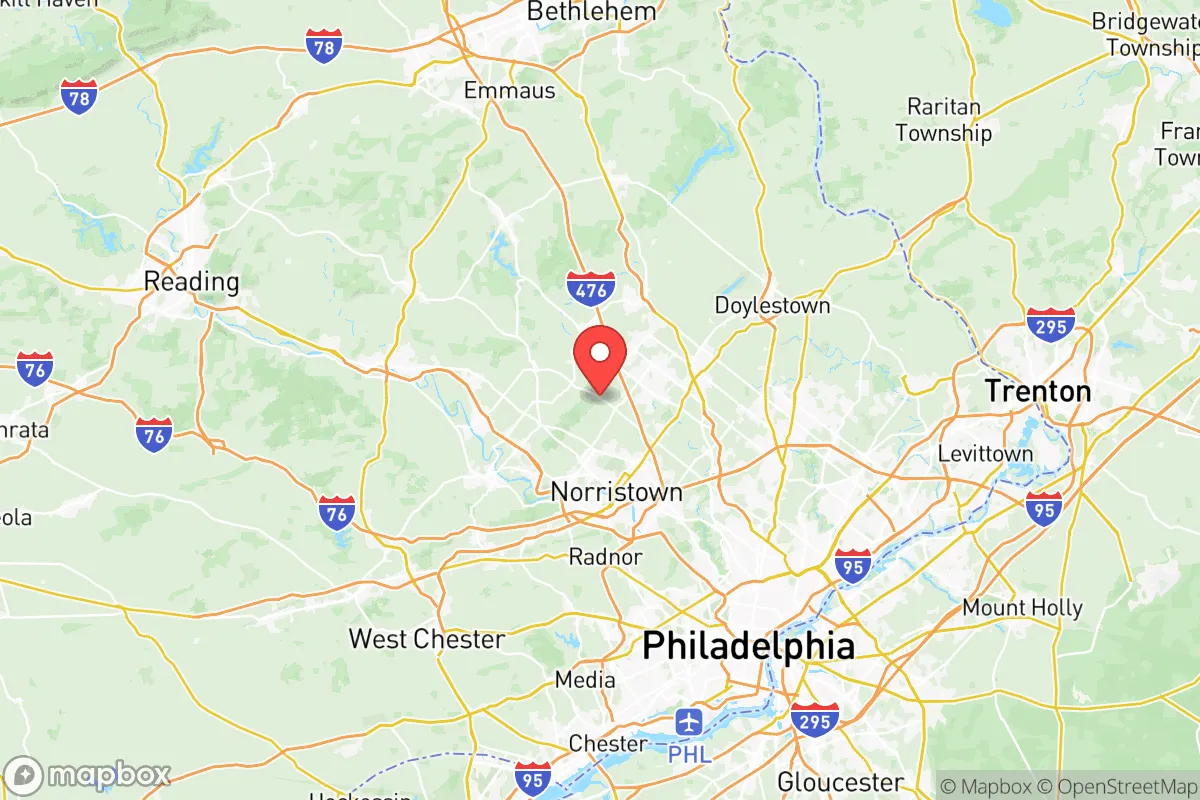
Montgomery County, Pennsylvania, offers a broad quality-of-life spectrum that ranges from dense, walkable urban centers to quiet, unincorporated rural hamlets, attracting everyone from young professionals and commuters to retirees and equestrian enthusiasts. The county’s character shifts noticeably as you move from its southeastern edge, bordering Philadelphia, north and west into the rolling hills of the Piedmont region. With a cost-of-living index of 141 (100 being the U.S. average), a median home value of $409,900, and a median rent of $1,612, the county commands a premium over national averages but provides a correspondingly high level of public services, school quality, and access to employment.
Largest town(s) & population centers
The county’s primary population anchor is Norristown, the county seat, which functions as a dense, transit-oriented urban hub with a median home value well below the county average and a diverse, working-class population. Daily life in Norristown revolves around the Norristown Transportation Center, providing direct SEPTA rail service to Center City Philadelphia in under 40 minutes, and a walkable downtown with county government offices, the Montgomery County Courthouse, and a growing number of brewery taprooms and ethnic restaurants. King of Prussia, technically a census-designated place within Upper Merion Township, is the region’s commercial and retail powerhouse, anchored by the King of Prussia Mall—one of the largest in the United States—and a massive concentration of corporate headquarters (e.g., AmerisourceBergen, CSL Behring). Life in King of Prussia is car-dependent but amenity-rich, with a median commute of 27.9 minutes reflecting the area’s role as a major employment node. Abington and Jenkintown, in the southeastern corner, offer older, tree-lined suburbs with strong school districts (Abington School District) and direct regional rail access, appealing to families who want urban proximity without urban density.
Smaller towns & rural pockets
Moving north and west, the landscape opens into distinct small towns and genuinely rural areas. Collegeville, home to Ursinus College, is a compact borough with a walkable main street and a strong sense of community, while Schwenksville along the Perkiomen Creek offers a small-town feel with access to the Perkiomen Trail for hiking and cycling. Further west, Green Lane is a tiny borough (population under 600) that serves as the gateway to Green Lane Park, a 3,400-acre county park with a reservoir for boating and fishing. The unincorporated village of Zieglerville and the historic hamlet of Sumneytown represent the county’s rural core, where homes sit on multi-acre lots, working farms still operate, and the nearest grocery store may be a 15-minute drive. In the far northwest, Palm and Red Hill are small boroughs in Upper Hanover Township that retain a distinct Pennsylvania Dutch influence, with lower home prices and a slower pace of life that contrasts sharply with the county’s southeastern edge.
Cost & lifestyle range
The cost and lifestyle spread across Montgomery County is dramatic. At the high end, Lower Merion Township (including the Main Line communities of Gladwyne, Villanova, and Bryn Mawr) features median home values exceeding $800,000, top-ranked public schools (Lower Merion School District), and direct rail access to Philadelphia, attracting executives, lawyers, and academics. At the opposite end, Norristown offers a median home value around $180,000 and a median rent closer to $1,200, making it one of the more affordable entry points in the county, though with higher crime rates and lower school performance metrics. Pottstown, straddling the Montgomery-Chester county line, provides another lower-cost option with a median home value near $200,000, a historic downtown undergoing revitalization, and a longer average commute of 32 minutes. In between, communities like Lansdale (median home value ~$350,000) and Hatfield offer a middle ground: walkable downtowns, regional rail service, and solid schools (North Penn School District) at a price point below the Main Line but above Norristown. The lifestyle range means a family in Gladwyne may spend weekends at country clubs and private schools, while a family in Green Lane may spend them on hiking trails and volunteer fire company events—both within the same county.
Montgomery County is best suited for people who value proximity to Philadelphia’s employment and cultural amenities but want a range of housing types, school qualities, and community densities to choose from. Commuters who can tolerate a 27.9-minute average drive or a regional rail ride will find the county’s transit infrastructure a major asset, while those seeking a truly rural lifestyle will find genuine options in the northwest. The county’s diversity—economic, demographic, and geographic—means that no single description fits all of its residents, but the common thread is access to high-quality public services, parks, and a regional economy that remains one of the strongest in the Northeast.

Crime in Montgomery County
WARNING: The crime statistics are unreliable for this jurisdiction. Local authorities have either not reported or under reported their data to the FBI. This could be due to bad intentions, incompetence or technical issues. Regardless, we suggest skepticism.
Higher crime rates than 62% of comparable U.S. locations.
Violent CrimeViolent Crime Analysis
Property CrimeProperty Crime Analysis
Crime Analysis
Montgomery County, Pennsylvania, presents a mixed safety profile: its overall violent crime rate of 225.9 per 100,000 residents sits below the national average but above the safest suburban counties in the state, while its property crime rate of 1,344.8 per 100,000 is notably higher than both state and national benchmarks. The county’s 2024 data reflects a jurisdiction where affluent, low-crime towns like Lower Merion and Upper Dublin coexist with higher-crime urban centers such as Norristown and Pottstown. Residents considering a move here should weigh neighborhood-level variation heavily, as safety outcomes differ dramatically within a 15-minute drive.
Crime in context
Montgomery County’s violent crime rate of 225.9 per 100,000 is roughly 35% lower than the national average of 380 per 100,000, but it is nearly double the rate of neighboring Chester County (120 per 100,000) and significantly higher than Bucks County (160 per 100,000). Property crime, at 1,344.8 per 100,000, exceeds the Pennsylvania state average of approximately 1,200 per 100,000 and the national average of 1,954 per 100,000. The county’s property crime rate is driven largely by thefts and vehicle break-ins in commercial corridors like King of Prussia and along the Route 422 corridor. Aggravated assault accounts for the majority of violent incidents, while homicide rates remain low—typically 5–10 per year countywide. The presence of progressive district attorneys in nearby Philadelphia has been cited by some analysts as a factor in regional crime patterns, though Montgomery County’s own DA office has maintained a more moderate approach, with conviction rates for violent offenses above 85%.
What residents experience
Daily life for most Montgomery County residents is safe, but the experience varies sharply by municipality. Norristown, the county seat, reports violent crime rates exceeding 600 per 100,000—nearly three times the county average—driven by drug-related disputes and gang activity in its downtown and along the Markley Street corridor. Pottstown, in the western part of the county, also sees elevated rates of aggravated assault and burglary, with a violent crime rate around 450 per 100,000. In contrast, Lower Merion Township (including Ardmore and Bryn Mawr) posts a violent crime rate below 100 per 100,000, with property crime largely limited to package thefts and occasional car break-ins near train stations. Upper Dublin, Abington, and Cheltenham townships fall in the middle range, with property crime rates between 1,000 and 1,500 per 100,000, often tied to retail theft at shopping centers. Residents in these areas report feeling safe walking at night in residential neighborhoods but remain vigilant about locking cars and securing packages.
Neighborhood-level variation and judicial influence
The starkest safety divide in Montgomery County is between its urbanized boroughs and its suburban townships. Norristown and Pottstown together account for roughly 40% of the county’s violent crime despite housing only 15% of its population. Meanwhile, communities like Blue Bell, Ambler, and Lansdale enjoy violent crime rates below 150 per 100,000, with property crime concentrated in commercial districts. The county’s judicial system, overseen by the Montgomery County Court of Common Pleas, has not adopted the progressive bail reform or sentencing reductions seen in Philadelphia or Allegheny County; average sentences for violent offenders in Montgomery County are 30% longer than in Philadelphia, a factor that local law enforcement credits with keeping recidivism rates relatively low. However, residents in Norristown and Pottstown express frustration with repeat property offenders cycling through the system, a pattern that mirrors concerns in other mid-sized Pennsylvania cities. For prospective residents, the safest bet is to target townships with their own police departments (e.g., Lower Merion, Upper Dublin, Whitpain) rather than relying on county-wide patrols, as local departments typically respond faster and maintain closer community ties.
* Values derived from national, state, county, city and local statistics and may differ in a specific area. Last updated: 2026-05-17T00:56:59.000Z
Narrative content on this page is AI-generated and may contain mistakes. Verify any details that matter before acting on them.
ReloMaps may earn a commission from affiliate links at no extra cost to you.

