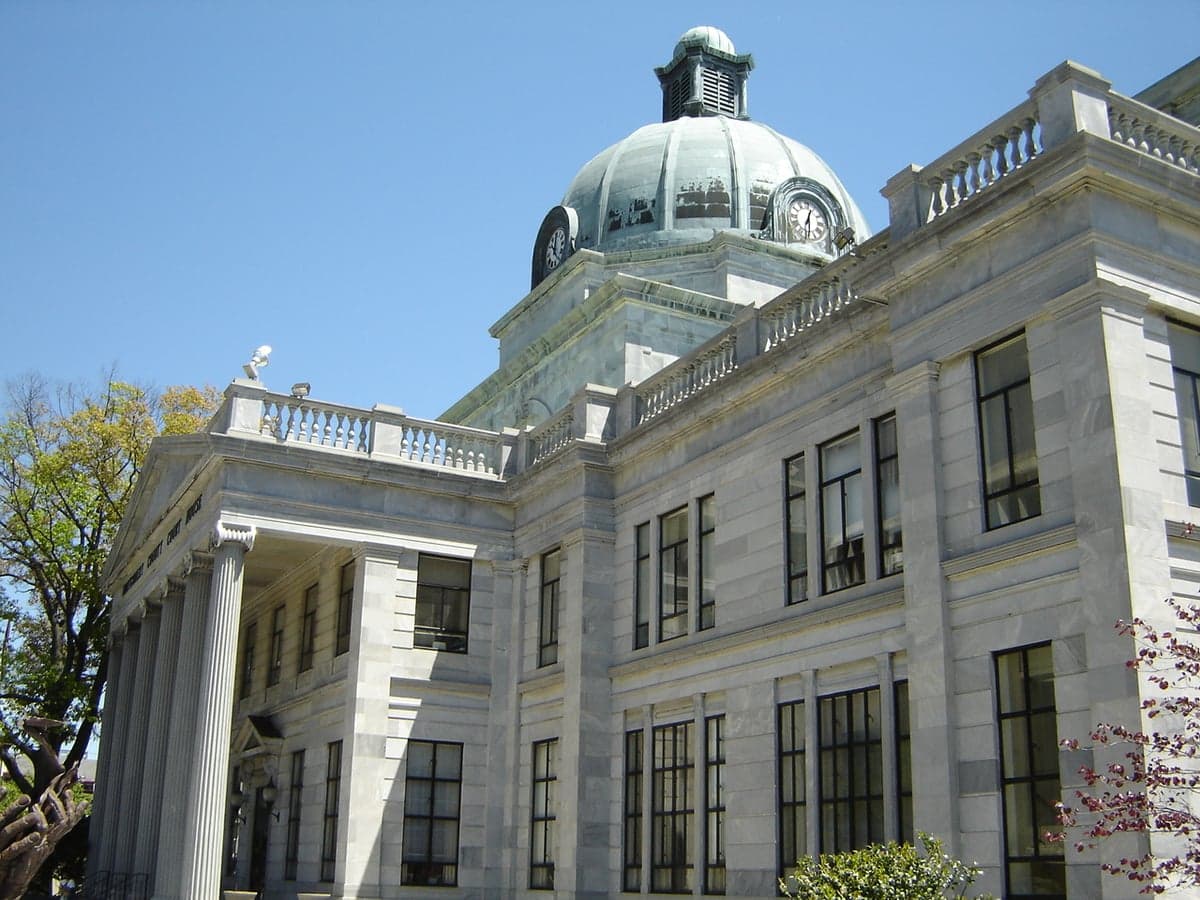
Photo: Wikipedia
Political ClimatePolitical Climate in Montgomery County
Showing district-level results — no local-only data available.
Local Political AnalysisPolitical Analysis of Montgomery County
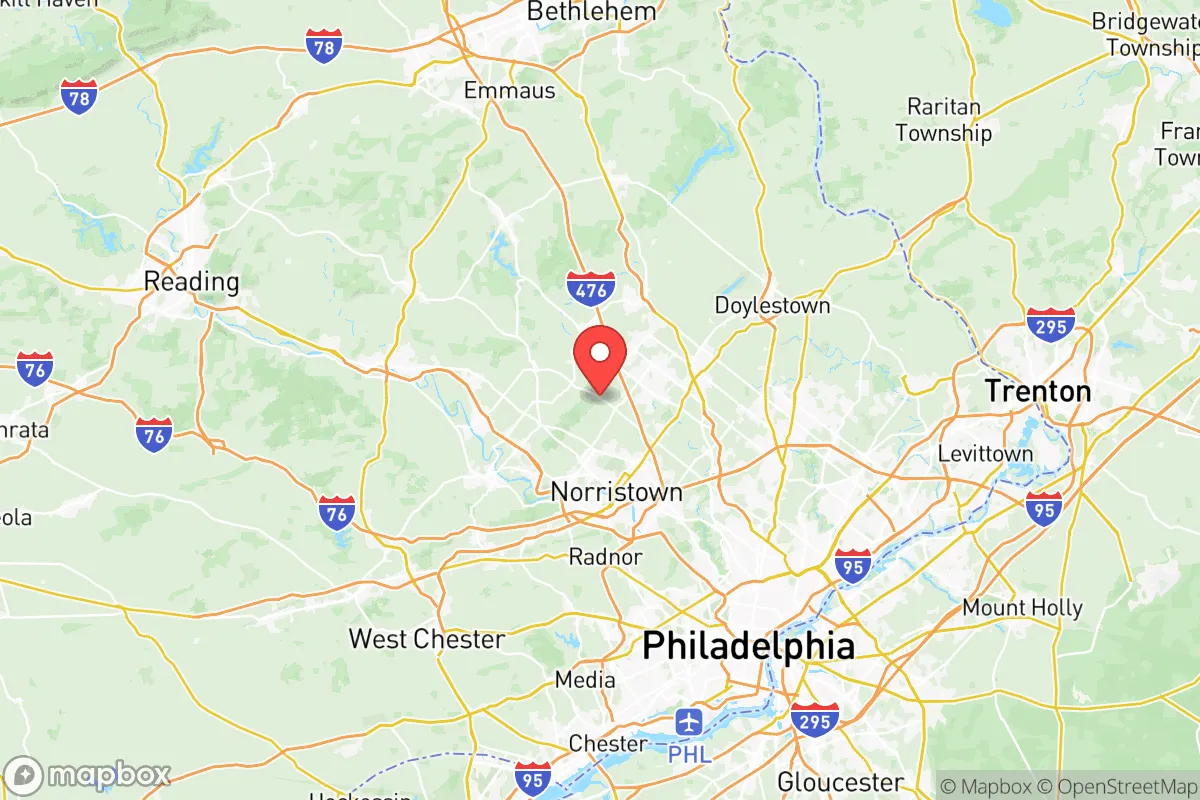
Montgomery County has shifted hard to the left over the past decade, and it’s not subtle anymore. The Cook PVI sits at D+8, meaning this place votes about eight points more Democratic than the nation as a whole, while the rest of Pennsylvania is dead even at EVEN. That’s a massive gap, and it’s been widening every election cycle. If you’re looking at the political landscape here, you’re seeing a county that was once a classic swing area—think suburban moderates who split tickets—now firmly in the blue column, driven by explosive growth in the Philadelphia suburbs and a steady exodus of conservative-leaning families.
How it compares
The contrast between Montgomery County and the rest of Pennsylvania is stark. The state as a whole is a true battleground—EVEN PVI—with deep red rural counties like Tioga and Fulton pulling one way and deep blue Philadelphia pulling the other. Montgomery County used to be part of that balancing act, but no longer. The county’s D+8 rating puts it in the same league as places like Delaware County or Bucks County, not the rest of the state. Look at the towns: Lower Merion, Ardmore, and Bryn Mawr are deep blue, with Democratic margins often exceeding 30 points in presidential races. Abington and Cheltenham are similarly solid. But you still see pockets of red, especially in the northern and western parts of the county. Upper Perkiomen, Red Hill, and parts of Limerick lean conservative, with Trump winning some precincts by 10-15 points in 2020. The swing precincts are in places like Lansdale, Hatfield, and Montgomeryville—older suburbs where working-class families are getting squeezed by rising taxes and progressive policies. Those areas are trending blue, but they’re still competitive, and they’re where the real fight is.
What this means for residents
For a conservative or even a moderate, living here means watching your local government push policies that feel disconnected from the rest of the state. The county commissioners are all Democrats, and they’ve been aggressive on things like zoning changes that favor high-density development, environmental regulations that hit small businesses, and school board decisions that prioritize equity initiatives over academic rigor. Property taxes are a constant headache—Montgomery County’s average effective rate is around 1.8%, which is high for Pennsylvania, and they keep creeping up. The school districts, especially in the blue strongholds like Lower Merion and Abington, are spending heavily on DEI programs and curriculum changes that many parents find intrusive. If you value local control and personal freedom, you’ll feel the squeeze. The county’s health department, for example, was one of the most aggressive in the state during COVID, with mask mandates and business closures that lasted longer than in neighboring counties like Berks or Lehigh.
Culturally, Montgomery County is becoming a place where traditional values are increasingly out of step with the dominant political class. The old-school, live-and-let-live suburban ethos is being replaced by a more activist government that doesn’t hesitate to tell you how to live. If you’re looking for a community where your voice still matters, you’ll want to focus on the northern and western towns—places like Green Lane, Pennsburg, and Schwenksville—where the politics are more grounded and the government is less likely to overreach. But even there, the tide is rising. The long-term trend is clear: Montgomery County is becoming a progressive stronghold, and if that doesn’t sit well with you, you’ll need to decide whether to dig in or look elsewhere. The state as a whole still offers a balance, but this county is no longer part of it.

State Political ClimatePolitical Climate in Pennsylvania
State Political AnalysisPolitical Environment in the State
Pennsylvania is a true battleground state, with a Cook PVI of EVEN, meaning it is perfectly split between the two major parties. Over the last 10-20 years, the state has shifted from a reliably blue-leaning state in presidential elections to a pure toss-up, driven by the collapse of union-dominated Democratic strongholds in the west and the explosive growth of conservative-leaning exurbs in the southeast. The dominant coalitions are the urban progressive machine in Philadelphia and Pittsburgh versus a sprawling, increasingly energized conservative base in the central and northern counties, plus the fast-growing, red-trending suburbs of the I-78 and I-81 corridors.
Urban vs. rural divide
The political map of Pennsylvania is a tale of two worlds. Philadelphia and its immediate collar counties (Montgomery, Delaware, Chester) are the engine of the Democratic vote, delivering margins of 70-80% in the city proper. Pittsburgh and its inner suburbs (Allegheny County) are also reliably blue, though less extreme. The rest of the state is overwhelmingly red. The key battlegrounds are the "collar counties" outside Philadelphia—Bucks, Chester, and Montgomery—which have been trending leftward as professionals flood in from the city, but still contain significant conservative pockets. Meanwhile, the Lancaster, York, and Lebanon corridor is a conservative stronghold, with Lancaster County voting +15 R in 2024. The northern tier (Bradford, Tioga, Potter) and the southwest (Fayette, Greene, Washington) are deeply red, driven by gun culture, energy jobs, and a distrust of Harrisburg. The I-81 corridor, anchored by Scranton, Wilkes-Barre, and Hazleton, is a fascinating mix: historically union-Democratic, it has flipped hard to the right over immigration and fracking, with Luzerne County voting +14 R in 2024 after voting Obama in 2012.
Policy environment
Pennsylvania's policy environment is a mixed bag for conservatives. The state has a flat income tax rate of 3.07%, which is relatively low and hasn't been raised in decades. Property taxes are high, especially in the Philadelphia suburbs, but there is no state sales tax on groceries or clothing. The regulatory posture is moderate: the state is a major natural gas producer (Marcellus Shale), and while there is an extraction tax (the "impact fee"), it is far lower than in neighboring Ohio or West Virginia. Education policy is a flashpoint: the state has a massive school funding lawsuit (the 2023 Commonwealth Court ruling that the current system is unconstitutional) that could force a statewide property tax hike or a shift to a more progressive income tax. Election laws are a concern: Pennsylvania has no voter ID requirement (though a 2024 law tightened absentee ballot procedures), and the state's mail-in voting system, expanded in 2019 under Act 77, remains controversial. Gun laws are relatively permissive: the state is a "shall issue" for concealed carry, has preemption for local gun ordinances, and no "red flag" law, though Philadelphia has its own restrictive ordinances that are frequently challenged.
Trajectory & freedom
Pennsylvania is trending in a concerning direction for personal freedom, but there are bright spots. On the positive side, the state has seen a surge in parental rights activism, with several school boards in Central Bucks, Pennridge, and Pine-Richland adopting policies that require parental notification for curriculum changes and restrict transgender accommodations. In 2024, the legislature passed a bill banning "gender transition" procedures for minors, though Governor Josh Shapiro vetoed it. On gun rights, the state has held the line: no new restrictions have passed since the 2018 "red flag" bill died in committee, and the state Supreme Court has upheld preemption. On medical freedom, the picture is darker: the state had one of the longest-lasting COVID-19 emergency orders (Governor Wolf's 2020-2021 mandates), and while those are gone, the legislature passed a bill in 2023 banning local health departments from imposing mask mandates on children without parental consent. Property rights are under pressure from the growing use of eminent domain for pipeline projects (the Mariner East pipeline controversy in Chester County) and from local zoning that restricts short-term rentals. The biggest freedom concern is taxation: the state's unfunded pension liabilities (over $60 billion) and the school funding lawsuit could force a major tax increase in the next 5 years.
Civil unrest & political movements
Pennsylvania has been a hotbed of political activism on both sides. The 2020 election integrity controversy was centered here, with the state's mail-in ballot procedures leading to lawsuits and a recount in Philadelphia. The 2021 "Stop the Steal" rally in Harrisburg drew thousands, and the state has seen a rise in "election integrity" groups like the Pennsylvania Election Integrity Network. On the left, Black Lives Matter protests in Philadelphia in 2020 were large and sometimes violent, leading to property damage and a lasting tension with police. Immigration politics are a flashpoint in Hazleton and Scranton, where the influx of immigrants (mostly from the Dominican Republic and Central America) has shifted local politics. Hazleton's former mayor, Lou Barletta, built a national profile on immigration enforcement. Sanctuary policies are limited: Philadelphia is a "sanctuary city" (it limits cooperation with ICE), but the state legislature has passed bills to withhold state funds from such cities, though they've been vetoed. Secession/nullification rhetoric is rare, but there is a growing "state sovereignty" movement in the northern tier, where residents feel ignored by Harrisburg. The most visible flashpoint for a new resident would be the fracking debate: protests at well sites in Washington County and the ongoing fight over a proposed moratorium in the Delaware River Basin.
Projection
Over the next 5-10 years, Pennsylvania is likely to become more competitive, not less. The demographic trends favor conservatives: the fastest-growing counties are the red-trending exurbs of Lancaster, York, and Lebanon, plus the I-81 corridor. The Philadelphia suburbs are still growing, but they are becoming more expensive and less affordable, pushing working-class families outward. The state's population is aging, and the rural areas are losing young people to the Sun Belt. The wild card is in-migration: Pennsylvania is seeing a net inflow from New York and New Jersey, but these newcomers tend to be more moderate or even conservative (they're fleeing high taxes and crime). If the state can keep its flat tax and avoid a major property tax hike, it could become a "purple" state that leans red in midterms. However, if the school funding lawsuit forces a progressive income tax or a statewide property tax increase, the exodus of conservatives to Florida and Texas will accelerate. The 2026 gubernatorial election will be a key test: if a conservative wins, the state could see a wave of school choice expansion and election integrity reforms. If a progressive wins, expect a push for a state-level "red flag" law, a higher minimum wage, and a carbon tax.
Bottom line for a new resident: Pennsylvania is a state where your personal freedom depends heavily on which county you choose. If you move to Lancaster, York, or the northern tier, you'll find a community that values gun rights, low taxes, and local control. If you move to Philadelphia or its inner suburbs, you'll face higher taxes, more regulation, and a political culture that is increasingly progressive. The state as a whole is a battleground, and your vote will matter. The biggest risk is a future tax increase driven by the school funding lawsuit and pension debt. If you're looking for a place where your rights are secure and your voice counts, stick to the red counties and get involved in local politics—that's where the real fights are won.
* Values derived from national, state, county, city and local statistics and may differ in a specific area. Last updated: 2026-05-17T00:56:59.000Z
Narrative content on this page is AI-generated and may contain mistakes. Verify any details that matter before acting on them.
ReloMaps may earn a commission from affiliate links at no extra cost to you.

