
Photo: Wikipedia
Personal Sovereignty in Montgomery County
Strong independent fundamentals that actively favor personal liberty and low regulation.
What does Personal Sovereignty tell us?
Personal Sovereignty measures your capacity for self-reliance and independence with minimal government friction. Higher scores mean fewer barriers between you and the way you want to live... but it assumes you have the space you need and good neighbors.
What does this tell us?
Personal Sovereignty measures your capacity for self-reliance and independence with minimal government friction. Higher scores mean fewer barriers between you and the way you want to live... but it assumes you have the space you need and good neighbors.
State Policy
Energy independence: Net exporter (150% of energy produced in-state)
Personal Liberty
Homesteading

Personal Liberty Analysis
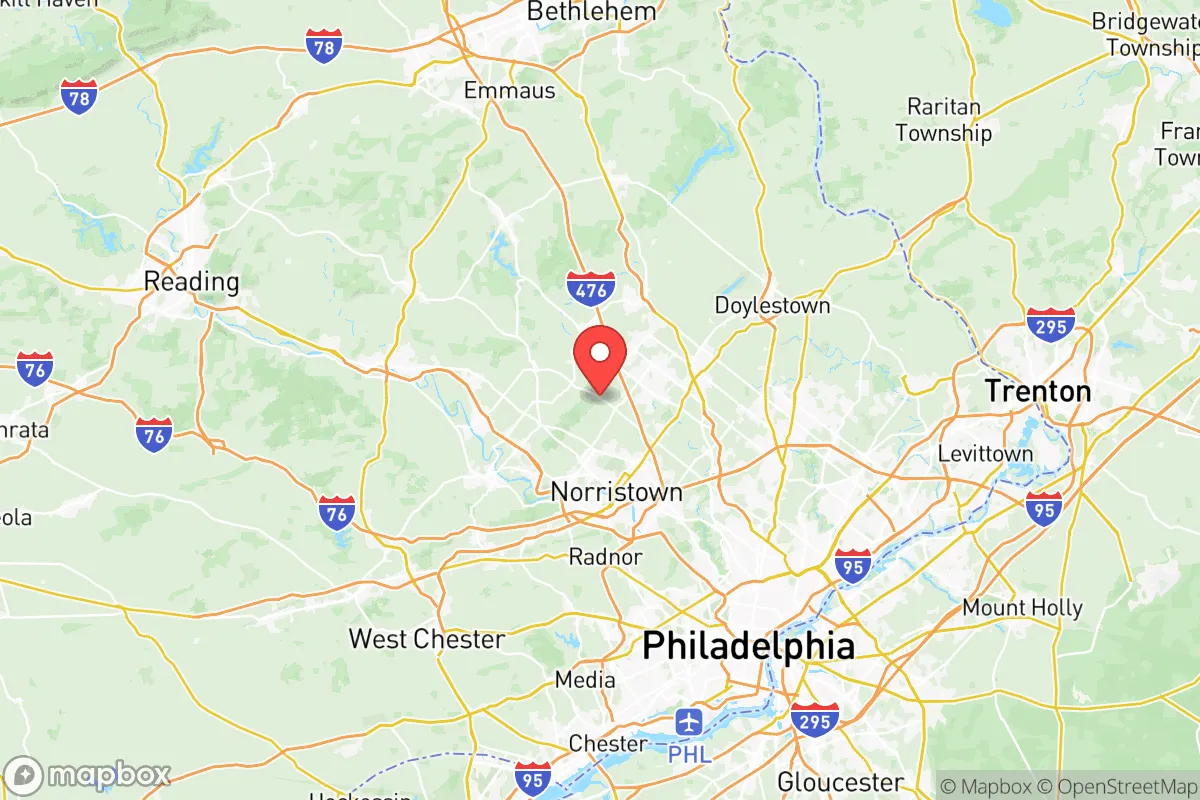
Montgomery County, Pennsylvania, presents a complex landscape for personal sovereignty, where the dense, historically regulated southeastern corner of the state meets a more rural, independent-minded interior. For those prioritizing autonomy—whether from government overreach, tax burdens, or cultural pressures—the county is not a monolith. The environment ranges from the relatively permissive, low-density townships in the northern and western reaches to the more restrictive, high-tax boroughs closer to Philadelphia. A strategic relocation here requires understanding that your personal freedom is heavily dependent on which specific municipality you choose, as local ordinances on everything from firearms to land use can vary dramatically within a 20-mile drive.
Tax burden and regulatory posture: How Montgomery County compares to surrounding areas
Pennsylvania’s state-level tax structure is a mixed bag for sovereignty-minded individuals. The state’s flat income tax rate of 3.07% is relatively low, and there is no tax on retirement income (Social Security, pensions, 401(k) withdrawals), which is a significant advantage for those seeking to keep more of their earnings. However, Montgomery County’s local tax burden is where the friction begins. The county itself levies a 0.5% earned income tax, and most municipalities add their own—often totaling 1% to 2% combined. Property taxes are the real concern. In high-service areas like Lower Merion Township or Abington, effective property tax rates can exceed 2.5% of assessed value, among the highest in the state. This funds extensive public services, but for a prepper or conservative, it feels like paying a premium for oversight you didn't ask for. In contrast, townships like Upper Hanover or Marlborough in the rural northern tier have significantly lower millage rates and a more hands-off regulatory posture. Zoning is generally less restrictive there, with fewer hoops to jump through for accessory structures, home businesses, or keeping livestock. The regulatory posture in these areas leans toward "leave us alone," while the southeastern boroughs are far more interventionist, with strict building codes, rental inspections, and noise ordinances.
Self-defense and gun law specifics: What you need to know about carry and restrictions
Pennsylvania is a "shall-issue" state for concealed carry permits, meaning the county sheriff must issue a License to Carry Firearms (LTCF) to any qualified applicant. Montgomery County’s Sheriff’s Office processes these efficiently, with no local restrictions beyond state law—a stark contrast to neighboring New Jersey or Delaware. Open carry is legal without a permit, though it becomes concealed carry once you enter a vehicle. The real sovereignty issue here is local preemption. Pennsylvania state law preempts municipalities from passing their own firearms ordinances, which is a strong protection. However, this has been challenged in recent years. In 2021, the city of Norristown attempted to pass an ordinance banning firearms on public property, which was struck down by the courts. This ongoing tension means that while the law is on your side, you may face local political pressure in more urbanized areas. For the prepper mindset, the key takeaway is that Montgomery County is a solid "B+" for gun rights—not as permissive as rural counties in central PA, but far better than the coastal states. The real concern is the political trajectory: the county has been trending blue, and while current law protects you, the cultural climate in places like Jenkintown or Ardmore may be less welcoming to visible firearm ownership. Stick to the northern and western townships for a more aligned cultural environment.
Self-reliance and homesteading viability: Lot sizes, zoning, and off-grid feasibility
This is where Montgomery County splits most sharply. The southeastern half—think Bryn Mawr, Glenside, Willow Grove—is suburban sprawl with quarter-acre lots, strict HOAs, and zoning that prohibits chickens, rainwater collection, or any structure that looks "agricultural." Off-grid living is effectively impossible there. But drive 30 minutes north to Green Lane or Schwenksville, and the picture changes entirely. In Upper Salford Township, you can find 2- to 5-acre parcels zoned for agricultural-residential use. Chickens, goats, and even small-scale livestock are permitted with minimal paperwork. Rainwater harvesting is legal (though you must register a well if you go that route). Solar panels are allowed, but net metering rules with PECO can be frustrating—you won't get rich selling power back, but you can offset your own usage. The biggest hurdle for off-grid feasibility is the lack of a statewide "right to dry" law for clotheslines, and some townships still have nuisance ordinances that could be used against a visible composting toilet or a large garden that looks "unkempt." For a serious homesteader, the northern townships—Marlborough, Upper Hanover, Douglass (Montgomery)—offer the best balance of affordable land (still $15,000–$25,000 per acre, not cheap but manageable) and permissive zoning. You won't be completely off-grid due to utility easements and building codes, but you can achieve a high degree of self-sufficiency.
Personal liberties: Parental rights, medical autonomy, speech, and property
Pennsylvania law provides a mixed bag for personal liberties. On parental rights, the state has a relatively strong "Parents' Bill of Rights" that was passed in 2022, affirming parents' authority over their children's education and medical decisions. However, local school boards in Montgomery County vary widely. Perkiomen Valley School District and Boyertown Area School District (which covers parts of the county) have been more responsive to conservative parents' concerns about curriculum transparency and medical privacy. In contrast, Lower Merion School District has been at the center of controversies over critical race theory and gender identity policies. For medical autonomy, Pennsylvania did not expand Medicaid under the ACA in a way that creates a state-run insurance monopoly, but the state did implement a COVID-19 vaccine mandate for healthcare workers that many saw as overreach. Currently, there are no state-level mandates for children, but individual school districts can impose their own. On property rights, Pennsylvania is a "Dillon's Rule" state, meaning local governments only have powers expressly granted by the state. This actually works in favor of property owners in rural townships, as they cannot easily create new restrictive ordinances without state authorization. However, the state's Act 537 (Sewage Facilities Act) can force property owners to connect to public sewer if it becomes available, which is a sovereignty concern for those wanting to remain on septic. Free speech is protected under the state constitution, but Montgomery County has seen local governments attempt to regulate political signs and public gatherings in parks—usually struck down, but the pattern of overreach is consistent.
Overall, Montgomery County offers a tiered sovereignty experience. If you choose the northern and western townships—Upper Hanover, Marlborough, Green Lane—you can achieve a level of personal autonomy that rivals many rural counties in central Pennsylvania, with the added benefit of proximity to medical and supply infrastructure. If you land in the southeastern boroughs, you will find yourself in a regulatory environment that feels more like a northeastern suburb, with higher taxes, more oversight, and a cultural climate that may clash with a prepper or conservative worldview. For the strategic relocator, the county is a viable option only if you are willing to do the granular work of picking the right township. It is not a bastion of liberty, but it is not a lost cause either—it is a place where sovereignty is still possible, provided you know exactly where to draw your lines on the map.

* Values derived from national, state, county, city and local statistics and may differ in a specific area. Last updated: 2026-05-17T00:56:59.000Z
Narrative content on this page is AI-generated and may contain mistakes. Verify any details that matter before acting on them.
ReloMaps may earn a commission from affiliate links at no extra cost to you.

