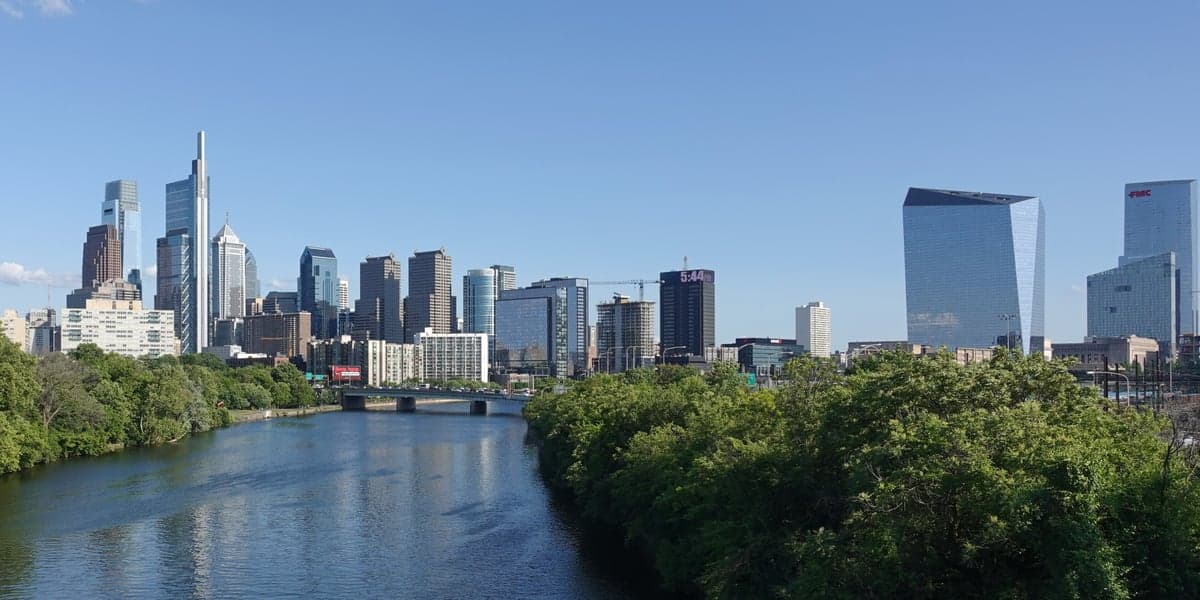
Photo: Wikipedia
Political ClimatePolitical Climate in Philadelphia, PA
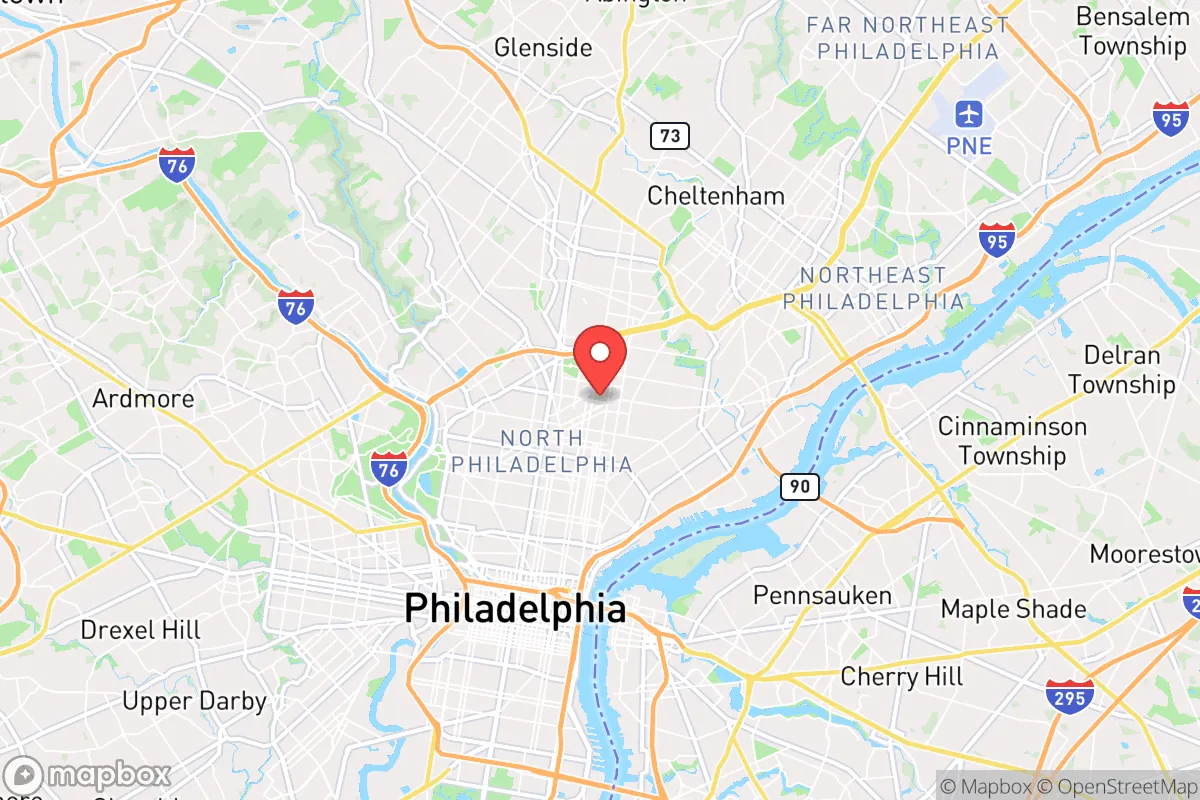
District shown is the primary district for this city’s centroid. Cities may span multiple districts.
Local Political AnalysisPolitical Analysis of Philadelphia, PA
Look, I’ve lived in and around Philadelphia my whole life, and I’ll tell you straight: this city leans hard left, and it’s been getting more so every year. The Cook PVI is D+19, which means it’s one of the most reliably Democratic big cities in the country. It wasn’t always this way—there used to be a real working-class, moderate Democratic tradition here, with plenty of union guys and small business owners who’d vote for a Republican now and then. But over the last decade, the shift has been dramatic. The city’s politics are now dominated by progressive activists, and the old-school machine politicians have either retired or been pushed out. If you’re looking for a place where your vote might actually balance things out, this isn’t it. The trajectory is toward more government, more regulation, and less room for dissenting views.
How it compares
Drive 20 minutes outside the city limits, and you’re in a different world. Bucks County, Montgomery County, and Delaware County used to be solidly purple, but even they’ve been trending blue in recent years. For a real contrast, head west to Chester County or up to Lancaster County—those areas still have a strong conservative presence, with local governments that push back on state mandates and keep taxes lower. But inside Philadelphia proper, you’re surrounded by a political monoculture. The city council is almost entirely Democratic, and the mayor’s office has been in Democratic hands for decades. If you value political diversity, you’ll find it in the suburbs, not the city itself.
What this means for residents
For a conservative or even a moderate, living in Philadelphia means constantly dealing with policies that feel like government overreach. The city has some of the strictest gun laws in the state, yet violent crime remains stubbornly high—so the restrictions don’t seem to help, but they do make it harder for law-abiding citizens to defend themselves. Taxes are another sore spot: the city wage tax hits you whether you live here or just work here, and property taxes have been creeping up to fund programs you might not agree with. The school district is a mess, and instead of focusing on basics, the administration pours money into DEI initiatives and social justice programs. You’ll see your tax dollars going to things you didn’t vote for, and there’s not much you can do about it at the ballot box.
On the cultural side, Philadelphia has always had a strong, independent streak—it’s a blue-collar town at heart. But the progressive wave is changing that. You’ll see more bike lanes that clog traffic, more restrictions on businesses, and a general attitude that the government knows best. The city’s response to the pandemic was a perfect example: prolonged school closures, business shutdowns, and mask mandates that lasted longer than in most surrounding counties. If you value personal freedom and want a government that stays out of your life, Philadelphia is heading in the wrong direction. The long-term outlook? Unless there’s a major shift, expect more of the same—higher costs, more regulations, and a political climate that leaves little room for anyone who doesn’t toe the progressive line.

State Political ClimatePolitical Climate in Pennsylvania
State Political AnalysisPolitical Environment in the State
Pennsylvania is a classic purple state that has been drifting leftward over the past two decades, though it still retains a strong conservative backbone in its rural and exurban regions. The state’s 19 electoral votes have gone Democratic in every presidential election since 1992 except 2016, when Donald Trump narrowly flipped it by about 44,000 votes. Since then, the trend has been concerning for conservatives: Joe Biden won the state by 80,000 votes in 2020, and the margins in Philadelphia’s collar counties have grown increasingly blue. The state legislature remains under Republican control, but the governor’s mansion has been held by Democrats since 2015, and the state Supreme Court has a 5-2 Democratic majority. For a conservative looking to relocate, the picture is mixed — there are still deep-red strongholds, but the state’s political gravity is pulling toward the left.
Urban vs. rural divide
The political map of Pennsylvania is a textbook case of the urban-rural split that defines American politics today. The Democratic strongholds are the state’s two major cities: Philadelphia and Pittsburgh, along with their immediate suburbs. Philadelphia alone accounts for about 600,000 Democratic votes in a close election, and its surrounding counties — Montgomery, Delaware, Chester, and Bucks — have shifted from swing territory to reliably blue over the past decade. Pittsburgh and its Allegheny County base are similarly Democratic, though the city’s western suburbs have held up better for conservatives. The rural and small-town regions are where the GOP dominates. Lancaster County, York County, and the vast northern tier stretching from Williamsport to the New York border are deeply red, with Trump winning some precincts by 70-80%. The Scranton/Wilkes-Barre area in the northeast is a bellwether that has been trending redder as union households shift away from the Democratic Party. The Lehigh Valley (Allentown, Bethlehem, Easton) is a true swing region that often decides statewide races. For a conservative, the safest bets are the rural counties west of the Susquehanna River and the northern tier, while the Philadelphia suburbs are increasingly hostile territory.
Policy environment
Pennsylvania’s policy environment is a frustrating mix for conservatives. The state has a flat income tax rate of 3.07%, which is relatively low and hasn’t changed in years, but property taxes are among the highest in the nation — averaging about 1.5% of home value, with some counties like Philadelphia and Delaware County pushing 2% or more. There is no state sales tax on groceries or clothing, but the overall sales tax is 6% (8% in Philadelphia). The regulatory climate is moderate but trending worse: the state has its own environmental regulations that often exceed federal standards, particularly around natural gas drilling in the Marcellus Shale. Education policy is a battleground — the state has a school choice program (the Educational Improvement Tax Credit) but it’s capped and under constant attack from the teachers’ unions. Governor Josh Shapiro, a Democrat, has pushed for expanded school funding but opposes universal vouchers. Election laws have been a flashpoint: the state expanded no-excuse mail-in voting in 2019 via Act 77, which conservatives argue led to the 2020 controversies. There is no voter ID requirement for mail-in ballots, though in-person voting still requires ID for first-time voters. The state’s gun laws are relatively permissive — no permit needed for open carry, and concealed carry permits are issued on a shall-issue basis — but Philadelphia and Pittsburgh have their own restrictive local ordinances that the state legislature has tried to preempt.
Trajectory & freedom
On the freedom front, Pennsylvania is a mixed bag that is slowly tilting toward more government control. The good news: the state has a strong preemption law that prevents cities from enacting their own gun control, though Philadelphia regularly flouts it and the courts have been inconsistent. The state also has a right-to-work law? No, it doesn’t — Pennsylvania is still a union-favoring state where workers can be forced to pay dues as a condition of employment, though the Supreme Court’s Janus decision weakened that. On the concerning side: the Shapiro administration has pushed for stricter environmental regulations on natural gas, which is the backbone of the state’s rural economy. The state also expanded Medicaid under Obamacare, and there’s a growing push for a state-level carbon tax. Parental rights have been under assault in school districts like Lower Merion and Pittsburgh Public Schools, where critical race theory and gender ideology have been introduced without parental consent. The state legislature has passed bills to require parental notification for sexually explicit content in schools, but they’ve been vetoed by Shapiro. Medical freedom took a hit during COVID: Pennsylvania had some of the longest-lasting school closures in the nation, and vaccine mandates were enforced for healthcare workers. The state’s response to the pandemic was heavy-handed, and many conservatives still resent the shutdowns.
Civil unrest & political movements
Pennsylvania has seen its share of political turbulence. The 2020 election aftermath was particularly intense in Philadelphia, where Republican poll watchers were allegedly restricted from observing ballot counting, leading to years of litigation and distrust. The state’s mail-in ballot system remains a point of contention, with ongoing lawsuits over signature verification and drop box security. On the left, activist groups like Indivisible and Pennsylvania Stands Up are well-organized in the Philadelphia and Pittsburgh suburbs, pushing for progressive policies on climate, policing, and education. On the right, grassroots groups like the Pennsylvania Firearm Owners Association and Moms for Liberty have been active in school board races and Second Amendment advocacy. Immigration politics are less visible here than in border states, but Philadelphia is a self-declared sanctuary city, and the state has policies that limit cooperation with ICE. There have been protests over police reform in Philadelphia, and the city’s crime surge has led to calls for more law enforcement, which the progressive district attorney Larry Krasner has resisted. The Lancaster County area has seen a growing Amish and Mennonite population that tends to vote conservative but stays out of the political fray.
Projection
Looking ahead 5-10 years, the trajectory is concerning for conservatives. The Philadelphia suburbs are becoming more Democratic as professionals and minorities move in, while the rural areas are aging and losing population. The state’s population growth is concentrated in the southeast, which will only amplify the urban vote. The Republican Party in Pennsylvania has been riven by infighting between the establishment and the Trump wing, which has hurt its ability to win statewide races. The state’s electoral votes will likely remain in the Democratic column for the foreseeable future, barring a major national shift. However, the state legislature is likely to stay Republican due to gerrymandering, though the courts could change that. For a conservative moving in, the best bet is to settle in a red county like Butler, Westmoreland, or Franklin, where local government is still friendly and the culture is traditional. The state’s natural gas industry will continue to be a battleground, but it provides good jobs in the western and northern parts of the state. The school choice movement has a chance to expand if the legislature can override a veto, but that’s a long shot.
For a conservative considering a move to Pennsylvania, the bottom line is this: you can find a community that aligns with your values, but you’ll be living in a state where the political winds are blowing against you. The rural areas are still solid, but they’re shrinking. The cities and suburbs are increasingly progressive, and the state government is controlled by Democrats who are pushing policies that restrict freedom — from higher taxes to education mandates to election laws that lack integrity. If you’re willing to fight for your values at the local level and can tolerate a state government that doesn’t represent you, Pennsylvania has plenty to offer in terms of cost of living, natural beauty, and community. But if you’re looking for a state that is trending toward freedom, you might want to look west to Ohio or south to Texas. Pennsylvania is a state in transition, and the direction is not favorable for conservatives.
* Values derived from national, state, county, city and local statistics and may differ in a specific area. Last updated: 2026-05-01T21:36:02.000Z
Narrative content on this page is AI-generated and may contain mistakes. Verify any details that matter before acting on them.
ReloMaps may earn a commission from affiliate links at no extra cost to you.

