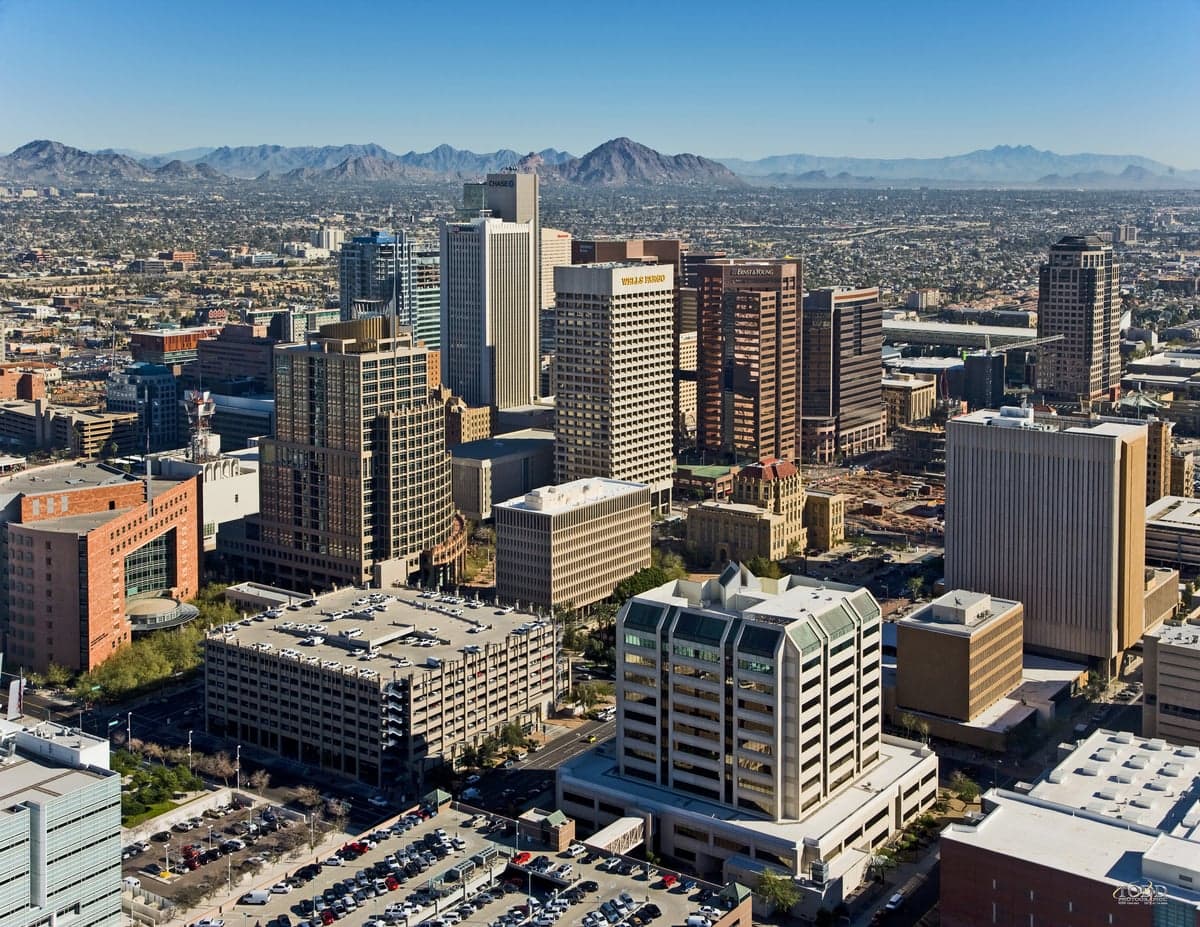
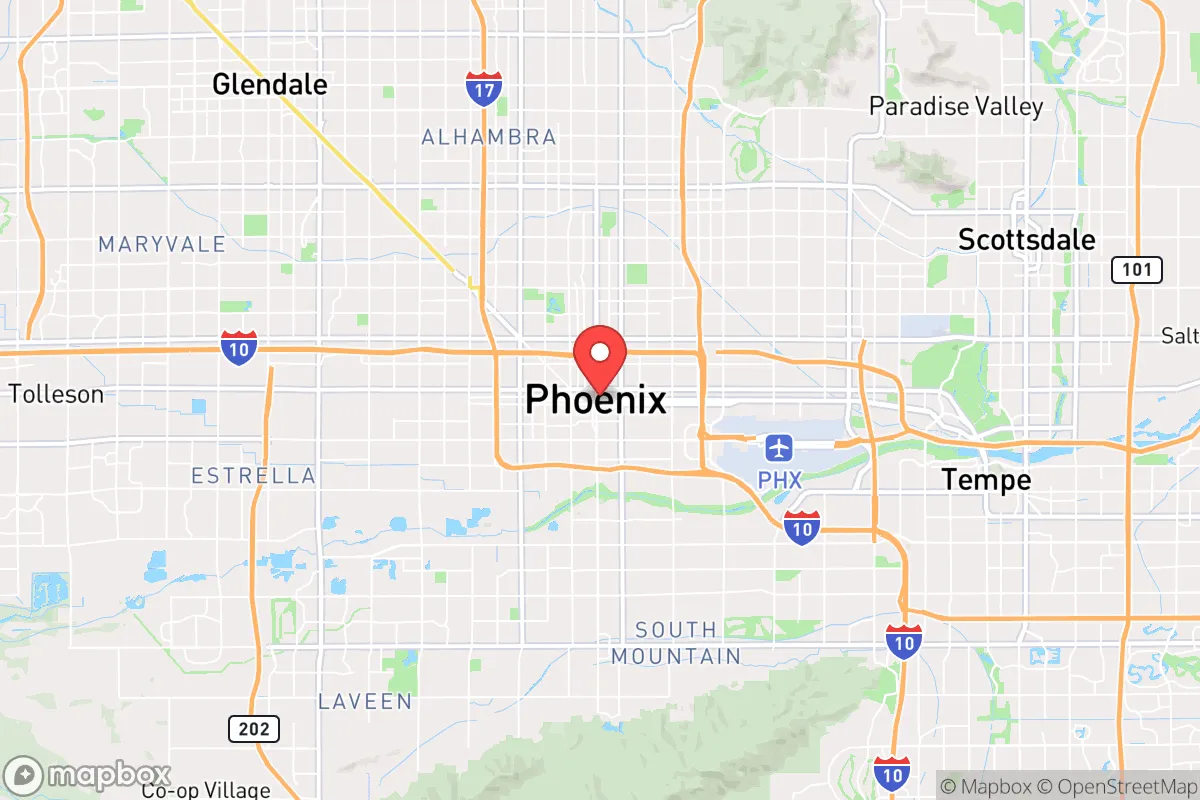
Photo: Wikipedia
Strategic Assessment of Phoenix, AZ
Multiple tactical vulnerabilities. Population density, target proximity, or disaster risk are likely compounding. A retreat property and exit planning is required.
What does the Strategic Assessment tell us?
Our Strategic Assessment grades tactical survivability of an area. Major population centers, military targets, fallout zones, natural disasters, and border exposure all drive risk — lower exposure means a more defensible position in a crisis.
This is heavily inspired by Joel Skousen's Strategic Relocation book. Highly recommended you checkout the book ($)What does this tell us?
Our Strategic Assessment grades tactical survivability of an area. Major population centers, military targets, fallout zones, natural disasters, and border exposure all drive risk — lower exposure means a more defensible position in a crisis.
This is heavily inspired by Joel Skousen's Strategic Relocation book. Highly recommended you checkout the book ($)Strategic Pillars

Key Distances
Regional Safe Places
Below is our recommended "safe zones" in Arizona and the surrounding area based on our strategic heuristics. For most people, it's unrealistic to live in a “safe zone” full-time due to work, family or other personal reasons. They tend to be more rural. However, many of these areas are perfect for second homes and retreat properties that double as a vacation home or even a short-term rental.
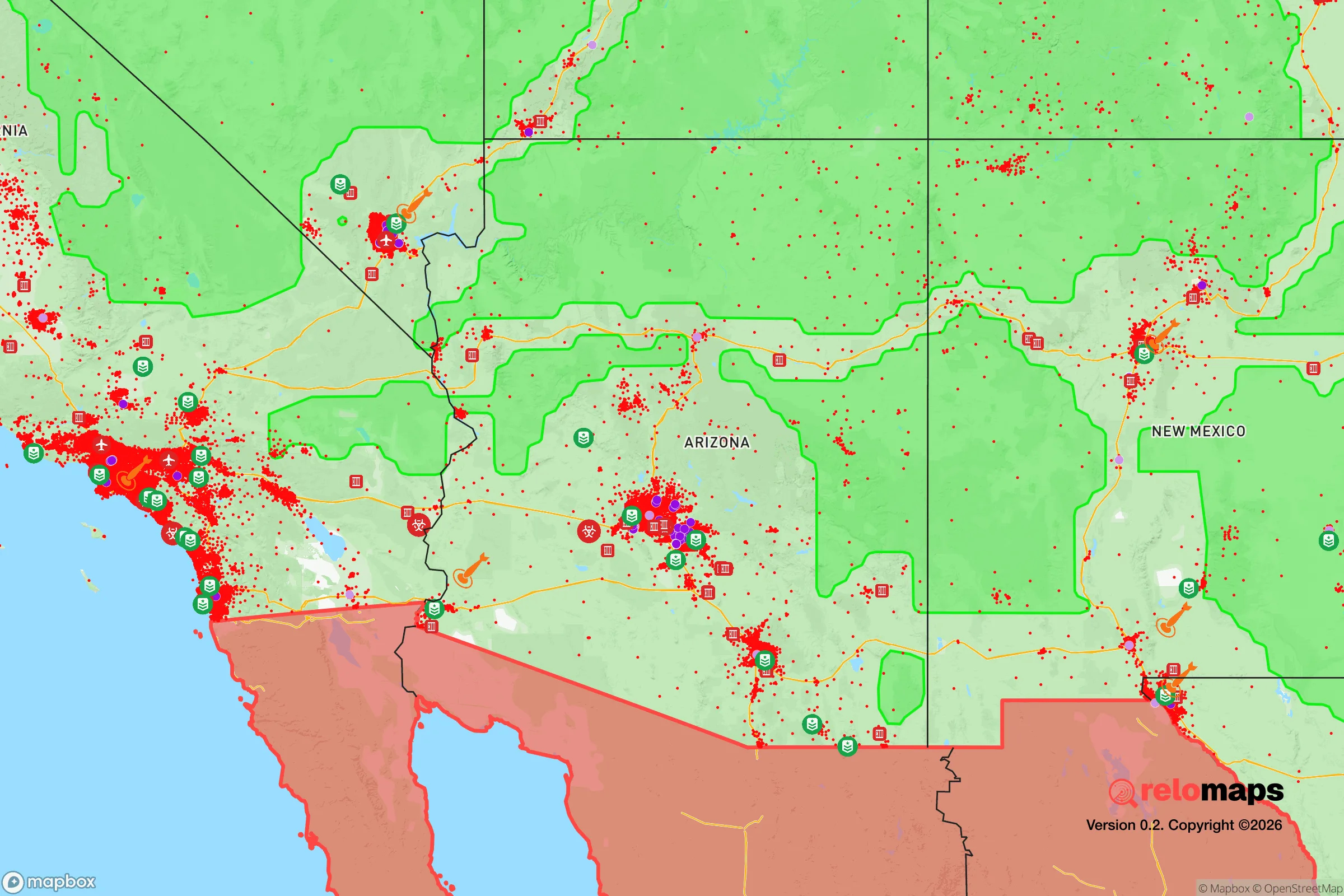
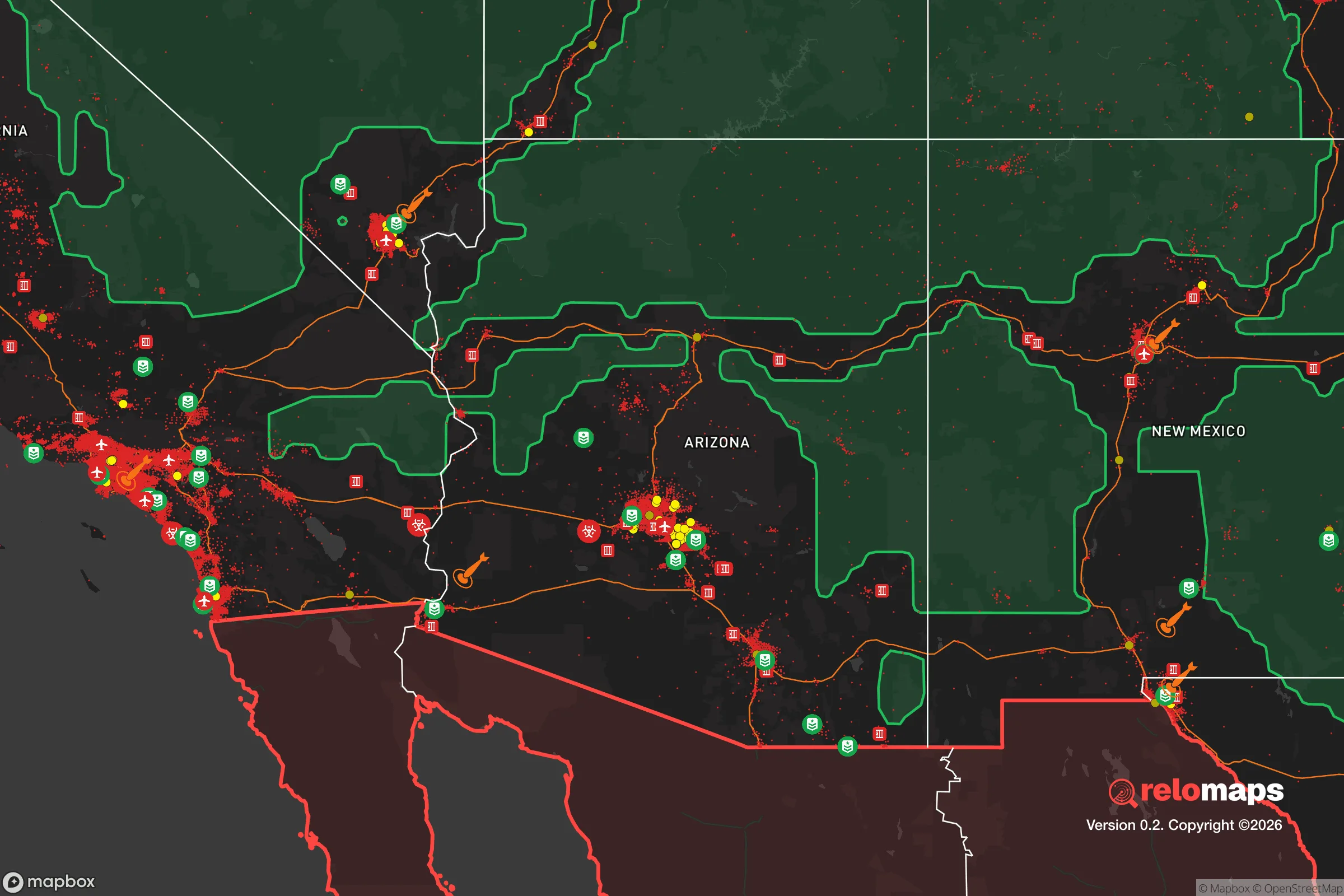


Important Note: For informational purposes only. This does not mean nothing bad ever happens in the green zones. Please use common sense. This is based on public data and modeled with AI. We tried to take a conservative approach but mistakes happen. We update this regularly as new information becomes available.
Solar Generator Recommendations
Backup power matters more here than in safer locations. We've picked three solar generators across budgets and capacity tiers — start with the budget unit if you only need a few essentials, or step up if you want to run a fridge and HVAC for days at a time.

Jackery Portable Power Station Explorer 300
Budget OptionPower on the Go: Weighing only 11 lbs, it's convenient to set up and store with book-sized foldable solar panels

BLUETTI Portable Power Station AC180
Designed for both indoor and outdoor scenarios, AC180 is highly capable as it has a robost capacity and continuous output power.

EF ECOFLOW DELTA Pro Ultra Power Station
Upgraded PickEcoFlow DELTA Pro Ultra is a whole-home energy system designed to grow with your family. Integrated with the Smart Home Panel 2, it scales to meet your evolving energy needs — keeping your home powered, intelligent, and secure through every stage of life.
We earn a commission, at no additional cost to you.
Strategic Assessment Analysis
Phoenix, Arizona, presents a complex strategic picture for the conservative prepper or survivalist. Its raw advantages—year-round sun, a growing network of water infrastructure, and a state government that generally respects Second Amendment rights and individual autonomy—are counterbalanced by extreme heat, a massive population center that is a prime target for civil unrest, and a precarious long-term water situation. For a single individual or family looking to ride out national-scale disruptions, Phoenix offers a mixed bag: strong short-term logistical benefits but significant long-term exposure to the very urban vulnerabilities you are trying to escape.
Geographic position and natural advantages for long-term survival
Phoenix sits in the Salt River Valley, a basin surrounded by mountain ranges that provide natural chokepoints and defensible terrain if you know where to look. The city's location at the intersection of Interstates 10 and 17 makes it a logistical hub for the Southwest, which is a double-edged sword: it facilitates supply movement in normal times but also makes it a funnel for refugees and looters during a collapse. The most significant natural advantage is the over 300 days of sunshine per year, which makes solar power generation exceptionally reliable. A well-placed off-grid property in the nearby Superstition Mountains or Tonto National Forest can generate enough electricity for a modern homestead with a modest panel array. The dry climate also means less corrosion on stored gear, fewer mold issues with food stores, and a lower risk of the fungal diseases that plague wetter regions. The valley floor sits at roughly 1,100 feet elevation, but within a 45-minute drive you can reach 5,000-foot pine forests in places like Payson or Flagstaff, offering a natural bug-out location with cooler temperatures and more water. For a relocator, the key takeaway is that Phoenix itself is not the asset—the surrounding high desert and mountain terrain are. The city is a base for supplies and medical care, not a place to hunker down.
Risks, exposures, and proximity to fallout-relevant landmarks
The most immediate risk for a Phoenix-based prepper is the city's sheer size. With a metropolitan population pushing 5 million, Phoenix is a prime target for civil unrest, food riots, and cascading infrastructure failure. The city's layout is sprawling and car-dependent, meaning any fuel shortage strands millions of people. The heat is a silent killer: summer temperatures regularly exceed 110°F, and a multi-day power outage during July would cause mass casualties within 72 hours, especially among the elderly and poor. Water is the existential threat. The Central Arizona Project canal, which brings Colorado River water to the valley, is a single point of failure. A deliberate attack, a major earthquake along the San Andreas fault system (which could disrupt the canal's pumping stations), or a prolonged drought could cut off 40% of the city's water supply overnight. Phoenix also sits within a few hundred miles of two major military installations—Luke Air Force Base and Davis-Monthan Air Force Base—that would be primary targets in any conflict involving strategic bombing. Fallout patterns from a strike on those bases would depend on wind direction, but the prevailing westerlies could carry contamination across the eastern suburbs. Additionally, the Palo Verde Nuclear Generating Station, the largest nuclear plant in the country, sits just 50 miles west of downtown. While the plant is well-fortified, a catastrophic failure or sabotage would render large portions of the western valley uninhabitable for years. For the survivalist, these are not theoretical risks—they are concrete vulnerabilities that must be factored into any relocation decision.
Practical resilience for a relocator: food, water, energy, and defensibility
Water is the single most critical factor in the Phoenix area, and it is not a solved problem. The city's municipal supply comes from a mix of the Salt and Verde River watersheds, the Colorado River via the CAP canal, and groundwater. For a relocator, buying a property with a grandfathered groundwater right or a private well is non-negotiable. Surface water is scarce and heavily regulated. Rainwater harvesting is legal and encouraged, but annual rainfall is only about 7 inches—you would need a massive catchment system to make a real difference. Food resilience is more achievable. The long growing season allows for year-round vegetable production, and the soil in many areas is workable with amendments. Backyard chickens are legal in most Phoenix suburbs, and some areas allow goats. However, the heat limits what you can grow in summer; the real productivity comes in fall, winter, and spring. Energy resilience is a bright spot. Solar is cheap and effective, and net metering policies in Arizona are favorable compared to California. A battery backup system paired with solar can keep a home running through grid outages, which are becoming more common during summer heat waves. Defensibility is the hardest factor. Phoenix is flat, open, and surrounded by sprawl. There are no natural defensive positions within the city itself. A rural property in the foothills of the McDowell Mountains or near the town of Cave Creek offers better terrain, but you are still within a 30-minute drive of millions of people. For a single individual or family, the best strategy is to live on the urban fringe with a well-stocked vehicle and a pre-planned bug-out location in the high country. Do not plan to fight for your home in a city of 5 million—plan to leave before the mob arrives.
The overall strategic picture for Phoenix is one of calculated risk. The area offers genuine advantages in solar energy, growing seasons, and a state-level political environment that is friendly to self-reliance and firearm ownership. But those advantages come with severe exposure to heat, water scarcity, and a massive population that could turn hostile in a crisis. For the conservative prepper, Phoenix is best viewed as a staging ground, not a final destination. Use it to build resources, network with like-minded individuals, and establish a presence in the Southwest, but have a clear exit plan to higher ground and more defensible terrain. If you are willing to be mobile and disciplined, Phoenix can work. If you are looking for a place to dig in and hold out indefinitely, look farther north or east. The desert is unforgiving, and it does not care about your politics or your preparations.

* Values derived from national, state, county, city and local statistics and may differ in a specific area. Last updated: 2026-04-29T02:20:33.000Z
Narrative content on this page is AI-generated and may contain mistakes. Verify any details that matter before acting on them.
ReloMaps may earn a commission from affiliate links at no extra cost to you.

