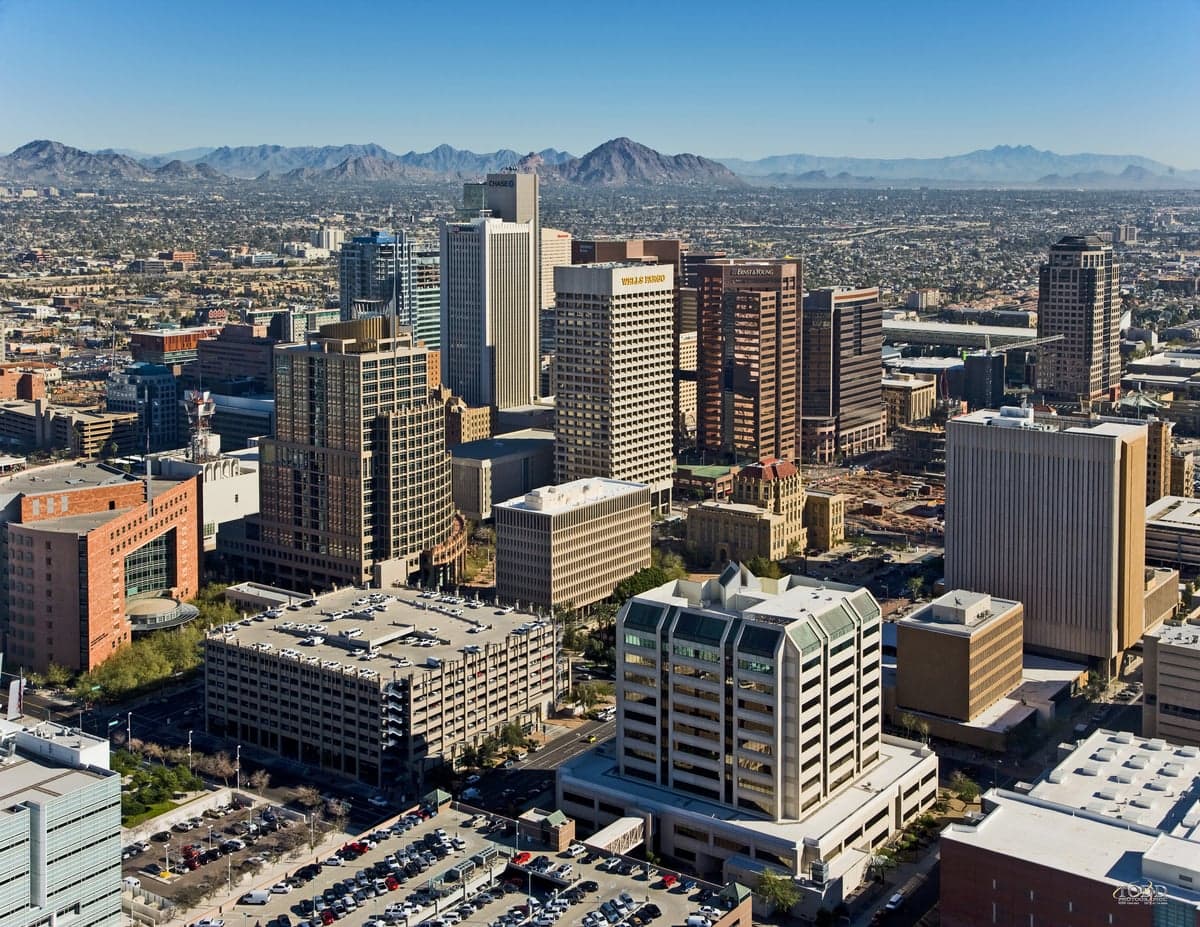
Photo: Wikipedia
Political ClimatePolitical Climate in Phoenix, AZ
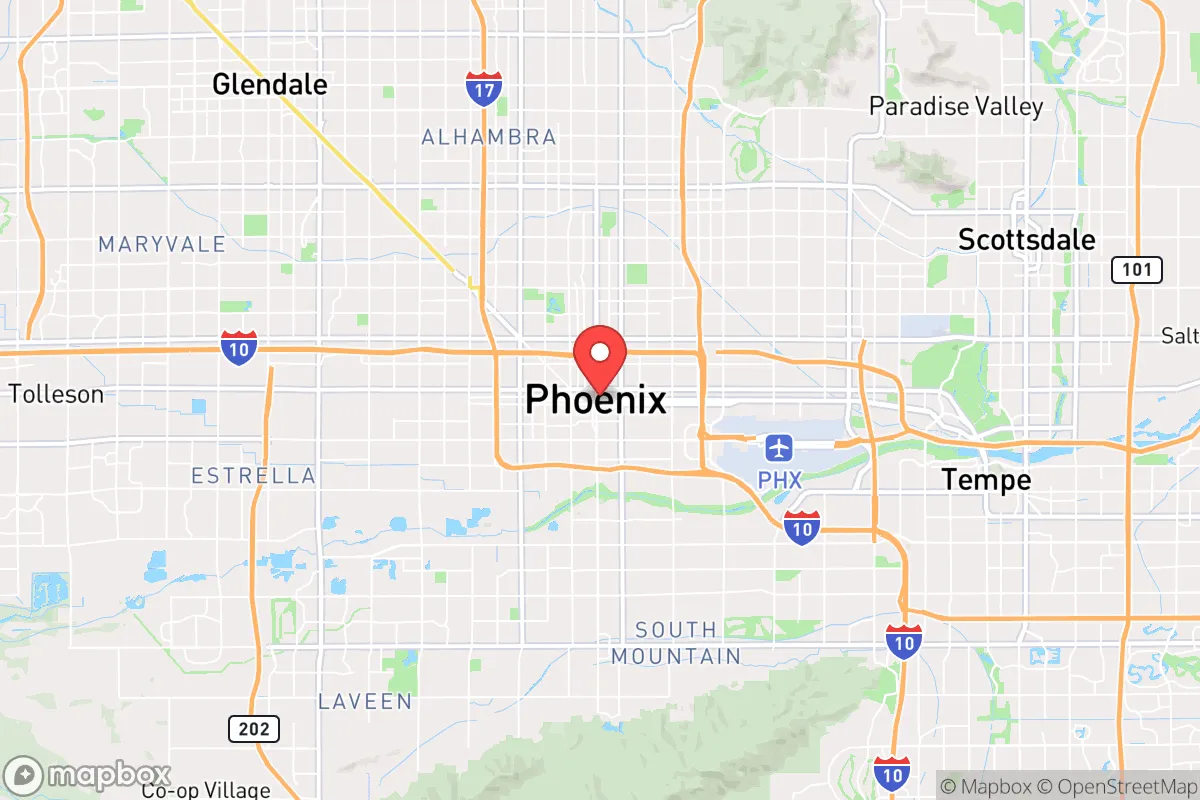
District shown is the primary district for this city’s centroid. Cities may span multiple districts.
Local Political AnalysisPolitical Analysis of Phoenix, AZ
Phoenix has always been a bit of a political mixed bag, but if you’re looking at the big picture, it’s a city that’s been drifting left while the rest of the state holds the line. The Cook PVI sits at R+1, which tells you it’s a true toss-up—but that number hides a lot of tension. Maricopa County as a whole still leans red, but the city proper has been trending blue for the last decade, especially since the 2020 election. You’ll find deep red strongholds in places like Mesa, Gilbert, and Chandler to the east, while Scottsdale and Paradise Valley stay reliably conservative. But inside Phoenix itself, the old-school conservative base is getting squeezed by transplants from California and the Midwest who bring progressive voting habits with them. It’s not a radical shift overnight, but it’s steady, and that’s what worries me.
How it compares
Compared to the rest of Arizona, Phoenix is the outlier. The surrounding towns—Surprise, Peoria, and Buckeye—are still solidly Republican, with local governments that push back on state-level mandates and keep taxes low. Drive 30 minutes east to Mesa, and you’ll find a city council that’s openly skeptical of the kind of zoning and spending policies Phoenix has embraced. Meanwhile, Tucson is even further left, but that’s expected. What’s more telling is how Flagstaff and Sedona have gone full progressive, while Phoenix is still fighting over the middle. The real contrast is between Phoenix’s city hall and the state legislature in Scottsdale. The state has passed laws to limit local control on things like short-term rentals and water rights, which tells you the conservative majority doesn’t trust Phoenix to govern itself without overreach. That tension is real, and it’s only going to get worse as the city’s population grows.
What this means for residents
For someone who values personal freedom and limited government, Phoenix is becoming a place where you have to keep an eye on city council meetings. The push for higher property taxes to fund light rail expansions and affordable housing mandates is a red flag—it’s government deciding how you should live and what you should pay for it. The city’s rent control discussions and eviction moratoriums during the pandemic were a preview of what’s coming: more rules, more fees, and less room to make your own choices. On the flip side, the state’s preemption laws still protect your right to carry a firearm without a permit and keep your business open without excessive red tape. But if Phoenix keeps electing progressive mayors and council members, those protections could erode. The 2024 election was a wake-up call—Maricopa County flipped back to Trump, but Phoenix proper voted for Biden again. That split means you’re living in a city where the local government doesn’t always reflect the values of the people who’ve been here for generations.
One thing that still sets Phoenix apart culturally is its independent streak. There’s a strong libertarian undercurrent here—people don’t like being told what to do, whether it’s about water usage, building codes, or mask mandates. The city’s water conservation policies are a good example: they’re necessary, but the way they’re enforced can feel like government overreach if you’re a homeowner who just wants to keep their grass green. The homelessness crisis downtown is another flashpoint—the city’s approach has been to spend millions on shelters and services, but critics say it’s just moving the problem around without addressing the root causes. In the long run, I see Phoenix staying purple but leaning left on local issues, while the state legislature keeps it in check. If you’re a conservative who values low taxes and personal liberty, you’ll want to pay close attention to who’s running for city council—because that’s where the real fight is happening.

State Political ClimatePolitical Climate in Arizona
State Political AnalysisPolitical Environment in the State
Arizona has shifted from a reliably Republican stronghold to a true battleground state over the past two decades, with a partisan lean that now sits roughly even—Democrats won the presidency here in 2020 by just 10,457 votes, while Republicans swept statewide offices in 2022. The dominant coalition is a three-way tug-of-war between Maricopa County’s explosive suburban growth, a deeply conservative rural base, and a rapidly growing Latino and transplant population that leans left. The trajectory since 2000 has been a steady march from solid red to purple, with the 2024 cycle likely to test whether that trend continues or reverses.
Urban vs. rural divide
The political map of Arizona is defined by a stark urban-rural split. Maricopa County, home to Phoenix and over 60% of the state’s population, is the decisive battleground—it voted for Biden by 2 points in 2020 after going for Trump by 3 in 2016. The county’s sprawling suburbs tell the story: Mesa and Gilbert remain reliably red, but Scottsdale and Paradise Valley have trended purple as wealthy transplants from California and the Northeast arrive. Tucson (Pima County) is a Democratic stronghold, consistently voting blue by double digits, while Flagstaff (Coconino County) is the state’s most liberal enclave, driven by Northern Arizona University and a strong environmentalist presence. Rural counties like Yavapai (Prescott), Mohave (Kingman), and Cochise (Sierra Vista) vote Republican by 30-40 points, but their populations are too small to offset the metro areas. The 2022 governor’s race saw Democrat Katie Hobbs win by 0.7% statewide, while Republican Kari Lake carried 12 of 15 counties—underscoring how the urban core now dictates outcomes.
Policy environment
Arizona’s policy environment is a mixed bag for conservatives. The state has a flat income tax rate of 2.5% (down from 4.5% in 2021), thanks to a 2022 tax cut package signed by Governor Doug Ducey—a clear win for economic freedom. Property taxes are low, with no state-level property tax and average effective rates around 0.6%. However, the state’s regulatory posture is uneven: occupational licensing remains burdensome, and the 2021 universal school voucher expansion (Empowerment Scholarship Accounts) made Arizona the national leader in school choice, allowing any family to use public funds for private or homeschool expenses. On education, the state has resisted Common Core and CRT mandates, but the 2022 "Parental Bill of Rights" (HB 2161) was watered down in committee and never passed—a missed opportunity. Healthcare policy leans free-market, with no Medicaid expansion beyond the 2014 AHCCCS program, but the state did adopt a 2023 law banning COVID-19 vaccine mandates for state employees (SB 1824). Election laws have been a flashpoint: the 2022 Voter ID law (HB 2492) requires proof of citizenship for federal elections, but a 2024 court ruling struck down parts of it, leaving the system in legal limbo. Overall, the policy environment is conservative on taxes and school choice, but inconsistent on regulatory reform and election integrity.
Trajectory & freedom
Arizona is becoming less free in several key areas, despite tax cuts. The biggest concern is the erosion of election integrity: the 2020 audit of Maricopa County’s ballots (the "Cyber Ninjas" audit) revealed systemic issues but was met with fierce resistance from the state’s Democrat-controlled Secretary of State office, and subsequent legislation to clean voter rolls has been blocked in court. On gun rights, Arizona remains a constitutional carry state (permitless carry since 2010), and the 2023 "Second Amendment Sanctuary" law (SB 1385) prohibits state enforcement of federal gun bans—a strong win. But personal liberty took a hit with the 2022 repeal of the 1864 near-total abortion ban, replaced by a 15-week restriction (HB 2484) that still allows exceptions. The 2023 "Medical Freedom" bill (HB 2456) banning vaccine passports for private businesses failed in committee, showing the legislature’s limits. Property rights are generally strong, with no statewide rent control and a 2023 law limiting homeowners’ association fines (SB 1132). The trajectory is a tug-of-war: tax and school choice reforms expand freedom, while election and medical autonomy battles suggest the state is drifting toward a more interventionist posture on public health and voting.
Civil unrest & political movements
Arizona has seen significant political activism on both sides. The 2020 "Stop the Steal" protests in Phoenix drew tens of thousands, and the 2021 Maricopa County audit became a national flashpoint for election integrity activists. On the left, the 2022 "Red for Ed" teacher strikes in Tucson and Phoenix pushed for higher spending, and the 2023 "Transgender Youth" protests at the state capitol saw dueling rallies over SB 1001 (banning gender-affirming care for minors, which passed). Immigration remains the hottest issue: Cochise County (border with Mexico) has seen a surge in migrant crossings, leading to the 2024 "Operation Secure Arizona" deployment of National Guard troops by Governor Hobbs—a rare bipartisan move. The 2022 "Sanctuary City" ban (SB 1070-style) remains state law, but Tucson and Flagstaff have declared themselves "welcoming cities," creating a patchwork of enforcement. Election integrity controversies persist: the 2024 primary saw Pinal County (south of Phoenix) experience ballot printer malfunctions, fueling distrust. A new resident would notice the constant political tension—yard signs, bumper stickers, and local news coverage are heavily polarized, especially in Maricopa County’s swing suburbs.
Projection
Over the next 5-10 years, Arizona is likely to become more competitive and more purple, with a slight leftward drift. Demographic trends favor Democrats: the state’s Latino population (now 32% of residents) is growing faster than any other group, and while not monolithic, it leans Democratic by about 20 points. In-migration from California (the largest source of new residents) brings more progressive voters, especially to Maricopa County’s suburbs like Chandler and Peoria. However, the rural exodus from blue states to places like Prescott and Kingman could offset some of that shift. The 2024 election will be a key test: if Republicans win the presidency and Senate seat, the state may hold steady; if Democrats sweep, expect a cascade of left-leaning policies on voting, education, and healthcare. The biggest wildcard is water—the Colorado River crisis could drive population decline in the Phoenix metro, potentially reshaping the political map. For a conservative moving in now, expect to live in a state where your vote matters but where cultural and policy battles will intensify, not resolve.
Bottom line for a new resident: Arizona offers low taxes, school choice, and strong gun rights, but you’ll be living in a battleground where every election is a knife fight. If you’re moving from a deep blue state, you’ll find more freedom here—but don’t expect it to stay that way without active engagement. The state’s future depends on whether the conservative base in places like Gilbert and Prescott can hold the line against the demographic tide. Choose your county carefully: Yavapai or Mohave for a reliably red environment, Maricopa for the front lines, and avoid Pima or Coconino if you want to avoid progressive local governance.
* Values derived from national, state, county, city and local statistics and may differ in a specific area. Last updated: 2026-04-29T02:20:33.000Z
Narrative content on this page is AI-generated and may contain mistakes. Verify any details that matter before acting on them.
ReloMaps may earn a commission from affiliate links at no extra cost to you.

