
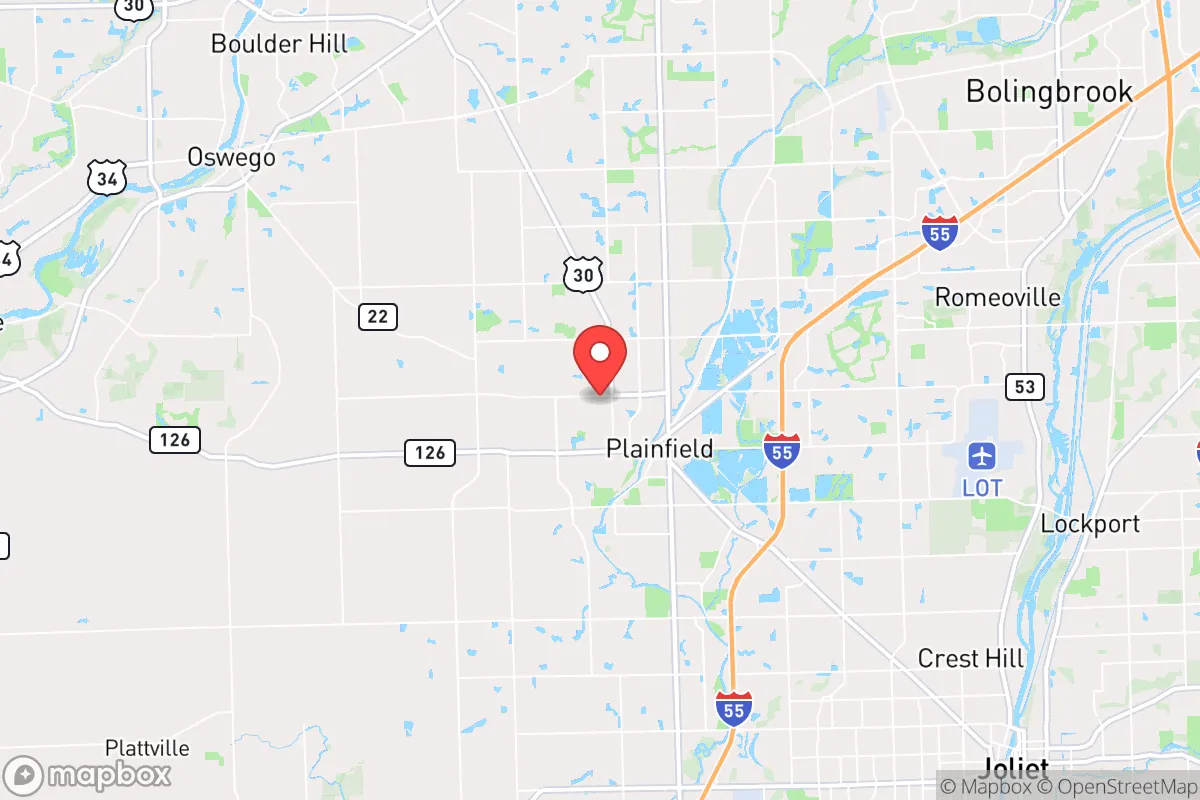
Photo: Wikipedia
Personal Sovereignty in Plainfield, IL
Viable for self-reliance. Generally workable, though some barriers may limit total independence.
What does Personal Sovereignty tell us?
Personal Sovereignty measures your capacity for self-reliance and independence with minimal government friction. Higher scores mean fewer barriers between you and the way you want to live... but it assumes you have the space you need and good neighbors.
What does this tell us?
Personal Sovereignty measures your capacity for self-reliance and independence with minimal government friction. Higher scores mean fewer barriers between you and the way you want to live... but it assumes you have the space you need and good neighbors.
State Policy
Energy independence: Importer (45% of energy produced in-state)
Personal Liberty
Homesteading

Personal Liberty Analysis
Plainfield, Illinois, offers a mixed bag for those prioritizing personal sovereignty, but for the strategic relocator with a survivalist or prepper mindset, the analysis is sobering. Located in Will County, roughly 35 miles southwest of Chicago, Plainfield sits under the long shadow of Illinois state law, which consistently ranks among the most restrictive in the nation for gun rights, tax burden, and parental autonomy. While the village itself has a more conservative, family-oriented character than the Cook County core, the legal and regulatory environment from Springfield imposes significant constraints on self-reliance, property rights, and the ability to live without government overreach. For a single individual or parent seeking maximum personal sovereignty, Plainfield is a compromise—offering a community of like-minded neighbors but operating within a state framework that actively limits individual freedom.
Tax burden and regulatory posture: How Illinois law impacts your household autonomy
Illinois’s fiscal and regulatory climate is a primary concern for anyone valuing economic self-determination. The state has the second-highest property tax burden in the nation, with effective rates often exceeding 2.0% of a home’s assessed value. In Plainfield, this translates to annual property tax bills that can easily reach $6,000 to $10,000 on a median-priced home, a significant recurring cost that reduces disposable income and the ability to invest in self-sufficiency projects like land improvements, solar arrays, or emergency supplies. The state income tax is a flat 4.95%, and sales taxes in Will County push the combined rate to around 7.25% to 8.0% depending on local add-ons. This heavy tax load is a direct reduction of household autonomy, funneling money away from family priorities and into state programs that may not align with conservative values. Furthermore, Illinois’s regulatory posture is dense. The state imposes strict environmental regulations, building codes, and licensing requirements that can complicate or delay projects like constructing a detached workshop, installing a rainwater catchment system, or even keeping certain livestock. For the prepper, the bureaucratic overhead is a constant friction point, making it harder to act quickly on self-reliance goals without navigating permits and fees.
Self-defense and gun law specifics: Navigating Illinois’s restrictive firearms environment
For the survivalist, the right to keep and bear arms is non-negotiable, and Illinois presents a significant obstacle. The state requires a Firearm Owner’s Identification (FOID) card for mere possession, a process that involves a background check and state-level approval, creating a government registry of gun owners. For concealed carry, a separate Concealed Carry License (CCL) is required, which mandates 16 hours of training and a $150 fee, with renewal every five years. This is a far cry from constitutional carry states. More critically, Illinois passed a ban on so-called "assault weapons" and high-capacity magazines in 2023 (the Protect Illinois Communities Act), which directly impacts the types of rifles and magazines many preppers consider essential for home defense and long-term security. The law is currently under legal challenge, but as of 2026, it remains in effect, meaning new purchases of AR-15s, AK-47s, and magazines holding more than 10 rounds for rifles or 15 rounds for handguns are prohibited. Existing owners were required to register their firearms with the state police—a step many view as an infringement and a precursor to confiscation. In Plainfield itself, local ordinances are generally more permissive than Cook County, but they cannot override state law. The result is a legal environment that treats law-abiding gun owners with suspicion, limiting the types of weapons and ammunition you can stockpile for a crisis scenario. For the strategic relocator, this is a major red flag.
Self-reliance and homesteading viability: Lot sizes, zoning, and off-grid feasibility in Plainfield
Plainfield’s development pattern is predominantly suburban, which constrains traditional homesteading. Most residential lots in the village proper are between 0.25 and 0.5 acres, limiting space for large gardens, livestock, or substantial water storage. Zoning codes are typical of a modern suburb: they restrict the keeping of chickens, goats, or other farm animals in standard residential zones, and regulations on fences, sheds, and accessory structures are detailed and enforced. Off-grid feasibility is low. Illinois law requires connection to the municipal water and sewer system in most subdivisions, and building codes mandate grid-tied electrical systems for new construction. Solar panels are permitted but must be connected to the grid, and battery storage systems face fire code restrictions. Rainwater harvesting is technically allowed for non-potable uses, but the state’s Department of Public Health imposes strict guidelines on cisterns and collection systems. For the prepper seeking true self-reliance—a remote property with a well, septic, solar, and the freedom to raise food—Plainfield is not the answer. However, the unincorporated areas of Will County just outside the village limits offer larger parcels (1 to 5 acres) with fewer restrictions, where you can keep livestock, drill a well, and install off-grid systems with less bureaucratic interference. The strategic move would be to look at rural properties in townships like Wheatland or Plainfield Township, not the village itself, to gain meaningful autonomy over your land.
Personal liberties: Parental rights, medical autonomy, speech, and property in Illinois
Illinois’s track record on personal liberties is concerning for conservative parents and individuals. Parental rights have been eroded by state mandates. Illinois was one of the first states to require public schools to teach LGBTQ+ inclusive history and to allow students to use chosen names and pronouns without parental notification, a direct challenge to parental authority. The state also has a universal mask mandate authority for schools during health emergencies, and vaccine requirements for school attendance are strict, with limited philosophical exemptions. Medical autonomy is similarly constrained. Illinois has a robust public health apparatus that can impose quarantines, vaccine mandates, and treatment orders during declared emergencies, with little room for individual refusal based on conscience or religious belief. The state also expanded abortion access and protects gender-affirming care for minors, policies that may conflict with the values of a conservative relocator. Free speech is protected under the First Amendment, but Illinois has laws against "hate speech" and disorderly conduct that have been used to prosecute protesters, and local ordinances in some suburbs restrict political signage and public gatherings. Property rights are under constant pressure from eminent domain and zoning changes, and the state’s progressive property tax system means your home is never truly your own—the government can reassess and raise taxes based on market fluctuations. For the individualist, Illinois is a state where the government asserts broad authority over family, health, and property, leaving little room for principled non-compliance.
In the final analysis, Plainfield offers a community of conservative-minded neighbors in a suburban setting, but the state-level sovereignty picture is bleak. Compared to states like Texas, Florida, or Idaho, Illinois imposes a heavy tax burden, restricts gun ownership with a registry and an assault weapons ban, limits homesteading through zoning and building codes, and asserts government authority over parental and medical decisions. For the survivalist or prepper who values maximum personal autonomy, Plainfield is a location of last resort—only viable if family or job ties are non-negotiable. The strategic relocator would be better served by looking at states with lower taxes, constitutional carry, strong property rights, and minimal government overreach. If you must be in Illinois, target the unincorporated rural areas of Will County, not the village itself, and be prepared to fight for every inch of your freedom against a state government that sees individual sovereignty as a threat to its power.

* Values derived from national, state, county, city and local statistics and may differ in a specific area. Last updated: 2026-04-24T13:02:10.000Z
Narrative content on this page is AI-generated and may contain mistakes. Verify any details that matter before acting on them.
ReloMaps may earn a commission from affiliate links at no extra cost to you.

