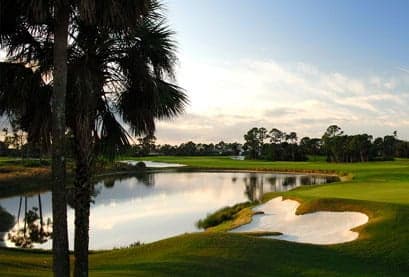
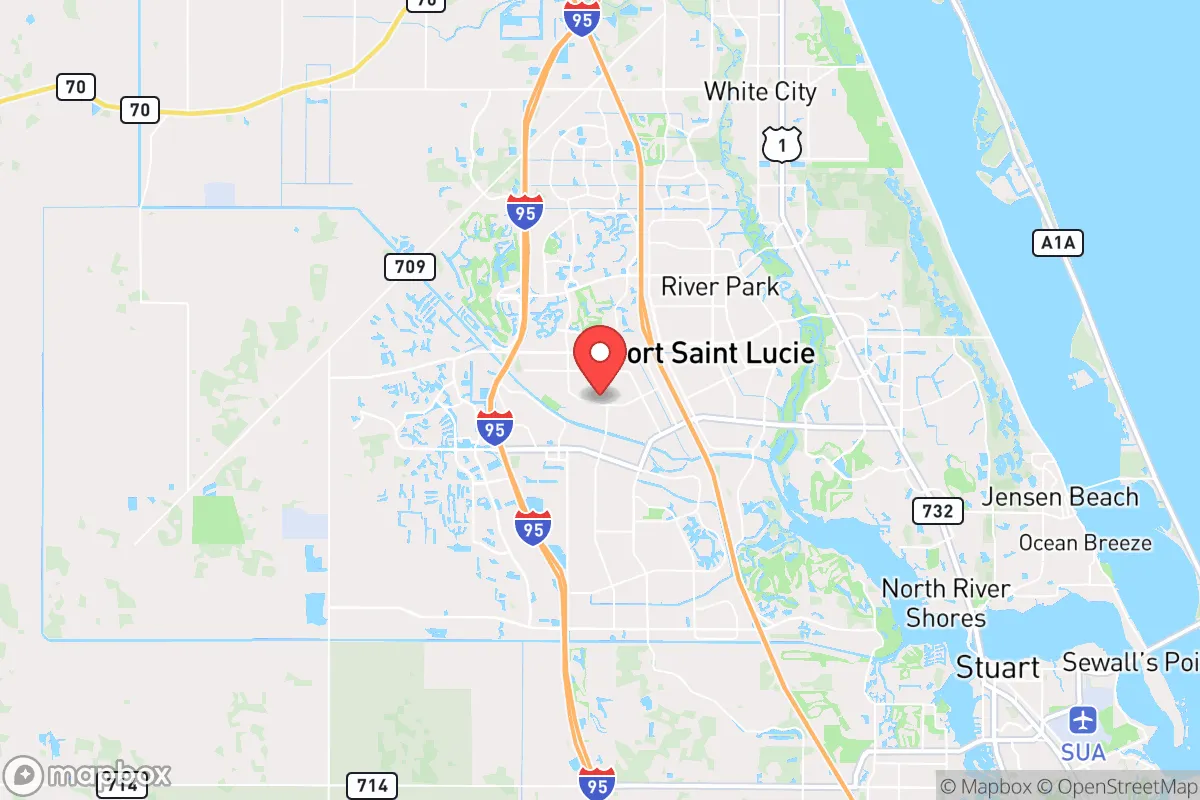
Photo: Wikipedia
Demographics of Port St Lucie, FL
Affluence Level in Port St Lucie, FL
A middle-class area roughly in line with national averages across income, home values, education, and employment.
People of Port St Lucie, FL
Today, Port St. Lucie is a city of 220,453 residents defined by its rapid, planned suburban growth and a notably diverse population for a mid-sized Florida city. Its character is shaped by a majority-white (51.8%) base, a substantial Hispanic community (23.0%), a significant Black population (18.2%), and smaller East/Southeast Asian (1.7%) and Indian subcontinent (0.5%) groups. The city feels less like a historic Florida town and more like a sprawling, family-oriented bedroom community where newcomers from the Northeast, the Caribbean, and Latin America have layered atop one another in distinct waves. Only 26.8% of adults hold a college degree, reflecting a workforce tilted toward trades, healthcare, and service industries rather than a white-collar professional hub.
How the city was settled and grew
Port St. Lucie is a genuinely post-1960s planned community with no colonial or 19th-century settlement core. The land was originally part of the vast Spanish land grants and later timber holdings, but no permanent population existed until the General Development Corporation (GDC) began selling lots in the 1960s. The first wave of residents were Northern retirees and working-class families from New York, New Jersey, and the Midwest lured by cheap land and the promise of a canal-front lifestyle. These early buyers settled the original grid of streets near the St. Lucie River, an area now known as Port St. Lucie Boulevard and the River Park neighborhood, where modest 1960s ranch homes still stand. GDC marketed the city as "The City of Golf, Gardens, and Waterways," and the initial population was overwhelmingly white, middle-class, and over 50.
Modern era (post-1965)
The 1980s and 1990s brought a second, larger wave of domestic in-migration as I-95 construction made Port St. Lucie a viable commuter suburb for jobs in West Palm Beach and Fort Pierce. This era saw the development of master-planned subdivisions like St. Lucie West, a 5,000-acre community built around the New York Mets spring training complex, which attracted younger families and a more ethnically mixed population. By the 2000s, the city's Hispanic population began growing rapidly, driven by Puerto Rican families relocating from the Northeast and direct migration from the Dominican Republic and Colombia. These newcomers concentrated in the southern end of the city near Becker Road and in the newer subdivisions off Tradition Parkway, where affordable new construction and proximity to I-95 made entry possible. The Black population, which had been small and largely confined to the older Lake Charles neighborhood near the river, expanded significantly after 2010 as African-American families from South Florida and the Northeast sought lower housing costs. The East/Southeast Asian community (1.7%) is small but visible in the area around the St. Lucie West commercial corridor, where Vietnamese and Filipino families own restaurants and nail salons. The Indian subcontinent population (0.5%) remains tiny, concentrated among professionals working at the Cleveland Clinic Martin Health and the Torrey Pines Institute, with no single ethnic enclave.
The future
Port St. Lucie's population is heading toward greater diversity but not toward the hyper-diverse, immigrant-heavy profile of Miami or Orlando. The foreign-born share is only 5.4%, well below the national average, meaning future growth will come primarily from domestic migration and natural increase. The Hispanic share (23.0%) is likely to continue rising as second-generation Puerto Rican and Dominican families age into homebuying and as new arrivals from Central America settle in the southern Tradition area. The Black population (18.2%) is stable and growing slowly, with new arrivals from the Northeast and Caribbean gravitating toward the newer subdivisions off Floresta Drive. The white share (51.8%) is declining gradually as older retirees pass away and younger, more diverse families replace them. The city is not tribalizing into stark ethnic enclaves—most neighborhoods are mixed—but there is a subtle economic sorting: St. Lucie West and the Tradition master-planned community are whiter and more affluent, while older areas near the river and the southern corridor are more diverse and working-class. Over the next 10-20 years, Port St. Lucie will likely become a majority-minority city, with Hispanics and Blacks together forming a slim majority, while remaining a predominantly domestic-born, family-oriented suburb.
For a conservative-leaning individual or parent moving in now, Port St. Lucie offers a stable, growing community where the population is diversifying organically rather than through rapid immigration. The city is becoming more Hispanic and more Black, but it remains a place where English is the dominant language, homeownership is the norm, and the political culture leans center-right. The key dynamic to watch is the tension between the older, white retiree base in the river neighborhoods and the younger, more diverse families filling the southern subdivisions—a shift that will define the city's character for the next generation.

* Values derived from national, state, county, city and local statistics and may differ in a specific area. Last updated: 2026-04-22T03:36:26.000Z
Narrative content on this page is AI-generated and may contain mistakes. Verify any details that matter before acting on them.
ReloMaps may earn a commission from affiliate links at no extra cost to you.

