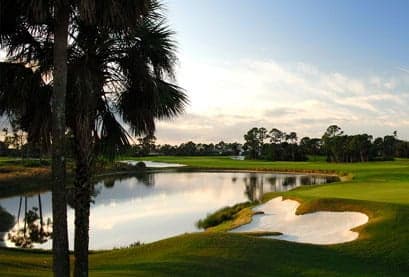
Photo: Wikipedia
Strategic Assessment of Port St Lucie, FL
Meaningful friction. Expect exposure to either population pressure, blast zones, or natural disaster risk. Consider buying a retreat property.
What does the Strategic Assessment tell us?
Our Strategic Assessment grades tactical survivability of an area. Major population centers, military targets, fallout zones, natural disasters, and border exposure all drive risk — lower exposure means a more defensible position in a crisis.
This is heavily inspired by Joel Skousen's Strategic Relocation book. Highly recommended you checkout the book ($)What does this tell us?
Our Strategic Assessment grades tactical survivability of an area. Major population centers, military targets, fallout zones, natural disasters, and border exposure all drive risk — lower exposure means a more defensible position in a crisis.
This is heavily inspired by Joel Skousen's Strategic Relocation book. Highly recommended you checkout the book ($)Strategic Pillars

Key Distances
Regional Safe Places
Below is our recommended "safe zones" in Florida and the surrounding area based on our strategic heuristics. For most people, it's unrealistic to live in a “safe zone” full-time due to work, family or other personal reasons. They tend to be more rural. However, many of these areas are perfect for second homes and retreat properties that double as a vacation home or even a short-term rental.

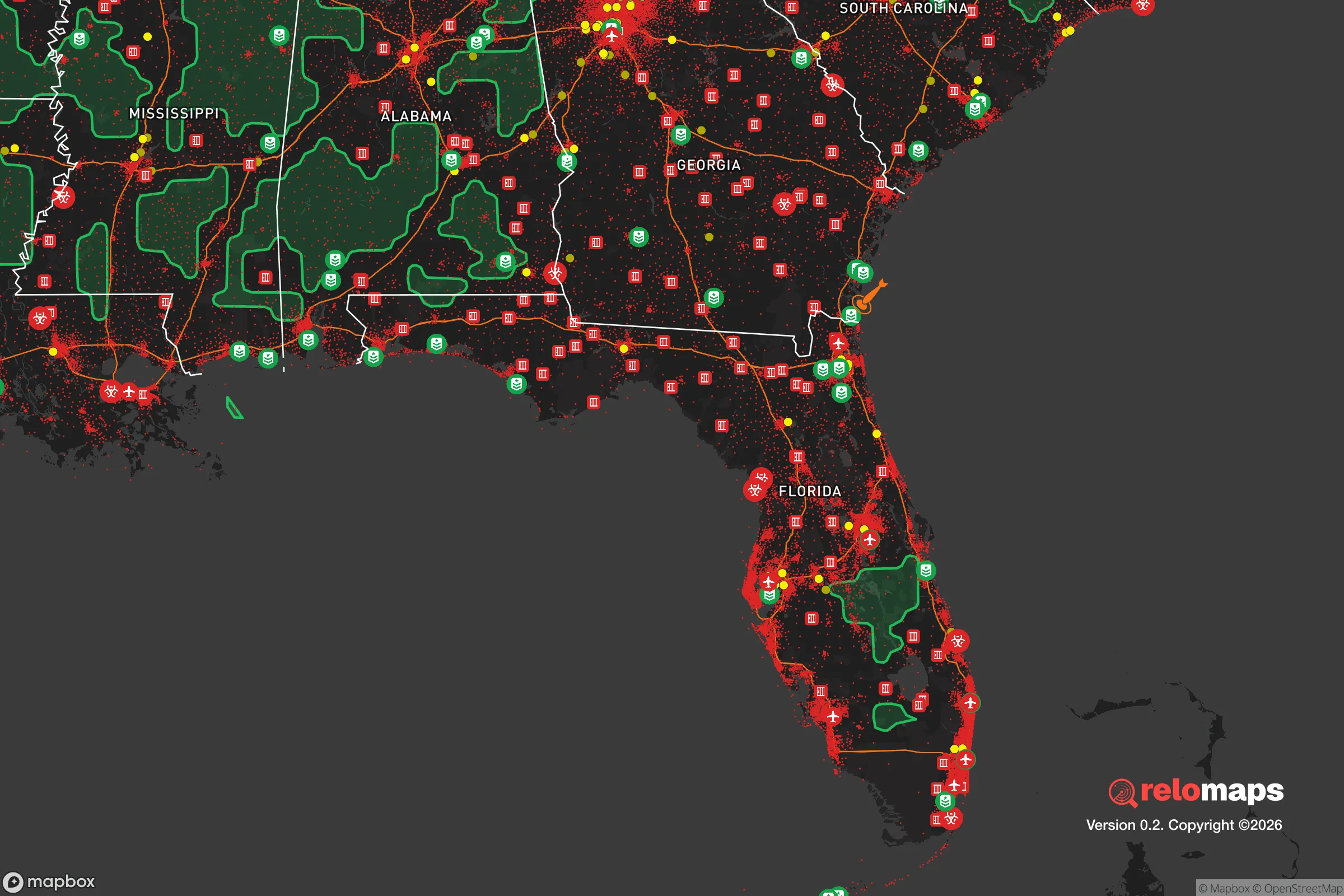


Important Note: For informational purposes only. This does not mean nothing bad ever happens in the green zones. Please use common sense. This is based on public data and modeled with AI. We tried to take a conservative approach but mistakes happen. We update this regularly as new information becomes available.
Solar Generator Recommendations
Backup power matters more here than in safer locations. We've picked three solar generators across budgets and capacity tiers — start with the budget unit if you only need a few essentials, or step up if you want to run a fridge and HVAC for days at a time.

Jackery Portable Power Station Explorer 300
Budget OptionPower on the Go: Weighing only 11 lbs, it's convenient to set up and store with book-sized foldable solar panels

BLUETTI Portable Power Station AC180
Designed for both indoor and outdoor scenarios, AC180 is highly capable as it has a robost capacity and continuous output power.

EF ECOFLOW DELTA Pro Ultra Power Station
Upgraded PickEcoFlow DELTA Pro Ultra is a whole-home energy system designed to grow with your family. Integrated with the Smart Home Panel 2, it scales to meet your evolving energy needs — keeping your home powered, intelligent, and secure through every stage of life.
We earn a commission, at no additional cost to you.
Strategic Assessment Analysis
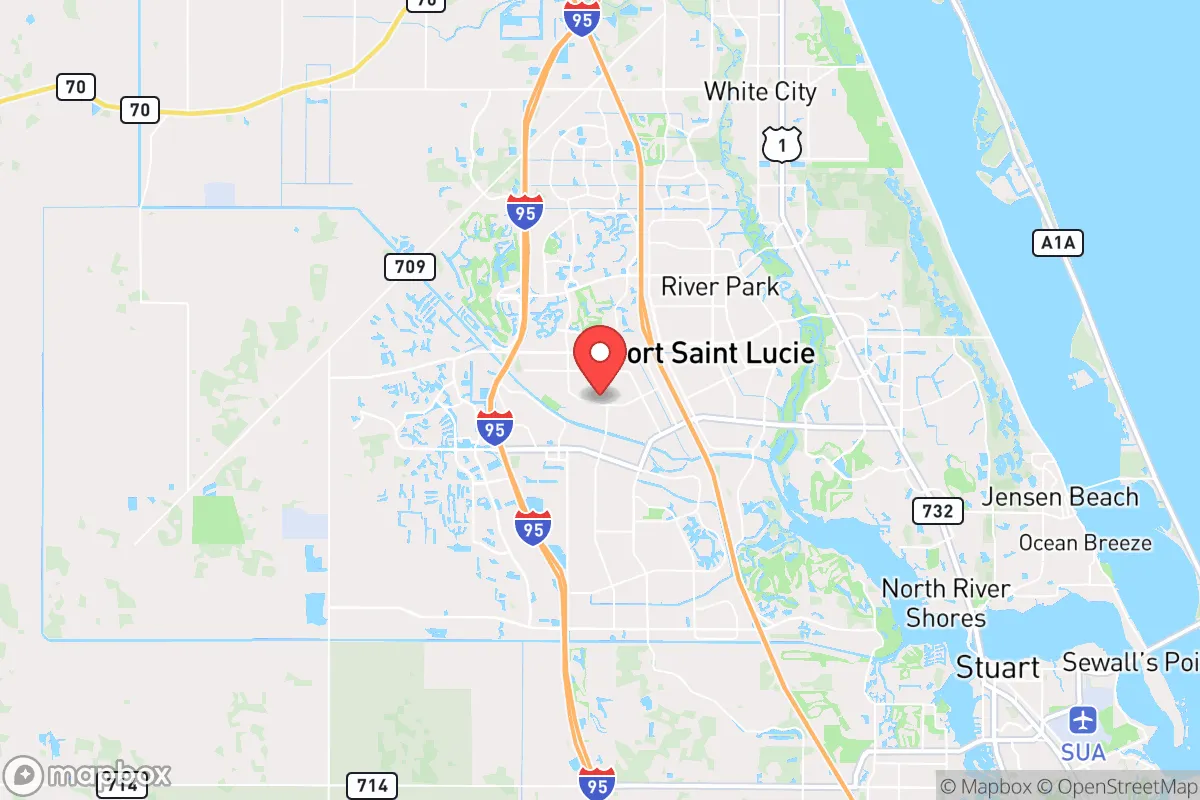
Port St. Lucie presents a mixed strategic picture for the conservative prepper. Its primary advantage is geographic buffering: it sits roughly 100 miles north of Miami and 130 miles southeast of Orlando, placing it outside the immediate blast radius of Florida’s major population centers while still being within a day’s drive of critical infrastructure. The city’s location on the Atlantic coast, between the St. Lucie River and the Indian River Lagoon, provides natural water access and a temperate climate that supports year-round food cultivation. However, this same coastal positioning introduces significant vulnerabilities—hurricane exposure, storm surge risk, and proximity to the densely populated I-95 corridor—that a strategic relocator must weigh carefully. For a conservative audience concerned with societal breakdown, Port St. Lucie offers a middle ground: close enough to urban resources to be useful, far enough to avoid the worst of a collapse scenario.
Geographic position and natural advantages for long-term survival
Port St. Lucie’s location in St. Lucie County places it within the “Florida peninsula” zone, which offers distinct advantages for a prepper. The area is part of the Treasure Coast region, a relatively less developed stretch of coastline compared to Miami-Dade or Broward. The city is bisected by the St. Lucie River, which provides a reliable freshwater source for filtration and irrigation, though it’s brackish in parts. The surrounding landscape is flat, with sandy soils that drain quickly—good for raised-bed gardening but poor for deep wells without significant investment. The climate is subtropical, with an average of 230 sunny days per year, allowing for year-round vegetable production in protected beds. The Indian River Lagoon to the east offers fishing and crabbing opportunities, though pollution from agricultural runoff has degraded water quality in recent years. For a relocator, the key natural advantage is the ability to grow food 12 months a year, supplemented by marine protein from the lagoon and Atlantic Ocean, which is a 15-minute drive from most of the city.
Risks, exposures, and proximity to fallout-relevant landmarks
The strategic downsides of Port St. Lucie are significant and cannot be ignored. The city sits directly in the path of Atlantic hurricane tracks, with Category 3+ storms making landfall in the region roughly once every 8-10 years. Storm surge from the Atlantic can push up the St. Lucie River, flooding low-lying neighborhoods east of I-95. More critically, the city is sandwiched between two major military installations: Patrick Space Force Base (45 miles north, near Cape Canaveral) and Port Everglades (a major naval logistics hub 90 miles south). In a mass casualty event or civil unrest scenario, these are likely targets for disruption or secondary effects. The St. Lucie Nuclear Power Plant is located just 10 miles north of the city limits, on Hutchinson Island. While the plant is a pressurized water reactor with a solid safety record, any incident—natural or man-made—would place Port St. Lucie within the 10-mile emergency planning zone. The I-95 corridor runs through the western edge of the city, making it a chokepoint for evacuation traffic during a crisis. In a societal breakdown, this highway becomes a liability: a funnel for refugees from Miami and Fort Lauderdale heading north, potentially overwhelming local resources.
Practical resilience for a relocator: food, water, energy, and defensibility
For a relocator focused on practical self-sufficiency, Port St. Lucie offers a mixed bag. Water is the primary concern: the city draws its municipal supply from the Floridan Aquifer, which is deep (800-1,000 feet) and generally clean, but a power grid failure would stop pumping. A prepper should budget for a solar-powered well pump or a manual hand pump for a private well, which costs $3,000-$5,000 to install. Rainwater collection is viable, with the area averaging 54 inches of rainfall annually, but storage tanks must be sized for the dry season (November-April). Food production is feasible on a standard 0.25-acre suburban lot: citrus, avocados, mangoes, and bananas grow well, along with warm-season vegetables like tomatoes, peppers, and okra. The Port St. Lucie Farmers Market operates year-round, but in a collapse scenario, local supply chains would be disrupted. Energy resilience is a weak point: the city is served by Florida Power & Light, which has a good grid-hardening record but is still vulnerable to hurricane outages. Solar panels with battery storage (e.g., Tesla Powerwall) are a wise investment, as net metering policies are favorable in Florida. Defensibility is challenging due to the city’s suburban sprawl—most homes are in subdivisions with multiple access points. A rural property on the western edge of the county, near the Savannas Preserve State Park, offers better natural barriers and fewer neighbors. The local St. Lucie County Sheriff’s Office is well-funded and has a reputation for conservative law enforcement, but in a prolonged crisis, response times would stretch thin.
The overall strategic picture for Port St. Lucie is one of calculated compromise. It is not a remote bunker location—it’s a suburban city with 200,000+ residents, which means competition for resources in a breakdown scenario. But it offers a lower risk profile than Miami or Orlando, with better access to fresh water and arable land than most coastal Florida cities. The key for a conservative relocator is to buy on the western side of I-95, away from the nuclear plant and storm surge zones, and to invest in off-grid infrastructure before moving. The area’s growing conservative population—St. Lucie County voted +12 for Trump in 2024—means a like-minded community exists, which is valuable for mutual aid networks. If you’re looking for a place that balances proximity to urban resources with a realistic shot at self-sufficiency, Port St. Lucie is a viable option—but only if you go in with eyes open to the hurricane and nuclear risks. It’s a strategic foothold, not a fortress.

* Values derived from national, state, county, city and local statistics and may differ in a specific area. Last updated: 2026-04-22T03:36:26.000Z
Narrative content on this page is AI-generated and may contain mistakes. Verify any details that matter before acting on them.
ReloMaps may earn a commission from affiliate links at no extra cost to you.

