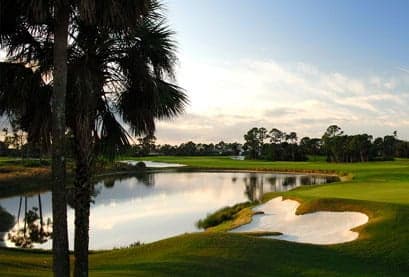
Photo: Wikipedia
Political ClimatePolitical Climate in Port St Lucie, FL
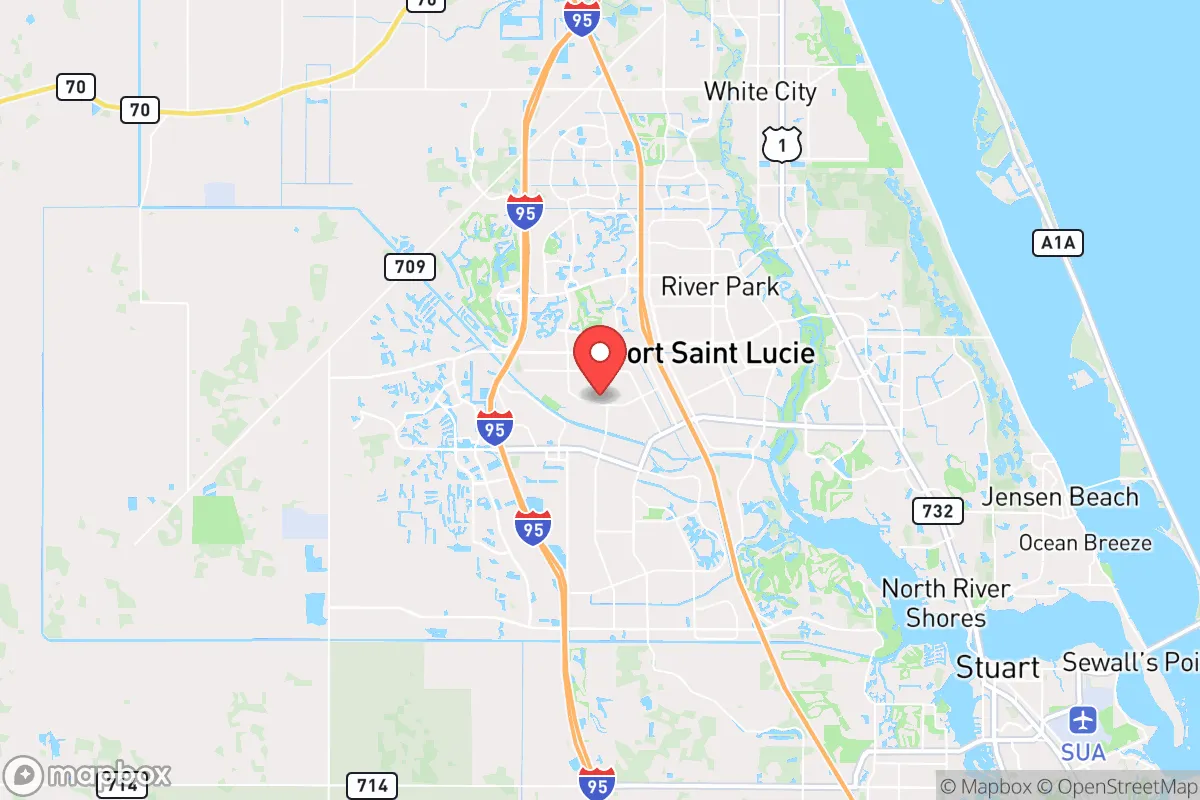
District shown is the primary district for this city’s centroid. Cities may span multiple districts.
Local Political AnalysisPolitical Analysis of Port St Lucie, FL
Port St Lucie leans reliably conservative, with a Cook PVI of R+7 that puts it solidly to the right of the national average. For a long time, this was a quiet, family-oriented place where folks moved to escape the chaos of South Florida—think less traffic, lower taxes, and a general sense that government stays out of your business. But over the last five to ten years, you’ve seen a slow creep of progressive influence, especially as younger families and retirees from blue states like New York and California have poured in. The city council and county commission still hold a conservative majority, but the margins are tighter than they used to be, and some local races have gotten uncomfortably close. If you’re looking for a place where your Second Amendment rights are respected and your property isn’t subject to endless new regulations, Port St Lucie still fits the bill—but you’ve got to keep an eye on the local elections.
How it compares
Drive 20 minutes north to Fort Pierce, and you’ll find a grittier, more working-class town that’s actually trended redder in recent cycles—partly because it hasn’t seen the same influx of out-of-state transplants. Head south to Stuart, and you’re in a more affluent, slightly more moderate area where the Republican lean is still strong but you’ll hear more talk about environmental regulations and beach access. The real contrast is with West Palm Beach, about 45 minutes south, which is a deep blue stronghold where progressive policies on housing, taxes, and public safety have driven up costs and driven out longtime residents. Port St Lucie sits in a sweet spot: conservative enough to feel safe and sensible, but close enough to the coast that you can enjoy the beaches without the political baggage. The surrounding St Lucie County as a whole voted +18 for Trump in 2020, so the rural and suburban areas keep the balance firmly rightward, but the city itself is where the demographic shift is most visible.
What this means for residents
For now, the practical impact is that your taxes stay relatively low, your homeowners’ association rules are enforced (for better or worse), and you won’t see mask mandates or vaccine passports being pushed by local officials. The school board has held the line on parental rights and curriculum transparency, which is a big deal for families. But the warning signs are there: a few city council candidates in the last cycle ran on “affordable housing” platforms that sounded a lot like rent control and density mandates, and they got a surprising amount of traction. If you value personal freedom—like the right to build a shed without three layers of permits, or to carry a firearm without a permission slip—you need to stay engaged. The long-term trajectory depends on whether the new arrivals assimilate to the local culture or try to remake it in the image of the places they left. So far, it’s a mixed bag.
Culturally, Port St Lucie still feels like Old Florida in a lot of ways: fishing, golf, and church on Sunday are the main pastimes, and the biggest local controversy is usually about traffic lights or new subdivisions. There’s no city income tax, property taxes are reasonable, and the county sheriff runs a tight ship without the kind of progressive “defund” nonsense you see in bigger cities. The biggest policy distinction is that the city has resisted the push for “complete streets” and bike lane mandates that slow down traffic and eat up road space—common sense stuff that keeps commutes manageable. If you’re looking for a place where your vote actually counts and your voice matters, Port St Lucie is still a good bet. Just don’t get complacent.

State Political ClimatePolitical Climate in Florida
State Political AnalysisPolitical Environment in the State
Florida has transformed from a classic swing state into a solidly Republican-leaning powerhouse over the past decade, with a partisan lean of roughly R+12 in statewide elections as of 2026. The dominant coalition is a blend of conservative retirees, Hispanic voters (especially Cuban-Americans and Venezuelans in South Florida), and a massive influx of domestic migrants from blue states seeking lower taxes and fewer restrictions. Over the last 20 years, the state has shifted from a purple battleground—where George W. Bush won by just 537 votes in 2000—to a place where Republicans now hold a supermajority in the legislature, the governor’s mansion, and both U.S. Senate seats. This trajectory accelerated sharply after 2020, driven by Governor Ron DeSantis’s aggressive conservative agenda and the COVID-era migration wave that brought hundreds of thousands of new residents from New York, California, and Illinois.
Urban vs. rural divide
The political map of Florida is a textbook case of urban-rural polarization, but with a twist: the state’s largest cities are not uniformly blue. Miami-Dade County, once a Democratic stronghold, has been trending right for years—Donald Trump won it in 2024 by a narrow margin, a seismic shift driven by Cuban-American and Nicaraguan voters who associate the Democratic Party with socialism. Jacksonville (Duval County) is a perennial toss-up, with its northern suburbs leaning red and its urban core blue. Orlando (Orange County) and Tampa (Hillsborough County) remain Democratic-leaning, but their surrounding suburbs—like St. Johns County (south of Jacksonville) and Collier County (Naples)—are among the most Republican in the nation. The rural Panhandle, from Pensacola to Tallahassee, votes 70-80% Republican, while the I-4 corridor (Tampa to Daytona) remains the state’s main battleground, though it’s been trending red since 2020. The key takeaway: Florida’s political geography is not a simple “cities blue, countryside red” story—it’s a mosaic where Hispanic voters in South Florida and conservative transplants in the suburbs are reshaping the map.
Policy environment
Florida’s policy environment is a conservative’s dream, with a low-tax, low-regulation framework that has been aggressively expanded under DeSantis. There is no state income tax, a major draw for high-earners and retirees. Property taxes are capped by the Save Our Homes amendment, which limits annual increases to 3% for homesteaded properties. The regulatory posture is business-friendly: Florida is a “right-to-work” state, and occupational licensing has been streamlined for veterans and out-of-state professionals. On education, the state has led the nation in school choice, with the Family Empowerment Scholarship program allowing state funds to follow students to private or charter schools. The Parental Rights in Education Act (HB 1557, dubbed “Don’t Say Gay” by critics) restricts classroom instruction on sexual orientation and gender identity through third grade, a move that has drawn national attention but is popular with conservative parents. Healthcare policy is market-oriented: Florida did not expand Medicaid under the ACA, and the state has banned COVID-19 vaccine mandates for private employers and government contractors. Election laws were tightened in 2021 (SB 90), requiring stricter voter ID, limiting drop boxes, and restricting third-party ballot collection—measures that critics call voter suppression but supporters say ensure integrity. The bottom line: Florida’s policy environment is designed to maximize personal freedom and economic opportunity, with minimal government interference in daily life.
Trajectory & freedom
Florida is unequivocally becoming more free in the conservative sense—expanding personal liberty in areas like gun rights, parental control, and economic autonomy, while contracting it in areas like COVID mandates and gender ideology. The state enacted constitutional carry (permitless carry of firearms) in 2023, allowing law-abiding adults to carry concealed weapons without a license. The Parental Rights in Education Act and the Stop WOKE Act (HB 7, which restricts critical race theory in schools and workplace training) have expanded parents’ control over their children’s education and limited government-imposed ideological training. On medical autonomy, Florida banned gender-affirming care for minors in 2023 (SB 254), a law that has survived court challenges. Property rights were strengthened with the “Live Local Act” (2023), which preempts local zoning to allow affordable housing development on commercial land, reducing NIMBYism. However, there are areas where freedom has contracted: the state’s strict anti-masking and anti-vaccine-mandate policies during COVID were seen by some as government overreach, and the 2021 election law (SB 90) imposed new restrictions on voting that some conservatives argue are necessary for integrity but others view as limiting access. Overall, the trajectory is toward more personal liberty in the traditional sense—less government in your wallet, your home, and your child’s education.
Civil unrest & political movements
Florida has seen its share of political flashpoints, but the level of civil unrest is relatively low compared to states like Oregon or Minnesota. The most visible protests in recent years were the 2020 Black Lives Matter demonstrations in Miami, Tampa, and Orlando, which were largely peaceful but saw some looting and property damage. The state’s response was swift: DeSantis signed the “Combating Public Disorder” bill in 2021, increasing penalties for rioting, blocking defunding of police, and protecting monuments. Immigration politics are a major flashpoint, especially in South Florida. DeSantis has made national headlines for flying migrants to Martha’s Vineyard and signing the “anti-sanctuary” law (SB 168) that requires local law enforcement to cooperate with ICE. Miami-Dade County has seen heated debates over sanctuary policies, with the county commission voting to maintain cooperation with federal immigration authorities. Election integrity remains a hot-button issue: the 2020 and 2022 elections in Florida were widely seen as smooth and secure, but activists on both sides continue to litigate issues like drop boxes and voter roll maintenance. The most visible political movement is the “Florida Blue” counter-movement—a small but vocal group of progressive activists who organize in cities like Gainesville and Tallahassee, but they remain a minority. For a new resident, the political atmosphere is generally calm, with the occasional protest in urban centers but no widespread unrest.
Projection
Over the next 5-10 years, Florida is likely to become even more conservative, driven by demographic shifts and in-migration patterns. The state is adding roughly 1,000 new residents per day, and the vast majority are coming from high-tax, high-regulation states like New York, California, and Illinois. These migrants tend to be older, wealthier, and more conservative than the average Floridian—they’re moving for lower taxes and fewer restrictions, not for progressive policies. Hispanic voters, particularly in South Florida, continue to trend right, with younger Cuban-Americans and Venezuelans identifying more with the GOP. The Republican supermajority in the legislature is unlikely to be broken anytime soon, as gerrymandering and population growth in red suburbs solidify the map. However, there are risks: the state’s vulnerability to hurricanes and rising insurance costs could eventually slow migration, and the influx of younger, more diverse residents to cities like Orlando and Tampa could create new blue pockets. But the overall trajectory is clear: Florida will remain a conservative stronghold, with policies that prioritize individual freedom, low taxes, and limited government. Someone moving in now should expect to find a state that is increasingly aligned with traditional conservative values, with a political culture that rewards self-reliance and punishes government overreach.
For a new resident, the bottom line is this: Florida offers a political environment where your personal freedoms—to keep your money, raise your children, and live without government intrusion—are protected and expanding. The state is not perfect; property insurance is a nightmare, and the summer heat is oppressive. But if you’re looking for a place where the government stays out of your life and your wallet, Florida is the best bet in the country right now. Just be prepared for the traffic and the humidity—and the occasional political argument at the barbecue.
* Values derived from national, state, county, city and local statistics and may differ in a specific area. Last updated: 2026-04-22T03:36:26.000Z
Narrative content on this page is AI-generated and may contain mistakes. Verify any details that matter before acting on them.
ReloMaps may earn a commission from affiliate links at no extra cost to you.

