
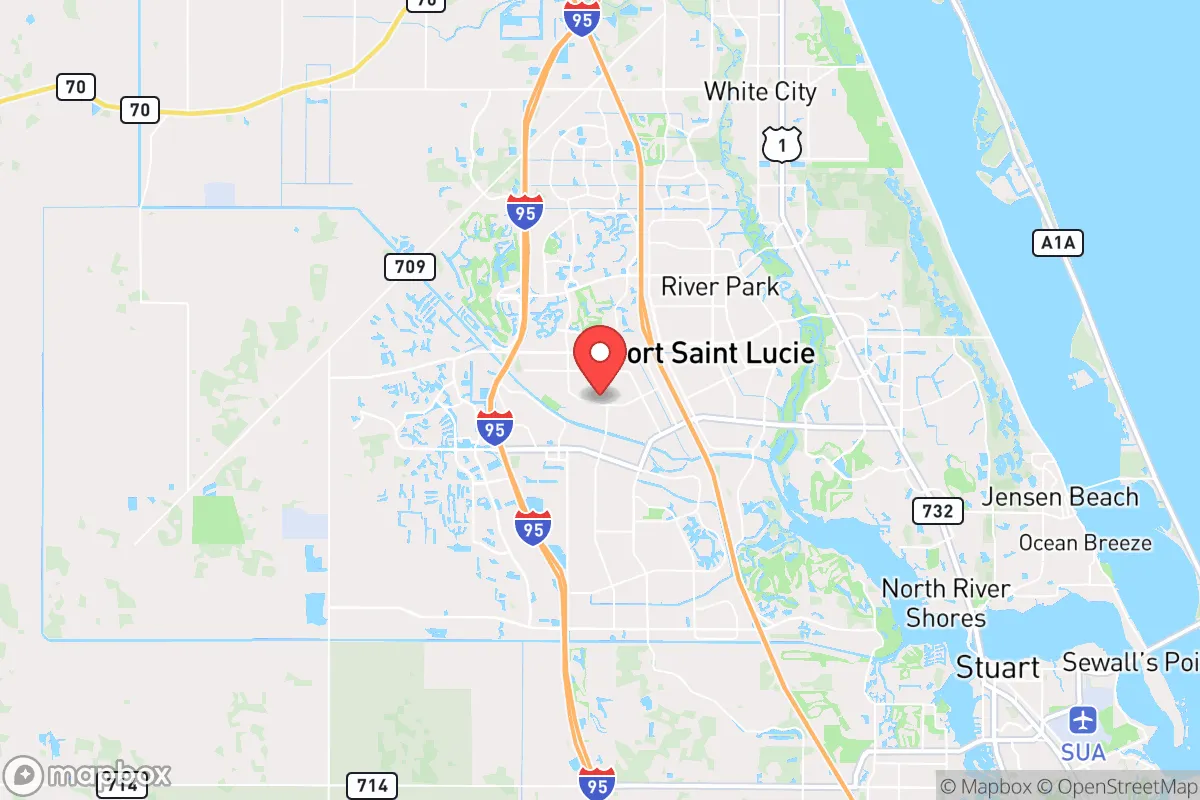
Photo: Wikipedia
Quality of Life in Port St Lucie, FL
A high quality of life with strong walkability, manageable living costs, healthy neighborhood signals, and solid amenity access.
What does Quality of Life tell us?
Quality of Life blends cost of living, nearby amenities, socioeconomic signals, and neighborhood character. City-level scores represent the whole municipality; individual neighborhoods can differ.
What does this tell us?
Quality of Life blends cost of living, nearby amenities, socioeconomic signals, and neighborhood character. City-level scores represent the whole municipality; individual neighborhoods can differ.
Cost of Living
38% above national average
The Real Cost of Living in Port St Lucie, FL for 2026
| Tier | Individual | Family (4) |
|---|---|---|
| Survival | $28k | $53k |
| Comfortable | $64k | $94k |
| Luxury | $121k+ | $187k+ |
| Elite (Top 5%) | $142k+ | $220k+ |
83%
The Area Signal
A metric tracking the socioeconomic signals of the area.
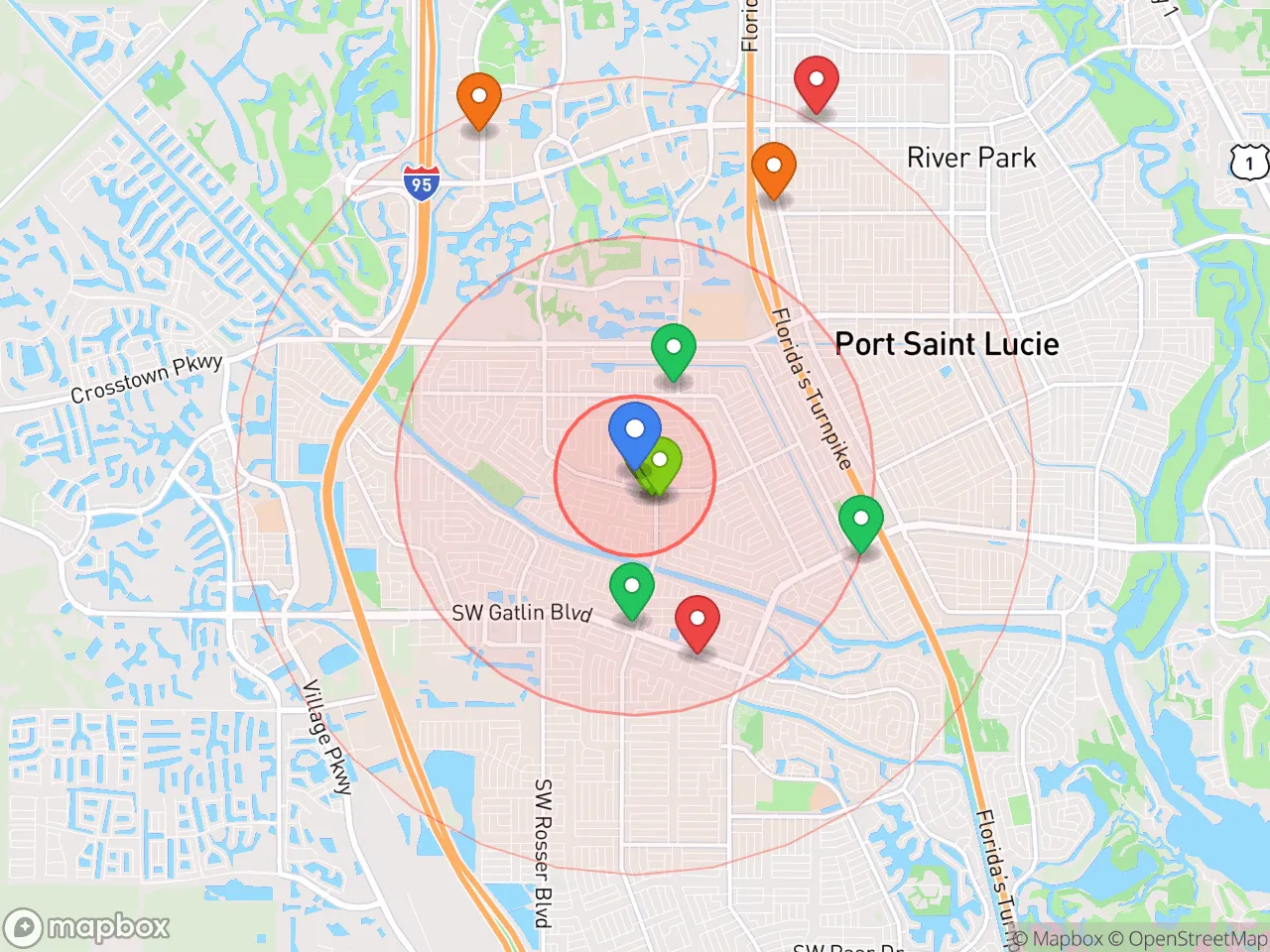
Hobbies
Explore the areaGroceries
8 within 10 miles
Gas
20 within 10 miles
Hospital
8 within 20 miles
Airport
MCO — Melbourne Orlando International
Post Office
USPS — Port St Lucie, FL
Critical Amenities
Quality-of-Life Analysis
Port St. Lucie has evolved from a quiet retirement corridor into one of Florida’s fastest-growing mid-sized cities, attracting a mix of young families, remote professionals, and established retirees drawn by its relative affordability compared to coastal Palm Beach and Broward counties. With a cost-of-living index of 138 (100 = U.S. average), the city sits notably above the national baseline but remains a value proposition when stacked against neighboring Stuart (index ~145) or West Palm Beach (index ~155). The median household income of roughly $72,000 supports a predominantly middle-to-upper-middle-class population, though the area’s rapid growth has begun to strain infrastructure and push home prices upward.
Cost of living, housing affordability, and how Port St Lucie compares to nearby cities
Housing is the primary driver of Port St. Lucie’s elevated cost index. The median home value of $327,700 is roughly 15% below the Florida statewide median of $385,000, making it one of the more attainable markets on the Treasure Coast. Renters face a median monthly rent of $1,781, which is about $200 less than in Stuart and $400 less than in Palm Beach Gardens. However, both home prices and rents have risen roughly 40% since 2020, narrowing the affordability gap with older coastal communities. The average commute of 29.6 minutes reflects the city’s bedroom-community character: many residents drive west on I-95 or south to jobs in Port St. Lucie’s own expanding medical and logistics sectors, while others commute to Palm Beach County. Property taxes remain moderate at roughly 1.1% of assessed value, and there is no state income tax, which helps offset the higher cost of goods and services.
What daily life is like for families: schools, amenities, and community rhythm
Daily life in Port St. Lucie centers on its master-planned subdivisions, strip-mall retail corridors, and a growing network of parks and recreational facilities. The St. Lucie Public Schools district serves the city, with West Gate K-8 and Treasure Coast High School consistently ranking among the top performers in the county; however, the district overall scores below the state average in math and reading proficiency, prompting many families to consider charter or private options. The city’s amenity base has expanded rapidly: the Port St. Lucie Botanical Gardens, the Civic Center, and the PGA Golf Club provide leisure anchors, while the Tradition Square area offers a walkable dining-and-shopping hub. Traffic congestion along U.S. 1 and Port St. Lucie Boulevard has worsened during peak hours, but the city remains less gridlocked than Fort Pierce or Stuart. Healthcare access is strong, with Cleveland Clinic Tradition Hospital and St. Lucie Medical Center both within a 15-minute drive of most neighborhoods.
Port St. Lucie is best suited for families seeking a slower-paced, suburban lifestyle with reasonable home prices and proximity to the Atlantic coast, as well as for remote workers who need reliable internet (fiber coverage exceeds 70% of the city) and a lower cost base than Miami or Fort Lauderdale. Retirees on fixed incomes may find the rising property taxes and HOA fees in newer communities a stretch, while young professionals without cars will struggle due to limited public transit. The city’s rapid growth—adding roughly 8,000 new residents per year—means that newcomers should expect ongoing construction and occasional infrastructure lag, but for those prioritizing space, safety, and relative value on Florida’s east coast, Port St. Lucie remains a compelling choice.

Crime in Port St Lucie, FL
Generally safer than 73% of comparable U.S. locations.
Violent CrimeViolent Crime Analysis
Property CrimeProperty Crime Analysis
Crime Analysis
Port St. Lucie is statistically one of the safer large cities in Florida, with overall crime rates well below both state and national averages. The city recorded a violent crime rate of 166.8 incidents per 100,000 residents and a property crime rate of 735.6 per 100,000 in the most recent reporting period. These figures place Port St. Lucie in a favorable position compared to similarly sized metro-area cities, though residents should remain aware of broader regional trends in the Treasure Coast justice system.
Crime in context
Port St. Lucie’s violent crime rate is roughly 55% lower than the national average and significantly below the Florida state average of approximately 380 per 100,000. Property crime is also suppressed, running about 40% below the U.S. median. However, these statistics must be weighed against the fact that Port St. Lucie sits within the larger Miami-Fort Lauderdale-Port St. Lucie combined statistical area. As part of a large metro region, the city is subject to the policies of St. Lucie County’s judicial system. Readers should note that progressive-leaning district attorneys and judges in the broader metro area have, in some cases, adopted diversion programs and reduced sentencing guidelines. While intended to reduce incarceration, such policies can result in repeat offenders returning to the streets more quickly, potentially undermining the city’s otherwise low crime numbers.
What residents experience
In practice, most Port St. Lucie neighborhoods feel safe for daily life. The city’s violent crime is dominated by aggravated assault (roughly 65% of incidents), with homicide and robbery remaining rare events. Property crime is primarily larceny-theft and vehicle break-ins, concentrated near commercial corridors like U.S. 1 and the St. Lucie West shopping district. Residents report that package theft and unlocked-car burglaries are the most common nuisances. The Port St. Lucie Police Department maintains a visible community policing presence, and response times average under 8 minutes for priority calls. However, the county’s jail population has fluctuated with shifting prosecutorial policies, and some residents express concern that property crime offenders face minimal consequences, leading to recidivism in certain apartment complexes.
Neighborhood-level variation is notable. Communities west of I-95, such as St. Lucie West and Tradition, consistently report the lowest crime rates, often with violent crime near zero. Older neighborhoods east of I-95, particularly around the Port St. Lucie Boulevard corridor, see slightly elevated property crime. Gated 55+ communities and newer master-planned subdivisions enjoy the highest safety levels, while renters near U.S. 1 should exercise standard urban precautions. Overall, Port St. Lucie offers a strong safety profile for a metro-area city, but residents benefit from staying informed about local judicial trends that could affect long-term crime trajectories.
* Values derived from national, state, county, city and local statistics and may differ in a specific area. Last updated: 2026-04-22T03:36:26.000Z
Narrative content on this page is AI-generated and may contain mistakes. Verify any details that matter before acting on them.
ReloMaps may earn a commission from affiliate links at no extra cost to you.

