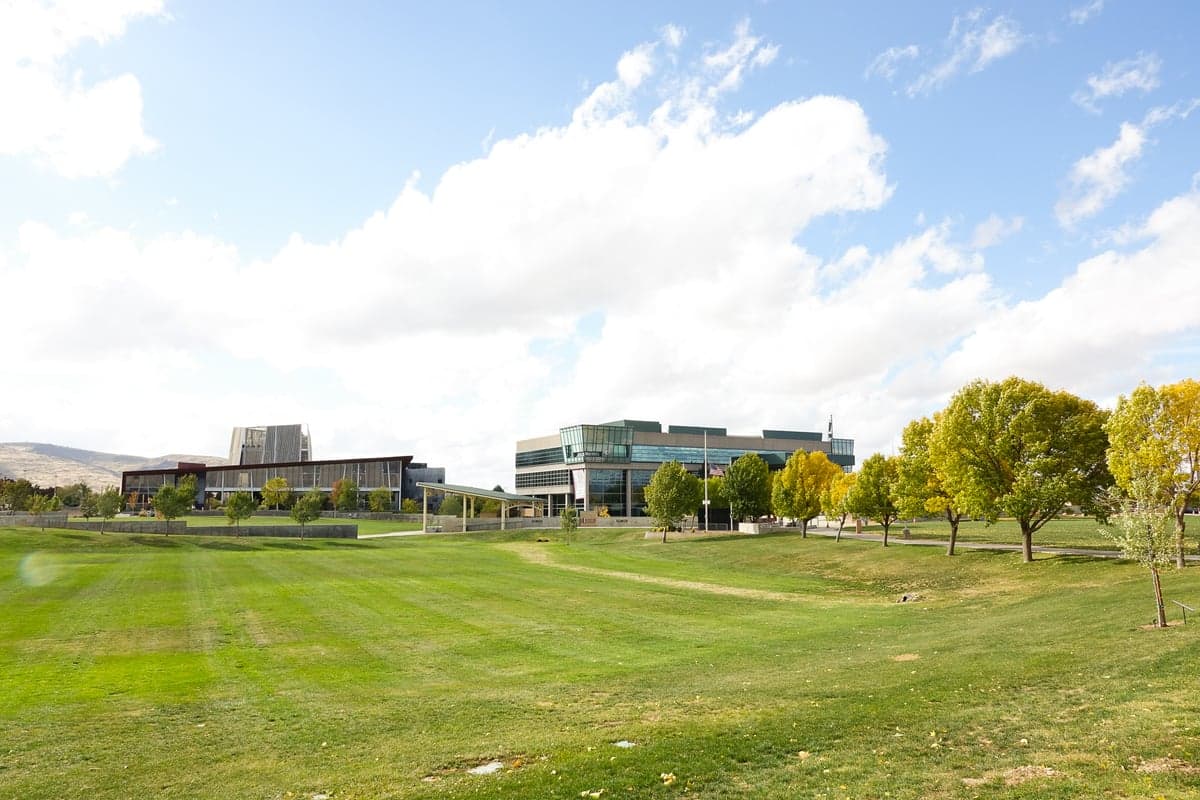
Photo: Wikipedia
Personal Sovereignty in Prescott Valley, AZ
Viable for self-reliance. Generally workable, though some barriers may limit total independence.
What does Personal Sovereignty tell us?
Personal Sovereignty measures your capacity for self-reliance and independence with minimal government friction. Higher scores mean fewer barriers between you and the way you want to live... but it assumes you have the space you need and good neighbors.
What does this tell us?
Personal Sovereignty measures your capacity for self-reliance and independence with minimal government friction. Higher scores mean fewer barriers between you and the way you want to live... but it assumes you have the space you need and good neighbors.
State Policy
Energy independence: Importer (20% of energy produced in-state)
Personal Liberty
Homesteading

Personal Liberty Analysis
Prescott Valley, Arizona, offers one of the strongest personal sovereignty environments in the Southwest, largely because Arizona’s state preemption laws and constitutional protections create a legal buffer against local overreach. For a survivalist or prepper evaluating relocation, this means your ability to keep what you earn, defend what you own, and raise your family without government interference is measurably higher here than in states like California, Oregon, or Colorado. The town sits in Yavapai County, a region where self-reliance isn’t just a lifestyle—it’s the default expectation, and the legal framework backs it up.
Tax burden and regulatory posture: how Arizona’s structure protects your income and property
Arizona’s tax climate is a major draw for those seeking to minimize government extraction from their household. The state’s flat income tax rate of 2.5% (as of 2024) is among the lowest in the nation, and Prescott Valley has no city-level income tax. Property taxes in Yavapai County average around 0.6% of assessed value, roughly half the national average. For a $400,000 home, that’s about $2,400 annually—versus $5,000+ in many blue states. Sales tax in Prescott Valley is 8.35% (state plus local), but groceries and prescription drugs are exempt. The regulatory posture is equally favorable: Arizona is a right-to-work state, meaning no forced union membership, and occupational licensing requirements are among the least burdensome in the country. For a prepper running a side business—say, firearms training, food preservation, or small-scale manufacturing—you won’t face the permitting gauntlet common in coastal states. The state also has no estate tax, no inheritance tax, and no tax on Social Security benefits, which matters for multi-generational property planning.
Self-defense and gun law specifics: constitutional carry and castle doctrine in practice
Prescott Valley sits in a jurisdiction that takes the Second Amendment as a given, not a privilege. Arizona is a constitutional carry state—no permit required to carry a concealed firearm for anyone 21 or older who can legally possess a gun. There is no state-level waiting period, no magazine capacity limit, and no universal background check requirement beyond federal law. The castle doctrine is codified in Arizona Revised Statutes §13-418, which presumes that a person using deadly force against an unlawful intruder in their home, vehicle, or place of business has acted in self-defense. There is no duty to retreat anywhere you are lawfully present. Yavapai County Sheriff’s Office is known for a pro-2A stance; the current sheriff, David Rhodes, has publicly stated his office will not enforce federal firearm regulations he deems unconstitutional. For a prepper, this means you can store, carry, and train with firearms without worrying about local ordinances that might shift with the political winds. The nearest major gun-friendly training facilities are within a 30-minute drive, including the Prescott Shooting Range and private land options in the surrounding national forest.
Self-reliance and homesteading viability: lot sizes, zoning, and off-grid feasibility
Prescott Valley’s zoning code is a practical asset for anyone serious about self-sufficiency. Residential lots in the town proper range from 0.25 to 1 acre, but unincorporated Yavapai County land—often just a 10-minute drive from the town center—offers parcels from 1 to 40 acres with minimal restrictions. The county allows accessory dwelling units, barns, and workshops without the permitting headaches common in metro Phoenix. Rainwater harvesting is legal and encouraged; Arizona law (ARS §45-141) explicitly permits it, and many rural properties already have cisterns in place. Off-grid solar is straightforward: net metering is available through Arizona Public Service (APS) and the local electric co-op, but you can also go fully off-grid with battery storage and no penalty. Wells are permitted on parcels of 1 acre or more in most of Yavapai County, though drilling costs run $15,000–$25,000 depending on depth. Septic systems are standard for rural homes. The growing season is about 180 days (April through October), and the local soil is sandy loam—amendable with compost for vegetable gardens. For a prepper, the key takeaway is that you can legally build a self-reliant homestead here without fighting the county at every step.
Personal liberties: parental rights, medical autonomy, speech, and property protections
Arizona has some of the strongest parental rights laws in the country. Under ARS §1-601, parents have the fundamental right to direct their child’s education, healthcare, and religious upbringing. The state passed a Parents’ Bill of Rights in 2022, which requires schools to notify parents of any medical or mental health services offered to minors and to obtain consent before administering surveys on sensitive topics. School choice is robust: Prescott Valley is served by the Humboldt Unified School District, but families can also use the state’s Empowerment Scholarship Account (ESA) program—essentially a universal school voucher—to fund private, charter, or homeschool education. In 2024, over 75,000 Arizona students used ESAs. Medical autonomy is less protected than in, say, New Hampshire, but Arizona does not have a state-level vaccine mandate for adults, and COVID-era emergency orders have expired. The state’s emergency powers law (ARS §26-303) was reformed in 2021 to limit a governor’s ability to shut down businesses or mandate medical procedures without legislative approval. Free speech is protected by the Arizona Constitution, which has its own free speech clause interpreted more broadly than the First Amendment in some cases. Property rights are strengthened by the state’s Private Property Rights Protection Act, which requires compensation for any regulation that reduces property value by 20% or more. For a prepper, this means your ability to stockpile supplies, homeschool your kids, and refuse medical mandates is legally anchored—not just a cultural preference.
Overall, Prescott Valley ranks among the top 15% of U.S. micropolitan areas for personal sovereignty, according to a composite of tax burden, gun law strength, and regulatory freedom metrics. Compared to Flagstaff or Tucson, it’s far less politically volatile; compared to rural Texas towns, it has better water availability and lower property taxes. The trade-off is that you’re still within a two-hour drive of Phoenix, meaning you can access urban resources without living under urban governance. For a survivalist or prepper who values keeping the government out of your home, your wallet, and your family, Prescott Valley is a legitimate contender—not a compromise.

* Values derived from national, state, county, city and local statistics and may differ in a specific area. Last updated: 2026-04-19T20:21:16.000Z
Narrative content on this page is AI-generated and may contain mistakes. Verify any details that matter before acting on them.
ReloMaps may earn a commission from affiliate links at no extra cost to you.

