Photo: Wikipedia
Political ClimatePolitical Climate in Prescott Valley, AZ
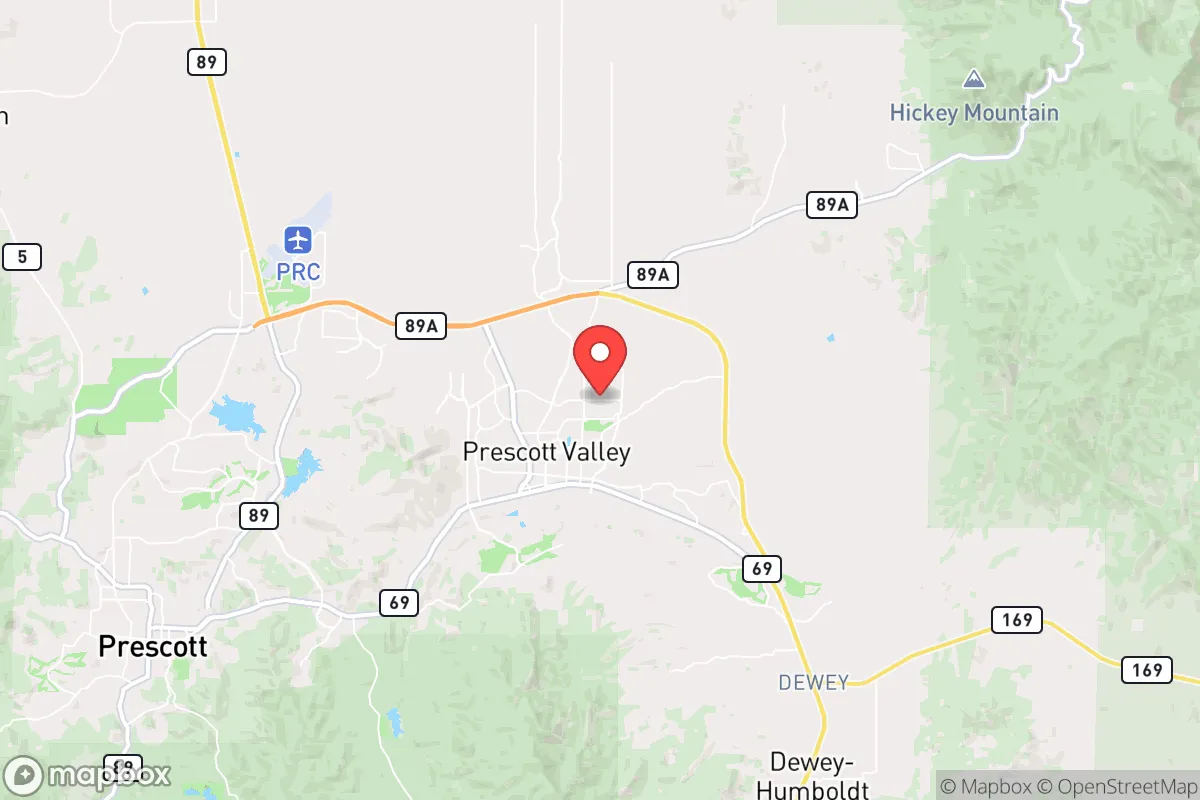
District shown is the primary district for this city’s centroid. Cities may span multiple districts.
Local Political AnalysisPolitical Analysis of Prescott Valley, AZ
Prescott Valley has long been a reliably conservative community, and that hasn't changed much despite some national trends. The area carries a Cook PVI of R+7, which means it votes about seven points more Republican than the country as a whole. In practical terms, that translates to a town where most folks still believe in limited government, personal responsibility, and keeping the feds out of local business. You won't see many "defund the police" signs here, and the local elections tend to favor candidates who talk about fiscal restraint and property rights. That said, there's been a slow trickle of new arrivals from California and other blue states over the last decade, and some of them bring different ideas about how things should run. So far, the core values have held, but it's something worth keeping an eye on.
How it compares
If you drive ten miles south to Prescott, you'll notice a slightly different vibe. Prescott proper has a more mixed political scene, with a louder progressive presence around the courthouse square and in some of the older neighborhoods. Prescott Valley, by contrast, is more straightforwardly conservative. The difference is stark when you look at local ballot measures: Prescott Valley consistently votes down tax hikes and bond proposals that Prescott sometimes approves. Head east to Dewey-Humboldt or north to Chino Valley, and you'll find even more rural, libertarian-leaning communities where people are suspicious of any new zoning rules or building codes. Prescott Valley sits in a comfortable middle ground—conservative enough to feel familiar, but with enough new development that you're not driving thirty minutes for a grocery store.
What this means for residents
For the average person living here, the political climate translates into a few concrete things. First, property taxes stay relatively low compared to what you'd pay in Phoenix or Tucson, because the local government isn't eager to expand its budget. Second, you won't find many heavy-handed regulations on things like short-term rentals or home-based businesses—the county generally takes a hands-off approach. Third, and this is important if you're moving here with kids, the school board tends to focus on basics like reading and math rather than pushing social experiments. There's no mask mandate drama, no critical race theory fights in the curriculum, and the library isn't hosting drag queen story hours. That's not an accident; it's a reflection of what the community votes for. If you value being left alone to live your life without government overreach, this is still a place where that's the norm.
One cultural distinction worth noting: Prescott Valley has a strong Second Amendment culture. You'll see gun shops and shooting ranges as common as coffee shops, and open carry is unremarkable. The local sheriff's office is known for being pro-constitutional carry and skeptical of federal gun control proposals. There's also a growing "live and let live" attitude among younger residents, but it's a libertarian-leaning tolerance, not a progressive one—people want to be left alone, not told how to live. The biggest long-term concern among locals is the steady influx of out-of-state money and people. If that wave brings enough voters who want to change the character of the town, the R+7 rating could shift. But for now, Prescott Valley remains a solid, no-nonsense conservative community where personal freedom still comes first.

State Political ClimatePolitical Climate in Arizona
State Political AnalysisPolitical Environment in the State
Arizona has shifted from a reliably red state to a competitive battleground over the past two decades, with a partisan lean that now tilts slightly right but is razor-thin in statewide races. The dominant coalition is a mix of traditional Western libertarians, conservative retirees, and a growing bloc of moderate suburbanites, while a surge of left-leaning transplants from California and the Midwest has made Maricopa County the epicenter of a political tug-of-war. Over the last 10-20 years, the state has gone from voting Republican by double digits in presidential elections to flipping blue for Biden in 2020 by just 10,457 votes, then swinging back to Trump in 2024 by roughly 5 points—a whiplash that reflects deep demographic and cultural churn.
Urban vs. rural divide
The political map of Arizona is a story of two worlds. Maricopa County, home to Phoenix, Scottsdale, Mesa, and Chandler, holds about 60% of the state’s population and decides every election. The core of Phoenix leans blue, driven by young professionals, Hispanic voters, and transplants from blue states, while the sprawling suburbs—especially the East Valley cities of Gilbert and Chandler—remain conservative but are softening. Pima County, anchored by Tucson, is a deep blue stronghold thanks to the university and a large Hispanic population. Meanwhile, the rural counties tell a different story: Yavapai County (Prescott), Mohave County (Lake Havasu City), and Pinal County (Casa Grande) are deeply red, often voting 70%+ Republican. The divide is stark: drive 30 minutes outside Phoenix and you’re in Trump country, where signs for the Second Amendment and border security outnumber yard signs for local candidates. The urban-rural split isn’t just about geography—it’s about lifestyle, with rural areas fiercely resisting the progressive cultural shifts taking hold in the cities.
Policy environment
Arizona’s policy environment is a mixed bag that reflects its competitive nature. On taxes, the state is relatively friendly: a flat income tax rate of 2.5% (passed in 2021 under Governor Doug Ducey) and a sales tax around 5.6% keep the burden low compared to California or New York. Property taxes are moderate, though school funding remains a perennial fight. Regulatory posture is generally pro-business, with right-to-work laws and minimal red tape, but local governments in Phoenix and Tucson have added layers of zoning and environmental rules. Education policy is a flashpoint: school choice is strong, with the Empowerment Scholarship Account program expanded in 2022 to allow nearly all students to use public funds for private or homeschool options—a win for parental rights. However, the state has seen battles over critical race theory and LGBTQ curriculum in schools, with conservative lawmakers pushing for transparency laws that require parental notification. Healthcare is a mixed picture: Arizona expanded Medicaid under the Affordable Care Act, but the state has resisted further government expansion, and abortion laws have swung wildly—from a near-total ban (an 1864 law revived by the state Supreme Court in 2024) to a 15-week ban passed in 2022, with a ballot measure in 2024 that enshrined abortion access up to viability, overriding the legislature. Election laws have been tightened since 2020: voter ID requirements, restrictions on ballot drop boxes, and a ban on private funding for elections were all passed, though they remain under legal challenge. For a conservative, the policy environment is a fortress under siege—good on taxes and school choice, but constantly threatened by progressive ballot initiatives and city-level overreach.
Trajectory & freedom
Is Arizona becoming more or less free? The answer depends on where you live. Gun rights are robust: Arizona is a constitutional carry state (no permit needed for concealed carry since 2010), and in 2021, the legislature passed a law prohibiting state and local enforcement of federal gun regulations that don’t exist in state law—a direct rebuke of federal overreach. Parental rights saw a win in 2022 with the “Parents’ Bill of Rights,” which requires schools to notify parents about curriculum changes and medical services. Medical autonomy took a hit during COVID, when Governor Ducey imposed some of the longest-lasting lockdowns in the West, but the backlash led to a 2021 law banning vaccine passports and a 2022 law prohibiting mask mandates in schools. Property rights are generally strong, though cities like Phoenix have imposed rent control-like measures and inclusionary zoning that frustrate homeowners. The biggest threat to freedom is the influx of out-of-state money and voters pushing progressive policies through ballot initiatives—like the 2024 abortion measure and a 2020 measure that legalized recreational marijuana, which conservatives argue erodes community standards. The trajectory is a slow creep toward more government intervention in daily life, especially in urban centers, but rural and suburban areas are fighting back with preemption laws and local control measures.
Civil unrest & political movements
Arizona has been a hotbed of political activism, particularly around immigration and election integrity. Immigration politics are front and center: the state passed SB 1070 in 2010, the “show me your papers” law, which was largely upheld by the Supreme Court but sparked massive protests. Today, the border crisis has fueled a resurgence of grassroots activism, with groups like the Arizona Border Patrol and the Yuma County Sheriff’s Office clashing with the Biden administration over federal policy. Election integrity remains a raw nerve: the 2020 audit of Maricopa County’s ballots (the “Cyber Ninjas” audit) was a national spectacle, and while it didn’t prove widespread fraud, it galvanized a movement that led to the 2021 election law changes. Civil unrest has been relatively muted compared to Portland or Seattle, but Phoenix saw protests in 2020 over George Floyd that turned violent, with looting and clashes with police. On the right, the “Patriot Movement” is strong in rural areas, with groups like the Oath Keepers having a presence, though they’ve been quieter since January 6. Sanctuary policies are a flashpoint: Phoenix and Tucson have declared themselves “sanctuary cities” for illegal immigrants, refusing to cooperate with ICE, which infuriates conservatives in the rest of the state. A new resident will notice the tension at the border—Yuma and Nogales are constant news stories—and the political signs everywhere, from “Trump 2024” in Prescott to “Abolish ICE” in Tucson.
Projection
Over the next 5-10 years, Arizona is likely to become more purple, with a slight leftward drift driven by demographic shifts. The state is growing fast—about 1.5% annually—and the new arrivals are split: many are conservative retirees from the Midwest, but a significant chunk are young, diverse, and left-leaning from California. Maricopa County will continue to be the battleground, with suburbs like Gilbert and Chandler slowly moderating as they densify. Rural areas will remain deeply red but lose population share. The biggest wildcard is the border: if the federal government doesn’t secure it, expect a conservative backlash that could keep the state red in presidential races, but if the crisis eases, the progressive urban vote could tip the scales. Ballot initiatives will be a key battleground—expect more fights over taxes, education funding, and abortion. For a conservative moving in now, expect to find a state that is still friendly on taxes and gun rights, but where you’ll need to be vigilant about local elections and ballot measures. The culture war is real here, and it’s not going away.
For a new resident, the bottom line is this: Arizona offers a relatively low-tax, high-freedom environment compared to the coasts, but it’s a state in flux. If you’re moving here, pick your county carefully—rural Yavapai or Mohave will feel like a conservative haven, while Phoenix or Tucson will feel like a blue city in a red state. Get involved in local politics, because the fight over the state’s soul is happening at the city council and school board level. And keep an eye on the ballot—every two years, progressives try to bypass the legislature with initiatives that could change everything. Arizona is still a place where you can live free, but you have to work to keep it that way.
* Values derived from national, state, county, city and local statistics and may differ in a specific area. Last updated: 2026-04-19T20:21:16.000Z
Narrative content on this page is AI-generated and may contain mistakes. Verify any details that matter before acting on them.
ReloMaps may earn a commission from affiliate links at no extra cost to you.

