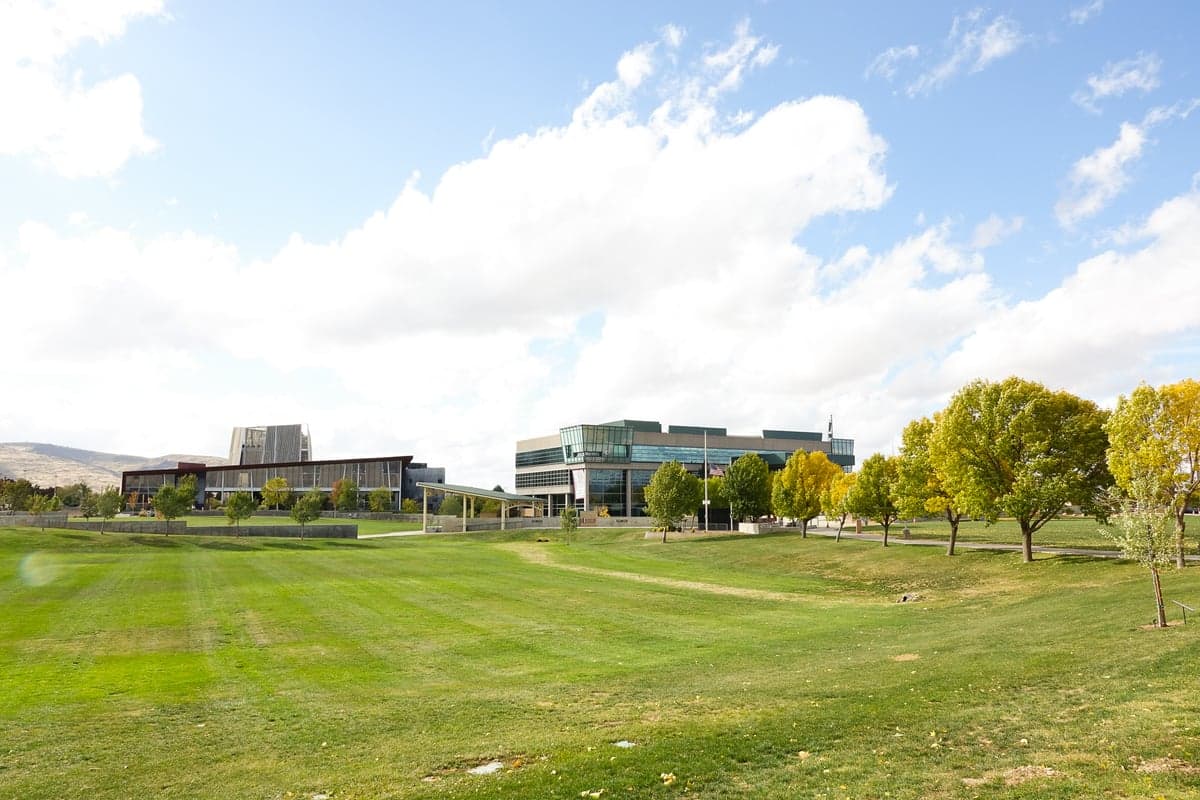
Photo: Wikipedia
Strategic Assessment of Prescott Valley, AZ
Meaningful friction. Expect exposure to either population pressure, blast zones, or natural disaster risk. Consider buying a retreat property.
What does the Strategic Assessment tell us?
Our Strategic Assessment grades tactical survivability of an area. Major population centers, military targets, fallout zones, natural disasters, and border exposure all drive risk — lower exposure means a more defensible position in a crisis.
This is heavily inspired by Joel Skousen's Strategic Relocation book. Highly recommended you checkout the book ($)What does this tell us?
Our Strategic Assessment grades tactical survivability of an area. Major population centers, military targets, fallout zones, natural disasters, and border exposure all drive risk — lower exposure means a more defensible position in a crisis.
This is heavily inspired by Joel Skousen's Strategic Relocation book. Highly recommended you checkout the book ($)Strategic Pillars

Key Distances
Regional Safe Places
Below is our recommended "safe zones" in Arizona and the surrounding area based on our strategic heuristics. For most people, it's unrealistic to live in a “safe zone” full-time due to work, family or other personal reasons. They tend to be more rural. However, many of these areas are perfect for second homes and retreat properties that double as a vacation home or even a short-term rental.
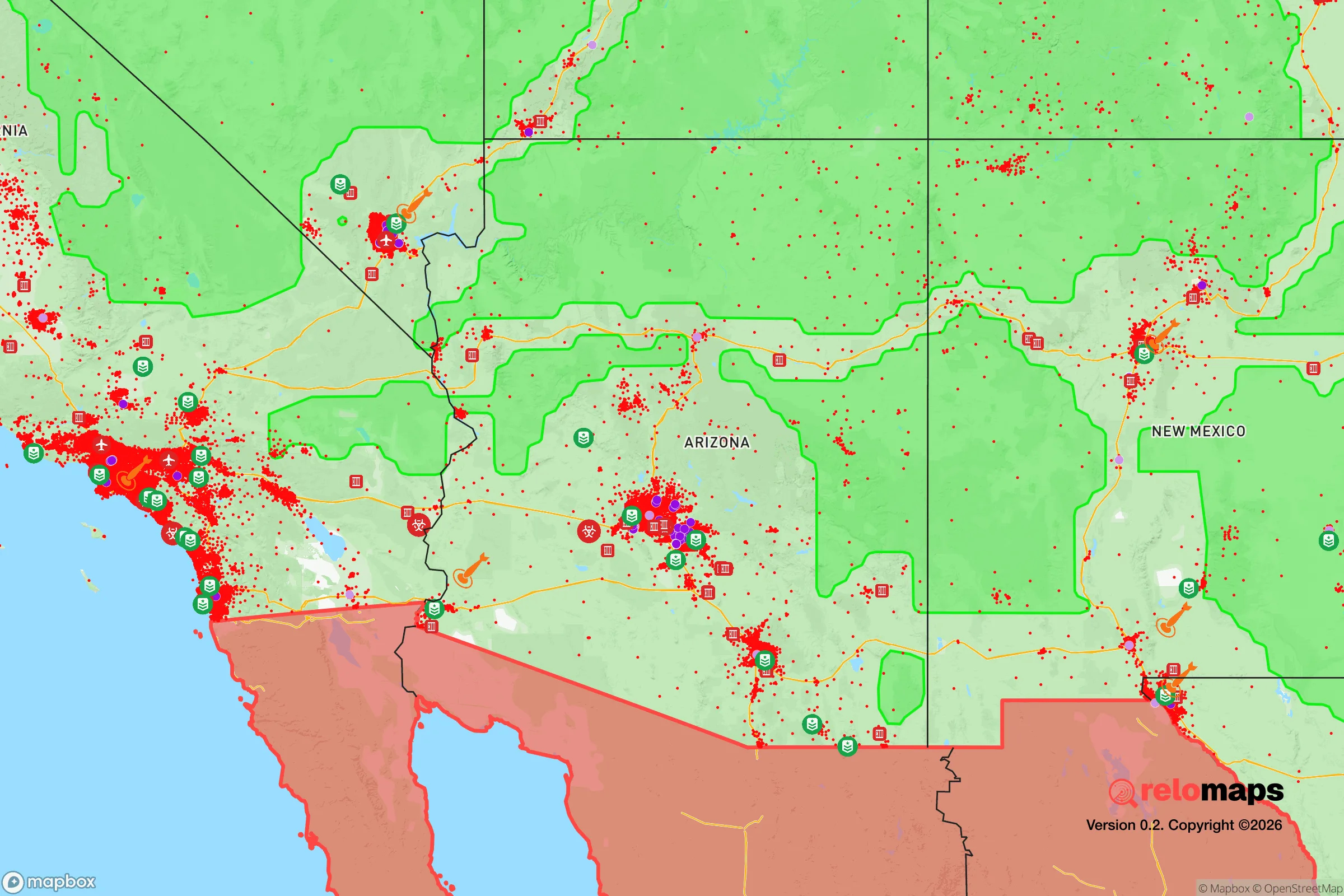
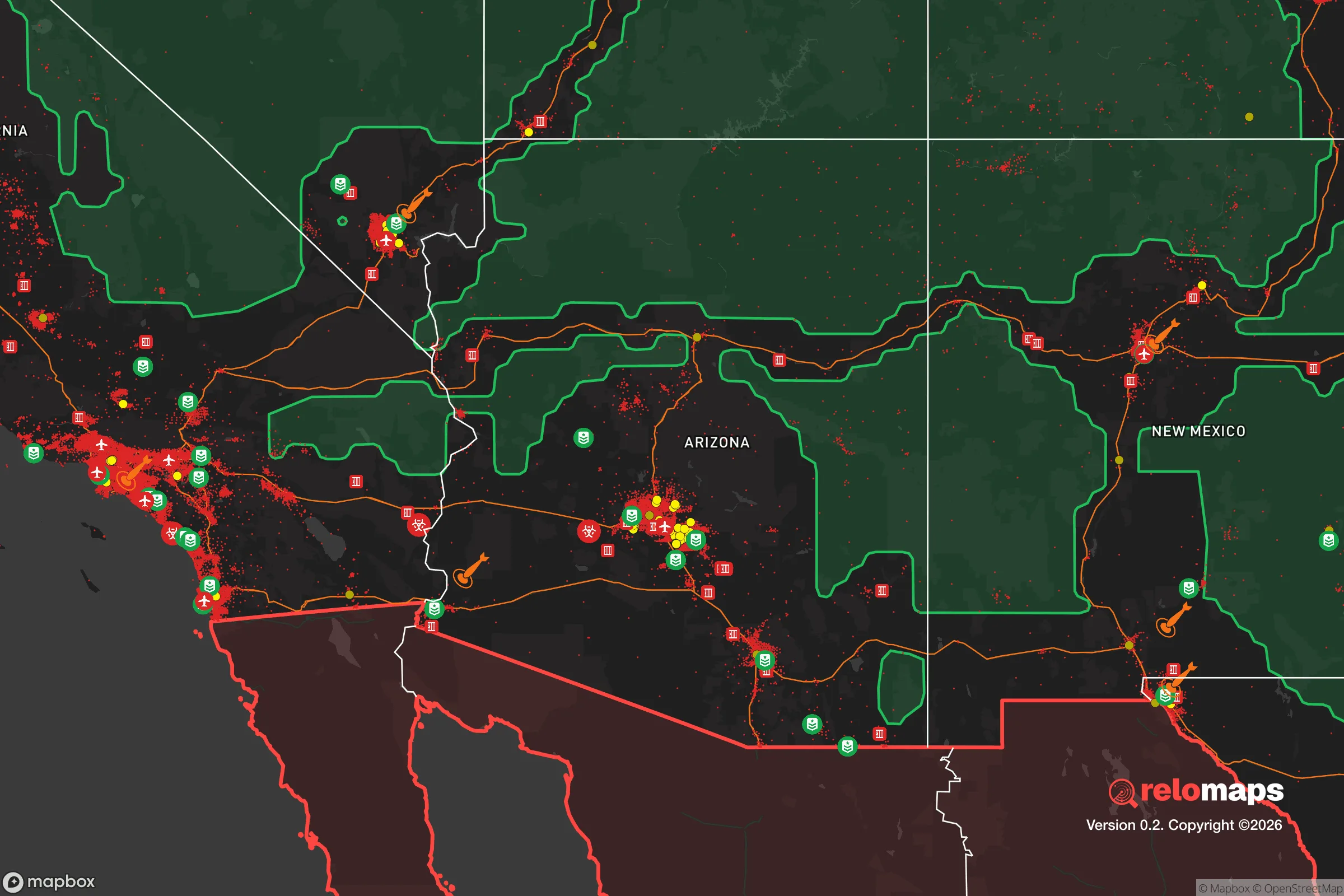


Important Note: For informational purposes only. This does not mean nothing bad ever happens in the green zones. Please use common sense. This is based on public data and modeled with AI. We tried to take a conservative approach but mistakes happen. We update this regularly as new information becomes available.
Solar Generator Recommendations
Backup power matters more here than in safer locations. We've picked three solar generators across budgets and capacity tiers — start with the budget unit if you only need a few essentials, or step up if you want to run a fridge and HVAC for days at a time.

Jackery Portable Power Station Explorer 300
Budget OptionPower on the Go: Weighing only 11 lbs, it's convenient to set up and store with book-sized foldable solar panels

BLUETTI Portable Power Station AC180
Designed for both indoor and outdoor scenarios, AC180 is highly capable as it has a robost capacity and continuous output power.

EF ECOFLOW DELTA Pro Ultra Power Station
Upgraded PickEcoFlow DELTA Pro Ultra is a whole-home energy system designed to grow with your family. Integrated with the Smart Home Panel 2, it scales to meet your evolving energy needs — keeping your home powered, intelligent, and secure through every stage of life.
We earn a commission, at no additional cost to you.
Strategic Assessment Analysis
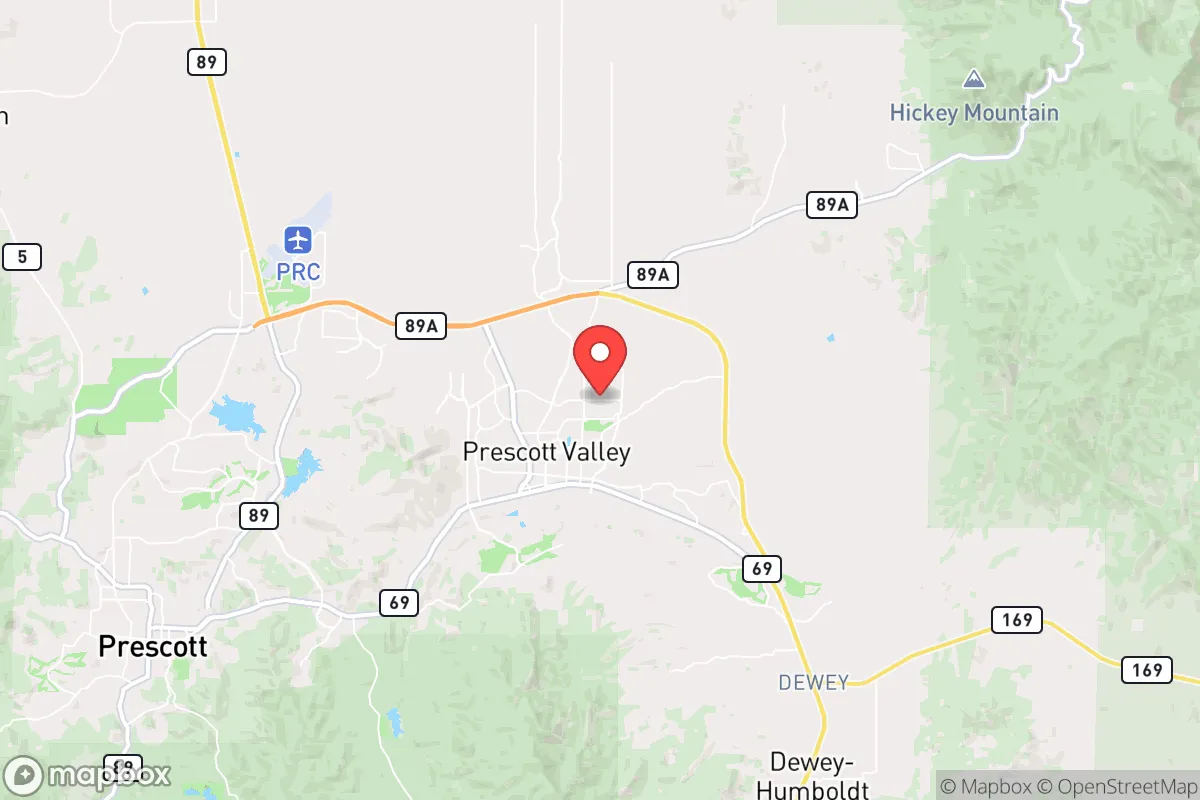
Prescott Valley, Arizona, sits at a strategic crossroads for those prioritizing long-term resilience and self-sufficiency. Its location in the high desert of Yavapai County, roughly 90 miles north of Phoenix and 50 miles south of Flagstaff, offers a unique blend of geographic isolation and practical accessibility that appeals to a conservative, prepper-minded audience. The town's elevation of 5,000 feet provides a moderate four-season climate without the extreme heat of the lower desert, while its position away from major interstate corridors reduces the risk of being caught in mass evacuation routes or civil unrest spillover from larger cities.
Geographic position and natural advantages for long-term stability
Prescott Valley's primary strategic asset is its location within the Prescott National Forest, surrounded by the Bradshaw Mountains and the Sierra Prieta range. This natural topography creates a defensible basin with limited entry points, primarily via State Route 69 from the south and State Route 89A from the north. The area sits at a higher elevation than Phoenix, which means cooler temperatures and lower wildfire risk compared to lower-elevation Arizona communities, though wildfire remains a seasonal concern. The region's geology is stable, with minimal earthquake risk and no active fault lines nearby, and the high desert climate reduces the likelihood of catastrophic flooding or hurricanes. For a relocator, this means a lower probability of natural disaster-driven displacement compared to coastal or tornado-prone regions. The proximity to the Prescott National Forest also offers abundant hunting, foraging, and timber resources for those with the skills to use them, though legal restrictions apply. The area's water supply comes from the Big Chino aquifer and the Prescott Active Management Area, which is a managed groundwater basin—a critical factor for long-term sustainability, as Arizona's water rights are complex and heavily regulated.
Risks, exposures, and proximity to fallout-relevant landmarks
No location is without vulnerabilities, and Prescott Valley has several that a strategic relocator must weigh. The most significant risk is its proximity to Phoenix, a major metropolitan area of over 1.6 million people that is a prime target for civil unrest, economic collapse, or a mass casualty event. In a worst-case scenario, Phoenix's population could attempt to flee north along the only major routes—I-17 and SR 69—which would choke Prescott Valley's access and potentially overwhelm local resources. The Prescott Valley area is also within 100 miles of Luke Air Force Base near Phoenix, a potential target in a conflict scenario, though the prevailing winds would carry fallout eastward, not toward Prescott Valley. The area's reliance on the Central Arizona Project canal system for some water supply is a vulnerability, as that infrastructure could be disrupted by sabotage or natural disaster. Additionally, the region's power grid is tied to the larger Western Interconnection, meaning a grid-down event in California or the Southwest could affect Prescott Valley. The town's population has grown rapidly—from about 38,000 in 2010 to over 50,000 today—which strains local infrastructure and increases competition for resources during a crisis. For a prepper, this means that while Prescott Valley is not a primary target, it is not immune to secondary effects from regional instability.
Practical resilience for a relocator: food, water, energy, and defensibility
For a relocator focused on self-sufficiency, Prescott Valley offers a mixed but workable picture. Water is the most critical concern: the area receives only about 14 inches of annual precipitation, making rainwater harvesting a limited but viable supplement if done correctly. The Big Chino aquifer is deep and relatively abundant, but well-drilling is expensive and regulated, and new construction often requires proof of a 100-year water supply. For those buying an existing home, checking the water rights and well status is non-negotiable. Food production is feasible with careful planning: the growing season runs from April to October, and crops like beans, squash, corn, and hardy greens do well. The local soil is rocky and alkaline, so raised beds or imported soil are recommended. Prescott Valley has a strong agricultural community with farmers' markets and local livestock operations, but large-scale food production would require significant land and water. Energy resilience is more straightforward: the area gets over 300 sunny days per year, making solar power with battery storage a practical investment. The local utility, Arizona Public Service, offers net metering, but a grid-down scenario would require off-grid capability. Defensibility is moderate: the town's layout is spread out with many cul-de-sacs and rural subdivisions, which can be secured more easily than dense urban areas. However, the lack of natural chokepoints on the main roads means that a determined group could enter the area. The local law enforcement presence is adequate for normal times, but in a widespread collapse, the Yavapai County Sheriff's Office would be stretched thin. The community itself leans heavily conservative and self-reliant, which is a cultural asset for those seeking like-minded neighbors.
The overall strategic picture for Prescott Valley is one of cautious optimism for a relocator with a prepper mindset. It offers a solid balance of isolation from major threats, access to natural resources, and a community that values independence and preparedness. The primary drawbacks are the water constraints, the risk of secondary effects from Phoenix's collapse, and the rapid population growth that could erode the area's resilience over time. For a single individual or family willing to invest in water storage, solar power, and food production, Prescott Valley provides a defensible, climate-moderate base that is far enough from the chaos of the cities but close enough to access supplies and medical care during normal times. The key is to act now, before the area becomes too crowded and the cost of land and water rights becomes prohibitive. In a world where the unthinkable is becoming thinkable, Prescott Valley is a solid, if not perfect, strategic choice for those who want to be prepared without living in a bunker.

* Values derived from national, state, county, city and local statistics and may differ in a specific area. Last updated: 2026-04-19T20:21:16.000Z
Narrative content on this page is AI-generated and may contain mistakes. Verify any details that matter before acting on them.
ReloMaps may earn a commission from affiliate links at no extra cost to you.

