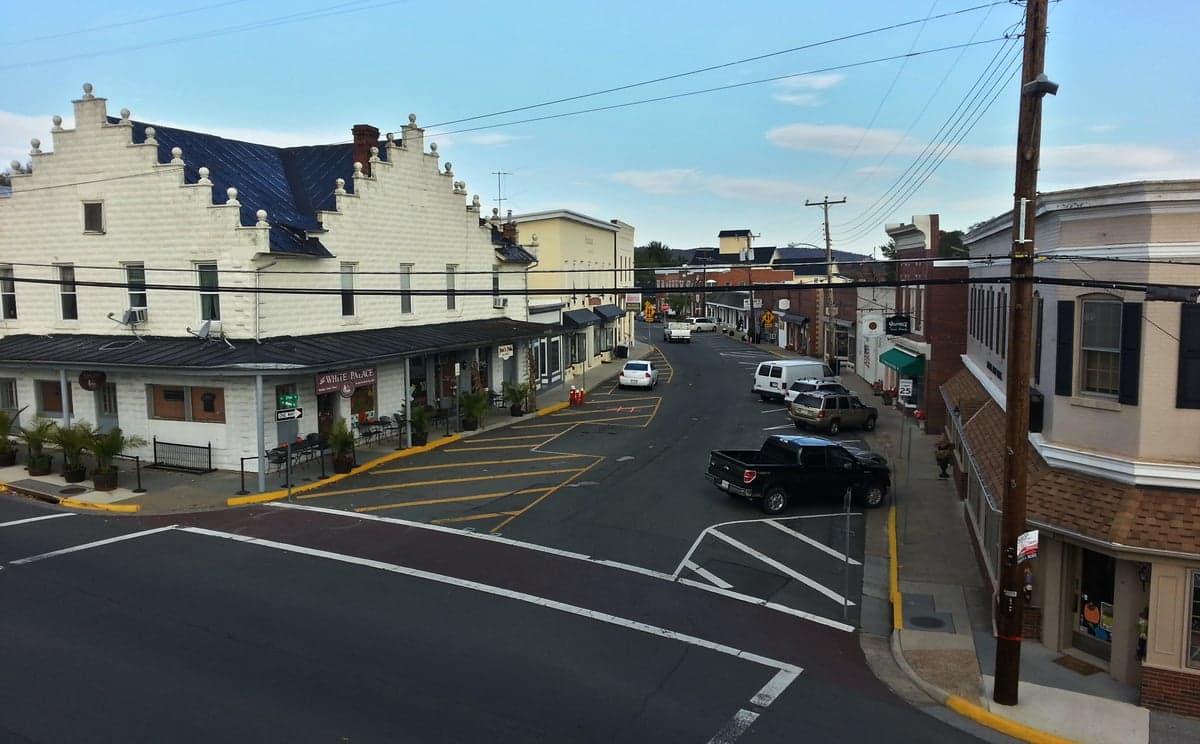

Photo: Wikipedia
Political ClimatePolitical Climate in Purcellville, VA
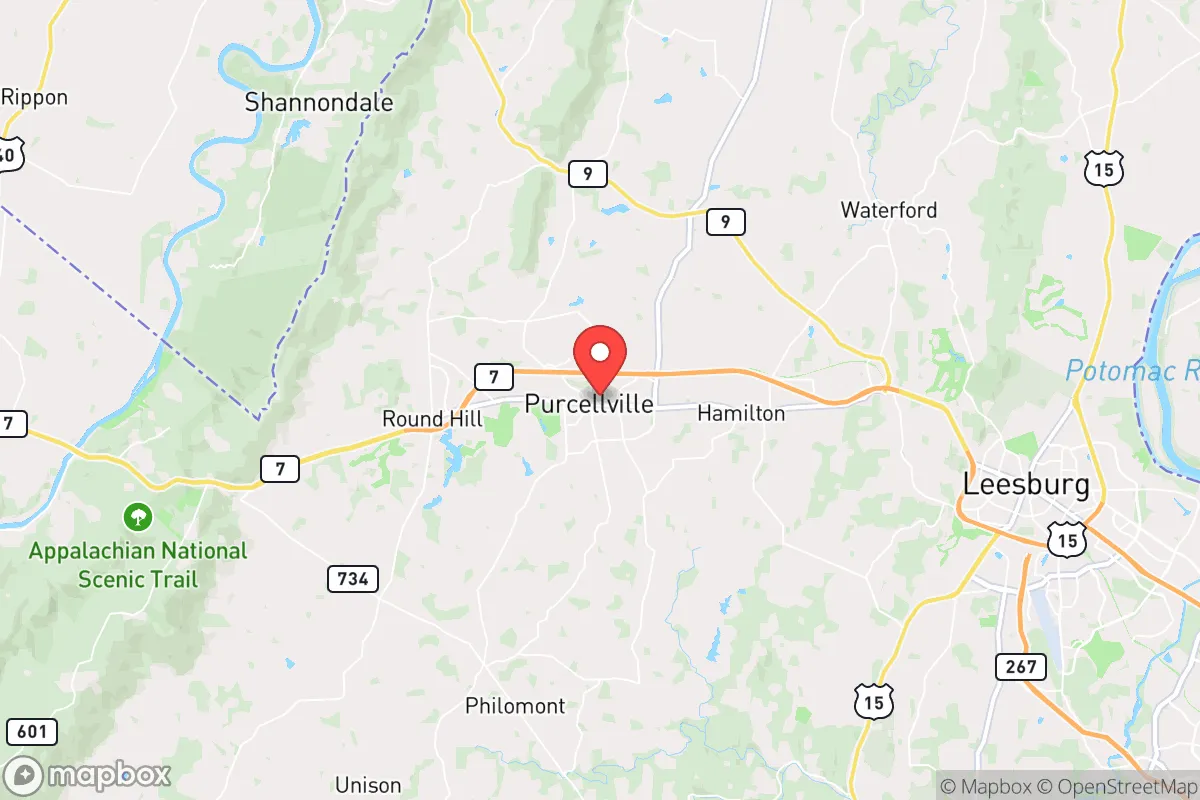
District shown is the primary district for this city’s centroid. Cities may span multiple districts.
Local Political AnalysisPolitical Analysis of Purcellville, VA
Purcellville, Virginia, sits in a bit of a political tug-of-war these days. While the town itself has historically leaned more conservative, the surrounding Loudoun County has been shifting left, and the Cook PVI rating of D+6 for the broader area reflects that. For a long time, Purcellville felt like a quiet, independent-minded outpost where folks valued their privacy and local control, but the last few election cycles have shown a slow creep of progressive influence that has a lot of us watching closely. The trajectory is concerning if you value limited government and personal freedoms, because the policies coming out of the county seat in Leesburg are starting to feel a lot more like what you'd see in Arlington or Alexandria.
How it compares
To really get the picture, you have to look at the towns around Purcellville. Head east toward Leesburg, and you're in a much more politically mixed area, with a growing population of D.C. transplants who bring their urban voting habits with them. Go further east to Ashburn or Sterling, and you're deep in solidly blue territory, where the tech and data-center crowd tends to vote straight-ticket Democrat. But drive west out of Purcellville toward Round Hill or Berryville in Clarke County, and the political vibe shifts back to a more traditional, conservative feel. Purcellville is really the last stand before you hit that rural, red belt. The contrast is stark: you can be in a neighborhood where folks fly "Don't Tread on Me" flags, and ten minutes down the road, you'll see yard signs for candidates who want to expand government oversight into everything from land use to school curriculum.
What this means for residents
For those of us who've been here a while, the biggest concern is how this political shift translates into real-life overreach. We're seeing more county-level mandates on property use, stricter zoning that feels like it's designed to discourage the kind of independent, small-town living that drew people here in the first place. There's also a growing push from the Loudoun County School Board—which has become a flashpoint for progressive policies—that has a lot of parents worried about curriculum transparency and parental rights. If you value being able to make your own choices about your property, your kids' education, and your business without a bureaucrat in Leesburg telling you how to do it, the trend is definitely moving in the wrong direction. The local elections in Purcellville itself still have a chance to push back, but the county-level influence is hard to ignore.
On the cultural side, you'll still find a strong sense of community at the Purcellville Farmers Market or the annual Fireman's Carnival, where people know each other and look out for one another. But there's an undercurrent of tension now that wasn't there a decade ago. Newer residents sometimes bring a different set of expectations about what "community" means—often more aligned with top-down solutions than local problem-solving. The long-term outlook depends heavily on whether Purcellville can maintain its independent character or gets absorbed into the broader Loudoun County machine. If you're thinking of moving here, just know that the political climate is a real, daily factor in everything from tax rates to school board meetings, and it's something you'll want to keep a close eye on.

State Political ClimatePolitical Climate in Virginia
State Political AnalysisPolitical Environment in the State
Virginia has transformed from a reliably purple swing state into a solidly blue stronghold over the past 15 years, driven by explosive growth in the Washington D.C. suburbs and a steady exodus of conservative-leaning voters from Northern Virginia. The state’s overall partisan lean now sits comfortably in Democratic territory — Joe Biden won it by 10 points in 2020, and Democrats control both chambers of the General Assembly and the governor’s mansion as of 2026. But that top-line number hides a deeply fractured political landscape: the rural south and southwest remain deeply red, while the urban crescent from Northern Virginia down through Richmond to Hampton Roads has become a Democratic fortress. For a conservative considering relocation, the key question isn’t whether Virginia is conservative — it’s whether you can find a pocket that still feels like the Virginia of 20 years ago.
Urban vs. rural divide
The political map of Virginia is a tale of two states. The urban crescent — Fairfax County, Arlington, Alexandria, and Richmond — votes overwhelmingly Democratic, often by margins of 30 to 50 points. Fairfax County alone, with over 1.1 million residents, casts more votes than the entire southwestern quadrant of the state. These areas are dominated by federal employees, tech workers, and a highly educated, socially liberal electorate that has made Virginia a national leader in progressive policy. Meanwhile, rural and exurban counties like Loudoun (which flipped from red to blue in the 2010s), Prince William, and Stafford are now battlegrounds, with Loudoun’s school board wars over critical race theory and transgender policies becoming a national flashpoint. The conservative strongholds remain in the Shenandoah Valley (Augusta County, Rockingham), Southside (Danville, Martinsville), and Southwest Virginia (Bristol, Wise County), where Trump won by 40+ points in 2020. But these areas are losing population and political clout as young people flee to the cities.
Policy environment
Virginia’s policy environment has shifted dramatically leftward since Democrats took full control in 2020. The state now has a progressive income tax with rates up to 5.75%, though it’s still lower than neighboring Maryland (up to 5.75% vs. 5.75% — actually Maryland’s top rate is 5.75% as well, but Virginia’s is flat, not graduated). Property taxes are locally set and vary wildly — Loudoun County has some of the highest in the state at around 1.2% of assessed value, while Giles County in the southwest is under 0.6%. The regulatory environment has become hostile to gun owners: in 2020, Democrats passed universal background checks, a red flag law, and a one-handgun-per-month limit. They also banned assault weapons in 2023, though enforcement is spotty. Education policy is a major battleground: the state eliminated its charter school cap in 2021, but actual charter growth has been minimal due to local opposition. Parental rights took a hit with the 2022 law requiring schools to adopt policies that allow transgender students to use bathrooms matching their identity without parental notification. Election laws are moderately restrictive — voter ID is required, but same-day registration and no-excuse absentee voting were expanded in 2020. The state also legalized marijuana in 2021, but retail sales are still not operational as of 2026.
Trajectory & freedom
On the freedom index, Virginia is trending downward for conservatives. The 2020 gun control package was the most aggressive in state history, and the 2023 assault weapons ban directly targets the AR-15 platform, which is the most popular rifle in America. The state’s right-to-work law remains intact, but Democrats have tried to repeal it every session since 2020, and it’s only a matter of time before they succeed. Medical freedom took a hit with the 2021 law requiring all schoolchildren to be vaccinated against COVID-19 — a mandate that was later repealed in 2022 after massive backlash, but the precedent is troubling. Property rights are under pressure from the Virginia Housing Development Authority, which has used eminent domain for affordable housing projects in Richmond and Norfolk. The state’s parental rights landscape is mixed: the 2022 transgender bathroom law overrides local school board decisions, but a 2023 law requires schools to notify parents of any changes to a student’s services or monitoring related to mental health or gender identity. The net effect is that a conservative family moving to Virginia today will find a state that respects some freedoms (no state income tax on military pensions, for example) but aggressively restricts others (gun ownership, school choice, medical autonomy).
Civil unrest & political movements
Virginia has been a flashpoint for political violence and activism. The 2017 Unite the Right rally in Charlottesville remains a scar on the state’s reputation, with a counter-protester killed and dozens injured. Since then, left-wing activism has been more organized, with groups like Virginia Organizing and Indivisible pushing for progressive policies. The 2020-2021 school board wars in Loudoun County drew national attention, with parents clashing over critical race theory, mask mandates, and transgender policies — leading to the formation of the Virginia Parents for Education group, which successfully flipped several school board seats in 2023. Immigration politics are relatively quiet compared to border states, but Prince William County has a sanctuary policy that limits cooperation with ICE, and Fairfax County has been a hub for refugee resettlement. Election integrity remains a concern for conservatives: the 2020 election saw widespread use of drop boxes and mail-in ballots, and while no major fraud was proven, the state’s voter rolls have been criticized for containing thousands of potentially ineligible voters. The Virginia Citizens Defense League remains a powerful grassroots force, organizing annual Lobby Day rallies at the state capitol that draw thousands of gun rights activists.
Projection
Over the next 5-10 years, Virginia will likely continue its leftward drift, driven by demographic trends that favor Democrats. Northern Virginia is growing at twice the rate of the rest of the state, and the D.C. exurbs — Loudoun, Prince William, Stafford — are filling with young professionals who vote blue. The rural areas will continue to lose population and political power, making it harder for conservatives to win statewide races. The 2025 gubernatorial election will be a key test: if a Republican can’t win in a non-presidential year, the state may be effectively lost for a generation. However, there are bright spots: the Virginia Beach area is a swing region that could keep the state competitive, and the Roanoke and Lynchburg areas are growing slowly but remain conservative. The biggest wildcard is whether the parental rights movement can turn into a lasting political force that flips suburban school boards and eventually state legislative seats. For now, the trajectory is clear: Virginia is becoming more like Maryland — a blue state with a few red islands.
For a conservative moving to Virginia, the bottom line is this: you can still find a good life here, but you need to pick your location carefully. Lynchburg, Roanoke, and Fredericksburg offer conservative communities with lower costs of living and decent schools. Virginia Beach is a purple city with a strong military presence that leans right on national security. But if you’re looking for a state that respects your gun rights, protects parental authority, and keeps taxes low, Virginia is no longer that place. The best you can hope for is a county that fights back against Richmond’s overreach — and there are still a few of those left. Just don’t expect the state to stay that way for long.
* Values derived from national, state, county, city and local statistics and may differ in a specific area. Last updated: 2026-05-01T02:49:38.000Z
Narrative content on this page is AI-generated and may contain mistakes. Verify any details that matter before acting on them.
ReloMaps may earn a commission from affiliate links at no extra cost to you.

