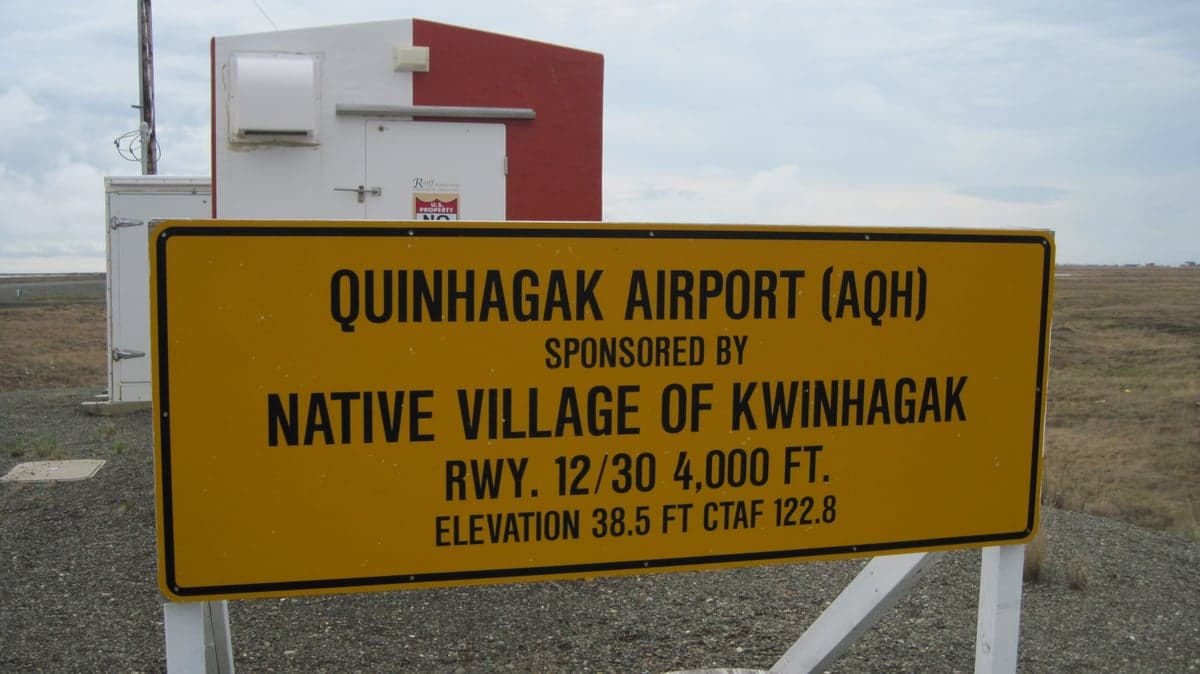
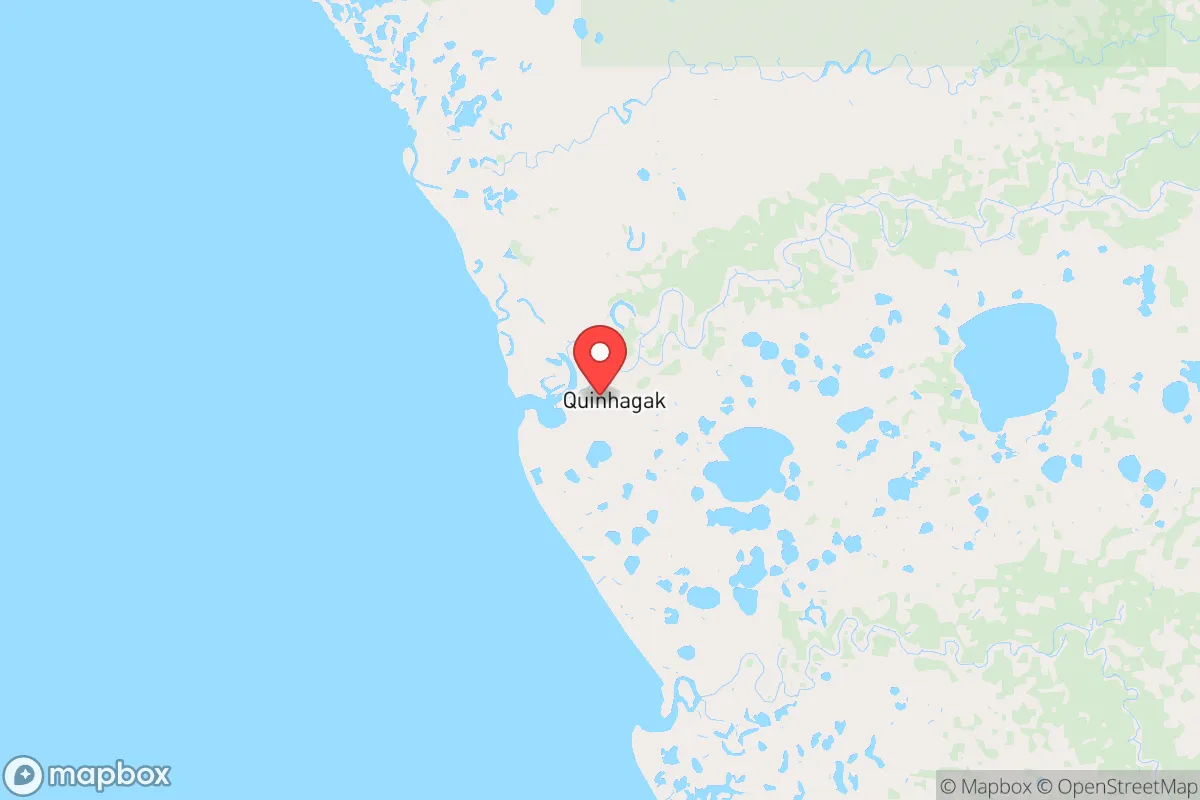
Photo: Wikipedia
Demographics of Quinhagak, AK
Affluence Level in Quinhagak, AK
A low-income area with significant economic hardship. Household wealth and educational attainment are well below national averages.
People of Quinhagak, AK
The people of Quinhagak, Alaska, are overwhelmingly Yup’ik, with 97.5% of the 1,302 residents identifying as Alaska Native or American Indian, creating one of the most culturally homogeneous communities in the state. The population density is low—roughly 10 people per square mile—and the village’s identity is deeply tied to subsistence living, the Yup’ik language, and the nearby Bering Sea. Foreign-born residents are nonexistent (0.0%), and the non-Native population is minimal, making Quinhagak a rare example of a community where Indigenous heritage remains the dominant social and cultural force.
How the city was settled and grew
Quinhagak was not “settled” by outsiders in the typical American sense; it has been the ancestral home of the Yup’ik people for thousands of years. The modern village began to take shape in the late 19th century when the Alaska Commercial Company established a trading post, drawing Yup’ik families from seasonal fish camps into a more permanent settlement. The first school, built in the 1920s, anchored the community around what is now the Old Village area, where traditional sod houses gradually gave way to frame homes. A second wave of consolidation occurred in the 1950s and 1960s when the Bureau of Indian Affairs (BIA) built a larger school and airstrip, pulling families from outlying seasonal camps like Kanektok and Eek into the core village. The Kanektok River area, just south of the main village, remains a historic fishing and gathering site for many families. No European or American settlers founded the town; the population has always been Yup’ik, with the village growing through natural increase and the gradual centralization of previously dispersed subsistence groups.
Modern era (post-1965)
Since the 1970s, Quinhagak’s population has remained remarkably stable in its ethnic composition, with no significant in-migration from outside the region. The Alaska Native Claims Settlement Act (ANCSA) of 1971 created the Qanirtuuq Incorporated village corporation, which owns land around the modern village and has funded infrastructure like the water and sewer system. The New Village area, built in the 1980s and 1990s, features newer HUD-funded homes and the school, while the Old Village retains older, smaller houses and a more traditional layout. The 0.2% East/Southeast Asian population (likely a single individual married into the community) and the 2.5% White population (mostly teachers, health aides, and public safety officers) are transient, rarely staying more than a few years. The college-educated share is just 2.6%, reflecting the village’s focus on subsistence and local employment rather than out-migration for higher education. The population has grown from roughly 600 in 1990 to 1,302 today, driven entirely by Yup’ik birth rates and improved healthcare access.
The future
Quinhagak is homogenizing further, not diversifying. The Yup’ik share of the population has actually increased slightly over the past two decades as non-Native service workers have become a smaller proportion of the total. The village is not tribalizing into distinct enclaves—it is too small and culturally unified for that—but there is a subtle geographic divide: the Old Village remains the heart of traditional Yup’ik life, with more multi-generational households and subsistence activities, while the New Village is slightly more modernized, with better infrastructure and younger families. The immigrant communities that exist in other Alaska towns are absent here; the foreign-born population is zero and is expected to remain so. The next 10-20 years will likely see continued natural increase, with the population reaching 1,500-1,600 by 2040, but the ethnic makeup will stay overwhelmingly Yup’ik. Out-migration of young people for education and jobs in Bethel or Anchorage is a concern, but many return to raise families, maintaining the village’s cultural continuity.
For someone moving in now, Quinhagak is not a place of demographic change or diversity—it is a deeply traditional Yup’ik community where outsiders remain temporary and the culture is actively preserved. The population is young (median age around 25), family-oriented, and tied to the land and sea. A newcomer should expect to be a visible minority and to adapt to a subsistence-based rhythm of life centered on fishing, hunting, and community events like the annual Qanirtuuq Dance Festival. The village is becoming more connected via internet and air travel, but its people are not becoming more like the rest of America—they are strengthening their own identity.

* Values derived from national, state, county, city and local statistics and may differ in a specific area. Last updated: 2026-04-19T19:34:55.000Z
Narrative content on this page is AI-generated and may contain mistakes. Verify any details that matter before acting on them.
ReloMaps may earn a commission from affiliate links at no extra cost to you.

