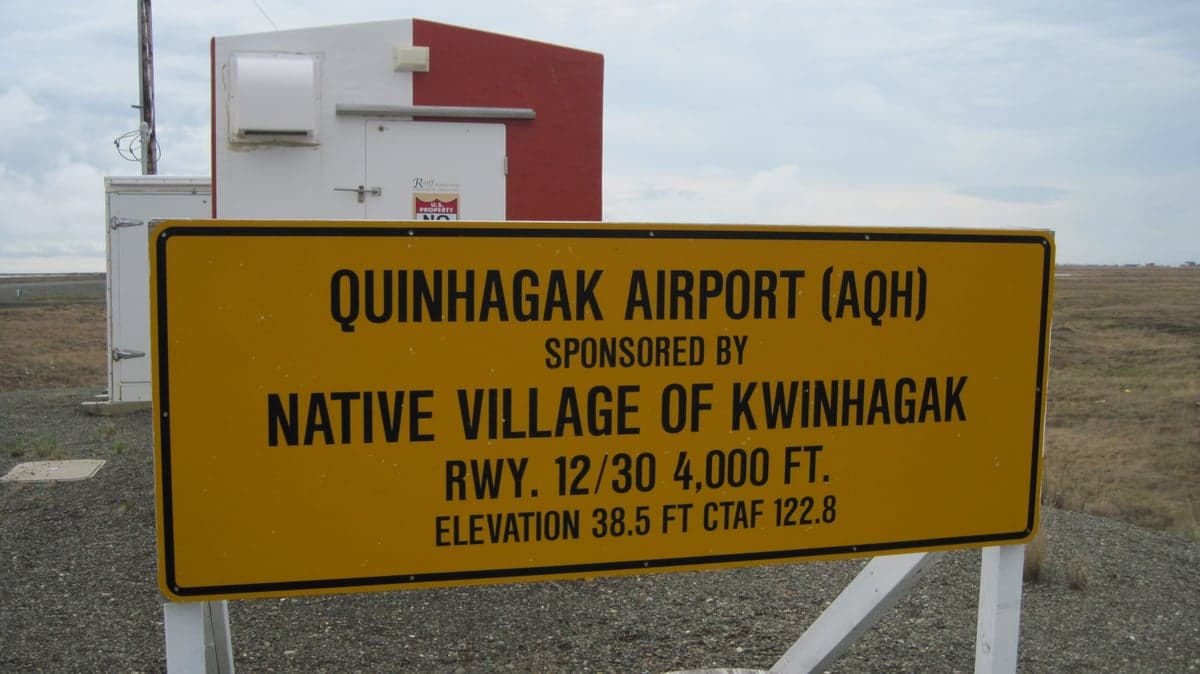
Photo: Wikipedia
Personal Sovereignty in Quinhagak, AK
Strong independent fundamentals that actively favor personal liberty and low regulation.
What does Personal Sovereignty tell us?
Personal Sovereignty measures your capacity for self-reliance and independence with minimal government friction. Higher scores mean fewer barriers between you and the way you want to live... but it assumes you have the space you need and good neighbors.
What does this tell us?
Personal Sovereignty measures your capacity for self-reliance and independence with minimal government friction. Higher scores mean fewer barriers between you and the way you want to live... but it assumes you have the space you need and good neighbors.
State Policy
Energy independence: Net exporter (350% of energy produced in-state)
Personal Liberty
Homesteading

Personal Liberty Analysis
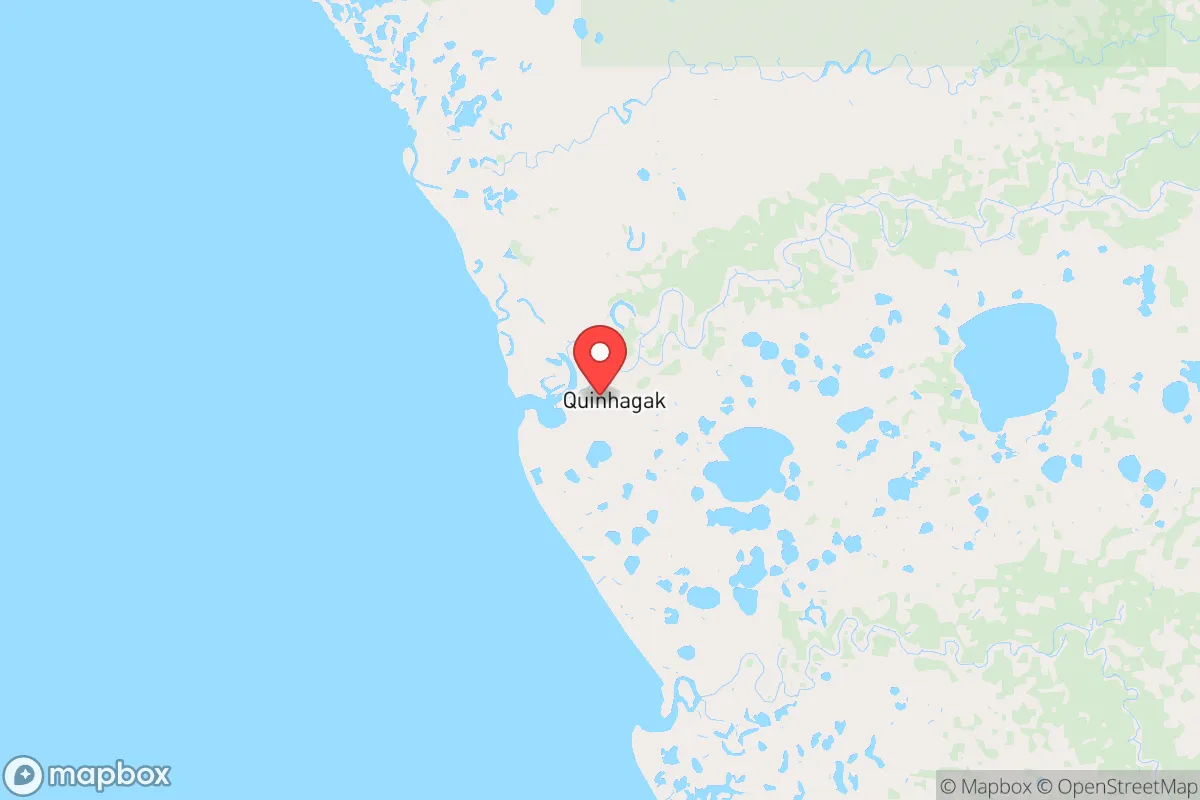
Quinhagak, Alaska, offers a personal sovereignty environment that is as raw and untamed as the surrounding tundra, making it a compelling outlier for those seeking to escape the encroaching reach of federal and state overreach. In this Yup'ik village of roughly 750 people, located on the Kanektok River near the Bering Sea, the practical realities of survival—subsistence hunting, fishing, and a deep reliance on community—create a de facto autonomy that few Lower 48 locations can match. The state of Alaska’s constitutional commitment to individual rights, combined with the sheer remoteness of Quinhagak, means that government presence is thin, and personal responsibility is not a choice but a necessity. For the conservative-leaning individual or parent who views personal sovereignty as the bedrock of freedom, this village represents a frontier where the trade-offs between isolation and liberty are starkly real.
Tax burden and regulatory posture in a remote Alaskan village
Alaska’s tax structure is a standout for those prioritizing financial sovereignty, and Quinhagak benefits directly from this. There is no state income tax and no state sales tax, a policy that keeps more money in the hands of residents. The state also distributes an annual Permanent Fund Dividend to every resident, including children, which in 2024 was approximately $1,702 per person—a direct cash transfer that bolsters household autonomy without the strings of federal welfare programs. Property taxes in Quinhagak are minimal, as the village is largely composed of tribally owned or trust lands, which are exempt from local property taxation. The regulatory posture here is light by design: the state of Alaska has a constitutional mandate to manage resources for maximum benefit of its people, and local governance in Quinhagak is handled by the Native Village of Quinhagak tribal council, which prioritizes subsistence rights and local control. However, be aware that federal regulations—particularly those from the Environmental Protection Agency and the National Marine Fisheries Service—still apply to waterways and wildlife, and the Alaska Department of Fish and Game imposes strict seasons and bag limits on hunting and fishing, even for subsistence users. For a prepper, the key takeaway is that state-level financial and regulatory burdens are among the lowest in the nation, but federal oversight remains a persistent, if distant, shadow.
Self-defense and gun law specifics in Quinhagak
Alaska is one of the most gun-friendly states in the Union, and Quinhagak reflects that ethos in practice. There is no permit required to purchase a firearm, no waiting period, and no state-level registration. Open carry is legal without a license, and concealed carry is permitted for anyone 21 or older who can legally possess a firearm—no state permit needed, though a federal background check applies at licensed dealers. The village itself is a small, tight-knit community where firearms are a common tool for subsistence hunting and personal protection against bears and moose, not a political flashpoint. Magazine capacity restrictions and "assault weapon" bans do not exist at the state level, meaning you can own standard AR-15s and high-capacity magazines without legal hassle. Stand-your-ground laws are in effect, and there is no duty to retreat before using deadly force in self-defense. For a survivalist, the practical reality is that law enforcement response times in Quinhagak can be hours or even days due to weather and remoteness, making personal armament not just a right but a critical survival tool. The nearest Alaska State Trooper post is in Bethel, over 100 miles away, so self-reliance in security is non-negotiable.
Self-reliance and homesteading viability in a remote village
Quinhagak sits on the edge of the Yukon-Kuskokwim Delta, a region where off-grid living is not a lifestyle choice but the baseline. Lot sizes in the village are generally small—typically a quarter-acre or less—due to the limited buildable land on the tundra, but the surrounding area offers vast, unoccupied public lands managed by the state and federal governments. The Bureau of Land Management and the State of Alaska allow remote cabin permits and homesteading-style use on certain parcels, though full private ownership is rare. Zoning is minimal; the tribal council oversees land use, and there are no county-level building codes or homeowner association restrictions. Off-grid feasibility is high: solar power works during the long summer days, but winter requires a generator or wind turbine due to near-total darkness. Most homes in Quinhagak rely on fuel oil for heating, delivered by barge or air, and water is often trucked in or collected from rainwater. Sewage is typically handled by honey buckets—a reality that tests one’s commitment to self-reliance. Gardening is challenging due to permafrost and short growing seasons, but subsistence fishing (salmon, trout) and hunting (moose, caribou, waterfowl) provide the bulk of protein. For a prepper, this is a location where homesteading is less about tilling soil and more about mastering the land and water for survival.
Personal liberties: parental rights, medical autonomy, speech, and property
In Quinhagak, personal liberties are shaped by isolation and a strong tribal governance structure that often prioritizes community consensus over individual rights. Parental rights are robust in the sense that the state of Alaska has a limited presence; the local school is run by the Lower Kuskokwim School District, but homeschooling is legal and relatively unregulated, requiring only a simple notification to the district. Medical autonomy is a double-edged sword: the village has a small health clinic staffed by community health aides, but serious medical issues require medevac to Anchorage or Bethel, meaning that government-mandated treatments (like vaccine mandates) are difficult to enforce in practice. Free speech is protected under the Alaska Constitution, which has stronger protections than the U.S. Constitution, and the village’s remoteness means there is little risk of social media surveillance or cancel culture reaching into daily life. Property rights are complicated by the fact that most land is held in trust by the federal government for the Native Village of Quinhagak, meaning you cannot simply buy a plot as a non-Native; you would need to lease or obtain permission from the tribal council. This is a significant limitation for those seeking fee-simple ownership. For a conservative parent concerned about government overreach in education or healthcare, Quinhagak offers a buffer of distance and practicality, but the tribal governance structure means that individual property rights are subordinate to collective tribal authority.
Overall, Quinhagak ranks as a high-sovereignty location for those who can adapt to its extreme conditions and accept the trade-offs of tribal land ownership. Compared to the Lower 48, where zoning boards, school mandates, and tax collectors are ever-present, this village offers a rare combination of low taxes, minimal regulation, and a culture of self-reliance that aligns with survivalist and conservative values. The catch is that personal sovereignty here is not handed to you—it is earned through grit, preparation, and a willingness to live without modern conveniences. For the individual or family willing to embrace that challenge, Quinhagak provides a sanctuary where government overreach is muted by geography and necessity, and where the freedom to live by your own rules is not a slogan but a daily reality.

* Values derived from national, state, county, city and local statistics and may differ in a specific area. Last updated: 2026-04-19T19:34:55.000Z
Narrative content on this page is AI-generated and may contain mistakes. Verify any details that matter before acting on them.
ReloMaps may earn a commission from affiliate links at no extra cost to you.

