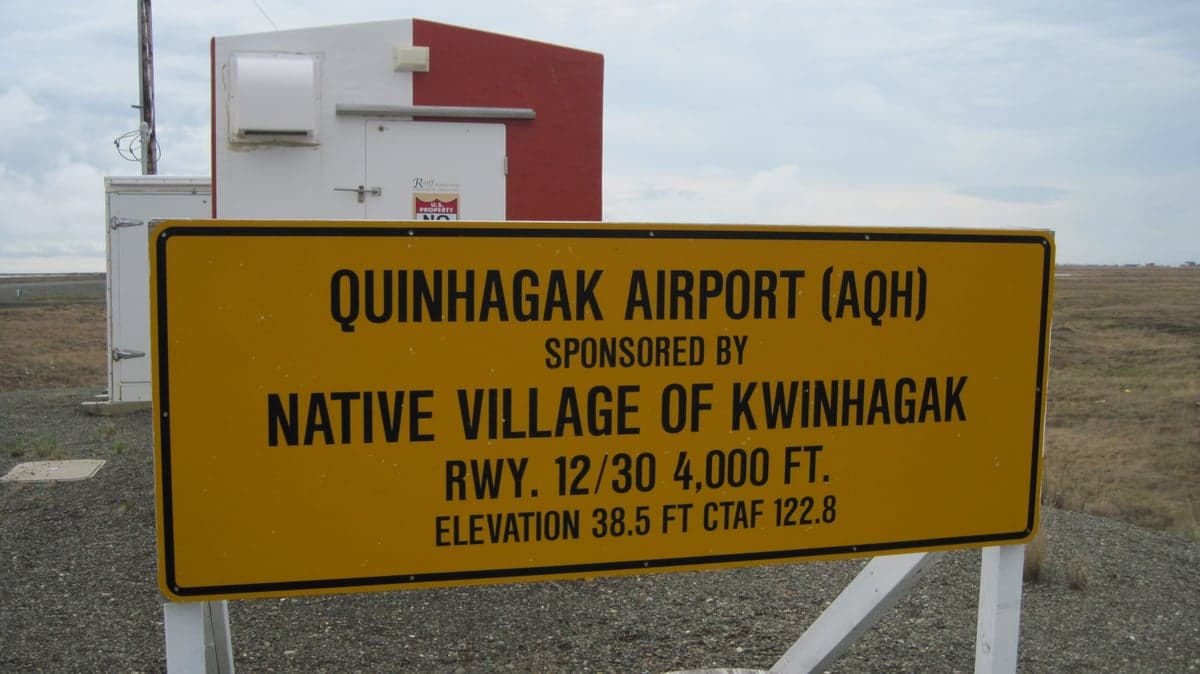
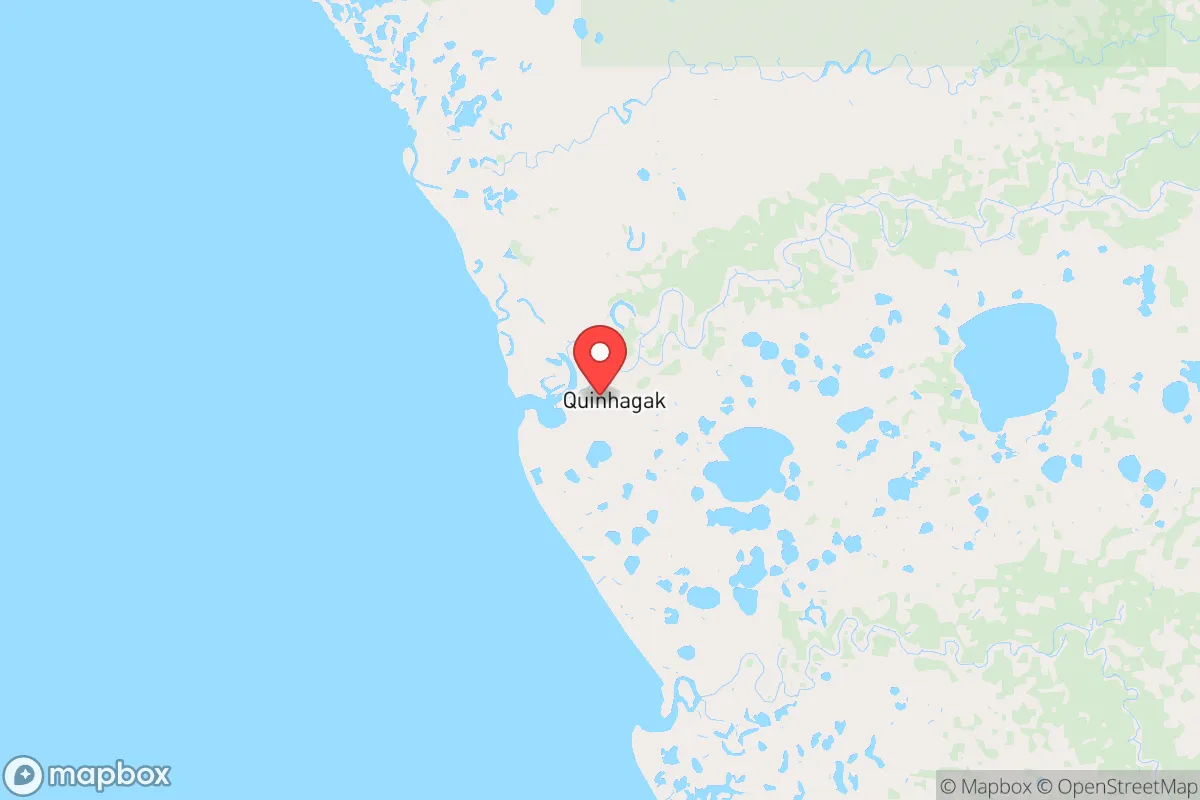
Photo: Wikipedia
Quality of Life in Quinhagak, AK
A livable area that tracks near national norms for affordability, walkability, and neighborhood health.
What does Quality of Life tell us?
Quality of Life blends cost of living, nearby amenities, socioeconomic signals, and neighborhood character. City-level scores represent the whole municipality; individual neighborhoods can differ.
What does this tell us?
Quality of Life blends cost of living, nearby amenities, socioeconomic signals, and neighborhood character. City-level scores represent the whole municipality; individual neighborhoods can differ.
Cost of Living
54% below national average
The Real Cost of Living in Quinhagak, AK for 2026
| Tier | Individual | Family (4) |
|---|---|---|
| Survival | $13k | $24k |
| Comfortable | $22k | $32k |
| Luxury | $88k+ | $136k+ |
| Elite (Top 5%) | $104k+ | $161k+ |
153%
The Area Signal
A metric tracking the socioeconomic signals of the area.


Limited data for this area
Limited data for this area
Hobbies
Explore the areaGroceries
0 within 10 miles
Gas
0 within 10 miles
Hospital
0 within 20 miles
Airport
Quinhagak Airport
Post Office
USPS — Quinhagak, AK
Critical Amenities
Quality-of-Life Analysis
Quinhagak, a Yup'ik village of roughly 800 residents on the Kuskokwim River delta, is one of the most affordable places to live in Alaska by cost-of-living metrics, yet it remains a community of modest means rather than affluence. The population is overwhelmingly Alaska Native, with a strong subsistence lifestyle centered on fishing, hunting, and berry gathering. Median household income hovers well below state averages, and the local economy relies heavily on commercial fishing, seasonal construction, and public-sector jobs through the Native Village of Kwinhagak tribal government and the Lower Kuskokwim School District.
Cost of living, housing affordability, and how Quinhagak compares to Bethel
Quinhagak's cost-of-living index of 46 (where 100 equals the U.S. average) makes it dramatically cheaper than the national baseline, but this figure reflects the absence of typical urban expenses rather than widespread disposable income. The median home value of $35,000 is a fraction of Alaska's statewide median of roughly $290,000, and median rent of $788 is about half the national average. However, housing stock is limited—most homes are older, single-family units or HUD-subsidized duplexes—and new construction is rare due to the high cost of shipping materials. Compared to Bethel, the regional hub 60 miles upriver, Quinhagak offers significantly lower home prices (Bethel's median is around $200,000) but fewer rental options and no hotel or extended-stay lodging. The average commute of just 4.4 minutes reflects the village's compact layout, where most residents walk or use ATVs to reach work, the school, or the store.
What daily life is like for families: schools, amenities, and subsistence rhythm
Daily life in Quinhagak revolves around the seasons and the river. The Lewis Angapak Memorial School serves grades K-12 with about 200 students, offering a curriculum that blends state standards with Yup'ik language and culture classes. Amenities are sparse: one general store (Qanirtuuq, Inc.), a small health clinic staffed by community health aides, a post office, and a single church. There is no restaurant, bank, or gas station—fuel is delivered by barge and stored in tanks. Internet access is available but slow and expensive, with satellite-based service common. The community's rhythm is dictated by salmon runs (king, sockeye, and chum), moose hunting in fall, and berry picking in late summer. The Qanirtuuq Village Corporation operates a commercial fish processing plant that provides seasonal employment, and the village also hosts an annual Kuskokwim 300 sled dog race checkpoint, drawing visitors from surrounding villages.
Quinhagak is best suited for individuals and families who value a subsistence-based, culturally rich lifestyle and are comfortable with extreme remoteness. Those who thrive here are typically Alaska Native residents with deep family ties to the area, or outsiders—teachers, health aides, and public-sector workers—who are drawn by the low cost of living and the opportunity to work in a close-knit rural community. The lack of retail, dining, and entertainment options, combined with harsh winters and limited medical access, makes it a poor fit for anyone seeking urban conveniences or year-round road access. For the right person, however, Quinhagak offers a quiet, affordable, and deeply connected way of life that is increasingly rare in modern Alaska.

Crime in Quinhagak, AK
Higher crime rates than 66% of comparable U.S. locations.
Violent CrimeViolent Crime Analysis
Property CrimeProperty Crime Analysis
Crime Analysis
Quinhagak, a remote Yup'ik village on the Kuskokwim River in southwest Alaska, reports crime rates that are significantly higher than both the Alaska state average and national benchmarks, placing it among the higher-risk communities in the state for both violent and property offenses. With a population of roughly 750 residents, the village's violent crime rate of 726.6 per 100,000 people is more than double the national average, while its property crime rate of 1,909.5 per 100,000 also exceeds typical U.S. figures. These statistics reflect a community where public safety is a persistent concern, shaped by factors common to many rural Alaska villages, including limited law enforcement presence, high rates of substance abuse, and socioeconomic challenges.
Crime in context
Quinhagak's violent crime rate is roughly 1.9 times the Alaska state average (which itself is among the highest in the nation) and approximately 2.1 times the U.S. national average. The property crime rate is about 1.4 times the Alaska average and 1.5 times the national average. For comparison, the nearby hub community of Bethel (population ~6,300) reports a violent crime rate of roughly 1,200 per 100,000, while the state's largest city, Anchorage, sits around 1,000 per 100,000. Quinhagak's figures, while elevated, are not the highest in the region, but they place the village in a tier of communities where residents face a tangible risk of victimization. The Alaska Department of Public Safety's 2023 data shows that rural villages like Quinhagak often experience crime spikes tied to seasonal patterns, with summer months seeing increased alcohol-related incidents and domestic disputes.
What residents experience
Daily life in Quinhagak is shaped by a close-knit community where most residents know one another, but this familiarity does not eliminate crime. The most common offenses reported include domestic violence, simple assault, and burglary. Alcohol abuse is a major driver of violent incidents, with the local public safety officer (the village's primary law enforcement presence) often responding to calls involving intoxicated individuals. Property crime, particularly theft of subsistence gear like snowmachines, boats, and fishing equipment, is a recurring issue, as these items are essential for survival and difficult to replace. The village's isolation—accessible only by air or river—means that suspects often remain in the community, which can both deter some crime and create tension among victims and offenders who live side by side. The local school and health clinic are generally considered safe spaces, but residents report that walking alone at night, especially near the village's few public gathering spots, carries elevated risk.
Neighborhood-level variation within Quinhagak is minimal due to the village's small size and compact layout. However, homes closer to the airstrip and the main road (the only paved stretch) tend to experience slightly less property crime, likely due to higher visibility and foot traffic. The outlying areas near the riverbank and the landfill see more reports of trespassing and theft. Overall, the village lacks the stark neighborhood divides found in larger cities; safety is more a matter of individual household precautions—such as securing boats and snowmachines with locks or chains—than of choosing a "safe" street. For prospective residents, understanding that Quinhagak's crime rates are a product of systemic issues (poverty, limited policing, substance abuse) rather than localized hotspots is key to assessing the real safety picture.
* Values derived from national, state, county, city and local statistics and may differ in a specific area. Last updated: 2026-04-19T19:34:55.000Z
Narrative content on this page is AI-generated and may contain mistakes. Verify any details that matter before acting on them.
ReloMaps may earn a commission from affiliate links at no extra cost to you.

