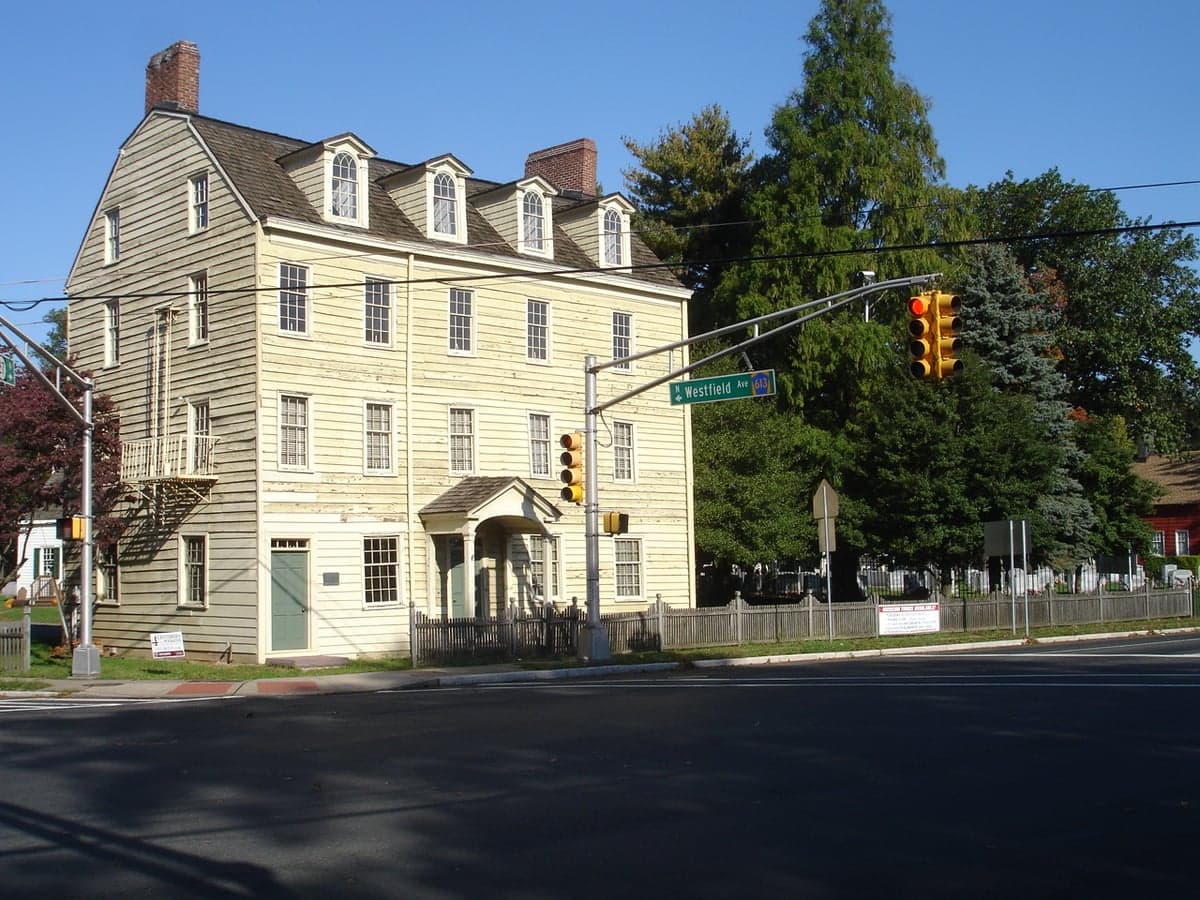
Photo: Wikipedia
Political ClimatePolitical Climate in Rahway, NJ
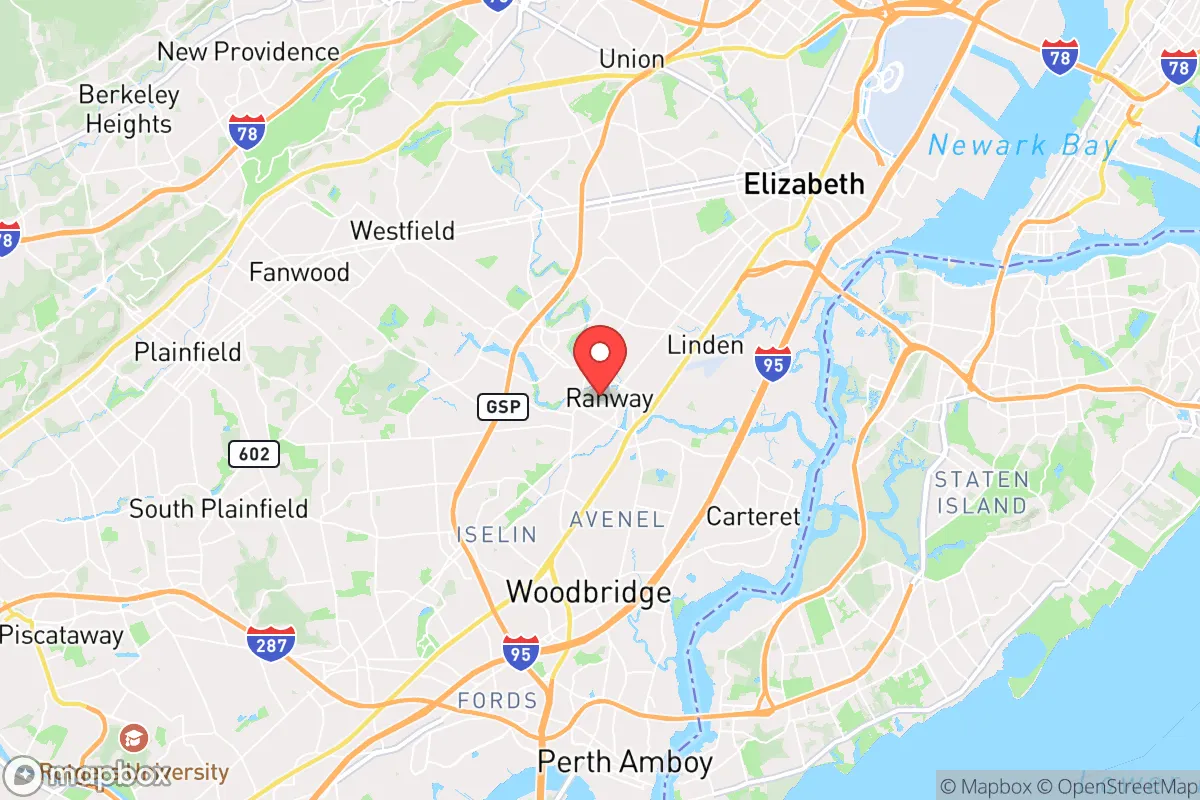
District shown is the primary district for this city’s centroid. Cities may span multiple districts.
Local Political AnalysisPolitical Analysis of Rahway, NJ
Rahway, New Jersey, sits in a political no-man's-land that's been shifting under our feet for the past decade. The Cook PVI rating of EVEN tells you the raw numbers, but it doesn't capture the feel on the ground. This town used to be reliably blue-collar Democratic, the kind of place where union guys and small business owners voted the same ticket without thinking twice. Now, with the influx of commuters from New York and the steady creep of progressive policies out of Union County and Trenton, that old balance is wobbling. You can see it in the local school board meetings and the zoning board fights—the old guard is getting pushed aside by people who see government as the solution to everything, not a necessary evil.
How it compares
Drive ten minutes west to Clark or Cranford, and you'll find towns that still lean more conservative, with lower taxes and a quieter approach to local governance. Head east toward Elizabeth or Newark, and you're in deep-blue territory where the machine politics are thick and the progressive agenda runs unchecked. Rahway is the awkward middle child. It's not as red as the exurbs like Bridgewater or Hillsborough, but it's not as blue as the urban core. What's happening here is a slow-motion takeover: the old Rahway families who remember when the city had a real downtown and a working-class backbone are being outvoted by newcomers who want bike lanes, affordable housing mandates, and "equity" initiatives that sound good on paper but always seem to come with higher taxes and more bureaucracy.
What this means for residents
For anyone who values personal freedom and keeping government out of your wallet, the trend is concerning. The local council has been flirting with rent control measures, which sounds nice until you realize it discourages landlords from maintaining properties and shrinks the rental market. There's been talk of "sanctuary city" policies that would tie local police hands, even though Rahway already has enough crime problems without adding federal immigration enforcement to the mix. Property taxes in Union County are already among the highest in the nation, and every new progressive initiative—whether it's a "climate action plan" or a "racial equity audit"—comes with a price tag that lands on your tax bill. The school board has been pushing DEI training and curriculum changes that prioritize social justice over reading and math, and parents who object are labeled as bigots. It's the kind of slow erosion of common sense that makes you wonder how long before the whole town is run by people who've never had to meet a payroll or fix a leaky roof.
On the cultural side, Rahway still has some fight left. The Arts District is a genuine bright spot, drawing people from outside town and keeping the downtown alive without turning it into a soulless chain-store corridor. But the political trajectory is clear: if the current trend holds, Rahway will look more like a mini-Jersey City within a decade—higher taxes, more regulations, and a government that sees itself as your caretaker rather than your servant. The old-timers who remember when the city had a working-class identity are getting outnumbered, and the newcomers don't seem to understand that freedom means being left alone, not being managed. If you're thinking of moving here, just know what you're signing up for: a town that's still affordable by North Jersey standards, but where the political winds are blowing hard in a direction that values collective action over individual liberty.

State Political ClimatePolitical Climate in New Jersey
State Political AnalysisPolitical Environment in the State
New Jersey has long been a reliably blue state in presidential elections, but its political climate is far more nuanced than the national headlines suggest. The state has voted Democratic in every presidential election since 1992, but the margins have tightened in recent cycles, with Joe Biden winning by about 16 points in 2020—down from Hillary Clinton’s 14-point margin in 2016 and Barack Obama’s 17-point win in 2012. The real story is the growing urban-suburban-rural divide, with the northern and central metros driving the blue wave while the southern and western counties have become increasingly red. For a conservative considering a move here, the picture is mixed: you’ll find strong local communities and lower crime than many blue states, but you’ll also face some of the highest taxes in the nation and a state government that has steadily expanded its reach into your personal life.
Urban vs. rural divide
The political map of New Jersey is a tale of three regions. The northern corridor—Newark, Jersey City, Paterson, and Elizabeth—is overwhelmingly Democratic, driven by dense urban populations, strong union presence, and a large immigrant base. These cities reliably deliver 70-80% of the vote for Democrats. The suburbs of Bergen, Essex, and Hudson counties have also shifted left, with once-moderate towns like Montclair and Maplewood now solidly blue. In contrast, the southern and western parts of the state—Ocean, Monmouth, Burlington, and Salem counties—have become Republican strongholds. Ocean County, home to Toms River and Lakewood, voted for Trump by 20 points in 2020. The rural areas of Sussex and Warren counties in the northwest are also deeply red, with Trump winning Sussex by 18 points. The key swing counties are the suburban “collar counties” around Philadelphia—Burlington, Camden, and Gloucester—which have trended blue but still host competitive races. For example, Burlington County flipped from red to blue in 2020, but its southern towns like Mount Laurel and Moorestown remain purple.
Policy environment
New Jersey’s policy environment is a textbook case of progressive governance with high costs. The state has the highest property taxes in the nation, averaging over $9,500 per year, and a progressive income tax that tops out at 10.75% for income over $1 million. The corporate tax rate is also high at 11.5%, making it one of the least business-friendly states. On education, the state spends more per pupil than almost any other, but the results are uneven—urban districts like Newark and Camden struggle with low graduation rates despite massive funding. Healthcare is heavily regulated, with a state-run health insurance exchange and strict Medicaid expansion. Election laws are among the most liberal: no-excuse mail-in voting was made permanent in 2020, and same-day voter registration is allowed. The state also has a “motor voter” law that automatically registers people when they get a driver’s license. For conservatives, the biggest red flags are the state’s strict gun laws—including a 2018 “red flag” law and a 2022 ban on carrying firearms in “sensitive places” like parks and public transit—and its sanctuary state policies, which limit cooperation with federal immigration enforcement.
Trajectory & freedom
Over the past decade, New Jersey has become less free by almost any measure. The state has aggressively expanded its regulatory footprint, particularly in the areas of gun rights, parental rights, and medical autonomy. In 2022, Governor Phil Murphy signed a law requiring all public schools to teach “diversity and inclusion” lessons that critics argue push a progressive agenda on gender and sexuality. The same year, the state passed a law banning “conversion therapy” for minors, which conservatives see as an overreach into parental decision-making. On gun rights, the state’s 2022 “sensitive places” law was so broad that it effectively banned carrying firearms in most public spaces, leading to a federal lawsuit that is still pending. On the economic front, the state’s tax burden has only increased, with a 2023 “millionaire’s tax” hike and a new “corporate transit fee” on large businesses. The only bright spot for freedom advocates is the state’s strong property rights tradition—New Jersey has no statewide rent control, and local zoning laws are generally respected. But overall, the trajectory is clear: more regulation, higher taxes, and less personal autonomy.
Civil unrest & political movements
New Jersey has seen its share of political flashpoints. The 2020 Black Lives Matter protests were large and sometimes violent in Newark and Trenton, with property damage and clashes with police. More recently, the state has become a battleground over parental rights in education. In 2023, a group of parents in Middletown (Monmouth County) sued the school district over a policy that allowed teachers to keep a student’s gender identity secret from parents, a case that gained national attention. The state’s sanctuary policies have also sparked tension: in 2022, the town of Jackson (Ocean County) passed a resolution declaring itself a “sanctuary city for the unborn,” banning abortion within town limits, though the law was quickly challenged and struck down by state courts. Election integrity remains a hot-button issue, with many conservatives pointing to the state’s widespread mail-in voting as a source of potential fraud. In 2021, a state audit found that over 3,000 ballots were improperly counted in the 2020 election, though no widespread fraud was confirmed. The state’s political activism is also visible in the growing “NJ for Trump” movement, which holds regular rallies in Wildwood and Point Pleasant Beach.
Projection
Looking ahead 5-10 years, New Jersey is likely to become more blue, not less. The state’s population is aging, but the influx of younger, more progressive residents from New York City and Philadelphia is accelerating. The suburbs of Morristown and Red Bank are becoming increasingly diverse and left-leaning, while the rural red areas are shrinking in population. The state’s high cost of living is driving some conservatives to leave for Florida, Texas, or the Carolinas, a trend that will only intensify if taxes continue to rise. On the policy front, expect more gun control, more progressive education mandates, and possibly a state-level “public option” for healthcare. The only wildcard is the state’s struggling economy—if the tax burden drives out enough businesses, the state may be forced to moderate. But for now, the political momentum is firmly with the progressive wing of the Democratic Party. A new resident moving in today should expect to live in a state where the government is deeply involved in your daily life, from your child’s education to your ability to defend yourself.
For a conservative considering New Jersey, the bottom line is this: you’ll find strong communities, good schools in the suburbs, and a lower crime rate than many blue states, but you’ll pay a heavy price in taxes and personal freedom. If you’re looking for a place where your values are reflected in state policy, this isn’t it. But if you’re willing to fight for your rights at the local level—in towns like Middletown or Jackson—you can carve out a life here. Just be prepared for the state government to be your constant adversary.
* Values derived from national, state, county, city and local statistics and may differ in a specific area. Last updated: 2026-05-03T09:54:53.000Z
Narrative content on this page is AI-generated and may contain mistakes. Verify any details that matter before acting on them.
ReloMaps may earn a commission from affiliate links at no extra cost to you.

