Photo: Wikipedia
Demographics of Raleigh, NC
Affluence Level in Raleigh, NC
A middle-class area roughly in line with national averages across income, home values, education, and employment.
People of Raleigh, NC
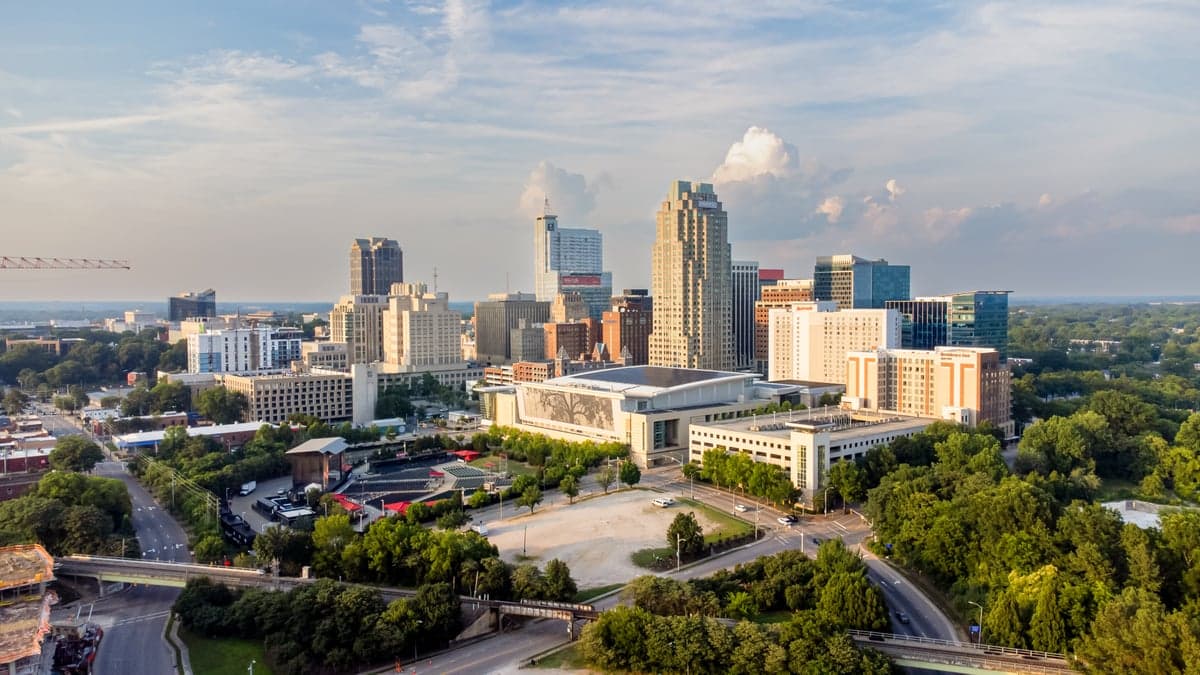
The people of Raleigh, North Carolina today form a predominantly white-collar, highly educated population of 470,763, with a character shaped by rapid tech-driven growth and a relatively moderate political climate compared to surrounding areas. The city is notably diverse, with a White population of 51.4%, a Black population of 27.0%, a Hispanic population of 12.7%, and smaller but growing East/Southeast Asian (2.9%) and Indian-subcontinent (1.8%) communities. Over half of adults (52.9%) hold a college degree, a figure that reflects the city’s anchor as a hub for research, government, and higher education. Distinctive identity markers include a strong sense of civic pride in its parks and greenways, a booming food scene, and a palpable tension between long-standing Black neighborhoods and newer, wealthier transplants.
How the city was settled and grew
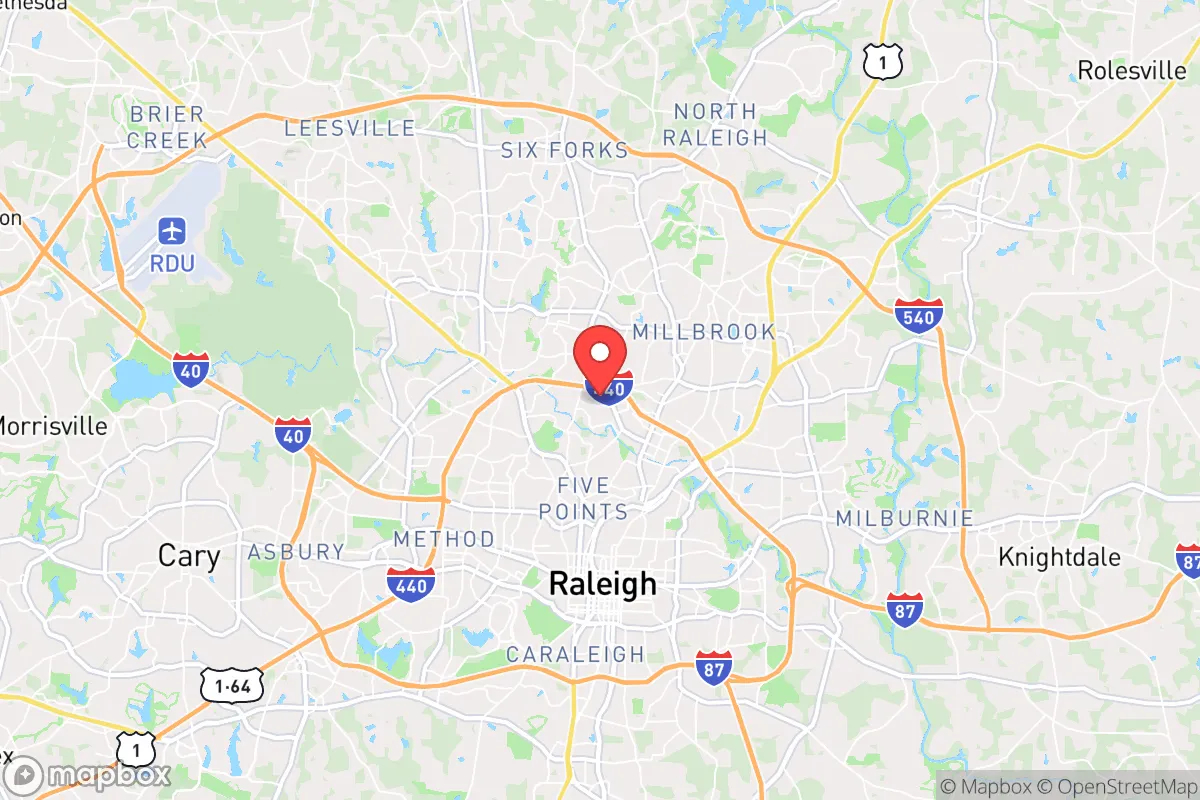
Raleigh was founded in 1792 as a planned capital city, chosen for its central location in the state. Its early population was drawn by government jobs, the establishment of the North Carolina State Capitol, and the promise of land grants in the surrounding Piedmont. The city grew slowly through the 19th century, with a significant Black population arriving after the Civil War, many settling in the Historic Oakwood and South Park neighborhoods, where they built churches, schools, and businesses. The arrival of the railroad in the 1850s and the founding of North Carolina State University in 1887 spurred modest growth, but Raleigh remained a relatively small, sleepy capital through the early 1900s. The post-World War II era brought a wave of white suburbanization, with families moving to new developments like Cameron Village (now a historic district) and Five Points, while Black residents were largely confined to the Southeast Raleigh corridor due to redlining and restrictive covenants.
Modern era (post-1965)
The 1965 Hart-Cellar Immigration Act had a modest immediate impact on Raleigh, but the city’s real demographic transformation began with the creation of Research Triangle Park (RTP) in 1959. RTP’s explosive growth in the 1970s and 1980s drew highly educated domestic migrants from the Northeast and Midwest, as well as a wave of international professionals. East/Southeast Asian immigrants, particularly from India and China, began settling in North Raleigh and Cary (a neighboring suburb), drawn by tech and pharmaceutical jobs. The Hispanic population grew rapidly from the 1990s onward, concentrated in Southeast Raleigh and parts of Garner, driven by construction, landscaping, and service-industry work. The Black population, while still a significant share, saw relative decline as middle-class Black families moved to suburbs like Knightdale and Wake Forest, and as white and Asian in-migration outpaced overall growth. The city’s foreign-born share remains relatively low at 7.9%, but the Indian-subcontinent community (1.8%) has grown notably in professional corridors, while East/Southeast Asian communities (2.9%) have stabilized.
The future
Raleigh’s population is heading toward greater educational and economic stratification, with the city becoming increasingly tribalized into distinct enclaves. The downtown core, including Glenwood South and Warehouse District, is drawing young, single professionals and empty-nesters, driving up housing costs and pushing lower-income residents—disproportionately Black and Hispanic—further into outlying suburbs like Zebulon and Wendell. The Hispanic population is expected to continue growing steadily, though at a slower pace than in the 2000s, as immigration from Latin America plateaus. East/Southeast Asian communities are likely to remain stable or grow modestly, primarily through professional migration, while the Indian-subcontinent community may see faster growth as tech and biotech sectors expand. The city is not homogenizing; rather, it is sorting by income and education, with affluent, highly educated enclaves (North Raleigh, Cameron Village) becoming whiter and more Asian, while lower-income areas (Southeast Raleigh) remain predominantly Black and Hispanic.
For someone moving to Raleigh now, the city offers a dynamic, opportunity-rich environment with a strong job market and high quality of life, but also a clear pattern of demographic sorting. New arrivals should expect to find a city where neighborhood character is closely tied to income and education levels, and where the long-standing Black community is increasingly peripheral to the city’s economic engine. The future points toward continued growth, but with a widening gap between the tech-driven professional class and the service-sector workforce that supports it.

* Values derived from national, state, county, city and local statistics and may differ in a specific area. Last updated: 2026-10-10T16:28:47.000Z
Narrative content on this page is AI-generated and may contain mistakes. Verify any details that matter before acting on them.
ReloMaps may earn a commission from affiliate links at no extra cost to you.

