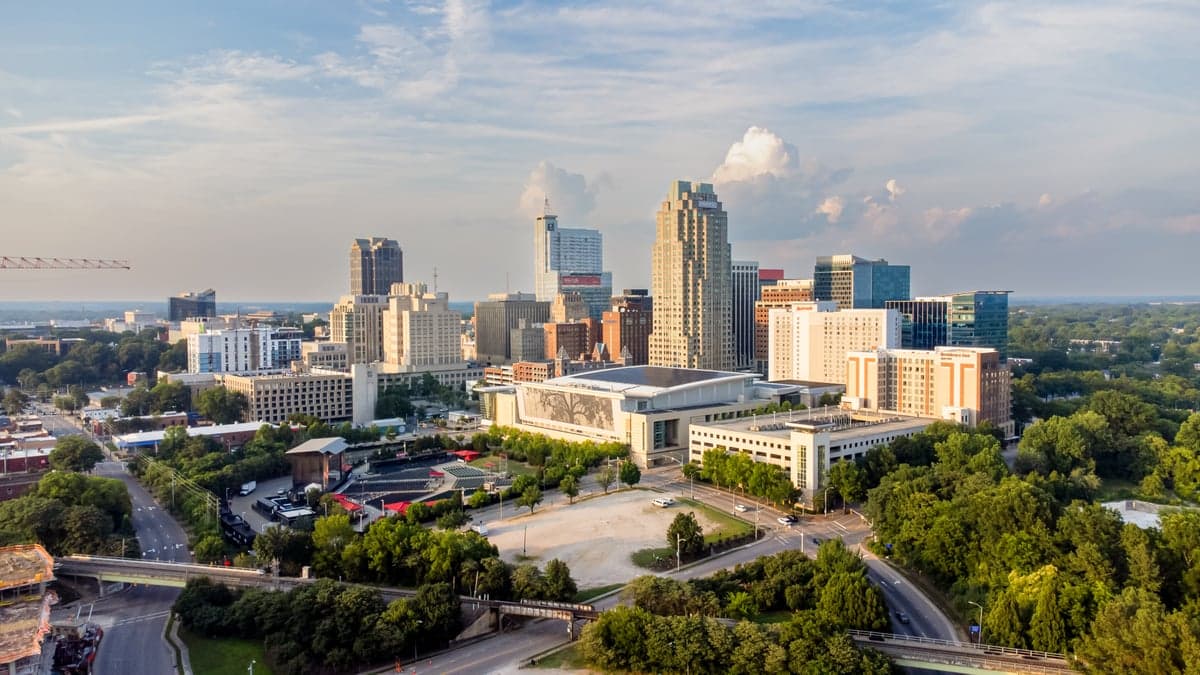
Photo: Wikipedia
Political ClimatePolitical Climate in Raleigh, NC
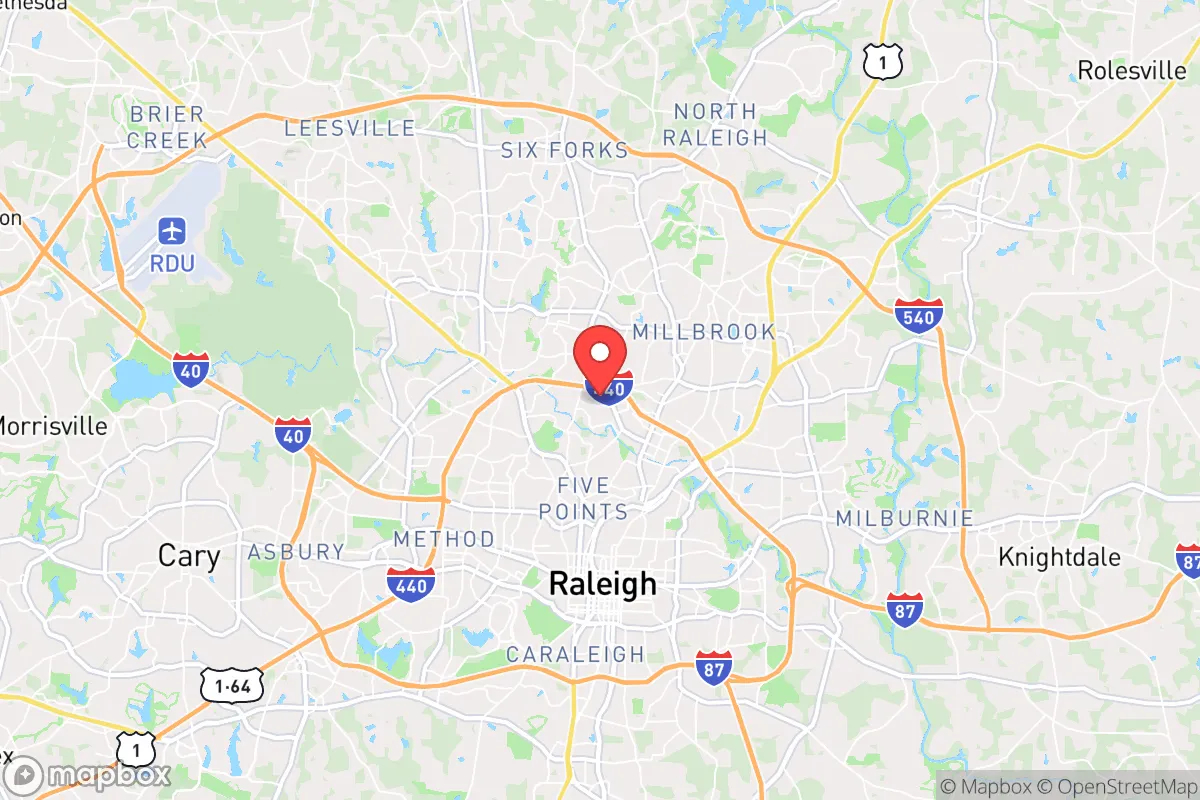
District shown is the primary district for this city’s centroid. Cities may span multiple districts.
Local Political AnalysisPolitical Analysis of Raleigh, NC
Look, I've been in Raleigh long enough to remember when this was a sleepy Southern town where folks kept their politics to themselves. Now, the political climate here has shifted hard and fast. The Cook PVI rating of D+17 tells you everything you need to know: Wake County is a deep blue island in a purple state. The city itself leans heavily Democratic, with the surrounding suburbs and exurbs like Wake Forest, Apex, and Cary trending the same direction, while more rural areas like Johnston County to the east and Harnett County to the south still hold onto conservative values. The trajectory is clear—Raleigh is getting bluer every election cycle, driven by transplants from the Northeast and West Coast who bring their progressive politics with them.
How it compares
If you drive 30 minutes north to Rolesville or 45 minutes east to Smithfield, you'll find a completely different political world. Those towns still vote reliably Republican, with local officials who talk about limited government and property rights. But inside the Beltline and in the booming suburbs, you're looking at a political monoculture. The contrast is stark: Raleigh's city council and county commission are dominated by Democrats who push policies like higher density zoning, light rail expansions, and sanctuary city ordinances. Compare that to neighboring Garner or Fuquay-Varina, where the local governments still push back on state mandates and keep taxes lower. The state legislature in Raleigh is Republican-controlled, which creates constant friction—they've passed laws preempting local ordinances on things like plastic bag bans and short-term rentals, which the city fights tooth and nail.
What this means for residents
For a conservative living here, it means you're constantly watching your back. The city government has gotten aggressive about things like traffic cameras, noise ordinances, and even restrictions on how you can use your own property. There's a real sense that the local bureaucracy wants to manage every aspect of daily life—from what kind of fence you can build to how many unrelated people can live in your house. The school board has become a battleground, with progressive members pushing curriculum changes and diversity initiatives that many parents find intrusive. Property taxes have climbed steadily to fund these priorities, and you'll see bond measures for transit and parks that sound nice but come with a price tag. The political pressure to conform is real—if you're not on board with the progressive agenda, you can feel like an outsider in your own community.
One thing that really stands out is how the culture has changed. Raleigh used to have a live-and-let-live attitude, but now there's a push for government to enforce social norms. The city has embraced things like "equity" programs in hiring and contracting, which sounds good on paper but often means quotas and preferences that squeeze out small, local businesses. The police department has faced defunding debates, and while that didn't fully happen, it created a chilling effect on law enforcement. If you value personal freedom—the right to speak your mind, run a business without endless red tape, or send your kids to a school that focuses on basics instead of activism—Raleigh is becoming a tougher place to call home. The long-term trend is concerning: more regulation, higher taxes, and a government that seems to think it knows better than you do about how to live your life.

State Political ClimatePolitical Climate in North Carolina
State Political AnalysisPolitical Environment in the State
North Carolina is a classic purple state that has been trending rightward over the past decade, but it remains a fierce battleground where the outcome of any statewide election is usually within a point or two. The dominant coalition is a mix of rural and suburban conservatives, military veterans, and a growing number of fiscally conservative transplants from the Northeast and Midwest, while the left is powered by the explosive growth of the Research Triangle (Raleigh-Durham-Chapel Hill) and the urban cores of Charlotte and Greensboro. Over the last 10-20 years, the state has gone from reliably blue in presidential races (voting for Obama in 2008) to reliably red in the last two cycles (voting for Trump in 2020 and 2024), while simultaneously electing a Democratic governor in every election since 2016 — a split that tells you everything you need to know about the internal tension here.
Urban vs. rural divide
The political map of North Carolina is a textbook case of the urban-rural chasm. The state's three major metro areas — Charlotte, the Triangle (Raleigh-Durham-Chapel Hill), and the Triad (Greensboro-Winston-Salem-High Point) — are solidly Democratic, with Mecklenburg County (Charlotte) and Wake County (Raleigh) alone delivering enough votes to swing a statewide race. Drive 20 minutes outside any of these cities, and you hit deep-red territory. The rural eastern counties, like Robeson and Cumberland, are more mixed due to large Black and Lumbee Native American populations, but the vast rural west — places like Hendersonville, Asheville's exurbs, and the mountain counties of Watauga and Avery — are overwhelmingly Republican. The real battleground is the suburbs: Cabarrus County (Concord), Union County (south of Charlotte), and Johnston County (southeast of Raleigh) have all shifted rightward as transplants from blue states flee high taxes and crime, making them the fastest-growing conservative strongholds in the state.
Policy environment
North Carolina's policy environment is a mixed bag that leans conservative on most economic and cultural issues, but with notable exceptions. The state has a flat income tax rate of 4.5% that is scheduled to drop to 3.99% by 2027, and no state tax on Social Security benefits — a huge draw for retirees. The regulatory posture is business-friendly, with a right-to-work law and a tort reform system that caps non-economic damages in medical malpractice cases. On education, the state has a robust school choice program: the Opportunity Scholarship Program now provides vouchers of up to $7,000 per student for private school tuition, and there are no income caps, meaning any family can apply. However, the state also expanded Medicaid under the Affordable Care Act in 2023, a move that many conservatives opposed as a federal overreach. Election laws are a bright spot: North Carolina requires voter ID (photo ID only, with free IDs available), has no same-day registration, and purges inactive voters regularly — measures that have withstood court challenges and kept election integrity relatively high compared to states like Pennsylvania or Georgia.
Trajectory & freedom
On the freedom front, North Carolina has been a net positive over the last five years, but there are warning signs. The state passed a major Second Amendment expansion in 2023 — HB 189 — which eliminated the requirement for a permit to purchase a handgun and removed the pistol purchase permit system entirely, making North Carolina a constitutional carry state for anyone who can legally own a firearm. That same year, the General Assembly passed the Parents' Bill of Rights (SB 49), which requires schools to notify parents of any changes in a child's health or well-being and prohibits instruction on gender identity and sexuality in K-4 classrooms. On the downside, the state's medical marijuana program remains stalled in the legislature, and the governor's office has used executive orders to impose environmental regulations that critics say hurt property rights, particularly in the coastal counties around Wilmington and Morehead City. The biggest freedom concern is the ongoing power struggle between the Republican-controlled General Assembly and the Democratic governor, Roy Cooper — the legislature has repeatedly overridden his vetoes on abortion restrictions (12-week ban with exceptions) and election integrity bills, but the governor still controls appointments to boards and commissions, creating a perpetual tug-of-war.
Civil unrest & political movements
North Carolina has seen its share of civil unrest, but it's been relatively contained compared to other swing states. The 2020 George Floyd protests in Charlotte and Raleigh turned violent for a few nights, with property damage and looting, but the state's strong law enforcement presence and the quick deployment of the National Guard kept it from spreading to suburbs like Cary or Apex. The most visible political movement on the left is the Moral Monday protests, which have been ongoing since 2013, led by the NAACP and focused on voting rights, Medicaid expansion, and criminal justice reform. On the right, the "Moms for Liberty" movement has been extremely active in school board races, particularly in Wake County and Mecklenburg County, where they've successfully pushed for parental notification policies and book reviews. Immigration politics are relatively quiet — North Carolina is not a sanctuary state, and the legislature passed a law in 2015 requiring all sheriffs to honor ICE detainer requests, though some urban sheriffs (like in Durham and Orange counties) have resisted. There is no serious secession or nullification rhetoric here; the state is too economically integrated and too politically divided for that kind of talk to gain traction.
Projection
Over the next 5-10 years, North Carolina is likely to become more conservative, not less, driven by two demographic forces. First, the massive in-migration from blue states — particularly New York, New Jersey, and California — is disproportionately composed of families and retirees who are fleeing high taxes, crime, and progressive policies. These transplants tend to be fiscally conservative and culturally moderate, and they are settling in the exurbs of Charlotte and Raleigh, places like Holly Springs, Fuquay-Varina, and Mooresville, which are already red and getting redder. Second, the rural counties that are losing population are still overwhelmingly Republican, and their political weight is amplified by the state's gerrymandered legislative maps. The wild card is the growing Hispanic population, concentrated in the eastern part of the state around Siler City and Monroe, which leans Democratic but is not as reliably blue as the national narrative suggests. If the Republican Party can keep its coalition together — and the current trajectory suggests it can — North Carolina will be a solid red state by 2030, with the governorship likely flipping back to the GOP once Cooper's term ends in 2028.
For a conservative-leaning individual or family moving here, the bottom line is this: you will find a state that respects your gun rights, protects your parental authority, and keeps taxes low, but you will have to navigate a deeply divided political landscape where your vote matters more than almost anywhere else in the country. The cities are blue, the countryside is red, and the suburbs are where the real action is. If you want to live in a place where your values are the majority, look at the exurbs of Charlotte or the mountain towns west of Asheville. If you want to be in the fight, Raleigh and Charlotte offer plenty of conservative communities — just know that you'll be living in a blue county with a red state government, and that tension is the defining feature of life in North Carolina.
* Values derived from national, state, county, city and local statistics and may differ in a specific area. Last updated: 2026-10-10T16:28:47.000Z
Narrative content on this page is AI-generated and may contain mistakes. Verify any details that matter before acting on them.
ReloMaps may earn a commission from affiliate links at no extra cost to you.

