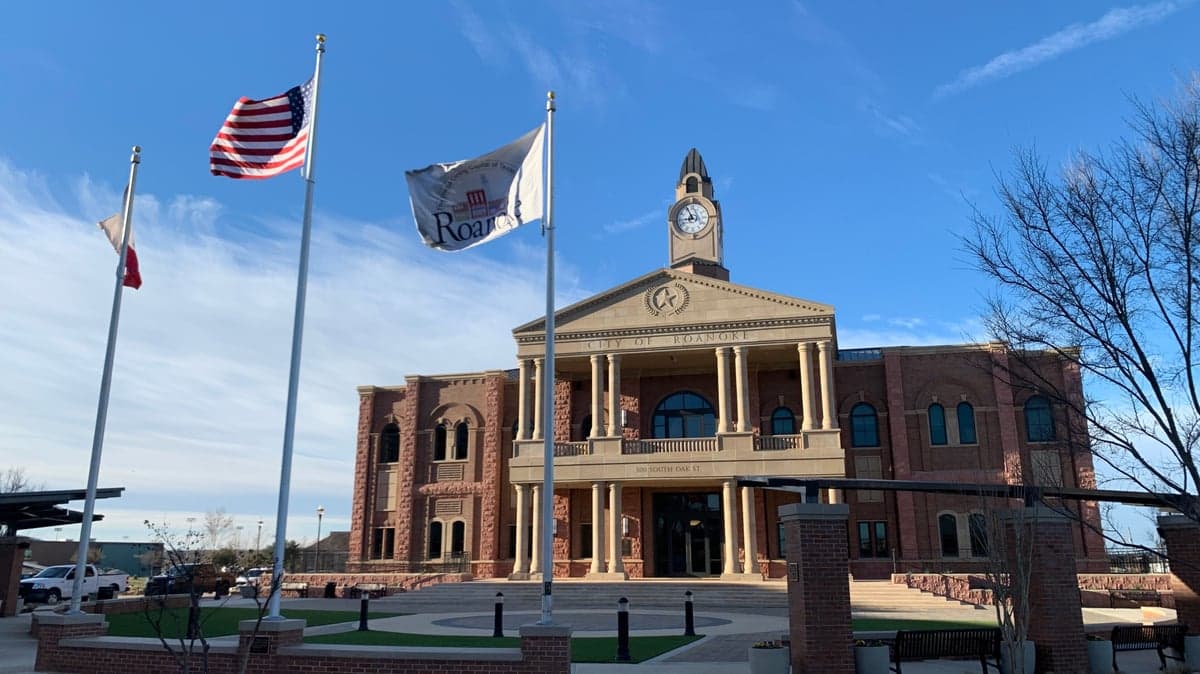
Photo: Wikipedia
Quality of Life in Roanoke, TX
A high quality of life with strong walkability, manageable living costs, healthy neighborhood signals, and solid amenity access.
What does Quality of Life tell us?
Quality of Life blends cost of living, nearby amenities, socioeconomic signals, and neighborhood character. City-level scores represent the whole municipality; individual neighborhoods can differ.
What does this tell us?
Quality of Life blends cost of living, nearby amenities, socioeconomic signals, and neighborhood character. City-level scores represent the whole municipality; individual neighborhoods can differ.
Cost of Living
58% above national average
The Real Cost of Living in Roanoke, TX for 2026
| Tier | Individual | Family (4) |
|---|---|---|
| Survival | $29k | $54k |
| Comfortable | $88k | $130k |
| Luxury | $182k+ | $283k+ |
| Elite (Top 5%) | $242k+ | $375k+ |
78%
The Area Signal
A metric tracking the socioeconomic signals of the area.
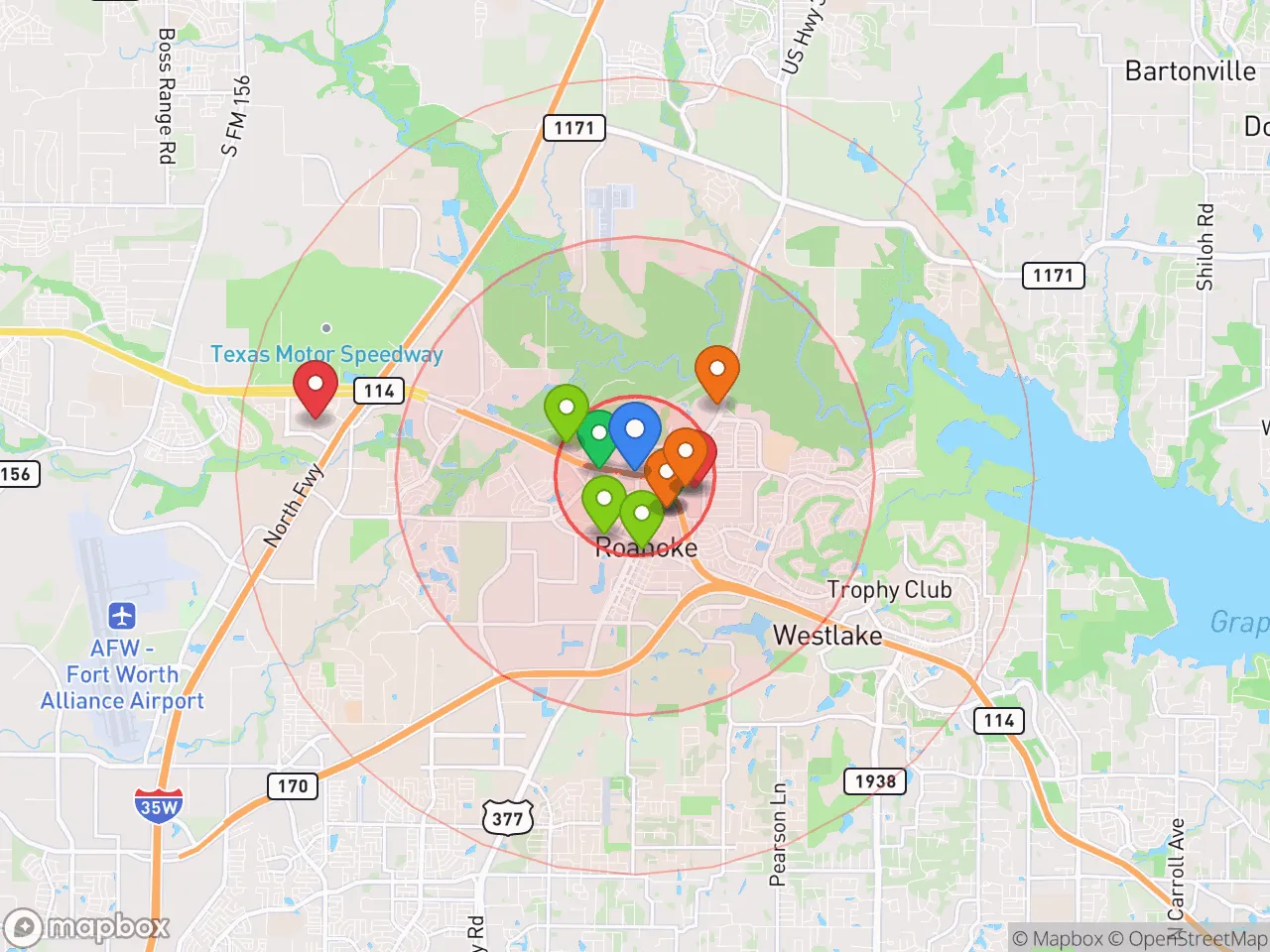
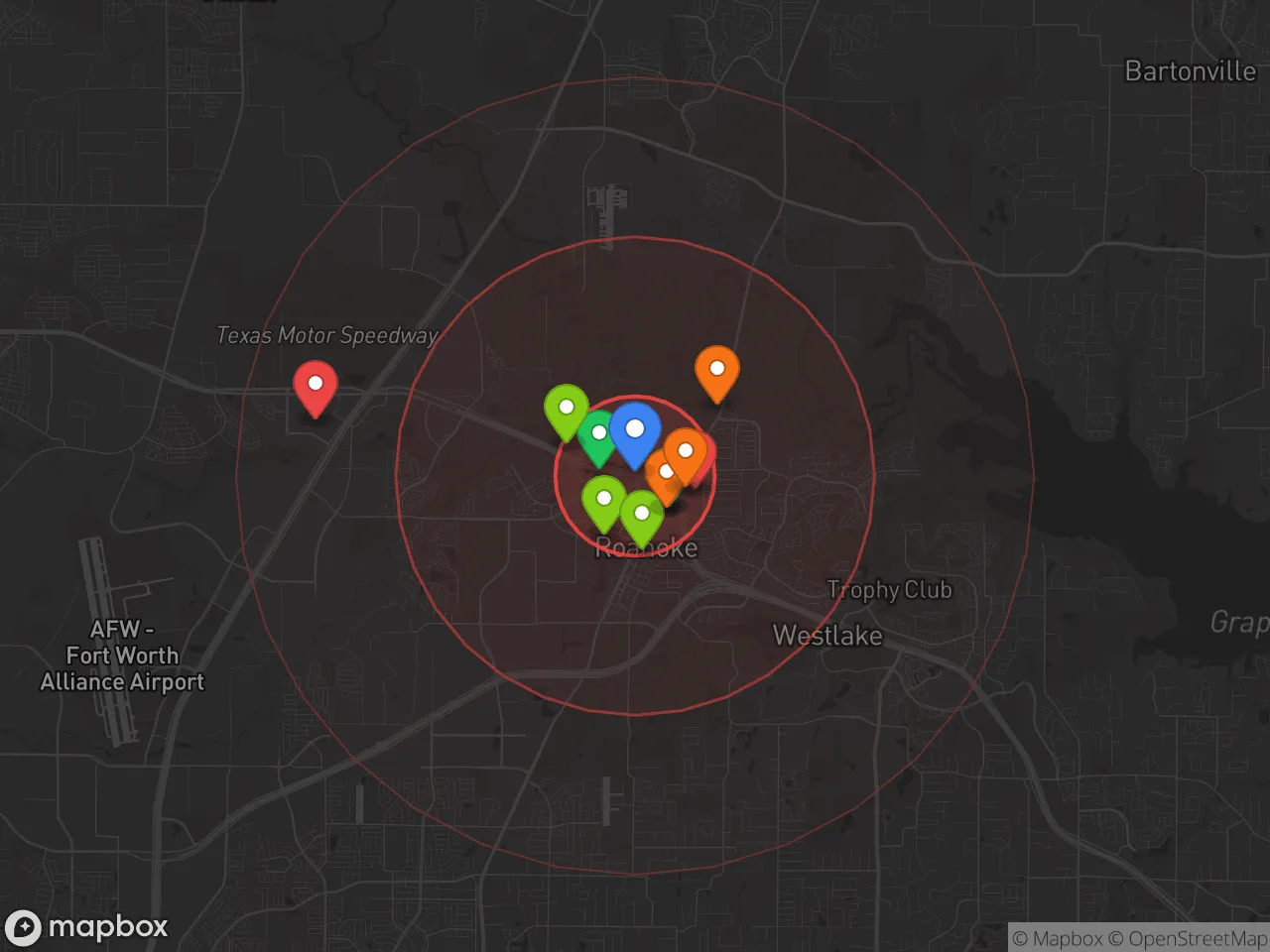
Hobbies
Explore the areaGroceries
7 within 10 miles
Gas
20 within 10 miles
Hospital
20 within 20 miles
Airport
DFW — Dallas/Fort Worth International
Post Office
USPS — Roanoke, TX
Critical Amenities
Quality-of-Life Analysis
Roanoke, Texas, is an affluent suburb in the Dallas-Fort Worth metroplex, consistently ranking among the state's wealthiest small towns. With a cost of living index of 158 (58% above the national average), the city attracts established professionals, executives, and families seeking a high-end, semi-rural lifestyle within commuting distance of major employment centers. The community is characterized by its master-planned neighborhoods, strong local schools, and a notably low crime rate, creating an environment where quality of life is closely tied to financial stability and access to premium amenities.
Housing costs and affordability compared to Denton and Fort Worth
Roanoke's housing market is the primary driver of its elevated cost of living. The median home value sits at $454,500, significantly higher than the national median and well above neighboring cities like Denton (approximately $380,000) and Fort Worth (approximately $340,000). This premium reflects the area's newer construction, larger lot sizes, and the cachet of the highly-rated Northwest Independent School District. Renters face a median rent of $1,814, which is competitive with other upscale DFW suburbs but represents a substantial monthly outlay. The average commute of 27 minutes is manageable by DFW standards, with most residents driving to jobs in the AllianceTexas corridor, Fort Worth's medical district, or downtown Dallas via State Highway 114 and Interstate 35W. While the overall cost of living is high, property taxes in Texas—typically 2.5% to 3.0% of assessed value in this area—are a major ongoing expense that buyers must factor into their budgets.
Schools, parks, and the daily rhythm of life in Roanoke
Daily life in Roanoke revolves around its top-tier public schools, extensive park system, and a growing downtown dining scene. The Northwest Independent School District is a primary draw, with Roanoke Elementary and Byron Nelson High School consistently earning A ratings from the Texas Education Agency. The city operates over 12 parks, including the 80-acre Oak Creek Park with its sports fields and hike-and-bike trails, and the popular Roanoke Dog Park. The historic downtown, anchored by the "Roanoke" water tower, has evolved into a dining destination known as "The Unique Dining Capital of Texas," featuring local spots like Babe's Chicken Dinner House and the Hard Eight BBQ. For daily errands, residents rely on the nearby Kroger and Target in the Roanoke Crossing shopping center, while major retail and entertainment are a 15-minute drive to the Golden Triangle Mall in Denton or the Alliance Town Center in Fort Worth. The pace is slower than central Fort Worth, with a strong emphasis on community events like the annual Roanoke Rodeo and Fourth of July celebration.
Roanoke is best suited for families and professionals who prioritize top-rated schools, low crime, and a suburban lifestyle with easy freeway access. The high cost of housing and property taxes make it a stretch for first-time buyers or those on a single income, but for dual-income households earning above the regional median, the trade-off for safety, space, and school quality is compelling. Retirees may also find it appealing if they can afford the housing and prefer a quiet, amenity-rich environment near medical facilities in Denton and Fort Worth. Those seeking urban nightlife, walkable transit, or a diverse rental market will likely find Roanoke too homogeneous and expensive for their needs.

Crime in Roanoke, TX
Generally safer than 68% of comparable U.S. locations.
Violent CrimeViolent Crime Analysis
Property CrimeProperty Crime Analysis
Crime Analysis
Roanoke, Texas, presents a safety profile that is notably mixed for a small city within the Dallas-Fort Worth metroplex. While its violent crime rate is exceptionally low, its property crime rate significantly exceeds both state and national averages, creating a nuanced picture for potential residents. The city's location in Denton County, which has seen shifting political dynamics, also introduces considerations about the broader justice system's approach to crime.
Crime in context
Roanoke's violent crime rate of 98.2 incidents per 100,000 residents is a standout positive, sitting well below the national average of roughly 380 per 100,000 and the Texas state average of approximately 445 per 100,000. This places the city among the safer communities in the region for violent offenses like assault, robbery, and homicide. However, the property crime rate tells a different story. At 856.8 per 100,000 residents, Roanoke's property crime rate is substantially higher than the national average of about 1,950 per 100,000 and the Texas average of roughly 2,500 per 100,000. This elevated rate, driven primarily by theft and vehicle break-ins, is a key concern for homeowners and renters alike.
What residents experience
For those living in Roanoke, the day-to-day reality is a low risk of violent confrontation but a heightened need for vigilance against property crime. The city's rapid growth and its position as a dining and retail hub along the Highway 114 corridor likely contribute to the higher property crime numbers, as transient populations and commercial activity can attract opportunistic theft. Residents frequently report incidents of package theft, vehicle burglaries, and occasional home burglaries, particularly in neighborhoods near major roads. The broader context of the Dallas-Fort Worth metro area, which includes jurisdictions with progressive district attorneys and judges, is a factor to weigh. In such environments, policies emphasizing diversion and reduced sentencing for property crimes can lead to quicker release of repeat offenders, directly increasing the likelihood of recidivism and negatively impacting public safety and victim justice.
Neighborhood-level variation in Roanoke is significant. Established, lower-density subdivisions like those near the historic downtown core tend to report fewer property crimes than newer, higher-density developments closer to the Interstate 35W corridor. Gated communities and those with active neighborhood watch programs generally see lower incident rates. Prospective residents are advised to review crime maps for specific streets and subdivisions, as the difference in safety can be stark between a quiet cul-de-sac and a block adjacent to a major commercial intersection. Overall, while Roanoke is safe from violent crime, its property crime challenges and the regional justice system's philosophy warrant careful consideration for those prioritizing security.
* Values derived from national, state, county, city and local statistics and may differ in a specific area. Last updated: 2026-05-11T19:32:13.000Z
Narrative content on this page is AI-generated and may contain mistakes. Verify any details that matter before acting on them.
ReloMaps may earn a commission from affiliate links at no extra cost to you.

