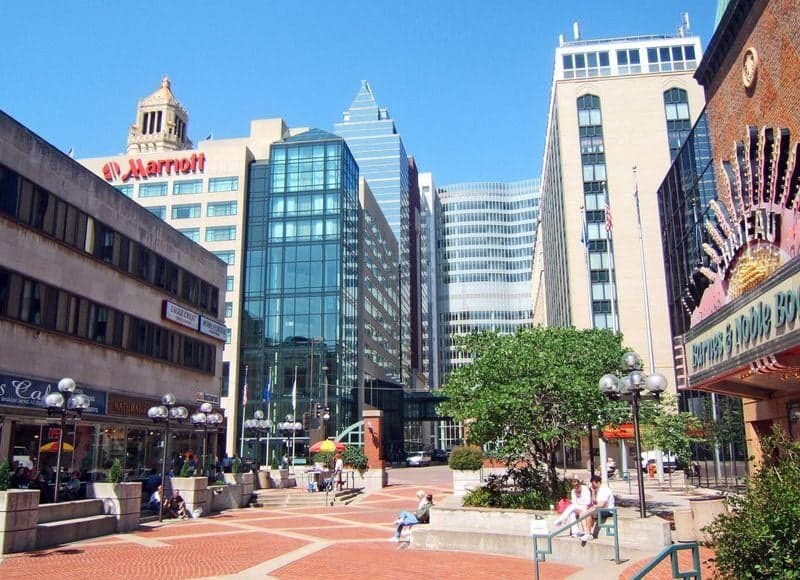
Photo: Wikipedia
Political ClimatePolitical Climate in Rochester, MN
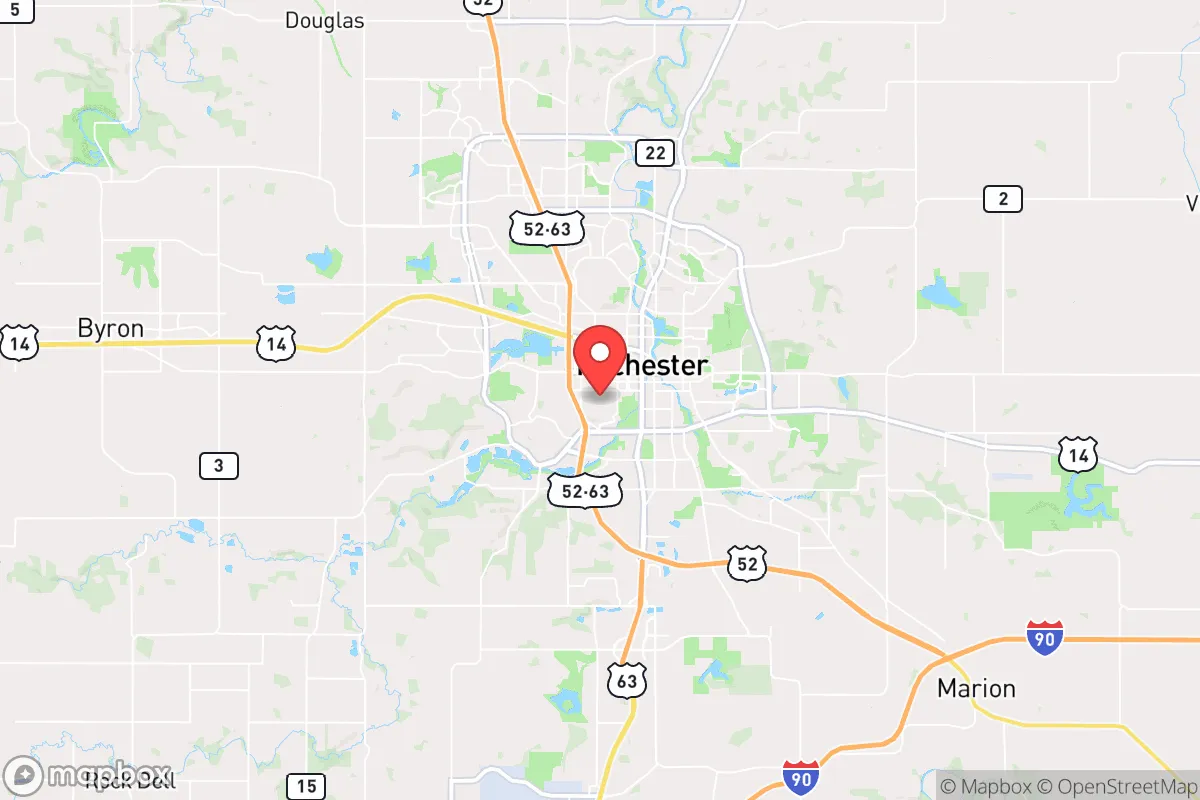
District shown is the primary district for this city’s centroid. Cities may span multiple districts.
Local Political AnalysisPolitical Analysis of Rochester, MN
Rochester, Minnesota, sits in a political landscape that’s been shifting under our feet for the last decade or so. The Cook PVI rating of R+6 tells you the district leans Republican, but that number feels a little less solid every election cycle. Historically, this was a reliably conservative area—folks here valued hard work, personal responsibility, and keeping government out of your business. But the Mayo Clinic’s massive growth has brought in a wave of new residents from all over the country, and with them, a more progressive tilt that’s slowly changing the local conversation. You can feel it in city council meetings and school board races; the old-school common-sense approach is getting challenged by people who seem to think more government oversight is the answer to everything.
How it compares
Drive 30 minutes in any direction from Rochester, and you’ll see a different world. Towns like Stewartville, Byron, and Kasson are still solidly conservative—folks there vote their conscience and don’t apologize for it. Even nearby Austin, home to Hormel, has a more traditional, blue-collar Republican vibe. But Rochester itself is becoming an island of moderation that’s drifting left. The contrast is stark: you can have a city council candidate in Rochester talking about expanding public transit and affordable housing mandates, while just down the road in Eyota, the biggest concern is keeping property taxes low and the county fair running. That R+6 rating masks the fact that Olmsted County as a whole is trending purple, and the city’s core is getting bluer with every new apartment complex that goes up.
What this means for residents
For those of us who’ve been here a while, the biggest worry is that the government overreach we used to see in places like Minneapolis is creeping in. We’re seeing more talk about zoning changes that could limit what you can do with your own property, and school policies that seem more focused on social engineering than reading and math. The city’s push for “equity” initiatives and climate action plans sounds nice on paper, but it often comes with new fees, regulations, and a bureaucracy that feels like it’s telling you how to live your life. If you value your Second Amendment rights, low taxes, and the freedom to run your small business without a stack of permits, you’re going to have to stay engaged. The long-term trend is concerning—if the progressive influx keeps up, we could lose the character that made Rochester a great place to raise a family.
One thing that still sets Rochester apart from the worst of the coastal cities is a strong sense of community and a practical, Midwestern skepticism of grand government schemes. The Mayo Clinic, for all its progressive leanings, also employs a lot of folks who just want to do their jobs and be left alone. You’ll still find plenty of neighbors who believe in personal responsibility over government handouts. But the cultural shift is real—you see it in the new restaurants and coffee shops that cater to a younger, more activist crowd, and in the local news coverage that seems to celebrate every move toward “inclusion” while ignoring the rising cost of living. If you’re thinking of moving here, just know that the political climate is a battleground. It’s not yet lost, but it’s a fight to keep the government out of your backyard, your wallet, and your family’s future.

State Political ClimatePolitical Climate in Minnesota
State Political AnalysisPolitical Environment in the State
Minnesota has undergone a dramatic political transformation over the past decade, shifting from a classic purple battleground to a reliably blue state in presidential elections, though with a surprisingly resilient conservative undercurrent in its rural and exurban regions. The state voted for Hillary Clinton by just 1.5 points in 2016, but Joe Biden carried it by over 7 points in 2020, and the Democratic-Farmer-Labor Party (DFL) now holds a trifecta in state government. This leftward lurch is driven almost entirely by the explosive growth of the Twin Cities metro area, while Greater Minnesota has become increasingly red, creating one of the most pronounced urban-rural political chasms in the country.
Urban vs. rural divide
The political map of Minnesota is a tale of two states. The Twin Cities metro—Hennepin, Ramsey, and Dakota counties—generates roughly 55% of the state’s vote and has become a Democratic stronghold. Minneapolis and St. Paul are among the most progressive cities in the Midwest, with St. Paul’s Ramsey County voting +36 for Biden in 2020. Meanwhile, the Iron Range in northeastern Minnesota, once a bastion of union Democrats, has flipped hard to the right. St. Louis County (Duluth) still leans blue, but the rural towns of Hibbing, Virginia, and Eveleth now vote Republican by wide margins. The southwestern agricultural counties, like Nobles County (Worthington) and Lyon County (Marshall), are deeply red, while the northwestern farm belt—Polk County (Crookston) and Norman County—has trended redder with each cycle. The only reliably blue areas outside the metro are the college towns of Duluth, Mankato, and Northfield, and the Native American reservations in the north. The 2020 election saw several rural counties flip from Obama to Trump, including Kandiyohi County (Willmar) and Stearns County (St. Cloud), which had been competitive for decades.
Policy environment
Minnesota’s policy environment has become a laboratory for progressive governance since the DFL took full control in 2023. The state now has a progressive income tax with a top rate of 9.85% on income over $200,000, one of the highest in the nation. Property taxes are above average, and the state sales tax is 6.875%, with local add-ons pushing it higher in the metro. The 2023 legislative session was a whirlwind: the DFL passed a $2.6 billion tax increase, codified abortion rights into state law, legalized recreational marijuana, and enacted a paid family and medical leave program funded by a new payroll tax. Education spending is among the highest per pupil in the country, but school choice is limited—Minnesota has no voucher program and charter schools face heavy regulation. The state also passed a “clean car” mandate requiring all new vehicles sold to be zero-emission by 2035, and a 100% carbon-free electricity standard by 2040. Election laws have been loosened: automatic voter registration, same-day registration, and no-excuse absentee voting are all in place, and felons regain voting rights upon release from prison. For a conservative, the policy environment feels increasingly hostile to traditional values and economic freedom.
Trajectory & freedom
On the freedom front, Minnesota is moving decisively in the wrong direction. The 2023 session saw the passage of a “red flag” law (Extreme Risk Protection Order) that allows courts to temporarily seize firearms from individuals deemed a threat, without a criminal conviction. This was paired with a universal background check law for all firearm transfers, including private sales. Parental rights took a hit with the passage of a law requiring schools to adopt policies that affirm a student’s gender identity without parental notification, effectively overriding parents’ ability to know what their child is being taught about gender. The state also banned conversion therapy for minors, which critics argue restricts therapeutic options for children struggling with gender dysphoria. Medical autonomy has been curtailed by the state’s vaccine mandate for healthcare workers, though it was later rescinded. Property rights are under pressure from a new “just cause” eviction law that makes it harder for landlords to remove tenants, and a rent control law in Minneapolis that caps annual increases at 3%. The trajectory is clear: more government control over personal decisions, less room for dissent, and a growing regulatory burden on families and businesses.
Civil unrest & political movements
Minnesota has been a flashpoint for civil unrest since the murder of George Floyd in Minneapolis in 2020, which sparked riots that caused over $500 million in property damage and led to the burning of a police precinct. The aftermath saw a surge in progressive activism, with the “Defund the Police” movement gaining traction in Minneapolis, though it was later rejected by voters in a 2021 ballot measure. The state has become a sanctuary for illegal immigrants, with the “Driver’s Licenses for All” law passed in 2023 allowing undocumented residents to obtain driver’s licenses. Immigration politics are a hot-button issue in rural towns like Worthington and Willmar, where meatpacking plants have drawn large Somali and Latino populations, straining local services and changing the cultural fabric. Election integrity remains a concern for conservatives, with the 2020 election seeing a massive surge in absentee ballots and the state’s lax voter ID laws. The “Trump 2020” movement is still active in rural areas, with regular rallies in St. Cloud and Bemidji. The state also saw a rise in secessionist rhetoric from the “Greater Minnesota” movement, with some rural counties passing resolutions declaring themselves “Second Amendment sanctuaries” in defiance of state gun laws.
Projection
Looking ahead 5-10 years, Minnesota is likely to become even more polarized and progressive. The Twin Cities metro is growing rapidly, driven by immigration and young professionals, while rural counties are losing population. This demographic shift will cement DFL control of the state legislature and governor’s office, making it nearly impossible for conservatives to win statewide office. The 2024 election saw Trump lose the state by a narrower margin than expected, but the trend lines are clear: the metro’s growth will outpace rural losses. Expect more progressive policies: a state-level wealth tax, a public option for healthcare, and stricter environmental regulations. The state’s housing crisis in the metro will likely lead to more rent control and land-use mandates. For a conservative moving in, the state will feel increasingly like a blue island in a red sea, with cultural and policy battles intensifying. The only hope for a conservative revival is if the exurban counties—like Wright County (Buffalo) and Sherburne County (Elk River)—continue to grow and eventually flip the metro’s balance, but that’s a long shot.
For a new resident, the bottom line is this: Minnesota offers a high quality of life with excellent schools, abundant nature, and a strong economy, but you will be living under a government that is actively hostile to conservative values. If you’re a parent, expect to fight for your rights in the classroom and in the doctor’s office. If you’re a gun owner, expect more restrictions. If you value low taxes and limited government, look elsewhere. But if you’re willing to be a voice of dissent in a blue state, Minnesota’s rural communities and exurban suburbs still offer a strong sense of community and a fighting chance to push back against the tide.
* Values derived from national, state, county, city and local statistics and may differ in a specific area. Last updated: 2026-04-30T04:17:35.000Z
Narrative content on this page is AI-generated and may contain mistakes. Verify any details that matter before acting on them.
ReloMaps may earn a commission from affiliate links at no extra cost to you.

