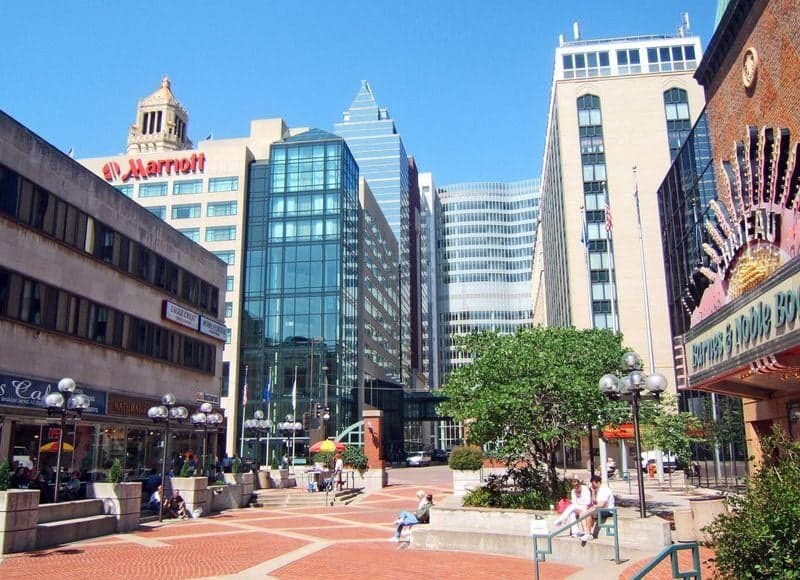
Photo: Wikipedia
Quality of Life in Rochester, MN
A high quality of life with strong walkability, manageable living costs, healthy neighborhood signals, and solid amenity access.
What does Quality of Life tell us?
Quality of Life blends cost of living, nearby amenities, socioeconomic signals, and neighborhood character. City-level scores represent the whole municipality; individual neighborhoods can differ.
What does this tell us?
Quality of Life blends cost of living, nearby amenities, socioeconomic signals, and neighborhood character. City-level scores represent the whole municipality; individual neighborhoods can differ.
Cost of Living
9% above national average
The Real Cost of Living in Rochester, MN for 2026
| Tier | Individual | Family (4) |
|---|---|---|
| Survival | $21k | $39k |
| Comfortable | $56k | $82k |
| Luxury | $159k+ | $246k+ |
| Elite (Top 5%) | $190k+ | $295k+ |
107%
The Area Signal
A metric tracking the socioeconomic signals of the area.
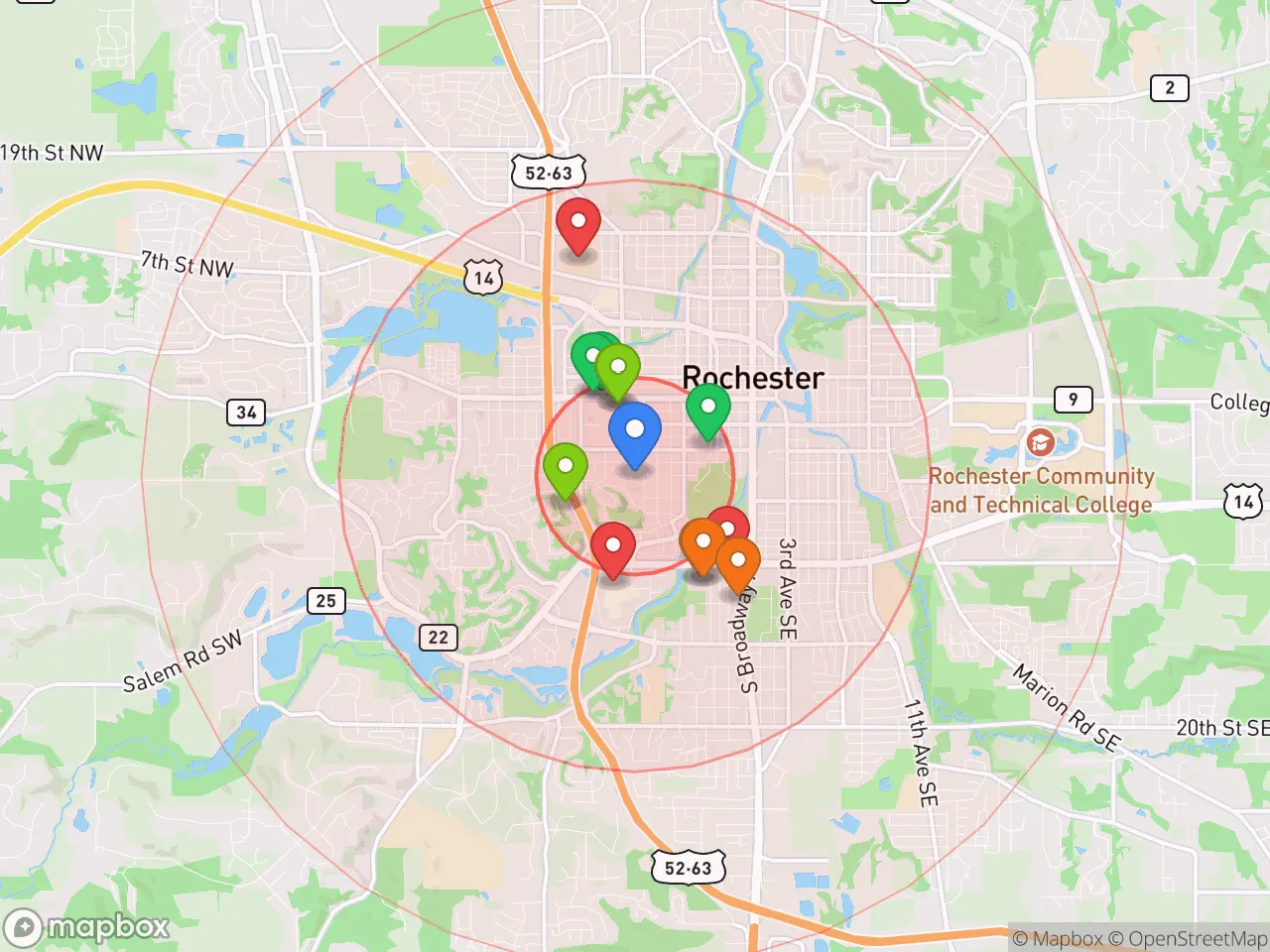
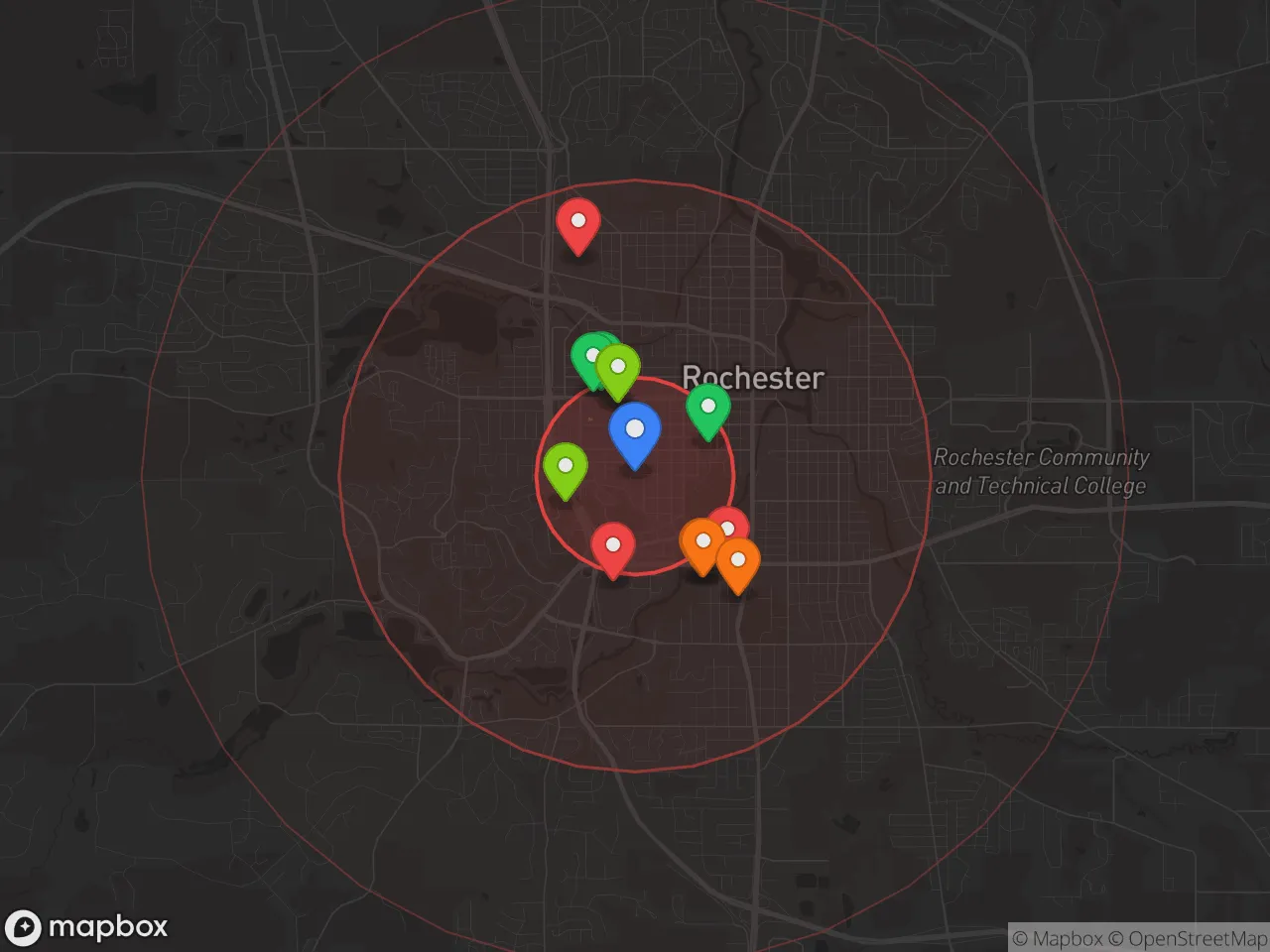
Hobbies
Explore the areaGroceries
7 within 10 miles
Gas
20 within 10 miles
Hospital
14 within 20 miles
Airport
JFK — John F. Kennedy Memorial
Post Office
USPS — Rochester, MN
Critical Amenities
Quality-of-Life Analysis
Rochester, Minnesota, is an affluent, fast-growing city anchored by the world-renowned Mayo Clinic, drawing a highly educated workforce of medical professionals, researchers, and support staff. With a cost of living index of 109 (9% above the national average), the city balances above-average housing costs with strong salaries and a remarkably short average commute of just over 17 minutes, creating a quality of life that prioritizes time and access over sprawl. The population skews professional and family-oriented, with a significant international contingent due to Mayo’s global draw, giving the city a cosmopolitan feel unusual for its Midwestern size.
Cost of living, housing affordability, and how Rochester compares to nearby cities
Rochester’s housing market is the primary driver of its above-average cost of living. The median home value sits at $287,500, notably higher than the Minnesota state median of roughly $290,000 but significantly more affordable than the Twin Cities metro (where the median exceeds $370,000). Median rent is $1,316, which is competitive for a city of its economic profile—comparable to Madison, Wisconsin, but cheaper than Des Moines or Minneapolis. The trade-off for these prices is a compressed commute: the average travel time to work is just 17.2 minutes, far below the national average of 26 minutes. This means residents can live in newer subdivisions on the city’s south or west sides and still reach Mayo’s downtown campus in under 20 minutes, a rarity in similarly sized medical hubs. Property taxes in Olmsted County are moderate, and while groceries and utilities are slightly above national averages, the absence of a state income tax on Social Security benefits helps retirees and long-term residents manage overall expenses.
What daily life is like: amenities, schools, and the local rhythm
Daily life in Rochester revolves around a strong public school system—Rochester Public Schools (ISD 535) consistently ranks among Minnesota’s top districts, with Century High School and John Adams Middle School earning national recognition for STEM and International Baccalaureate programs. The city’s amenity base is unusually robust for a metro of 120,000: the Rochester Art Center, the Mayo Civic Center, and the Soldiers Field Veterans Memorial provide cultural anchors, while the Douglas Trail and Quarry Hill Nature Center offer immediate outdoor access. The local rhythm is shaped by Mayo’s shift-based schedule—coffee shops and gyms are busy at 5:30 a.m., and downtown restaurants like Pescara and The Loop fill early for dinner. The city lacks a major nightlife scene but compensates with frequent community events (Thursdays on First & 3rd summer market, Rochesterfest) and a low violent crime rate that is roughly half the national average. For families, the presence of the Rochester Public Library system and multiple indoor play centers makes winter months manageable.
Rochester is best suited for medical professionals, researchers, and families who value short commutes, excellent schools, and a stable, service-rich environment over urban excitement or extreme affordability. Empty-nesters and retirees also thrive here, drawn by the Mayo Clinic’s geriatric care network and the walkable downtown core. Those seeking a vibrant nightlife, heavy ethnic diversity beyond the medical community, or rock-bottom housing costs may find the city too quiet or expensive. For anyone prioritizing career stability in healthcare, a 17-minute commute, and a community that feels both small and globally connected, Rochester offers a compelling, data-backed quality of life.

Crime in Rochester, MN
Generally safer than 74% of comparable U.S. locations.
Violent CrimeViolent Crime Analysis
Property CrimeProperty Crime Analysis
Crime Analysis
Rochester, Minnesota, reports a violent crime rate of 222.8 incidents per 100,000 residents and a property crime rate of 1,417.9 per 100,000, placing it below the national average for violent offenses but above the national average for property crime. While these figures suggest a generally safer environment than many comparably sized cities, the city's location within a liberal-leaning judicial district raises specific concerns about public safety and offender accountability. The overall safety picture is one of moderate risk, heavily influenced by the local justice system's approach to prosecution and sentencing.
Crime in context
Rochester's violent crime rate is roughly 40% lower than the national average, a statistic that often attracts families and professionals to the area. However, its property crime rate sits approximately 15% higher than the national average, driven largely by thefts and vehicle break-ins. When compared to other Minnesota cities of similar size, Rochester's violent crime numbers are favorable, but the property crime rate is a persistent issue. A critical factor in this context is the judicial philosophy of Olmsted County's district court. Like many jurisdictions in Minnesota, the area has seen a trend toward progressive prosecution policies, including reduced bail requirements and diversion programs for property offenders. While these policies aim to reduce incarceration, they can result in repeat offenders cycling back onto the streets quickly, directly undermining public safety and victim confidence in the justice system.
What residents experience
For daily life in Rochester, the most tangible safety concern is property crime. Residents frequently report incidents of package theft, bicycle theft, and unlocked vehicle entries, particularly in neighborhoods near downtown and the Mayo Clinic campus. Violent crime, while less common, is not absent; it tends to be concentrated in specific areas and often involves individuals who know each other. The progressive judicial approach in Olmsted County means that even when arrests are made, offenders often face minimal consequences for first-time property offenses. This creates a frustrating cycle for victims, who may see their stolen property unrecovered and the perpetrator back in the neighborhood within days. The emphasis on rehabilitation over punishment, while well-intentioned, can erode the sense of security for law-abiding residents who feel the system prioritizes offender rights over public protection.
Neighborhood-level variation is significant. The northwest and southeast quadrants of the city, including areas like the 7th Street corridor and parts of the East Side, experience higher concentrations of both property and violent crime. In contrast, neighborhoods like the Historic Southwest District and newer developments on the far west side report much lower incident rates. Prospective residents should research specific block-level data and consider that the city's overall statistics can mask pockets of higher risk. The combination of a progressive judicial environment and uneven crime distribution means that choosing a neighborhood wisely is a critical step for anyone prioritizing personal and family safety in Rochester.
* Values derived from national, state, county, city and local statistics and may differ in a specific area. Last updated: 2026-04-30T04:17:35.000Z
Narrative content on this page is AI-generated and may contain mistakes. Verify any details that matter before acting on them.
ReloMaps may earn a commission from affiliate links at no extra cost to you.

