Photo: Wikipedia
Quality of Life in Rock Hill, SC
A high quality of life with strong walkability, manageable living costs, healthy neighborhood signals, and solid amenity access.
What does Quality of Life tell us?
Quality of Life blends cost of living, nearby amenities, socioeconomic signals, and neighborhood character. City-level scores represent the whole municipality; individual neighborhoods can differ.
What does this tell us?
Quality of Life blends cost of living, nearby amenities, socioeconomic signals, and neighborhood character. City-level scores represent the whole municipality; individual neighborhoods can differ.
Cost of Living
4% above national average
The Real Cost of Living in Rock Hill, SC for 2026
| Tier | Individual | Family (4) |
|---|---|---|
| Survival | $20k | $38k |
| Comfortable | $52k | $76k |
| Luxury | $112k+ | $173k+ |
| Elite (Top 5%) | $131k+ | $203k+ |
85%
The Area Signal
A metric tracking the socioeconomic signals of the area.
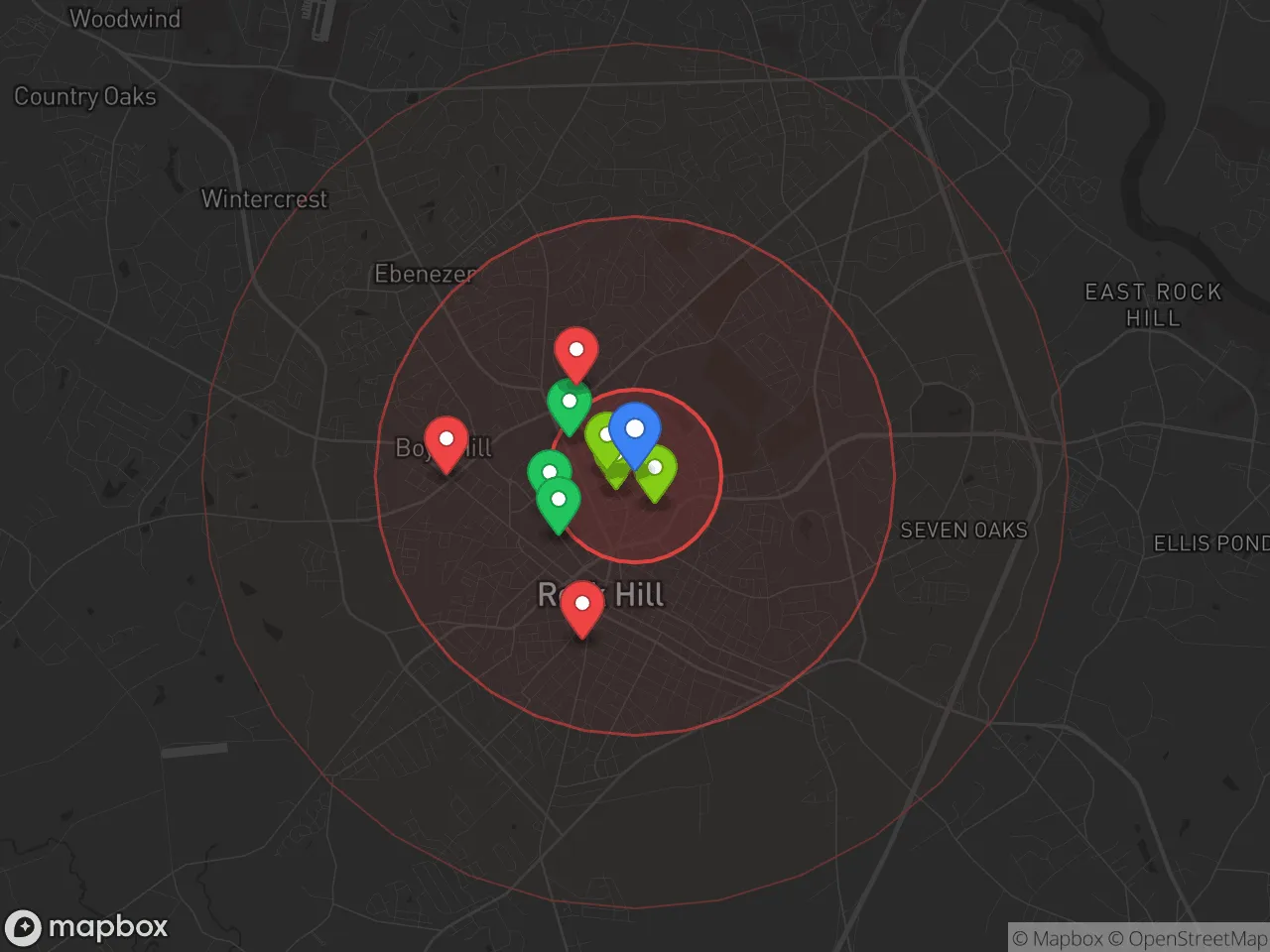
Hobbies
Explore the areaGroceries
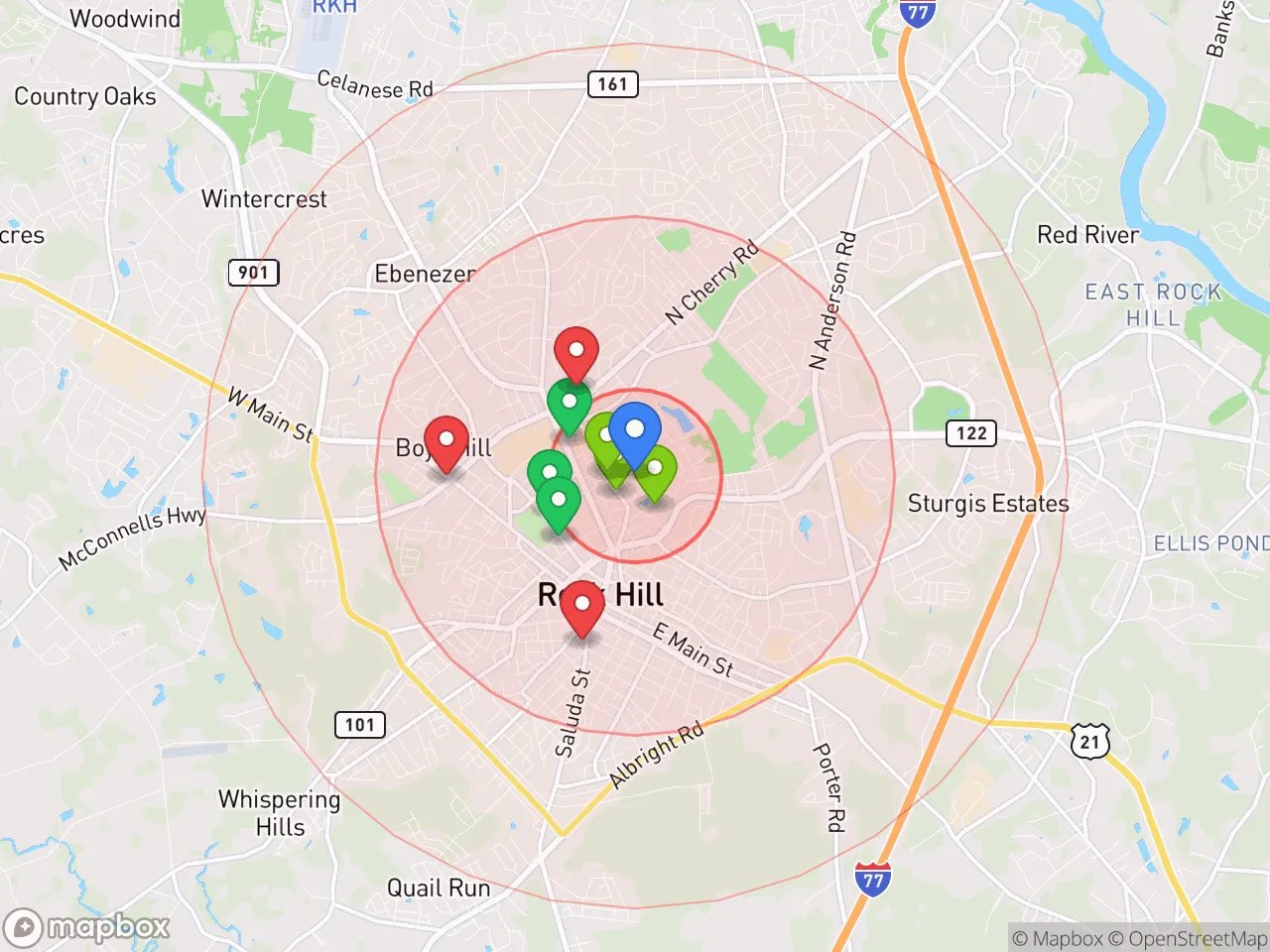
5 within 10 miles
Gas
20 within 10 miles
Hospital
12 within 20 miles
Airport
CLT — Charlotte Douglas International
Post Office
USPS — Rock Hill, SC
Critical Amenities
Quality-of-Life Analysis
Rock Hill, South Carolina, presents a quality of life defined by steady economic growth and a cost of living that remains below the national average, attracting a mix of young professionals, families, and Charlotte commuters. With a cost-of-living index of 104 (where 100 equals the U.S. average), the city offers a tangible financial advantage over its much larger neighbor, Charlotte, North Carolina, where the index often exceeds 105. The population skews slightly younger and more educated than the South Carolina state average, driven by the presence of Winthrop University and a growing base of white-collar workers in healthcare, education, and advanced manufacturing.
Cost of living, housing, and affordability compared to Charlotte
Rock Hill’s affordability is its strongest draw for newcomers, particularly those priced out of Charlotte’s hot housing market. The median home value sits at $267,400, roughly $100,000 less than the median in Charlotte proper, making homeownership attainable for many dual-income households. Median rent is $1,279, which undercuts Charlotte’s average by about $200 per month. The average commute of 25.3 minutes reflects the city’s role as a bedroom community for Charlotte—driving I-77 north to Uptown Charlotte typically takes 30–40 minutes, though peak traffic can stretch that to 50 minutes. Property taxes in York County are notably lower than in Mecklenburg County, North Carolina, with an effective rate around 0.6% versus Charlotte’s 0.9%, saving a homeowner on a $267,400 home roughly $800 annually. Utility costs and groceries are on par with national averages, but healthcare costs run about 8% below the U.S. norm, further stretching household budgets.
Schools, amenities, and the daily rhythm of life
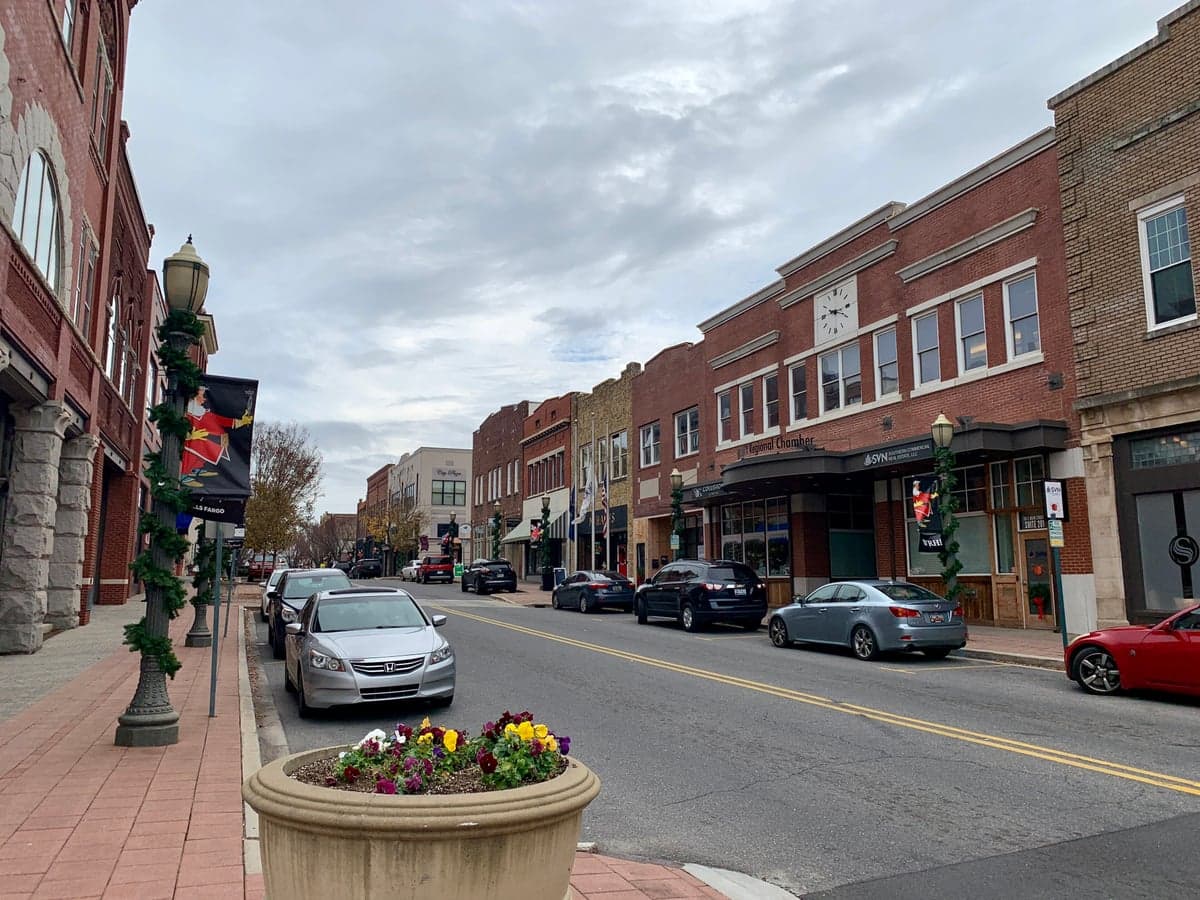
Daily life in Rock Hill revolves around a compact downtown core, the Catawba River corridor, and a network of public schools that perform above the South Carolina average. The Rock Hill School District (York 3) includes several schools rated “Good” on GreatSchools, with Northwestern High School and Rock Hill High School both offering International Baccalaureate programs. For outdoor recreation, the Rock Hill Outdoor Center along the Catawba River provides 30+ miles of mountain bike trails and a whitewater kayak course, drawing regional competitors. The city’s downtown has seen a revival with the Knowledge Park innovation district, anchored by a 3D-printing hub and the Main Street Children’s Museum. Restaurants and breweries—such as Legal Remedy Brewing and Kounter—cater to a younger crowd, while the Giordana Velodrome hosts national cycling events. The rhythm is slower than Charlotte’s but faster than most South Carolina towns: retail and service jobs dominate, with major employers including 3D Systems, Piedmont Medical Center, and the York County government. Nightlife is limited compared to Charlotte, but weekend farmers’ markets and seasonal festivals like Come See Me fill the social calendar.
Rock Hill is best suited for those who want a lower cost of living without sacrificing proximity to a major metro’s job market. Commuters to Charlotte will find the trade-off of a 25-minute average drive acceptable, especially given the savings on housing and taxes. Families benefit from solid schools and abundant outdoor amenities, while young professionals can tap into a growing arts and tech scene. Retirees on fixed incomes will appreciate the low property taxes and healthcare costs, though the city’s suburban character may feel too active for those seeking a quiet retirement. For anyone prioritizing affordability, access to nature, and a manageable commute to Charlotte, Rock Hill offers a clear quality-of-life advantage over higher-cost alternatives in the region.

Crime in Rock Hill, SC
Crime rates similar to the national median for U.S. locations.
Violent CrimeViolent Crime Analysis
Property CrimeProperty Crime Analysis
Crime Analysis
Rock Hill, South Carolina, reports a violent crime rate of 391.7 incidents per 100,000 residents and a property crime rate of 2,180.4 per 100,000, placing it above both state and national averages for overall crime. These figures indicate that while Rock Hill is not among the most dangerous cities in the Carolinas, residents face a notably higher risk of theft, burglary, and assault compared to the typical U.S. municipality. The city's proximity to Charlotte, North Carolina, and its role as a regional employment and retail hub contribute to a dynamic but also challenging public safety environment.
Crime in context
Rock Hill's violent crime rate is roughly 12% higher than the national average of approximately 350 per 100,000 and significantly exceeds South Carolina's statewide rate of about 490 per 100,000, though it remains below the rates of larger cities like Columbia or Charleston. Property crime in Rock Hill is nearly 30% above the national average of roughly 1,700 per 100,000, driven largely by larceny-theft and motor vehicle theft. These numbers place Rock Hill in a middle tier among South Carolina's mid-sized cities, with a crime index that is a concern for families and professionals evaluating long-term relocation. The presence of progressive judicial policies in York County, including diversion programs and reduced sentencing for non-violent offenders, has been cited by local law enforcement as a factor that may contribute to repeat offenses and a perception of leniency that does not fully prioritize victim safety.
What residents experience
Residents commonly report that property crime, particularly vehicle break-ins and package theft, is the most frequent safety issue in daily life, especially in neighborhoods near Interstate 77 and commercial corridors like Cherry Road. Violent crime, while less common, is concentrated in specific areas and often involves disputes among individuals known to one another rather than random attacks on strangers. Community policing efforts in Rock Hill have improved response times and neighborhood watch participation, but the city's overall clearance rate for property crimes remains below 20%, meaning most thefts go unsolved. The influence of progressive district attorneys in the broader Charlotte metro area, who may prioritize alternatives to incarceration, has a spillover effect in Rock Hill, as offenders from across the state line face reduced consequences, increasing the risk for local residents.
Neighborhood-level variation
Safety in Rock Hill varies considerably by neighborhood. Areas west of Highway 21, including the historic downtown and newer developments near Winthrop University, generally report lower crime rates and stronger community engagement. In contrast, neighborhoods east of Interstate 77, particularly around the Saluda Street corridor and sections of the India Hook area, experience higher concentrations of both property and violent crime. Newer suburban developments on the city's northern and western edges, such as those near the Rock Hill Galleria, tend to have the lowest crime rates, though they are not immune to property crime. Prospective residents should examine block-level crime maps and consult with local police precincts, as the difference in safety between adjacent streets can be stark, and the overall city statistics mask pockets of significantly higher risk driven by regional criminal justice policies.
* Values derived from national, state, county, city and local statistics and may differ in a specific area. Last updated: 2026-04-30T07:57:45.000Z
Narrative content on this page is AI-generated and may contain mistakes. Verify any details that matter before acting on them.
ReloMaps may earn a commission from affiliate links at no extra cost to you.

