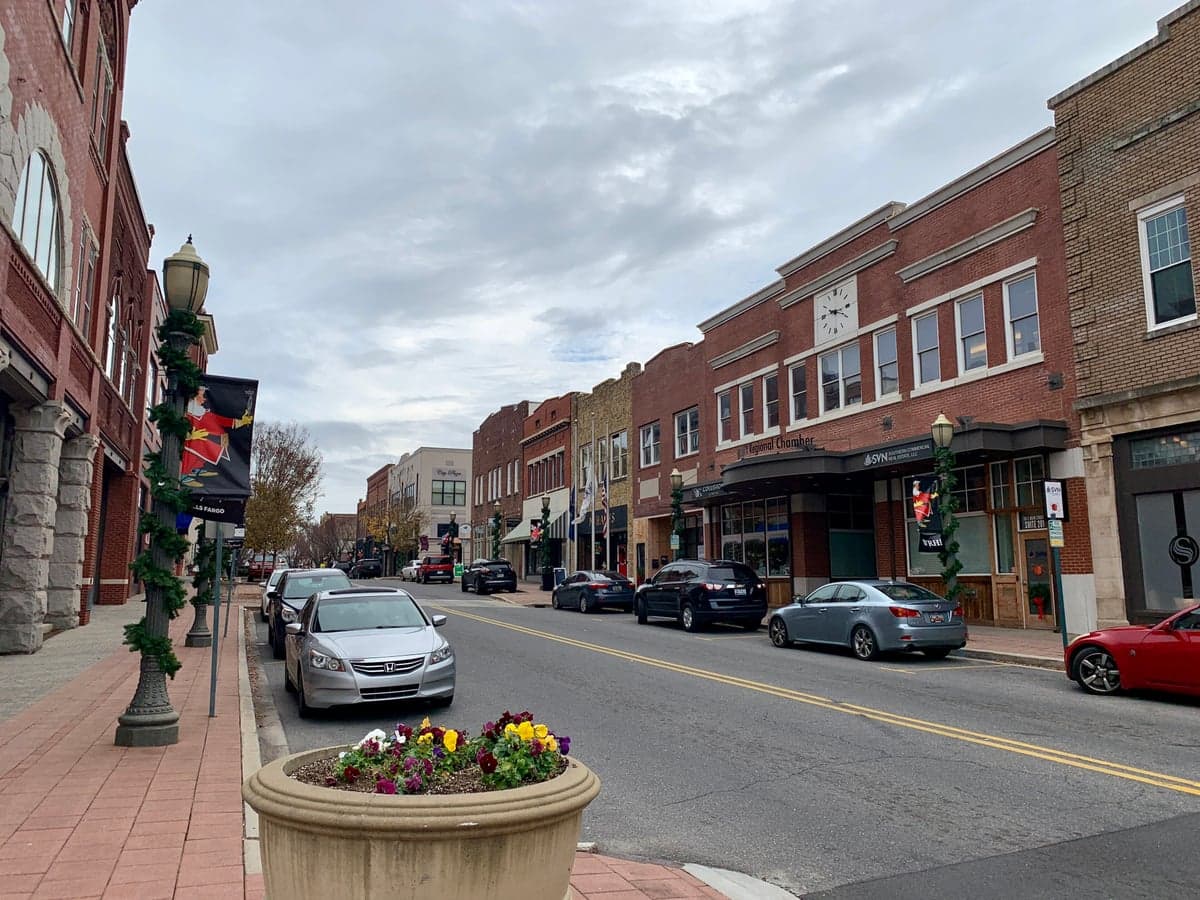
Photo: Wikipedia
Political ClimatePolitical Climate in Rock Hill, SC
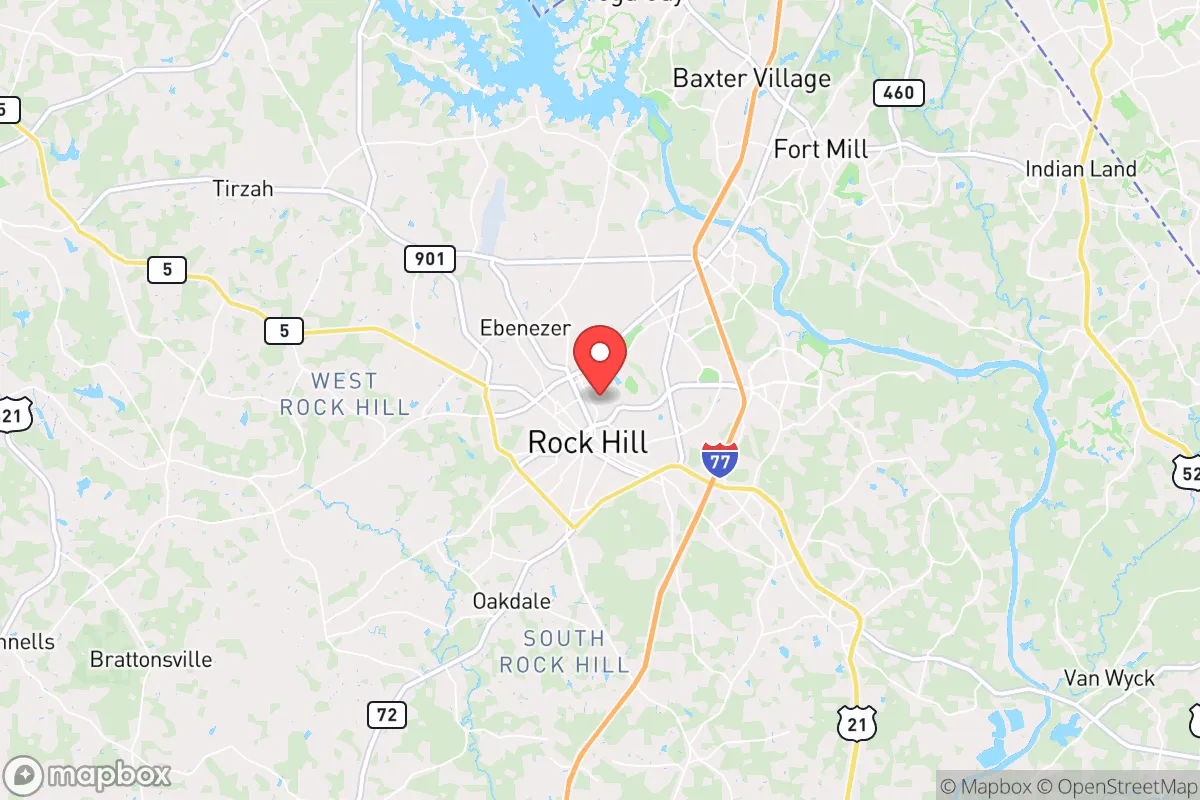
District shown is the primary district for this city’s centroid. Cities may span multiple districts.
Local Political AnalysisPolitical Analysis of Rock Hill, SC
Rock Hill has long been a reliably conservative area, anchored by a Cook PVI of R+11 that reflects its deep-rooted preference for limited government and traditional values. For decades, this city in York County was a quiet stronghold where folks expected local leaders to stay out of their business and keep taxes low. But over the last five to ten years, you’ve seen a slow creep of progressive influence, especially as Charlotte’s sprawl pushes south and younger, more transient residents move in. The 2024 election results still leaned red, but the margins have tightened in some precincts near Winthrop University and the downtown core, signaling a shift that long-time residents watch with a wary eye.
How it compares
Rock Hill sits in a political sandwich. Drive north ten miles into Charlotte, and you’re in a deep-blue urban county that’s embraced everything from defund-the-police rhetoric to heavy-handed zoning mandates. Head south toward Lancaster or Chester, and you find communities that are still solidly red, with fewer chain stores and more folks who remember when the biggest local controversy was a zoning variance. Within York County itself, the contrast is stark: Fort Mill and Tega Cay have seen an influx of out-of-state transplants who bring their big-city voting habits, while western parts of the county like Clover and Hickory Grove remain staunchly conservative. Rock Hill sits right in the middle—still red overall, but with a growing progressive minority that’s pushing for things like higher property taxes for “equity” programs and stricter environmental regulations that feel like government overreach to many locals.
What this means for residents
For families and small business owners, the political drift here is something to keep an eye on. Property taxes have inched up as the city council debates new spending on bike lanes and “inclusive” public art, while basic infrastructure like pothole repair and police staffing gets slower attention. The school board has seen heated meetings over curriculum changes and library books, with conservative parents pushing back against what they see as indoctrination. On the plus side, the county’s Republican majority still holds the line on most major issues—concealed carry permits are straightforward, there’s no city income tax, and zoning laws haven’t yet turned into the kind of bureaucratic nightmare you see in Charlotte. But the trend lines are concerning: if you’re someone who values personal freedom and distrusts government overreach, you’ll want to stay engaged in local elections, because the progressive wave is lapping at Rock Hill’s door.
Culturally, Rock Hill still feels like a Southern town where neighbors know each other and church attendance is high, but the character is changing. You’ll see more “Black Lives Matter” signs in yards near downtown than you did a decade ago, and the city has embraced some symbolic gestures like renaming streets and flying pride flags during June. These aren’t earth-shattering changes, but they signal a willingness to adopt the cultural trappings of progressive cities without the economic benefits. The real test will come in the next few years as the city council considers a proposed “housing first” ordinance and a new stormwater fee that critics say is a backdoor tax. For now, Rock Hill remains a good place to raise a family if you value conservative principles, but you’ll need to stay vigilant—because the political winds are shifting, and not in a direction that respects the freedoms that made this area great.

State Political ClimatePolitical Climate in South Carolina
State Political AnalysisPolitical Environment in the State
South Carolina has long been a reliably Republican state, but the political climate here is more layered than the simple "red state" label suggests. The GOP holds a supermajority in both legislative chambers, and the state has voted Republican in every presidential election since 1980, with Donald Trump carrying it by 11 points in 2024. However, the past decade has seen a slow but steady shift, driven by explosive growth in the coastal Lowcountry and the Upstate, which is pulling the state's center of gravity away from its traditional rural conservative base and toward a more suburban, business-friendly, and culturally moderate Republicanism.
Urban vs. rural divide
The political map of South Carolina is a study in contrasts. The state's two major metros, Charleston and Greenville, are both Republican-leaning, but in very different ways. Charleston County, which includes the city itself and its booming suburbs like Mount Pleasant and Summerville, has become a battleground. The city of Charleston is increasingly liberal, driven by a wave of out-of-state transplants and a growing tech and tourism economy. In 2024, Charleston County voted for Kamala Harris by a slim margin, a flip from its 2020 support for Trump. Meanwhile, Greenville County, anchored by the conservative hub of Greenville and its rapidly growing suburbs like Simpsonville and Greer, remains solidly Republican, though the city itself is trending more moderate as it attracts young professionals and remote workers. The rural areas—the Pee Dee region around Florence, the Lowcountry counties like Colleton and Hampton, and the Upstate's Oconee and Pickens counties—are deeply red, often voting 70-80% Republican. The real political tension isn't between Democrats and Republicans; it's between the old-school, culturally conservative rural base and the newer, more economically focused suburban conservatives who prioritize low taxes and business growth over social issues.
Policy environment
South Carolina's policy environment is a mixed bag for conservatives. On the plus side, the state has no state income tax on Social Security benefits, a flat 6.2% personal income tax rate (down from 7% in 2022 and scheduled to drop further), and a relatively low property tax burden thanks to a 6% assessment cap on owner-occupied homes. The regulatory climate is business-friendly, with a right-to-work law and a tort reform system that caps noneconomic damages in medical malpractice cases. However, there are areas where the state's conservative credentials are weaker. Education policy is a flashpoint: the state has a robust school choice program (the Education Scholarship Trust Fund, expanded in 2024), but public school funding remains heavily tied to local property taxes, creating disparities between wealthy suburbs and rural districts. Healthcare is a perennial issue—South Carolina did not expand Medicaid under the Affordable Care Act, leaving a coverage gap for about 200,000 low-income adults, which puts pressure on rural hospitals. On election integrity, the state passed a voter ID law in 2021 and has strict absentee ballot rules, but it also allows no-excuse early voting for two weeks, a compromise that satisfies most conservatives. The biggest red flag for many is the state's continued reliance on the federal government for disaster relief and infrastructure funding, which some see as a creeping federal overreach.
Trajectory & freedom
Over the past five years, South Carolina has moved in a decidedly more freedom-oriented direction on several fronts, but with some worrying exceptions. On gun rights, the state passed constitutional carry in 2024, allowing permitless concealed carry for anyone 18 or older who can legally possess a firearm—a major win for Second Amendment advocates. On parental rights, the 2023 "Parents' Bill of Rights" (H. 3728) requires schools to notify parents of any medical or mental health services offered to their children and prohibits instruction on sexual orientation or gender identity in K-5 classrooms. This law has been challenged in court, but it remains in effect. On medical autonomy, the state passed a near-total abortion ban in 2023 (the "Fetal Heartbeat and Protection from Abortion Act"), with exceptions only for rape, incest, and the life of the mother. This is a clear expansion of government power over personal medical decisions, which some conservatives support as protecting life, but others view as an overreach. On property rights, the state has a strong "Dillon's Rule" framework that limits local government authority, which has frustrated some homeowners in fast-growing areas like Lexington and Rock Hill who want more local control over zoning and development. The overall trajectory is toward more state-level control over social issues, but with a lighter touch on economic regulation.
Civil unrest & political movements
South Carolina has a relatively low level of visible civil unrest compared to states like Oregon or Georgia, but there are active political movements on both sides. The most organized conservative force is the South Carolina Republican Party's grassroots, which is heavily influenced by the "Constitution Party" wing and groups like the South Carolina Freedom Caucus, which has pushed for stricter immigration enforcement and election integrity measures. On the left, the "Moral Monday" movement, led by the NAACP and progressive churches, has held regular protests at the Statehouse in Columbia over voting rights and Medicaid expansion. Immigration politics are a simmering issue, particularly in the Upstate, where a growing Hispanic population (now about 6% of the state) has led to tensions in towns like Greer and Duncan. The state has no sanctuary city policies, and in 2024, the legislature passed a bill requiring local law enforcement to cooperate with ICE detainers. There is no serious secession or nullification rhetoric, but the "State Sovereignty" resolution passed in 2023, asserting the state's right to nullify federal gun laws, is a symbolic gesture that resonates with many conservatives. The most visible flashpoint for a new resident would be the ongoing debate over Confederate monuments, particularly in Charleston and Columbia, where local governments have removed or relocated statues, sparking counter-protests from heritage groups.
Projection
Looking ahead 5-10 years, South Carolina is likely to become more politically competitive, but not in the way many expect. The in-migration from blue states—particularly New York, New Jersey, and California—is concentrated in the suburbs of Charleston, Greenville, and the Lake Murray area near Irmo. These newcomers are often fiscally conservative but socially moderate, which could push the state's Republican Party toward a more libertarian or "country club" orientation, similar to what has happened in Georgia and North Carolina. The rural vote will remain deeply conservative, but its share of the electorate is shrinking as the coastal and Upstate metros grow. The wild card is the Hispanic and Asian populations, which are growing fast in the Spartanburg and Greenville areas; these groups tend to be socially conservative but economically pragmatic, and their political allegiance is up for grabs. The state's Democratic Party is weak but could become competitive in state legislative races if it can mobilize the growing suburban moderate vote. For a conservative moving in now, expect a state that remains reliably Republican at the presidential level for at least another decade, but where the internal debate will shift from culture war battles to fights over taxes, school choice, and infrastructure spending.
For a new resident, the bottom line is this: South Carolina offers a low-tax, business-friendly environment with strong gun rights and a conservative social framework, but it's not a libertarian paradise. The state government is active in regulating personal medical decisions, local zoning, and education curriculum, and the growing influence of suburban moderates means the political landscape is slowly evolving. If you're looking for a place where the government largely stays out of your way on economic matters but is willing to enforce traditional values on social issues, South Carolina is a solid bet. Just be prepared for the traffic in Greenville and Charleston to get worse as more people discover what you already know.
* Values derived from national, state, county, city and local statistics and may differ in a specific area. Last updated: 2026-04-30T07:57:45.000Z
Narrative content on this page is AI-generated and may contain mistakes. Verify any details that matter before acting on them.
ReloMaps may earn a commission from affiliate links at no extra cost to you.

